
Choosing a keychain might seem like a small decision, but for many, it’s an extension of identity. Whether clipped to a bag, looped onto keys, or gifted as a token of affection, keychains carry emotional weight. Among the most popular options are Barbie keychains and character keychains—two categories that speak to different aesthetics, memories, and self-expression. While both offer charm and nostalgia, they diverge in symbolism, design philosophy, and audience appeal. Understanding these differences helps answer the real question: which one reflects *you* more?
The Allure of the Barbie Keychain
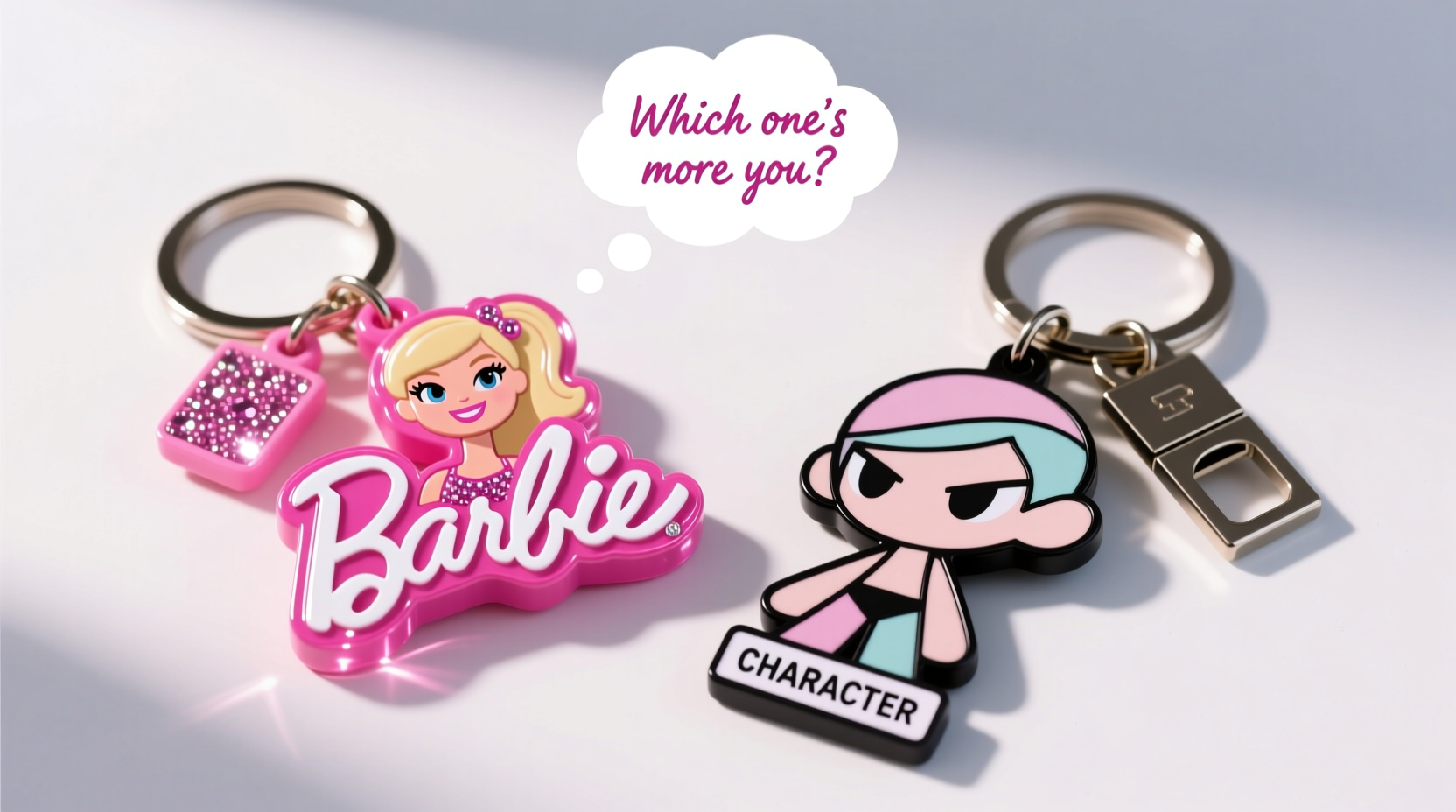
Since her debut in 1959, Barbie has evolved from a fashion doll into a cultural icon. Her presence on keychains isn’t just about branding—it’s about empowerment, style, and timeless femininity. Barbie keychains often feature her signature pink aesthetic, glamorous outfits, and confident posture. They come in various forms: miniature dolls, enamel charms, glitter pendants, and even sustainable resin designs.
These keychains appeal to those who identify with themes of independence, transformation, and self-reinvention. For collectors, limited-edition releases tied to movie launches or collaborations (like the 2023 Greta Gerwig film) add significant value. The Barbie keychain is more than an accessory; it’s a statement of embracing boldness and individuality.
Understanding Character Keychains: A World of Personal Connection
Character keychains draw from broader pop culture—cartoons, anime, video games, movies, and TV shows. From Pikachu to SpongeBob, Mickey Mouse to Wednesday Addams, these keychains let fans carry a piece of their favorite worlds. Unlike the singular brand identity of Barbie, character keychains span genres and generations, making them highly personalized.
The emotional pull here is rooted in nostalgia and fandom. A Mario keychain might remind someone of childhood gaming sessions. A Studio Ghibli Totoro charm could symbolize comfort and imagination. These items aren’t just decorative—they’re emotional anchors. Their appeal lies in specificity: you don’t just like “a character,” you love *this* character, for *this* reason.
“People don’t buy character merchandise because it’s cute—they buy it because it feels like carrying a friend.” — Lena Tran, Pop Culture Analyst
Comparing Design, Audience, and Meaning
To determine which keychain aligns better with your personality, consider three core aspects: design language, target audience, and symbolic meaning.
| Feature | Barbie Keychain | Character Keychain |
|---|---|---|
| Design Style | Glamorous, polished, fashion-forward | Varied—cartoonish, edgy, whimsical, minimalist |
| Audience | Broadly female-identifying; fans of fashion, nostalgia, empowerment | All genders; niche communities based on fandoms |
| Symbols Represented | Confidence, reinvention, aspiration | Nostalgia, belonging, humor, rebellion |
| Collectibility | High—especially limited editions | Very high—rare variants can become valuable |
| Personalization Level | Moderate—mostly tied to Barbie brand | High—direct link to specific characters and stories |
This comparison reveals a fundamental distinction: Barbie keychains represent an idealized version of self, while character keychains reflect lived experiences and emotional connections. One elevates image; the other honors memory.
How to Choose Based on Your Personality
There’s no universal “better” option—only what resonates with *you*. Use this simple checklist to guide your decision:
Checklist: Which Keychain Fits Your Vibe?
- Do you admire confidence, fashion, and self-expression? → Lean toward Barbie.
- Is your phone wallpaper a favorite cartoon or movie scene? → Consider a character keychain.
- Do you collect memorabilia from films or series? → A character piece integrates naturally.
- Are you drawn to pink, sparkle, and luxury aesthetics? → Barbie likely speaks to you.
- Do you associate strong emotions with certain fictional characters? → That connection deserves representation.
If you find yourself split between both, consider layering. Many people use multiple keychains—one practical, one sentimental. A Barbie charm might sit beside a retro Sonic the Hedgehog figure, blending aspiration with affection.
Real-Life Example: Maya’s Keyring Story
Maya, a 28-year-old graphic designer, used to rotate her keychains seasonally. In spring, she’d attach a pastel Barbie mini-doll to match her mood. By fall, it was replaced with a tiny ceramic Hopper from *Stranger Things*. At first, she saw them as interchangeable accessories. But during a therapy session focused on identity, she realized something: the Barbie keychain made her feel powerful at job interviews, while Hopper reminded her of resilience during tough times.
She stopped rotating them. Now, both hang together—Barbie on the left, Hopper on the right. “One is who I want to be,” she says. “The other is who I’ve already survived being.” This duality isn’t uncommon. Keychains, though small, can hold layered meanings.
Step-by-Step Guide to Finding Your Perfect Match
- Reflect on your values: Are you drawn to ambition and glamour (Barbie), or loyalty and adventure (characters)?
- Review your media habits: What shows, games, or movies do you rewatch or replay? These hint at meaningful symbols.
- Assess your style: Do you lean toward minimalist, edgy, romantic, or playful fashion? Match the keychain’s vibe to your wardrobe.
- Check availability and quality: Search reputable retailers. Avoid flimsy plastic versions—opt for metal, enamel, or durable resin.
- Test emotional resonance: Hold a photo or sample of each type. Which one makes you smile instantly? That’s your answer.
Frequently Asked Questions
Can a keychain really reflect my personality?
Absolutely. Small accessories often reveal subconscious preferences. Just as someone might choose a watch for precision or a ring for sentiment, a keychain acts as a portable emblem of identity. It’s not about size—it’s about significance.
Are Barbie keychains only for women?
No. While marketed traditionally toward girls, Barbie has become a unisex symbol of self-acceptance and creativity. Men, non-binary individuals, and gender-nonconforming people increasingly embrace Barbie merchandise as a form of ironic pride or genuine admiration.
Where can I find rare character keychains?
Specialty stores like BoxLunch, Hot Topic, or online marketplaces such as Etsy and Mandarake (for anime goods) offer unique finds. Attend conventions like Comic-Con or follow fan artists on Instagram for exclusive drops.
Final Thoughts: It’s Not About Trends—It’s About You
In the end, the choice between a Barbie keychain and a character keychain isn’t about popularity or resale value. It’s about alignment. Does Barbie inspire you to stand taller, dress bolder, dream bigger? Or does a beloved character ground you, remind you of joy, or symbolize perseverance?
You don’t need to choose forever. Tastes evolve. So do identities. What matters is that your keychain feels intentional—not just something you picked up at a gas station, but something that sparks recognition when you reach for your keys. That moment of connection, however brief, reinforces a truth: you know who you are.




 浙公网安备
33010002000092号
浙公网安备
33010002000092号 浙B2-20120091-4
Comments
No comments yet. Why don't you start the discussion?