
In the world of small accessories—especially those clipped to bags, pockets, or keys—the line between function and fashion often blurs. One common point of confusion among everyday carry (EDC) enthusiasts and casual users alike is whether a \"bat keychain\" and a \"zipper pull\" are truly distinct items or just two names for the same object. At first glance, both may appear identical: compact, bat-shaped metal pieces with a hole or loop for attachment. But a closer look reveals subtle yet meaningful differences in purpose, design, and user intent.
The bat motif has gained popularity in recent years, not only as a symbol of gothic style or pop culture fandom but also as a functional tool. Whether you're drawn to it for its aesthetic edge or practicality, understanding how these items differ—or don’t—can help you make smarter choices when selecting EDC gear.
What Is a Bat Keychain?
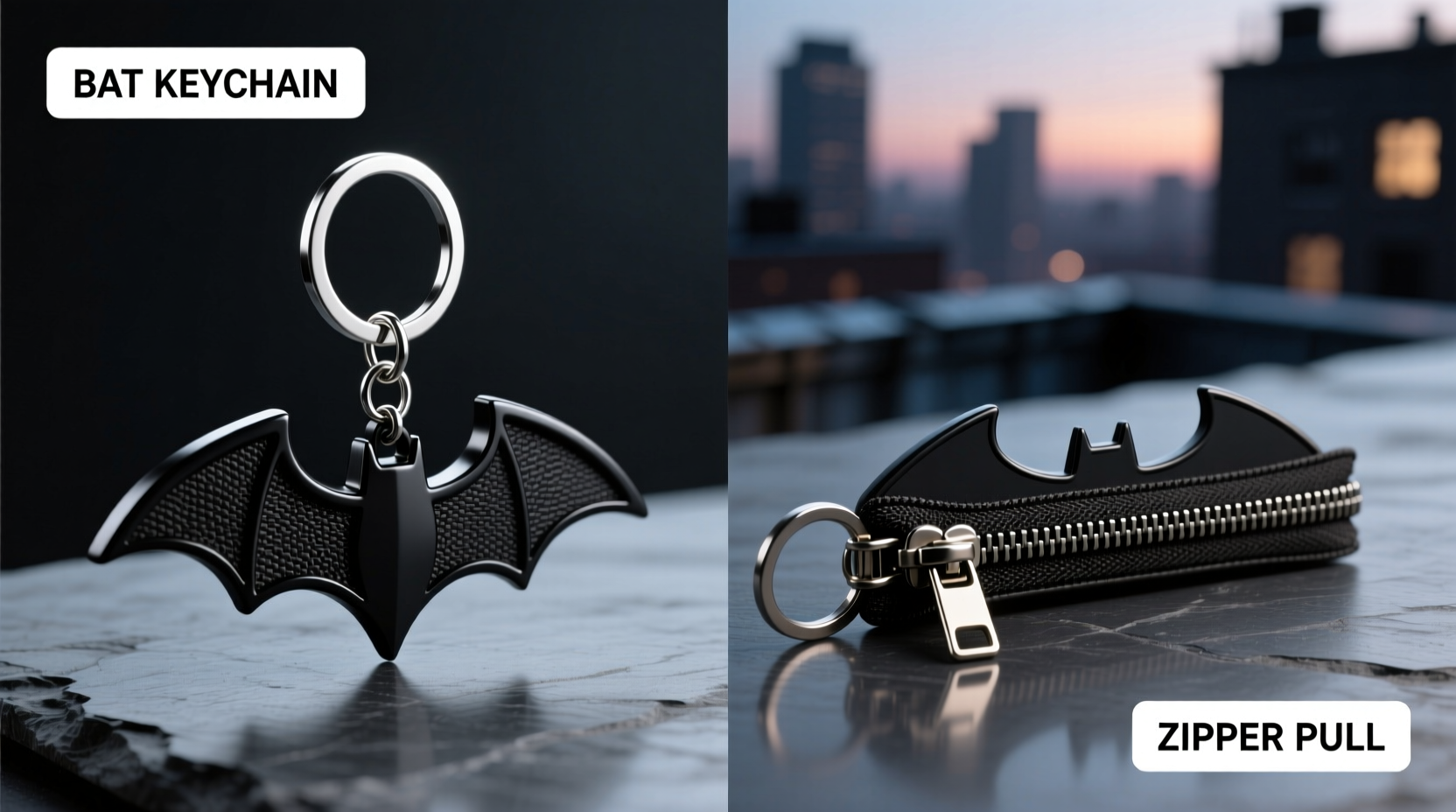
A bat keychain is typically a decorative or functional accessory shaped like a bat, designed primarily to attach to a keyring. These come in various materials—stainless steel, aluminum, zinc alloy—and range from minimalist silhouettes to intricately detailed engravings. Their primary role is identification and utility: helping users locate their keys quickly while adding a personal touch.
Many bat keychains feature a split ring attachment point, allowing them to be secured directly to a keychain. Some models include additional features such as bottle openers, flathead screwdrivers, or even integrated flashlights. In this sense, bat keychains often serve dual roles: symbolic expression and hands-on usefulness.
What Is a Zipper Pull?
A zipper pull, by definition, replaces or augments the standard tab on a zipper slider. It's meant to improve grip, especially on heavy-duty zippers found on jackets, backpacks, gloves, or tactical gear. While many zipper pulls are simple rings or cords, themed versions—including bat shapes—are increasingly popular.
Unlike keychains, zipper pulls usually have a small hook, loop, or pin mechanism designed to attach directly to the zipper slider. They’re engineered for repeated pulling motion and must withstand friction and stress without detaching. Aesthetic appeal matters here too, but durability under tension is paramount.
Some zipper pulls double as standalone keychains when unhooked, which contributes to the confusion. However, their structural design prioritizes secure attachment to moving parts rather than static display on a keyring.
Key Differences: Function, Design, and Use Case
While both items may share a bat shape, they diverge significantly in intended use and engineering. Below is a comparison highlighting critical distinctions:
| Feature | Bat Keychain | Zipper Pull |
|---|---|---|
| Primary Purpose | Keys organization, decoration, light utility | Improving zipper accessibility and grip |
| Attachment Method | Split ring or carabiner to keychain | Hook, pin, or loop directly onto zipper slider |
| Durability Focus | Moderate wear resistance | High tensile strength, repeated pulling |
| Size & Weight | Larger, sometimes heavier for visibility | Compact, lightweight to avoid snagging |
| Material Quality | Variably durable; some decorative only | Reinforced joints and robust construction |
| Mobility | Fixed to keyring unless removed | Attached to movable zipper; slides along track |
This table illustrates that while form may overlap, function drives divergence. A well-made zipper pull must endure constant tugging, whereas a keychain’s main challenge is avoiding loss or breakage from jostling.
“Form follows function—even in tiny accessories. Just because two items look alike doesn’t mean they perform the same.” — Daniel Reyes, EDC Gear Designer at Urban Tactix
When Do They Overlap?
The confusion arises because some manufacturers market multi-functional bat-shaped tools that blur the categories. For example, a bat-shaped piece with a split ring can act as a keychain, but if it also has a secondary hook, it might double as a zipper pull. These hybrid designs are becoming more common in niche markets.
Moreover, users often repurpose items creatively. Someone might detach a bat keychain and clip it onto a jacket zipper simply because they like the look—even though it wasn’t designed for that use. This DIY approach expands versatility but can compromise longevity. Using a delicate keychain as a daily zipper pull may lead to bent attachments or premature wear.
Realistically, the distinction isn't always rigid. Context determines identity: the same physical object becomes a \"zipper pull\" when used on a zipper, regardless of original labeling.
Mini Case Study: The Commuter’s Hack
Jess M., a graphic designer in Portland, wanted a way to distinguish her work bag from others during crowded train rides. She bought a sleek black bat keychain made of brushed steel. After a few weeks, she noticed difficulty zipping her laptop compartment one-handed, especially when carrying coffee. Inspired by online forums, she detached the bat charm and threaded it through the zipper pull using a small split ring. Now, the bat serves as both an identifier and a larger gripping surface for easier access.
It works—but she admits the angle of pull causes slight wobbling over time. “I wouldn’t recommend doing this long-term,” she says. “It’s clever, but not what it was built for.” Her experience highlights the fine line between innovation and misuse.
How to Choose the Right One for Your Needs
Selecting between a bat keychain and a zipper pull depends on your priorities. Follow this checklist to ensure you pick the right tool for the job:
- Determine primary use: Will it stay on your keys, or do you need it on a bag or jacket?
- Check attachment type: Split rings suggest keychain use; hooks or pins indicate zipper compatibility.
- Evaluate material strength: Look for hardened steel or aircraft-grade aluminum if durability is key.
- Assess ergonomics: Can you comfortably grip it? Does it catch on fabric?
- Consider size: Larger bats stand out on keychains but may snag on clothing as zipper pulls.
- Verify multipurpose claims: If marketed as both, research reviews to see how well it performs in each role.
Frequently Asked Questions
Can I use a bat keychain as a zipper pull?
You can, provided it has a way to attach securely to the slider. However, most keychains aren’t reinforced for repeated pulling and may bend or break over time. Use only if the build quality supports stress.
Are bat-shaped zipper pulls less durable than plain ones?
Not inherently. Durability depends on material and craftsmanship, not shape. High-quality themed pulls from reputable brands perform just as well as generic models.
Why are bat designs so popular in EDC gear?
The bat symbolizes mystery, resilience, and urban edge. Its symmetrical wings lend themselves well to compact tool design, and it resonates with subcultures ranging from goth fashion to survivalist communities.
Final Thoughts: Same Shape, Different Roles
The bat keychain and the zipper pull are not the same thing, despite frequent visual similarities. One is rooted in identification and convenience; the other in mechanical utility and ease of operation. Recognizing the difference helps prevent misuse and extends the life of your gear.
That said, modern design trends are merging these categories. As modular, multi-role accessories gain traction, the boundaries will continue to evolve. What remains essential is matching the tool to the task—and understanding that even the smallest item deserves thoughtful selection.




 浙公网安备
33010002000092号
浙公网安备
33010002000092号 浙B2-20120091-4
Comments
No comments yet. Why don't you start the discussion?