
At first glance, a pair of Crocs might look like simple foam clogs—lightweight, colorful, and easy to slip on. So why do they often cost between $40 and $90, with some limited editions selling for over $150? The answer isn’t just branding or hype. Behind the seemingly basic design lies a calculated mix of proprietary materials, functional engineering, global logistics, and cultural positioning that collectively justify their premium pricing. Understanding this breakdown reveals why Crocs have transitioned from backyard footwear to a billion-dollar lifestyle brand.
The Role of Proprietary Material: Croslite™ Technology
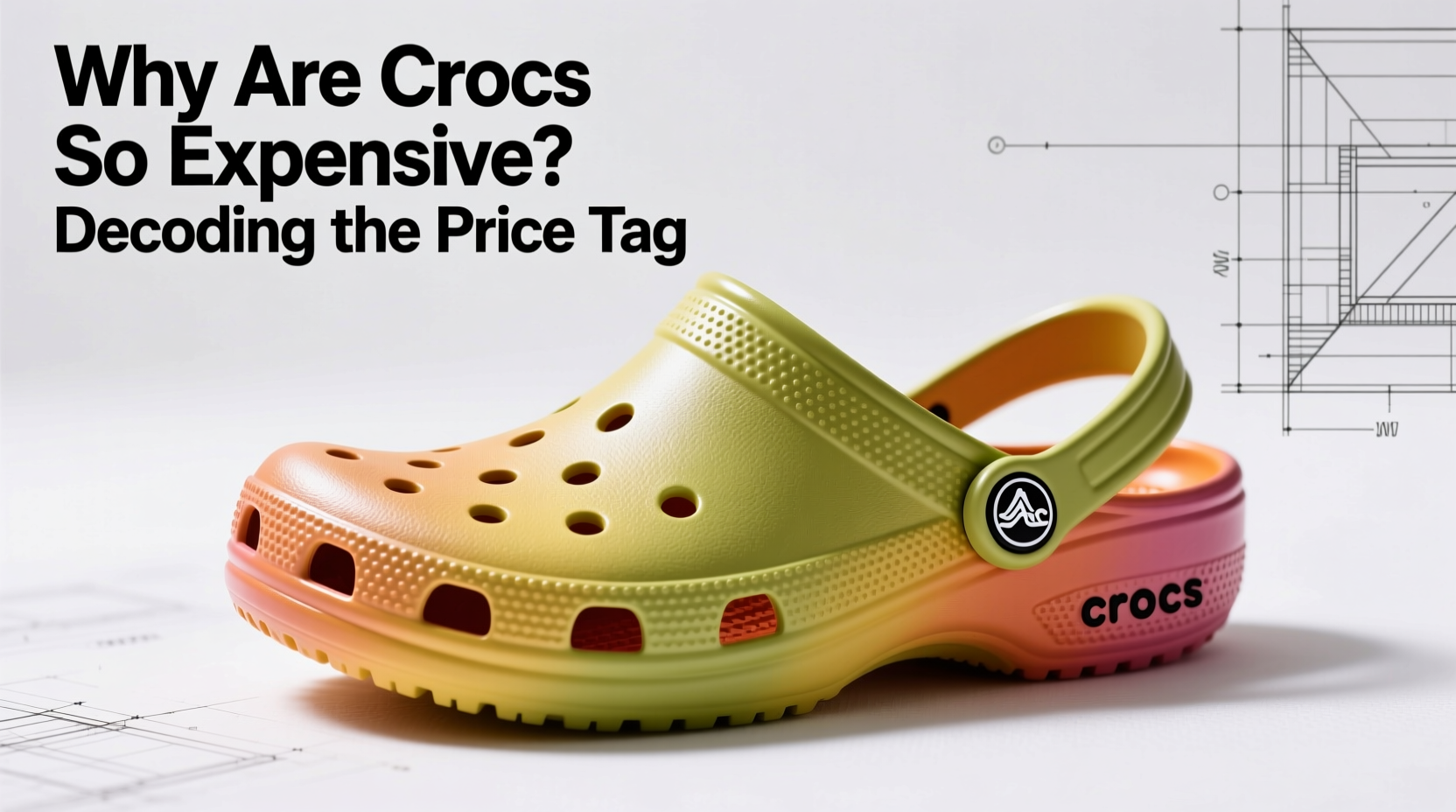
The foundation of every Croc is Croslite™, a closed-cell resin made from ethylene-vinyl acetate (EVA). This isn’t ordinary foam. Croslite™ is engineered in-house and protected by patents, giving Crocs exclusive rights to its formulation. Unlike generic EVA used in cheaper sandals, Croslite™ offers unique properties:
- Lightweight yet supportive cushioning
- Odor-resistant and non-porous (resists bacteria buildup)
- Waterproof and quick-drying
- Moldable to foot shape over time
This material development didn’t happen overnight. Crocs invested heavily in R&D during the early 2000s to perfect a foam that could be durable, comfortable, and mass-produced without cracking or degrading. According to industry analysts, the cost of developing and maintaining proprietary compounds like Croslite™ adds significantly to the per-unit production expense—costs passed on to consumers.
“Croslite™ isn’t just foam—it’s performance material disguised as casual wear. That’s where the value starts.” — Dr. Lena Park, Footwear Materials Scientist, University of Leeds
Manufacturing and Global Supply Chain Strategy
Crocs operates manufacturing facilities in Canada, Mexico, Italy, and Indonesia. While labor costs vary across regions, the company maintains tight control over quality and consistency. Unlike many footwear brands that outsource entirely to third-party factories, Crocs owns several of its plants, ensuring that Croslite™ molding processes meet strict standards.
Each pair undergoes a rotational molding process where liquid resin is heated and spun inside a mold. This method ensures even thickness and structural integrity but requires specialized machinery and energy input. The precision involved reduces waste but increases overhead compared to injection molding used for cheaper foam shoes.
In addition, Crocs has shifted toward regionalized production to reduce shipping times and carbon footprint—a move that improves sustainability but raises short-term costs. For example, supplying European markets from Italian factories avoids transatlantic freight charges but comes at higher local labor rates.
Design, Functionality, and Market Positioning
What sets Crocs apart isn’t just comfort—it’s purpose-built functionality. Originally designed for boaters needing non-slip, floatable deck shoes, Crocs evolved into footwear trusted by healthcare workers, chefs, gardeners, and parents. Their success in professional environments stems from practical features:
- Slip resistance rated for high-risk surfaces
- Easy to sanitize (can be washed with soap and water)
- Roomy toe box supports foot swelling common in medical settings
- Jibbitz™ customization appeals to personal expression
These functional advantages allow Crocs to position themselves not as fashion accessories but as performance footwear. Like investing in quality work boots or running shoes, buyers pay for safety, hygiene, and long-term foot health. Hospitals and food service businesses often subsidize Crocs for staff, reinforcing their image as essential gear rather than disposable fashion.
Comparison: Crocs vs. Generic Foam Sandals
| Feature | Crocs (Authentic) | Generic Foam Sandals |
|---|---|---|
| Material | Patented Croslite™ | Basic EVA or PVC |
| Durability | 1–3 years with daily use | 3–12 months |
| Odor Resistance | Naturally antimicrobial | Porous; traps sweat and odor |
| Slip Resistance | Tested for wet/oily surfaces | Limited traction |
| Price Range | $40–$90+ | $10–$25 |
The Power of Brand Evolution and Cultural Hype
Once mocked for their clunky appearance, Crocs underwent a strategic rebranding campaign starting in the late 2010s. Collaborations with high-profile designers like Balenciaga, Vetements, and Justin Bieber’s Drew House turned the clog into a fashion statement. Limited-edition drops created scarcity and urgency, driving resale prices into triple digits.
This pivot wasn’t accidental. Crocs acquired Canadian sneaker boutique Last Place in 2021, signaling a deeper commitment to streetwear culture. By aligning with influencers and niche communities, they transformed perception: wearing Crocs became an act of irony, rebellion, or confidence—not just convenience.
When a product becomes culturally symbolic, pricing reflects more than materials. It captures exclusivity, trend relevance, and identity. A $75 Classic Clog may cost $12 to produce, but its market value includes licensing fees, marketing campaigns, and emotional resonance.
Mini Case Study: The Balenciaga X Crocs Drop (2022)
In 2022, Crocs partnered with luxury fashion house Balenciaga to release a distorted version of the classic clog, complete with exaggerated platform and logo detailing. Priced at $550, the shoe sold out within hours. Resellers flipped them for over $1,000.
While few bought them for practicality, the collaboration elevated Crocs’ status from utilitarian brand to avant-garde player. Retailers reported a 34% increase in core product sales following the launch, proving that high-end partnerships can boost demand across all price tiers.
Is the Price Justified? A Practical Checklist
Before dismissing Crocs as overpriced, consider whether their benefits match your needs. Use this checklist to evaluate if they’re worth the investment:
- Do you stand for long periods? – Nurses, teachers, and retail workers benefit from shock absorption.
- Are you frequently in wet or messy environments? – Chefs, gardeners, and pet owners appreciate easy cleaning.
- Do you struggle with foot pain or circulation issues? – The roomy fit accommodates orthotics and swollen feet.
- Do you value low-maintenance footwear? – No laces, no insoles to replace, no special cleaners needed.
- Are you buying for children? – Kids grow fast, but Crocs last through seasons and hand-me-downs.
Frequently Asked Questions
Why are Crocs more expensive than other foam shoes?
Crocs use patented Croslite™ foam, which is more durable, odor-resistant, and ergonomically designed than standard EVA. Their manufacturing process, quality control, and global distribution also add to the cost.
Do Crocs really last longer than cheap sandals?
Yes. With regular use, authentic Crocs typically last 1–3 years, whereas generic foam sandals often crack, lose shape, or develop odors within a year. Users report fewer replacements over time, making Crocs more cost-effective in the long run.
Are expensive Crocs collaborations worth it?
For collectors or fashion enthusiasts, yes. Limited editions hold or increase value. But for everyday comfort, standard models offer identical functionality at a fraction of the price.
Final Thoughts: Value Beyond the Label
The price of Crocs reflects more than foam and plastic. It accounts for decades of material innovation, targeted design for demanding professions, and a bold cultural reinvention. While they may seem overpriced next to bargain-bin sandals, their longevity, hygiene benefits, and versatility often deliver superior long-term value.
Ultimately, paying more for Crocs isn’t about falling for a trend—it’s about choosing footwear engineered for real-life conditions. Whether you're navigating hospital floors, backyard messes, or urban sidewalks, the right pair can make a measurable difference in comfort and convenience.




 浙公网安备
33010002000092号
浙公网安备
33010002000092号 浙B2-20120091-4
Comments
No comments yet. Why don't you start the discussion?