
Itchiness and flaking are two of the most common complaints among men growing out their beards. Often dismissed as temporary discomforts of the \"awkward phase,\" these issues can persist if not addressed with the right grooming tools. While both beard oil and beard balm are marketed as solutions for a healthier beard, they serve different purposes—and their effectiveness in combating itch and dandruff varies significantly. Understanding the science behind each product, their ingredients, and how they interact with your skin and hair is essential to making an informed decision.
The Root Causes of Beard Itch and Flaking
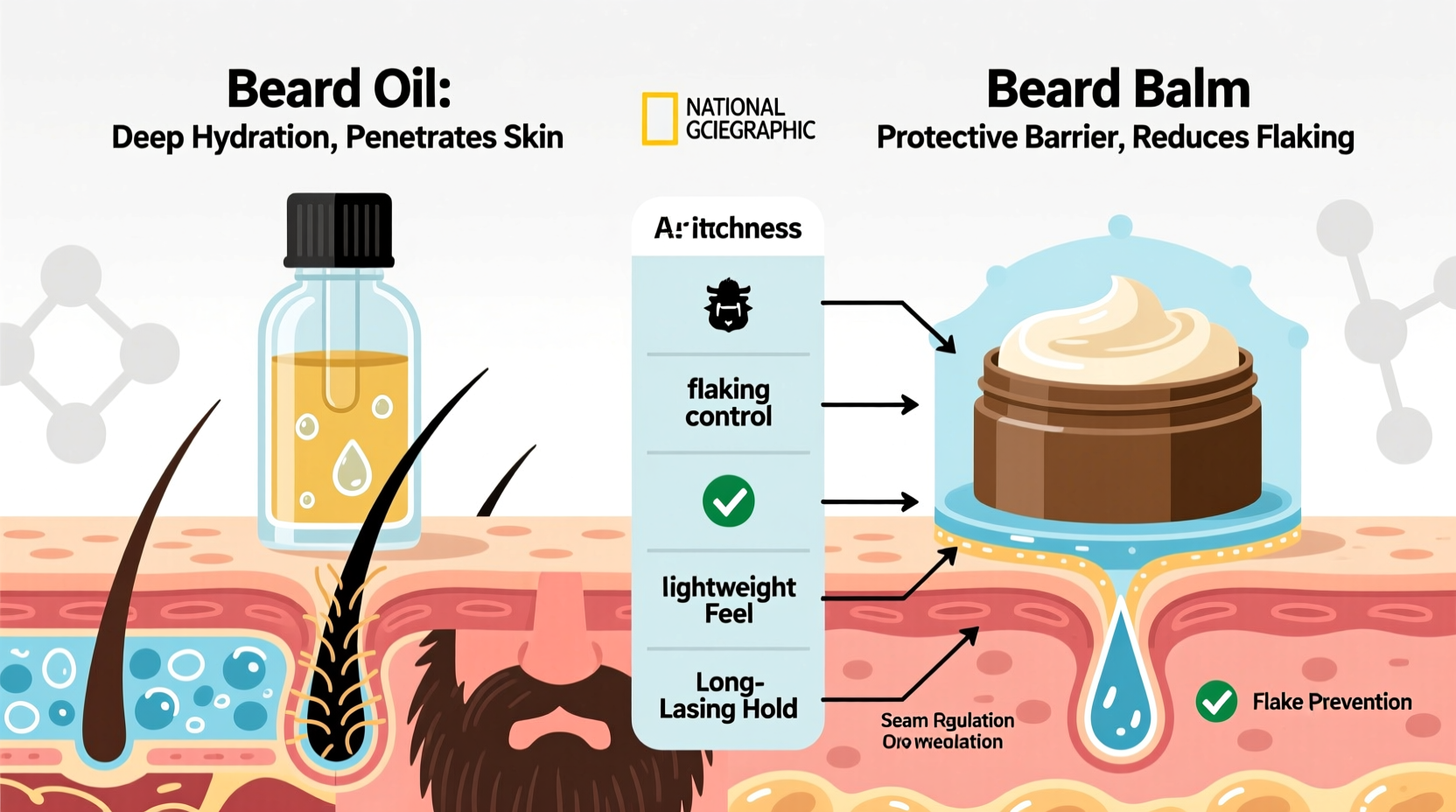
Before comparing products, it's crucial to understand what causes beard itch and flaking in the first place. The primary culprit isn’t the beard itself—it’s the skin underneath. As facial hair grows, it can trap dead skin cells, dirt, and excess sebum. This environment disrupts the skin’s natural moisture balance, leading to dryness, irritation, and flaking—commonly known as “beardruff.”
Additionally, new beard growth often pokes through the skin at sharp angles, especially during the early stages, causing micro-abrasions and triggering histamine responses that result in itching. Environmental factors like cold weather, low humidity, and harsh soaps also strip the skin of its natural oils, exacerbating the problem.
“Most men assume their beard is the issue, but 90% of beard discomfort stems from neglected skin health.” — Dr. Marcus Reed, Dermatologist specializing in male skincare
How Beard Oil Works: Hydration and Nourishment
Beard oil is primarily designed to moisturize both the facial hair and the skin beneath. It typically consists of a blend of carrier oils (such as jojoba, argan, or grapeseed) and essential oils for fragrance and additional therapeutic properties. These oils closely mimic the skin’s natural sebum, helping to restore hydration without clogging pores.
Jojoba oil, one of the most effective ingredients, penetrates deeply into the skin and hair shaft, softening coarse hairs and reducing friction that leads to irritation. Argan oil is rich in vitamin E and fatty acids, promoting skin repair and reducing inflammation. Because beard oil absorbs quickly and doesn’t leave a greasy residue when used correctly, it’s ideal for daily use—especially for men with sensitive or dry skin.
For acute cases of itchiness and flaking, beard oil provides fast relief by replenishing lost moisture. However, its effects are short-lived—typically lasting 6 to 8 hours—so consistent application is required throughout the day for sustained comfort.
How Beard Balm Works: Hold, Protection, and Moisture Retention
Beard balm, while also moisturizing, functions differently. It contains the same nourishing oils found in beard oil but adds beeswax and shea or cocoa butter. This combination gives it a thicker consistency and provides light hold for styling, making it popular among men with longer or unruly beards.
The key difference lies in its occlusive properties. Beeswax forms a protective barrier on the skin and hair, locking in moisture and shielding against environmental aggressors like wind and pollution. Shea butter has anti-inflammatory properties that soothe irritated skin and help heal micro-tears caused by ingrown hairs or razor burn.
Because of this sealing effect, beard balm is more effective than oil at preventing moisture loss over extended periods. However, it doesn’t penetrate as deeply or rapidly as oil. For men dealing with persistent dryness and flaking, balm works best when applied after oil—creating a two-step regimen that hydrates first, then seals.
Direct Comparison: Beard Oil vs Beard Balm for Itch and Flaking
| Feature | Beard Oil | Beard Balm |
|---|---|---|
| Primary Function | Hydrate skin and soften hair | Lock in moisture, provide hold |
| Best for Itch Relief? | Yes – fast absorption, immediate soothing | Moderate – slower action, better long-term prevention |
| Best for Flaking? | Effective initially | Better long-term control due to occlusion |
| Penetration Speed | Fast (within minutes) | Slow (30+ minutes for full absorption) |
| Residue | Minimal when properly dosed | Slight waxy feel, especially in humid climates |
| Ideal Beard Length | All lengths, especially short to medium | Medium to long beards |
| Daily Use Suitability | Excellent – lightweight | Good – may feel heavy if overused |
This comparison shows that beard oil excels in delivering rapid relief from itchiness by directly nourishing the skin. Beard balm, while less immediate, offers superior protection and moisture retention, making it more effective at preventing recurring flaking.
Real-World Example: Two Men, Two Approaches
Consider two individuals: James, who started growing his beard six weeks ago, and Daniel, who’s had a full beard for over a year.
James experiences intense itching and visible flakes around his jawline. He tries beard balm first, applying it every morning. While his beard looks neater, the itch persists. After switching to a daily routine of 4 drops of jojoba-based beard oil post-shower, he notices significant improvement within three days. The oil reaches his skin faster and calms the irritation effectively.
Daniel, on the other hand, rarely itches but struggles with dry patches during winter. His longer beard traps moisture poorly in cold air. He uses beard oil in the evening but applies a small amount of balm in the morning. This hybrid approach keeps his skin hydrated under the sealant layer, eliminating flaking even in harsh conditions.
The takeaway: beard oil is better for immediate symptom relief; beard balm is superior for ongoing protection and maintenance.
Step-by-Step Routine to Eliminate Itch and Flaking
For optimal results, combine both products strategically. Follow this daily routine:
- Cleanse Gently: Wash your face and beard with a sulfate-free facial cleanser or beard-specific wash. Avoid regular soap, which strips natural oils.
- Pat Dry: Use a clean towel to gently pat your beard and skin—never rub, as this irritates follicles.
- Apply Beard Oil: Dispense 3–5 drops (depending on beard length) into palms, rub hands together, and massage thoroughly into the skin beneath the beard. Work upward from the roots to ensure coverage.
- Wait 2–3 Minutes: Allow the oil to absorb before applying balm.
- Apply Beard Balm: Scoop a pea-sized amount, warm between fingers, and distribute evenly through the mid-lengths and ends. Style as needed.
- Comb Daily: Use a wooden or boar bristle comb to evenly distribute oils and remove loose flakes.
- Nightly Check: If flaking returns, consider adding a weekly exfoliating scrub to remove dead skin buildup.
Checklist: Choosing the Right Product for Your Needs
- ✅ Are you in the early stages of beard growth? → Prioritize beard oil.
- ✅ Is your skin sensitive or prone to redness? → Look for fragrance-free oil with jojoba or squalane.
- ✅ Do you have a long or thick beard? → Use balm for manageability and moisture retention.
- ✅ Does flaking return despite daily care? → Try a combination routine: oil at night, balm in the morning.
- ✅ Living in a dry or cold climate? → Balm’s occlusive properties offer better defense.
- ✅ Experiencing sudden itch after using a new product? → Check for allergens like synthetic fragrances or nut oils.
Frequently Asked Questions
Can I use beard oil and balm together?
Yes—and doing so is often the most effective strategy. Apply beard oil first to hydrate the skin, then follow with balm to lock in moisture and style the beard. This layered approach maximizes the benefits of both products.
Why does my beard still itch after using balm?
Balm focuses on sealing moisture rather than delivering it. If your skin is already dry, applying balm alone is like putting a lid on an empty jar—it won’t solve the underlying dehydration. Always start with oil or a hydrating serum if itchiness is severe.
How long until I see results?
With consistent use, most men notice reduced itchiness within 3 to 5 days. Flaking may take 7 to 10 days to fully resolve, especially if dead skin buildup is significant. Pair product use with gentle exfoliation once a week for faster results.
Expert Insight: What Dermatologists Recommend
“For men struggling with beard dermatitis, we recommend starting with a simple oil-based regimen. Ingredients like jojoba and sunflower oil have proven anti-inflammatory effects and improve skin barrier function. Balm can be added later for protection, but hydration comes first.” — Dr. Lena Torres, Board-Certified Dermatologist
This aligns with clinical understanding of skin health: the stratum corneum (outermost skin layer) must be adequately hydrated before any occlusive agent can be effective. Skipping the hydration step renders balms less useful for treating active irritation.
Final Verdict: Which One Actually Stops Itchiness and Flaking?
If forced to choose only one product, **beard oil is the clear winner for stopping itchiness and flaking**—especially in the short term. Its ability to deliver fast-acting hydration directly to the skin makes it indispensable during the critical early weeks of beard growth. However, for long-term skin health and prevention of recurrence, combining beard oil with balm offers the most comprehensive solution.
Think of beard oil as your daily vitamin—it nourishes from within. Think of beard balm as sunscreen—it protects and preserves. Neither replaces proper hygiene, but both enhance your skin’s resilience when used correctly.




 浙公网安备
33010002000092号
浙公网安备
33010002000092号 浙B2-20120091-4
Comments
No comments yet. Why don't you start the discussion?