
Gundam is more than just a franchise—it’s a cultural phenomenon that has spanned over four decades, encompassing more than 50 anime series, movies, manga, novels, and thousands of model kits. For newcomers, the sheer volume can be overwhelming. Where do you begin? Should you follow chronological order? Watch in release order? Or jump straight into the most popular entries?
The truth is, there's no single correct path. The Gundam universe is structured like a multiverse: most series exist in separate continuities, meaning you don’t need to watch them all—or even in sequence—to enjoy any one of them. This guide cuts through the noise, offering a clear, practical roadmap for beginners who want to dive into the world of mobile suits, Newtypes, and war-torn space colonies—without getting lost in the timeline.
Understanding the Gundam Universe Structure
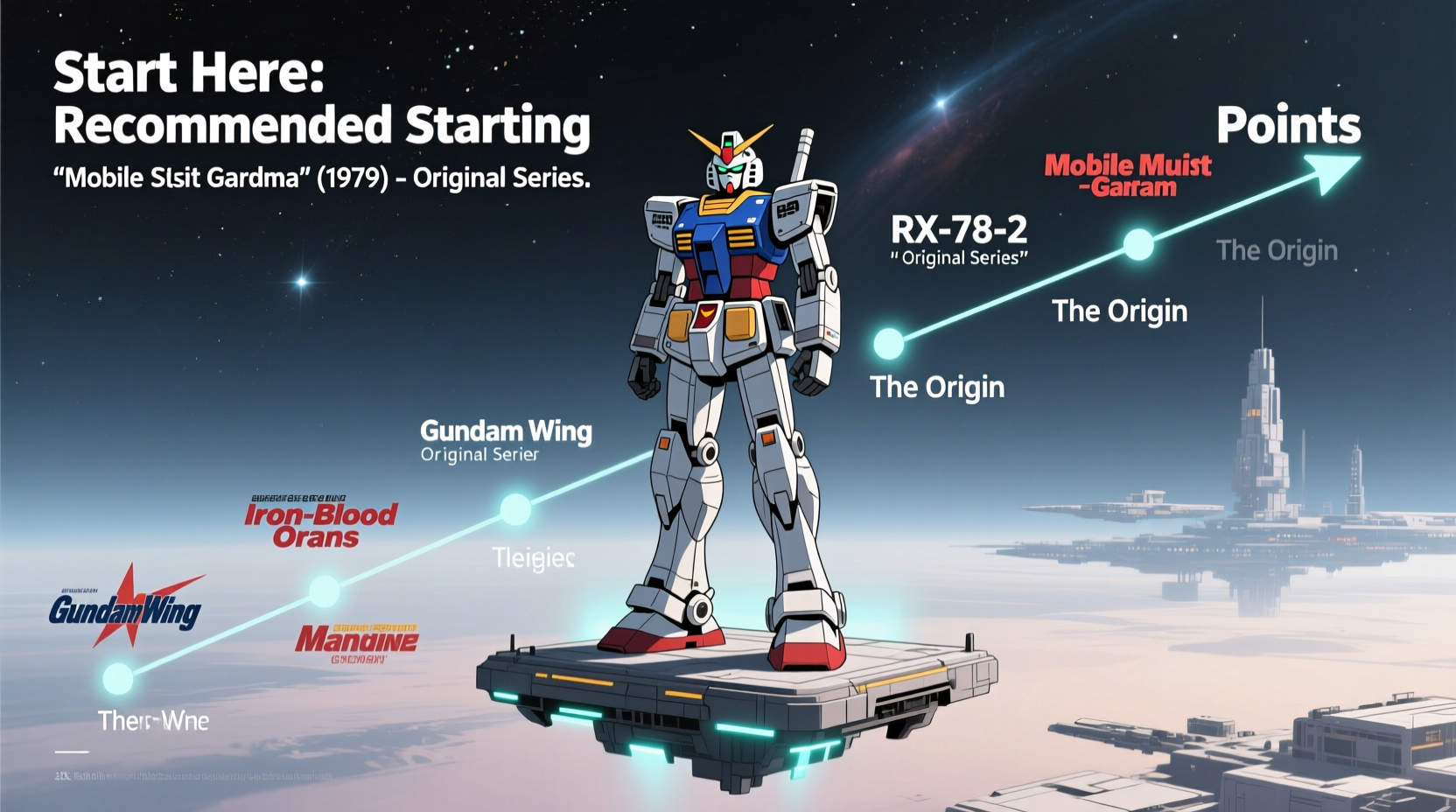
Unlike franchises that follow a linear narrative (like Star Wars or Marvel), Gundam operates on an anthology model. Each major series takes place in its own alternate universe with unique timelines, political systems, and technological rules. The only consistent elements are thematic: war, identity, youth caught in conflict, and the iconic humanoid mecha known as \"mobile suits.\"
The primary universes are labeled by their calendar systems:
- Universal Century (UC): The original and most expansive timeline, beginning with the 1979 series Mobile Suit Gundam.
- After Colony (AC): Home to the wildly popular Mobile Suit Gundam Wing.
- Cosmic Era (CE): Features Gundam Seed and its sequel Destiny.
- Anno Domini (AD): The setting for Gundam 00, featuring orbital elevators and energy wars.
- Advanced Generation (AG): A lesser-known but accessible entry with Gundam AGE.
- Post Disaster (PD): The futuristic world of Gundam Iron-Blooded Orphans.
Because these timelines don’t intersect, you can explore any of them independently. Think of it like picking a novel from a bookshelf—each tells its own self-contained story.
Best Entry Points for Beginners
Starting with the original 1979 Mobile Suit Gundam might seem logical, but its animation, pacing, and storytelling reflect its time. For modern viewers, it can feel slow or dated. Instead, consider these beginner-friendly gateways:
1. Mobile Suit Gundam: The 08th MS Team (UC Timeline)
A grounded, war-focused side story set during the One Year War. It emphasizes realism, character development, and battlefield tension over flashy battles. Its 11-episode OVA format makes it digestible, and it requires zero prior knowledge.
2. Mobile Suit Gundam Wing (AC Timeline)
One of the most internationally successful entries, thanks to its 1990s broadcast on Toonami. It features five charismatic pilots, sleek designs, and Shakespearean drama. While the middle drags slightly, the opening and finale are iconic. Perfect for fans of shonen-style narratives.
3. Mobile Suit Gundam SEED (CE Timeline)
A dramatic, emotional series blending romance, genetic engineering, and interstellar war. With updated animation and a strong focus on teenage protagonists, it’s highly accessible. Its popularity led to multiple sequels and remastered versions.
4. Mobile Suit Gundam 00 (AD Timeline)
Set in the near future, this series explores global politics, terrorism, and renewable energy through the lens of armed peacekeepers. Its animation quality is high, and the dual-season structure provides a complete arc. Ideal for viewers who enjoy geopolitical themes.
5. Mobile Suit Gundam: Iron-Blooded Orphans (PD Timeline)
A darker, grittier take on child soldiers and corporate exploitation. Known for its brutal realism and emotional weight, this 2015 series resonated with Western audiences. The second season divides fans, but the first is widely praised.
“Gundam isn’t about robots—it’s about people shaped by war. Start with the story that speaks to you, not the one with the longest lore.” — Yuki Moriyama, Anime Historian & Mecha Critic
Step-by-Step Guide to Starting Your Gundam Journey
Follow this six-step process to build confidence and avoid overwhelm:
- Choose your preferred tone: Do you want gritty realism (Iron-Blooded Orphans), romantic drama (SEED), or idealistic heroism (Wing)? Match the mood to your tastes.
- Pick one starting series: Based on your preference, select one of the five recommended above.
- Watch it in full: Avoid jumping between series. Commit to finishing your chosen show before branching out.
- Explore supplementary material (optional): After finishing, check out related films or OVAs if you’re invested. For example, Gundam Wing: Endless Waltz concludes the AC timeline.
- Dive into Universal Century (if ready): Once comfortable, try UC entries like Char’s Counterattack or Mobile Suit Gundam: Hathaway, which assume some familiarity.
- Build outward: Sample other timelines based on what you enjoyed—more political? Try 00. More emotional? Go for SEED Destiny.
Universal Century vs. Alternate Universes: What’s the Difference?
The Universal Century (UC) is both the origin point and the most complex timeline. It includes the original series, its sequels, prequels, and spin-offs, all interconnected. Meanwhile, alternate universes (like AC or CE) are standalone worlds with no continuity obligations.
Here’s a breakdown to help you decide where to invest your time:
| Timeline | Best For | Entry Difficulty | Recommended Starting Point |
|---|---|---|---|
| Universal Century (UC) | Lore enthusiasts, completists, model builders | High | Mobile Suit Gundam: The 08th MS Team |
| After Colony (AC) | Fans of 90s anime, dramatic dialogue | Medium | Mobile Suit Gundam Wing |
| Cosmic Era (CE) | Emotional storytelling, love triangles | Medium | Mobile Suit Gundam SEED |
| Anno Domini (AD) | Modern animation, political intrigue | Low-Medium | Mobile Suit Gundam 00 |
| Post Disaster (PD) | Realism, moral ambiguity, action | Low-Medium | Iron-Blooded Orphans |
Note: Entry difficulty reflects narrative complexity, not quality. UC is harder to enter due to its dense lore and older production values, not because it’s “better” or “worse.”
Mini Case Study: How Sarah Found Her Way Into Gundam
Sarah, a 28-year-old graphic designer, had heard about Gundam for years but felt intimidated by the number of series. She tried watching the original 1979 show but found the animation and pacing difficult to engage with. After reading a forum post comparing Gundam Wing to a space opera with tragic heroes, she gave it a shot.
She started with the first episode and was immediately drawn to the visual design of the Gundams and the brooding protagonist, Heero Yuy. Though she skipped a few mid-season episodes due to slow pacing, she returned for the final arc and finished the series. Inspired, she watched Endless Waltz and even bought a model kit of the Wing Zero.
“I didn’t need to know UC lore or Char’s backstory,” she said. “I just needed a story that grabbed me. Wing did that.”
Today, Sarah is exploring Iron-Blooded Orphans and participates in an online Gundam fan group. Her journey shows that personal connection matters more than chronological order.
Essential Tips for New Fans
Checklist: Your First Month as a Gundam Fan
- ✅ Choose one beginner-friendly series from the list above
- ✅ Watch at least 5 episodes to get past the setup phase
- ✅ Note characters, factions, and themes that stand out
- ✅ Research the ending if you don’t finish—know the conclusion
- ✅ Join a subreddit or Discord server to discuss with others
- ✅ Decide whether to continue with sequels or switch timelines
Frequently Asked Questions
Do I need to watch Gundam in release order?
No. Most series are independent. Watching in release order only matters if you're diving deep into Universal Century lore. For casual viewing, prioritize accessibility over chronology.
Is the original 1979 series worth watching today?
Yes, but with caveats. It’s historically significant and introduces core themes, but its pacing and animation may not appeal to modern audiences. Consider starting with the Mobile Suit Gundam: The Movie Trilogy, which condenses the 43-episode series into three cinematic films with updated visuals.
Are there any non-military Gundam series?
Almost all Gundam series involve war in some form, as conflict is central to the franchise’s identity. However, some entries like Gundam Build Fighters focus on model battles as sport rather than warfare. These are lighter in tone and great for younger viewers or those seeking fun over drama.
Conclusion: Start Anywhere, But Start Now
The Gundam universe doesn’t demand perfection. It invites exploration. You don’t need to master every timeline or memorize every mobile suit designation. You just need curiosity and a willingness to engage with stories about humanity’s struggles—set against the vast silence of space.
Whether you’re drawn to the tragic romance of SEED, the ideological clashes of 00, or the raw intensity of Iron-Blooded Orphans, there’s a place for you. The best starting point isn’t the first series ever made—it’s the one that speaks to you right now.




 浙公网安备
33010002000092号
浙公网安备
33010002000092号 浙B2-20120091-4
Comments
No comments yet. Why don't you start the discussion?