
Cats are masters of subtlety. Unlike dogs, they rarely bark or whine when distressed. Instead, they communicate stress through changes in behavior, routine, and body language. For many owners, these signals go unnoticed until the issue escalates into health problems or destructive habits. Recognizing early signs of feline stress is essential—not only for your cat’s comfort but also for maintaining harmony in your home. More importantly, creating a stable, calming environment can prevent stress from taking root in the first place.
Stress in cats isn't just about temporary discomfort. Chronic stress weakens the immune system, increases susceptibility to illness like feline interstitial cystitis, and can lead to long-term behavioral issues such as aggression or inappropriate elimination. The good news? Most stress-related behaviors are reversible with timely intervention and environmental adjustments. This guide will help you identify key behavioral indicators of stress and provide practical, science-backed strategies to foster a peaceful living space for your feline companion.
Common Behavioral Signs Your Cat Is Stressed
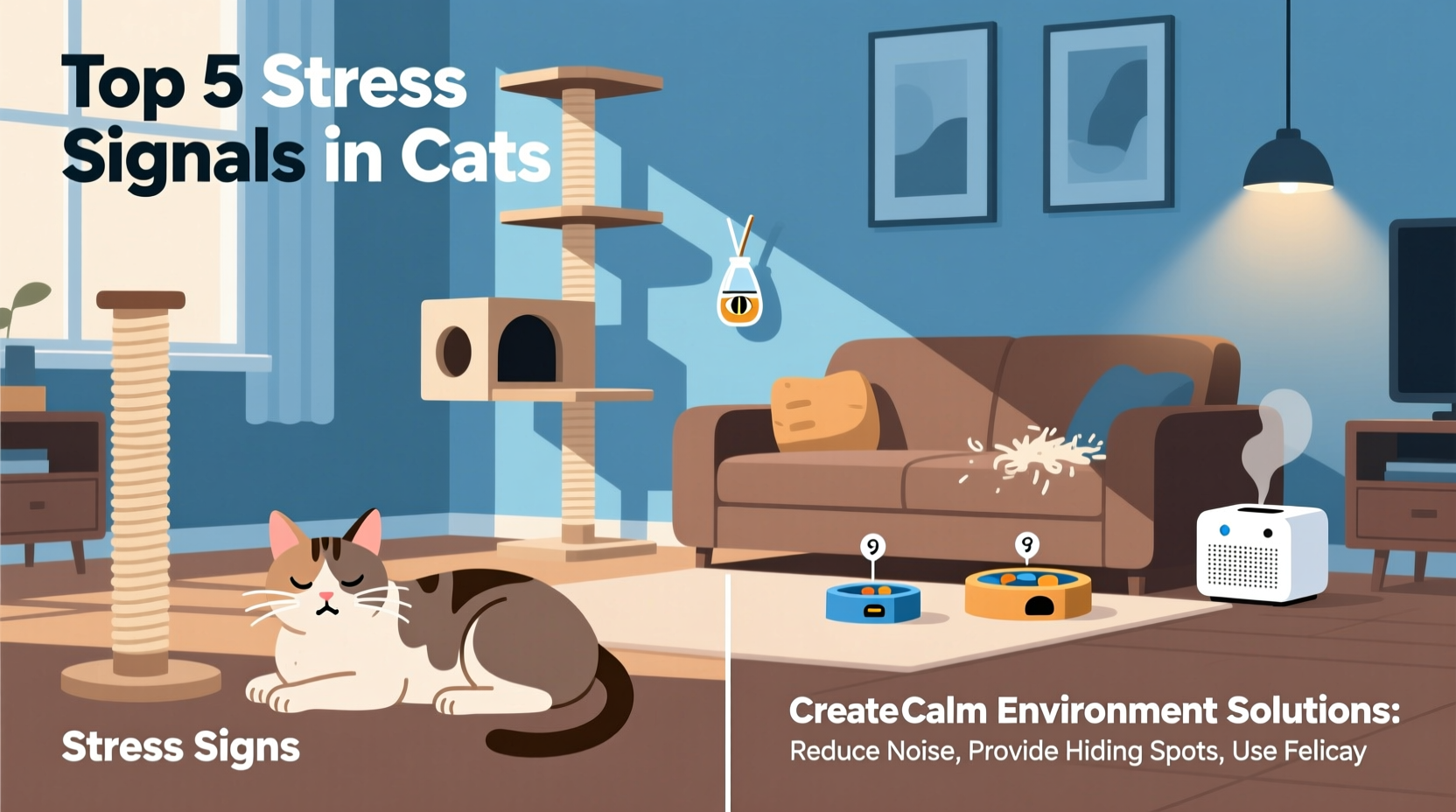
Cats express distress differently than humans or even other pets. They don’t vocalize their anxiety openly but instead exhibit physical and behavioral shifts that require careful observation. Some signs are overt; others are so subtle they’re easily mistaken for normal quirks. Being attuned to your cat’s baseline behavior is the first step in detecting deviations caused by stress.
- Excessive grooming or barbering: Over-grooming, especially to the point of hair loss or skin irritation, is a displacement behavior often triggered by anxiety.
- Withdrawal or hiding: A sudden preference for secluded areas—under beds, in closets, or behind furniture—can indicate emotional overwhelm.
- Aggression or irritability: Uncharacteristic swatting, hissing, or biting, particularly during handling, may signal heightened stress levels.
- Changes in litter box habits: Urinating or defecating outside the box is one of the most common stress responses, even in previously well-trained cats.
- Loss of appetite or overeating: Some cats eat less when anxious; others turn to food for comfort.
- Vocalization changes: Increased meowing, yowling at night, or complete silence when normally communicative can both be red flags.
- Tail flicking, flattened ears, or dilated pupils: These physical cues, combined with context, help interpret emotional state.
Understanding Feline Stress Triggers
While some stressors are obvious—like moving homes or introducing a new pet—others are less visible. Cats are highly sensitive to changes in routine, scent, sound, and territory. What seems insignificant to us can be deeply unsettling for them.
Common triggers include:
- New people or visitors (especially loud or unfamiliar children)
- Pet introductions or conflicts with other household animals
- Loud noises (construction, fireworks, vacuum cleaners)
- Changes in schedule (owner working late, altered feeding times)
- Scent contamination (new cleaning products, perfumes, or laundry detergents)
- Lack of control over environment (no escape routes, limited high perches)
- Veterinary visits or medical procedures
“Cats thrive on predictability. Even positive changes—like a new toy or rearranged furniture—can trigger stress if introduced too abruptly.” — Dr. Sarah Ellis, Certified Feline Behavior Expert, International Cat Care
The key is not to eliminate all change—which is impossible—but to manage transitions thoughtfully and provide consistent anchors of safety and familiarity.
Step-by-Step Guide to Creating a Calm Environment
Creating a low-stress environment doesn’t require expensive renovations or professional help. It begins with understanding your cat’s natural instincts and designing a space that supports them. Follow this five-step process to build a sanctuary your cat can rely on.
- Designate Safe Zones: Identify quiet areas where your cat can retreat without disturbance. Equip each zone with a bed, familiar blanket, and access to a window. Avoid placing these spaces in high-traffic zones.
- Provide Vertical Space: Install shelves, cat trees, or window perches. Elevation gives cats a sense of security and control over their surroundings.
- Maintain Litter Box Harmony: Follow the “n+1” rule—one box per cat, plus one extra. Place boxes in quiet, accessible locations away from food and appliances. Scoop daily and clean monthly.
- Establish Predictable Routines: Feed, play, and interact at consistent times. Cats find comfort in repetition, which reduces uncertainty.
- Incorporate Calming Sensory Inputs: Use pheromone diffusers (like Feliway), soft background music designed for cats, and natural light cycles to promote relaxation.
Do’s and Don’ts of Managing Cat Stress
| Do | Don’t |
|---|---|
| Approach your cat slowly and allow them to initiate contact | Force interaction or pick up a reluctant cat |
| Use positive reinforcement with treats or praise | Punish unwanted behaviors—they increase fear and confusion |
| Introduce changes gradually (e.g., new food, furniture, pets) | Rearrange rooms or bring in new animals suddenly |
| Respect your cat’s need for alone time | Interrupt sleep or hideouts unnecessarily |
| Monitor multi-cat dynamics and ensure equal resource access | Assume all cats get along just because they tolerate each other |
Real Example: Helping Luna Adjust After a Move
Luna, a 3-year-old domestic shorthair, began urinating on her owner’s bed two weeks after relocating to a new apartment. Her owner, Maria, was baffled—Luna had always used her litter box reliably. There were no medical issues found during a vet visit, ruling out urinary tract infections.
A feline behavior consultant assessed the home setup and discovered several stress factors: the litter box was tucked in a noisy laundry room next to a constantly running HVAC unit, there were no elevated resting spots, and Luna had no private space away from the couple’s frequent guests.
The solution involved three steps: relocating one litter box to a quiet bedroom corner, installing a wall-mounted cat shelf near a sunlit window, and setting up a cozy “safe room” with Luna’s favorite bedding and a Feliway diffuser. Within ten days, the inappropriate urination stopped. Two weeks later, Luna began lounging on the windowsill and greeting visitors from a nearby perch—calm, confident, and clearly more at ease.
This case illustrates how environmental redesign—not punishment or medication—resolved a stress-induced behavior simply by restoring a sense of safety and control.
Checklist: Building a Stress-Free Home for Your Cat
Use this checklist to evaluate and improve your cat’s environment:
- ✅ At least one quiet retreat space per cat (bed, carrier, covered hideout)
- ✅ Multiple vertical spaces (shelves, cat trees, window seats)
- ✅ Litter boxes following the n+1 rule, placed in low-traffic areas
- ✅ Feeding stations separate from litter and noisy appliances
- ✅ Daily interactive play sessions (10–15 minutes with wand toys)
- ✅ Consistent daily routines for feeding, play, and interaction
- ✅ Pheromone diffusers in shared or high-anxiety zones (if needed)
- ✅ No forced socialization—allow gradual introductions to people or pets
- ✅ Regular monitoring of grooming, appetite, and elimination habits
- ✅ Access to natural light and visual stimulation (bird feeders outside windows)
Frequently Asked Questions
How long does it take for a cat to recover from stress?
Recovery time varies depending on the cause and duration of stress. With proper environmental support, most cats show improvement within 7–14 days. Chronic stress may take several weeks or months to resolve, especially if medical or behavioral therapy is required.
Can I use human calming techniques like music or massage on my cat?
Some classical or species-specific music (such as “Through a Cat’s Ear”) can reduce anxiety. Gentle petting in known preferred zones (like under the chin) may help, but avoid forcing touch. Each cat has unique preferences—observe what brings comfort rather than assuming.
Should I get another cat to keep my current cat company?
Not necessarily. Cats are not inherently social like dogs. Adding another cat often increases stress due to territorial competition. If considering a companion, introduce them slowly over months and ensure ample resources for both. Many cats prefer living solo with attentive human interaction.
Conclusion: Prioritize Emotional Wellness for a Healthier Cat
Stress in cats is often invisible until it manifests in disruptive or harmful ways. But with mindful observation and intentional environmental design, you can prevent much of it before it starts. Your cat doesn’t need luxury—it needs stability, safety, and respect for its instincts. By recognizing subtle behavioral cues and responding with empathy, you transform your home into a true refuge.
Start today: assess one area of your cat’s environment, make a small improvement, and observe the response. Whether it’s adding a perch, adjusting litter placement, or simply allowing more downtime, every action builds toward greater peace. A calm cat is not only happier but healthier, more affectionate, and more resilient in the face of life’s inevitable changes.




 浙公网安备
33010002000092号
浙公网安备
33010002000092号 浙B2-20120091-4
Comments
No comments yet. Why don't you start the discussion?