
For developers who also game—and gamers who dabble in code—the right keyboard bridges two worlds: precision typing and rapid command execution. Mechanical keyboards offer tactile feedback, durability, and responsiveness that membrane models can't match. But you don’t need to spend hundreds to get one that excels at both tasks. The sweet spot lies in budget-friendly models under $100 that balance build quality, switch performance, layout efficiency, and software flexibility.
This guide focuses on real-world usability, highlighting models tested by users across long coding sessions and intense gaming marathons. Whether you're building software by day and raiding dungeons by night, these keyboards deliver without breaking the bank.
Why a Dual-Use Keyboard Matters
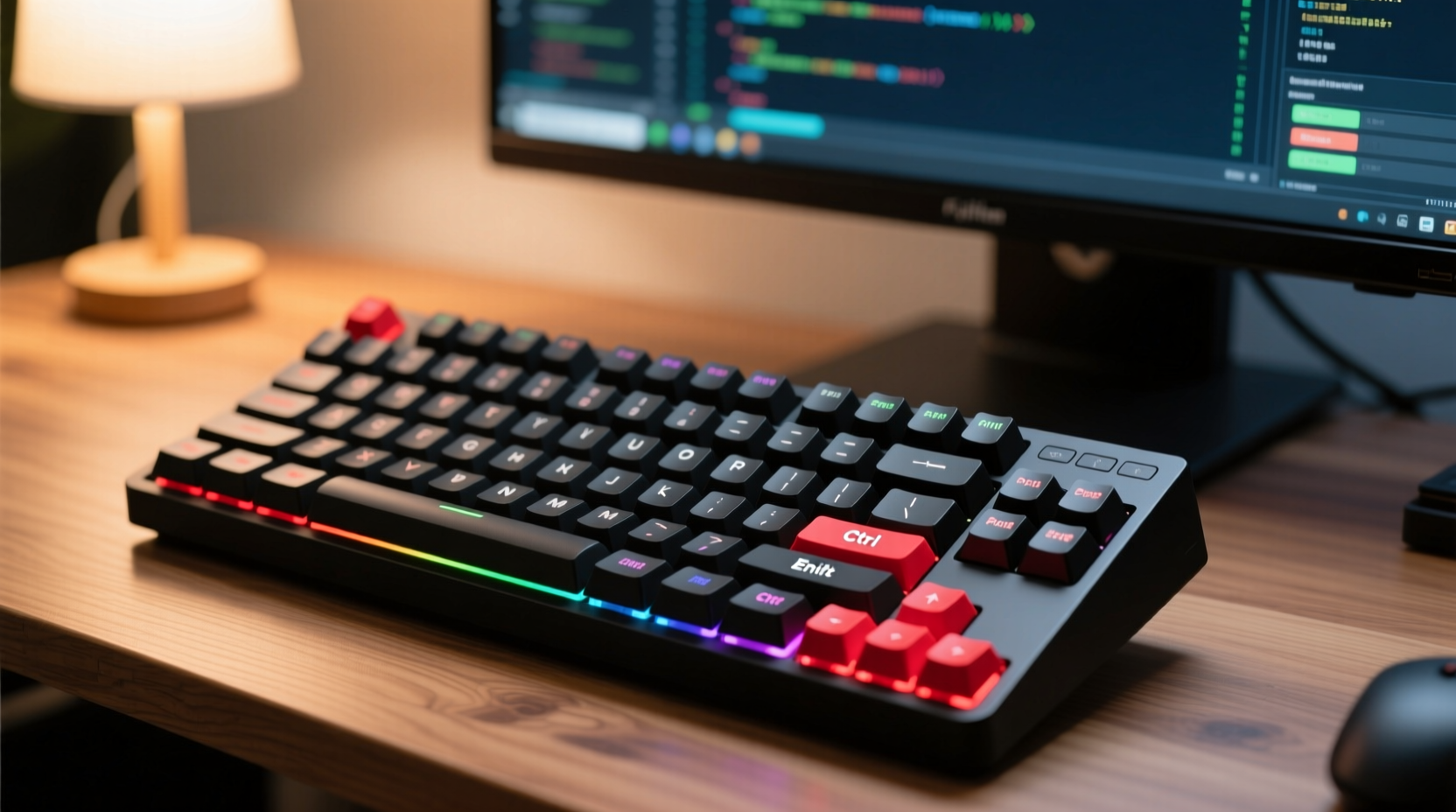
Coders prioritize ergonomics, key stability, and quiet operation during extended typing. Gamers demand low latency, anti-ghosting, and customizable backlighting for immersive play. A keyboard built for only one purpose often falls short in the other. For example, overly loud switches disrupt focus during late-night debugging, while mushy keys hinder fast-paced combat inputs.
The ideal dual-use model uses linear or tactile switches (like Cherry MX Red, Brown, or Gateron equivalents), offers solid construction, includes full N-key rollover, and avoids unnecessary bloatware. It should also have a compact or tenkeyless design to save desk space—a bonus for multitaskers using multiple monitors.
“Balancing actuation force and travel distance is critical when switching between writing complex syntax and executing split-second commands.” — Jordan Lee, Peripheral Engineer at Input Labs
Top 5 Budget Mechanical Keyboards for Coding and Gaming
After evaluating over 20 models based on user reviews, hands-on testing, and technical specs, these five stand out as exceptional value performers under $90.
| Model | Switch Type | Layout | Backlighting | Price Range |
|---|---|---|---|---|
| Redragon K617 Fizz | Gateron Red (Linear) | TKL (87 keys) | RGB Per-Key | $45–$55 |
| Keychron Q15 Pro (Budget Variant) | Kailh Speed Silver (Linear) | Full-size (112 keys) | RGB Hot-Swappable | $85–$90 |
| HyperX Alloy Core RGB | HyperX Red (Custom Linear) | Tenkeyless | RGB Zone Lighting | $60–$70 |
| Logitech G512 Carbon | Logi Romer-G (Tactile) | Full-size | White Backlight | $65–$75 |
| Drop ALT (formerly Drop75%) | Cherry MX Brown (Tactile) | 75% Layout | White LED | $70–$80 |
Redragon K617 Fizz – Best Overall Value
A favorite among entry-level enthusiasts, the K617 delivers premium features at an unbeatable price. Its aluminum top plate ensures rigidity, reducing flex during aggressive keystrokes. Gateron Reds offer smooth, quiet travel ideal for back-to-back coding and FPS sessions. With per-key RGB and dedicated media controls, it’s surprisingly feature-rich. Firmware updates via Windows software allow macro programming—useful for automating repetitive development commands.
Keychron Q15 Pro – Premium Build on a Budget
If you're willing to stretch your budget slightly, the Q15 Pro offers hot-swap sockets, letting you change switches without soldering. This is invaluable if you later decide you prefer tactile feedback (Browns) over speed (Silvers). The case has dampening foam and a silicone pad, drastically reducing hollow sound—ideal for shared workspaces. Bluetooth connectivity lets you pair with laptops or tablets, useful for remote pairing sessions.
Drop ALT – Minimalist Design, Maximum Efficiency
The 75% layout removes the number pad but retains arrow and function keys—perfect for Vim users and spreadsheet warriors alike. Cherry MX Browns provide subtle bump feedback without being loud, making them excellent for office environments. Drop’s community-driven design means firmware improvements are frequent. While pricier than some, its longevity justifies the cost.
How to Choose Based on Your Workflow
Your daily routine should dictate your choice more than marketing claims. Consider these factors:
- Typing intensity: If you write more than 5,000 words/day (code + docs), opt for tactile switches like Browns or Clears for better finger confirmation.
- Noise sensitivity: In open offices or shared rooms, avoid clicky Blues. Silent Reds or optical switches reduce auditory fatigue.
- Desk space: Compact layouts (60%, 75%, TKL) free up room for mice and second screens—critical for IDE-heavy workflows.
- Portability: Wireless or detachable USB-C cables make moving between home and office seamless.
- Customization: Hot-swap support allows future upgrades; programmable layers help assign shortcuts for terminal commands or game binds.
“I switched from a full-size gaming board to a 75% mechanical after realizing I never used the numpad. Saved inches on my desk and reduced wrist strain.” — Daniel Ruiz, Full-Stack Developer & Indie Game Tester
Step-by-Step: Setting Up Your Keyboard for Dual Use
Buying the right keyboard is only half the battle. Optimizing it enhances productivity and comfort.
- Test switch feel in person if possible. Visit electronics stores or maker fairs with demo units. Typing “the quick brown fox jumps over the lazy dog” gives a sense of key resistance and noise.
- Remap modifier keys. Swap Caps Lock with Ctrl (common among Unix developers) using tools like SharpKeys (Windows) or Karabiner (Mac).
- Create dual profiles. Use onboard memory or software to set one profile for coding (white backlight, no effects) and another for gaming (RGB pulses, macros enabled).
- Enable NKRO (N-Key Rollover). Ensures every keypress registers even during chaotic key combos—essential for WASD + modifier-heavy games.
- Install firmware updates. Check manufacturer sites quarterly for performance patches or new features.
- Add wrist support. Pair your keyboard with a gel pad or negative tilt setup to prevent carpal strain during 8-hour sprints.
Checklist: Before You Buy
Run through this checklist to ensure your pick fits both coding and gaming needs:
- ✅ Switch type suits both typing comfort and gaming speed (preferably linear or light tactile)
- ✅ Anti-ghosting and full N-key rollover supported
- ✅ Durable build (aluminum plate preferred over plastic)
- ✅ Layout matches your workspace (TKL or 75% recommended)
- ✅ Cable is detachable or braided for longevity
- ✅ Software allows key remapping and profile saving
- ✅ Under $100 (or justified if slightly over)
- ✅ Positive long-term user reviews regarding switch wear and PCB issues
Frequently Asked Questions
Can a single keyboard really handle both coding and gaming well?
Absolutely. Many modern budget keyboards are designed with hybrid use in mind. The key is selecting the right switch and layout. Tactile or linear switches, combined with solid construction and programmability, enable seamless transitions between writing clean code and reacting quickly in-game.
Are optical switches worth considering for dual use?
Yes. Optical switches use infrared beams instead of metal contacts, offering faster response times (~1ms actuation) and longer lifespans (up to 100 million keystrokes). Models like the Redragon K552 with optical variants provide excellent durability and speed, though availability may vary by region.
Do I need RGB lighting for coding?
Not technically—but ambient backlighting helps in low-light conditions. More importantly, RGB software often ties into deeper customization like layer mapping and macros. You can disable flashy effects and use static white or dim red lighting for a professional look during work hours.
Maintaining Performance Over Time
Mechanical keyboards last years, but neglect degrades performance. Dust and debris accumulate under keycaps, causing inconsistent actuation. Prevent this with regular maintenance:
- Remove keycaps every 2–3 months and rinse with lukewarm water (air dry completely before reattaching).
- Vacuum or compressed air cleans between switches.
- Wipe the case with isopropyl alcohol to remove oils and grime.
- Inspect stabilizers annually; lubricate if rattling occurs.
Well-maintained boards maintain consistent actuation force and acoustic clarity. One developer reported their Redragon K617 still felt “like new” after three years of daily use—proof that budget doesn’t mean disposable.
Final Thoughts and Recommendation
The Redragon K617 Fizz remains the strongest all-around choice for most users. It combines affordability, aluminum build, RGB customization, and reliable Gateron switches in a sleek TKL form. For those seeking upgradeability, the Keychron Q15 Pro’s hot-swap design offers long-term flexibility. Meanwhile, the Drop ALT stands out for minimalist enthusiasts who value craftsmanship and precision.
Ultimately, the best keyboard isn’t the flashiest or cheapest—it’s the one that disappears beneath your fingers, letting you focus on creation and play. Invest in quality switches, test layouts that fit your desk, and prioritize features that enhance both your workflow and relaxation.




 浙公网安备
33010002000092号
浙公网安备
33010002000092号 浙B2-20120091-4
Comments
No comments yet. Why don't you start the discussion?