
For dog owners with strong, energetic, or anxious pets, a standard leash often doesn’t stand a chance. Aggressive pulling, sudden lunges, and persistent chewing can destroy even high-end leashes in days. When your dog is powerful or prone to destructive behavior during walks, investing in a truly chew-proof leash made from resilient materials isn’t just smart—it’s essential for safety and long-term value.
The right chew-proof leash balances strength, comfort, and resistance to wear. But not all “heavy-duty” leashes deliver on their promises. Many fail under real-world stress because they use subpar materials or poor construction. Understanding which materials genuinely resist chewing and strain—while remaining manageable for daily use—is key to making an informed decision.
Why Standard Leashes Fail with Strong or Destructive Dogs
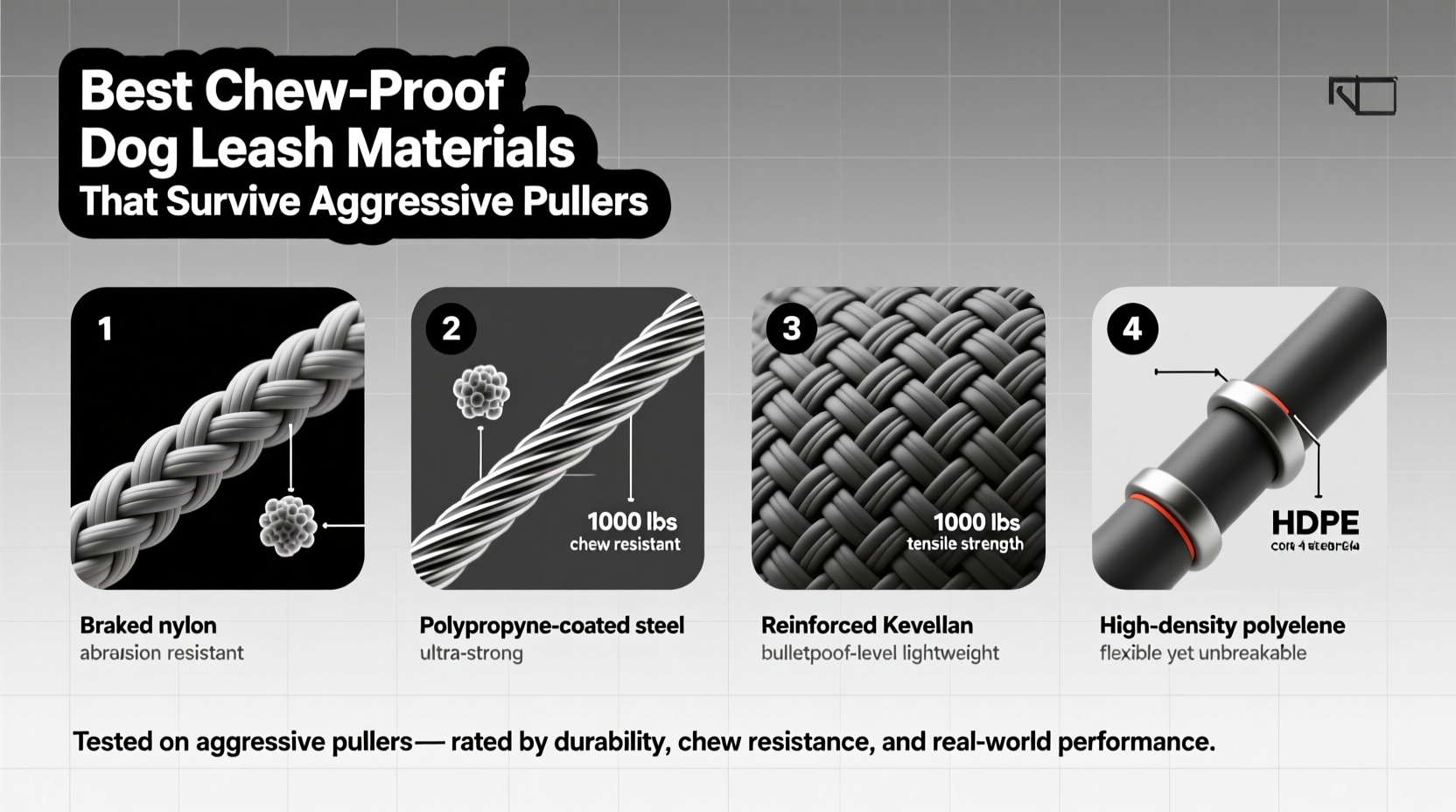
Most off-the-shelf leashes are designed for average dogs with moderate energy levels. They typically use nylon webbing, polyester blends, or thin rubber coatings—materials that offer comfort and flexibility but lack resilience against extreme force or teeth. When a large or high-drive dog pulls aggressively, these leashes stretch, fray, or snap at weak points like stitching or clasp joints.
Chewing compounds the problem. Dogs may chew out of boredom, anxiety, or instinct. Puppies explore with their mouths, while adult dogs under stress may redirect tension into gnawing on the leash. Over time, this behavior creates weak spots that compromise structural integrity. A single deep bite through a nylon strap can reduce tensile strength by more than 50%, turning a routine walk into a potential escape risk.
Top Chew-Proof Dog Leash Materials That Hold Up Under Pressure
The most effective chew-proof leashes rely on advanced materials engineered for durability, abrasion resistance, and tensile strength. Below are the top-performing materials proven to survive aggressive pulling and chewing.
1. Paracord (Military-Grade Nylon)
Originally used in parachute suspension lines, paracord (specifically Type III) is renowned for its strength-to-weight ratio. It has a minimum breaking strength of 550 pounds, making it ideal for large or powerful breeds. The outer sheath resists abrasion, while the inner braided nylon fibers provide elasticity and shock absorption.
Paracord leashes are often double- or triple-braided for added thickness, reducing the likelihood of teeth penetrating the core. While not completely immune to determined chewing, the tightly woven structure makes it difficult for dogs to unravel quickly.
2. Biothane® (Coated Webbing)
Biothane is a game-changer in pet gear. It consists of a polyester webbing core coated in thermoplastic polyurethane (TPU) or PVC. This coating creates a smooth, waterproof, and highly resistant surface that repels dirt, moisture, and—critically—teeth.
Biothane leashes don’t absorb water, resist UV degradation, and are easy to clean with soap and water. The rigid coating makes it nearly impossible for dogs to compress or puncture with their teeth. Unlike fabric, there’s no fiber to shred. Available in various widths (typically ¾ inch to 1 inch), Biothane is favored by working dog handlers and owners of breeds like Rottweilers, German Shepherds, and Pit Bulls.
“Biothane is the gold standard for durable dog leashes. Its combination of strength, weather resistance, and chew resistance makes it ideal for high-drive animals.” — Dr. Lena Torres, Canine Behavior & Equipment Specialist
3. Braided Steel Cable with Protective Jacket
Used primarily in training or containment scenarios, steel cable leashes are virtually indestructible. Encased in a thick polymer or rubber jacket, these leashes resist both chewing and pulling forces that would destroy any fabric-based option.
While extremely durable, they are heavier and less flexible than other options, making them better suited for short training sessions or controlled environments. The protective jacket can eventually wear down if constantly gnawed, exposing the metal core—which poses a danger if ingested or if sharp edges form.
4. High-Tensile Polyester Webbing (Industrial Grade)
Different from consumer-grade nylon, industrial polyester webbing is engineered for load-bearing applications. With higher denier counts (over 1,000D) and reinforced stitching, these leashes resist fraying and stretching under sustained pressure.
When combined with anti-chew treatments or layered constructions (e.g., multiple plies bonded together), high-tensile polyester becomes significantly more resistant to tooth penetration. However, unlike Biothane, it can still absorb moisture and degrade over time if not properly maintained.
5. Kevlar-Reinforced Composite Straps
Kevlar, known for its use in bulletproof vests, offers exceptional cut and abrasion resistance. Some premium leashes incorporate Kevlar fibers into the core weave to prevent slicing or tearing from sharp canine teeth.
These leashes are rare and expensive but represent the pinnacle of chew resistance. They’re typically used in tactical or service dog applications where failure is not an option. The material doesn’t stretch and maintains integrity even after repeated biting attempts.
Construction Features That Enhance Chew Resistance
Material alone isn’t enough. Even the strongest fabric fails if poorly constructed. Look for these design elements when choosing a chew-proof leash:
- Reinforced stitching: Double or triple-stitched seams using bonded nylon thread prevent separation at stress points.
- Molded or welded ends: Avoid stitched ends; instead, choose leashes with heat-sealed or molded terminations that eliminate fraying zones.
- Heavy-duty hardware: Solid brass or stainless steel snap hooks with spring-loaded gates resist corrosion and snapping under load.
- No loose fibers: Smooth, sealed surfaces without exposed threads give dogs nothing to latch onto.
- Thick diameter: Wider leashes (at least 1 inch) are harder for dogs to grip and chew effectively.
Comparison of Chew-Proof Leash Materials
| Material | Tensile Strength | Chew Resistance | Weight | Best For |
|---|---|---|---|---|
| Paracord (Triple-Braided) | 550–800 lbs | High | Light | Medium to large active dogs |
| Biothane® (1\" Width) | Over 1,000 lbs | Very High | Medium | Powerful breeds, anxious chewers |
| Steel Cable (Jacketed) | 1,500+ lbs | Extreme (until jacket fails) | Heavy | Training, containment |
| Industrial Polyester (1000D+) | 600–900 lbs | Moderate to High | Medium | Durable everyday use |
| Kevlar-Reinforced | 1,200+ lbs | Extreme | Medium | Service dogs, extreme chewers |
Real-World Example: Managing a Reactive German Shepherd
Mark, a dog trainer in Colorado, worked with a 95-pound German Shepherd named Axel who exhibited severe reactivity on walks. Axel would lunge at passing dogs and then immediately begin chewing the leash in a state of heightened arousal. Within three weeks, he destroyed four nylon leashes, two of which snapped mid-walk.
After switching to a 1-inch wide black Biothane leash with a reinforced steel snap hook, the pattern changed. Despite continued chewing episodes, the leash showed no signs of damage after six months. The smooth, non-porous surface prevented Axel from getting purchase with his teeth, and the 1,200-pound tensile strength handled every pull safely.
“It wasn’t just about durability,” Mark said. “The predictability of the material gave me confidence. I could focus on training instead of worrying about equipment failure.”
Step-by-Step Guide to Choosing a Chew-Proof Leash
- Assess your dog’s behavior: Determine whether the issue is primarily pulling, chewing, or both. This guides material selection.
- Measure your dog’s strength: Larger or athletic breeds (e.g., Huskies, Mastiffs) require higher tensile strength (800+ lbs).
- Select the appropriate material: For chewers, prioritize Biothane or Kevlar; for pullers, consider paracord or industrial webbing.
- Check hardware quality: Ensure the clip is solid metal, rust-resistant, and rated for heavy loads.
- Test the grip and handling: A comfortable, non-slip handle improves control and reduces hand strain.
- Monitor during initial use: Watch how your dog interacts with the new leash. Adjust length or attachment method if chewing persists.
Common Mistakes to Avoid
- Choosing style over substance: Decorative leashes often sacrifice durability for aesthetics.
- Ignoring hardware: A strong leash paired with a weak clip is a liability.
- Using retractable leashes for strong dogs: These are unsafe for powerful breeds and encourage bad habits.
- Failing to replace worn gear: Even chew-proof leashes degrade over time. Replace if you notice cracks, deep grooves, or bent hardware.
FAQ
Can any leash be truly chew-proof?
No leash is 100% indestructible, but materials like Biothane and Kevlar come very close. The goal is to delay damage long enough to redirect behavior and maintain safety.
Are chew-proof leashes safe for everyday use?
Yes, especially those made from Biothane or heavy-duty paracord. They’re designed for regular handling, easy cleaning, and long-term reliability. Just ensure proper fit and comfort for both dog and handler.
How do I stop my dog from chewing the leash?
Address the root cause—often anxiety, overexcitement, or boredom. Use positive reinforcement, distraction techniques, and consistent training. Pair behavioral work with a chew-resistant leash to prevent accidents during the learning process.
Essential Checklist Before Buying a Chew-Proof Leash
- ✅ Made from Biothane, paracord, or Kevlar-reinforced material
- ✅ Tensile strength rating above 800 lbs for large dogs
- ✅ Reinforced stitching or seamless construction
- ✅ Heavy-duty metal clasp (brass or stainless steel)
- ✅ At least ¾ inch wide (1 inch recommended for strong breeds)
- ✅ Smooth surface with no loose fibers or frayed edges
- ✅ Comfortable, non-slip grip for the handler
- ✅ Easy to clean and resistant to weather exposure
Final Thoughts and Recommendations
When dealing with a dog that pulls hard or chews relentlessly, the leash isn’t just a tool—it’s a critical safety device. Compromising on material quality risks injury to your dog, bystanders, or yourself. The best chew-proof leashes combine military-grade durability with thoughtful design, ensuring they hold up under real-world stress.
For most owners of strong or destructive chewers, **Biothane** stands out as the optimal balance of strength, longevity, and usability. It resists teeth, weather, and wear while remaining lightweight and easy to manage. Paracord is a solid budget-friendly alternative, especially when triple-braided. For extreme cases, Kevlar or steel-cable options exist—but should be used with caution due to weight and rigidity.
Remember: even the toughest leash won’t fix underlying behavioral issues. Combine durable gear with consistent training to create safer, more enjoyable walks for both you and your dog.




 浙公网安备
33010002000092号
浙公网安备
33010002000092号 浙B2-20120091-4
Comments
No comments yet. Why don't you start the discussion?