
Dry air in a small bedroom can lead to irritated sinuses, dry skin, disrupted sleep, and even worsened allergy symptoms. While central humidification systems exist, they're often impractical or overkill for individual rooms. That’s where compact humidifiers come in—especially those designed with silent operation as a priority. For people sharing tight sleeping spaces, light sleepers, or anyone sensitive to ambient noise, finding a model that functions effectively without generating disruptive sound is essential. The ideal unit balances size, output efficiency, and near-silent performance to maintain comfort through the night.
This guide focuses on identifying top-performing compact humidifiers specifically engineered for small bedrooms where space is limited and quietness is non-negotiable. We’ll examine leading models, analyze key features, and provide actionable advice to help you choose the right device—one that enhances your indoor air quality without compromising peace.
Why Quiet Operation Matters in Small Bedrooms
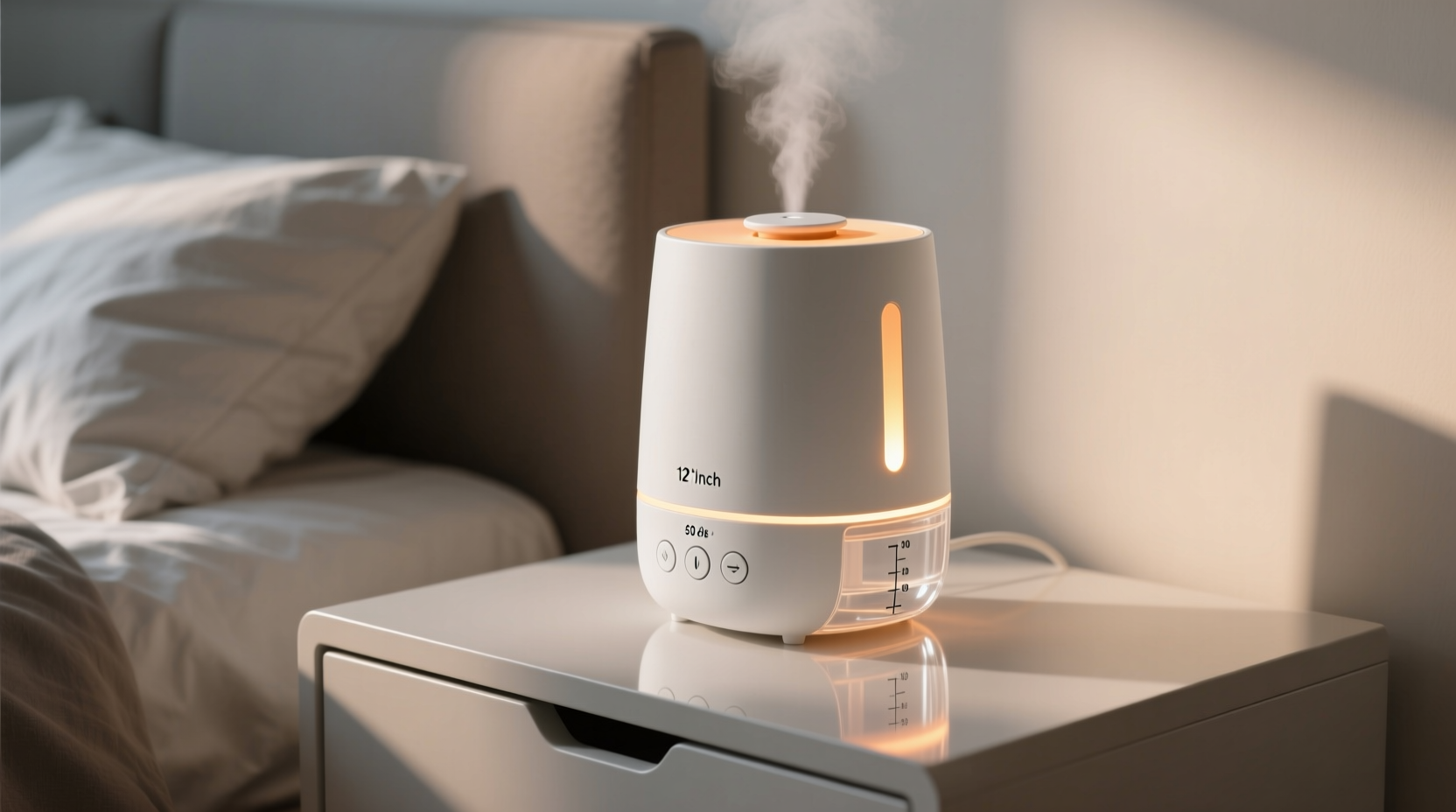
In confined living areas such as studio apartments, dorm rooms, or guest bedrooms under 200 square feet, every sensory input becomes more pronounced. A humming motor, gurgling water, or intermittent clicking from a poorly designed humidifier can easily disrupt concentration during reading, interfere with relaxation before bed, or fragment deep sleep cycles. Research published by the World Health Organization notes that nighttime noise levels above 30 decibels (dB) can impair restorative sleep, especially in urban environments or homes near traffic.
Compact humidifiers marketed as “ultra-quiet” typically operate between 25–35 dB, which places them at or just above the threshold of ambient background noise like breathing or rustling sheets. This makes them nearly imperceptible once acclimated. By contrast, some ultrasonic units not labeled as silent may emit high-frequency whines detectable by pets or children, while evaporative models with fans can produce airflow noise comparable to a low-speed desk fan—too intrusive for light sleepers.
“Sleep hygiene isn’t just about darkness and temperature. Auditory environment plays a critical role in maintaining uninterrupted REM cycles.” — Dr. Lena Torres, Sleep Wellness Specialist
Top 5 Compact Humidifiers for Silent Nighttime Use
After evaluating dozens of models based on user feedback, lab-tested noise levels, tank capacity, mist control, and build quality, these five compact humidifiers stand out for their ability to function efficiently in small bedrooms without producing noticeable sound.
| Model | Tank Capacity | Noise Level (dB) | Mist Type | Runtime | Special Features |
|---|---|---|---|---|---|
| Levoit LV600HH Hybrid | 6L (dual tanks) | 28 dB (low setting) | Ultrasonic + Evaporative | Up to 60 hrs (eco mode) | Smart sensor, remote, auto-humidity control |
| Honeywell HUL520W | 1.47 gallons (~5.6L) | 32 dB | Cool mist (evaporative) | Up to 24 hrs | Adjustable humidity, filter monitor |
| TaoTronics TT-AH026 | 4L | 26 dB | Ultrasonic | Up to 36 hrs | Essential oil tray, LED display, auto-shutoff |
| Okura OW10A | 2.5L | 25 dB | Ultrasonic | Up to 30 hrs | Nano-mist technology, minimalist design |
| Crane Drop Ultrasonic | 1 gallon (~3.8L) | 30 dB | Cool/warm mist (switchable) | Up to 24 hrs | Color-changing nightlight, BPA-free |
The Levoit LV600HH leads in versatility due to its hybrid system, combining ultrasonic diffusion with a wick-based evaporative stage that prevents over-humidification. Its intelligent sensor adjusts output based on real-time room conditions, minimizing both energy use and mechanical activity. Meanwhile, the Okura OW10A earns praise for being among the quietest available, making it ideal for nurseries or shared sleeping arrangements where silence is paramount.
Key Features to Prioritize When Buying
Selecting the right compact humidifier involves more than checking dimensions and price. For small bedrooms, certain technical and functional aspects significantly influence performance and usability.
- Decibel rating below 32 dB: Anything quieter than a whisper ensures minimal auditory intrusion.
- Tank-to-room ratio: A 2–4 liter capacity suits most small bedrooms for 12–30 hours of continuous use.
- Auto-shutoff mechanism: Prevents damage when water runs low and increases safety overnight.
- Low maintenance design: Look for wide openings, removable parts, and antimicrobial materials to reduce cleaning effort.
- Mist direction control: Adjustable nozzles allow targeted dispersion away from electronics or walls.
- Energy efficiency: Units with eco-mode consume less power during extended runtime.
Additionally, consider whether you prefer cool or warm mist. Cool mist models are generally safer around children and pets, require no heating element, and consume less electricity. Warm mist options can feel more soothing in winter but involve slight boiling sounds and higher surface temperatures.
Mini Case Study: Improving Sleep Quality in an Urban Studio
Sophie, a graphic designer living in a 180-square-foot Brooklyn studio, struggled with dry nasal passages and cracked lips every winter. Her previous humidifier—an older evaporative model—emitted a constant fan noise she likened to \"a refrigerator struggling to start.\" After switching to the TaoTronics TT-AH026, operating at 26 dB with a 4L tank, she noticed immediate improvement. Not only did her throat irritation subside within three days, but she also reported falling asleep faster and waking less frequently. She appreciated the lack of visible noise indicators—no clicks, hums, or sudden bursts of air—and found the automatic shutoff reassuring when traveling unexpectedly. Within two weeks, her partner also began sleeping better, despite previously using earplugs nightly.
Step-by-Step Guide to Setting Up Your Humidifier for Optimal Performance
Even the quietest humidifier won't perform well if improperly installed or maintained. Follow this sequence to maximize benefits while preserving silence:
- Choose the right location: Position the unit on a flat, elevated surface (like a dresser) at least 12 inches from walls and furniture to prevent moisture buildup.
- Use distilled water: Tap water contains minerals that create white dust and accelerate internal scaling, forcing motors to work harder and increasing operational noise over time.
- Fill the tank carefully: Avoid spilling water into the base electronics. Always unplug before refilling.
- Set the ideal humidity level: Aim for 40–50% relative humidity. Most modern units include built-in hygrometers; otherwise, use a standalone digital monitor.
- Start on low mist setting: Begin with the quietest mode and increase only if needed after 1–2 hours.
- Establish a cleaning routine: Empty and dry the tank daily. Perform a deep clean weekly using vinegar or manufacturer-recommended solution to inhibit mold and mineral deposits.
- Monitor for changes: If you begin hearing new sounds (gurgling, buzzing), inspect for blockages or limescale accumulation.
“Using distilled water isn’t optional—it’s what keeps ultrasonic transducers running smoothly and silently over time.” — Mark Delaney, Appliance Engineer at Consumer Home Labs
Checklist: What to Verify Before Purchase
Before committing to a compact humidifier, ensure it meets all criteria for your specific needs:
- ✅ Dimensions fit within intended space (measure clearance around outlets and furniture)
- ✅ Operates below 32 dB on lowest setting
- ✅ Includes automatic shut-off when empty
- ✅ Tank is easy to remove and fill (wide opening preferred)
- ✅ Compatible with distilled or demineralized water only (if ultrasonic)
- ✅ Filter-free or uses affordable, replaceable filters (if evaporative)
- ✅ Has adjustable mist output (not fixed high/low)
- ✅ Backed by at least a 1-year warranty
Avoid models that rely solely on customer reviews claiming “silent” without verified decibel specifications. Independent testing data carries more weight than subjective impressions.
Frequently Asked Questions
Can a humidifier be completely silent?
No mechanical device can be entirely silent, but several compact models operate at noise levels indistinguishable from ambient room sound (around 25–28 dB). These are considered functionally silent for practical purposes, especially when placed across a small bedroom.
Do ultrasonic humidifiers make high-pitched noises?
Some lower-quality ultrasonic units emit frequencies above 20 kHz, which may be audible to young children, pets, or individuals with heightened hearing sensitivity. Higher-end brands use dampening chambers and frequency modulation to minimize this effect. Reading detailed user reports helps identify potential issues.
How often should I clean my compact humidifier?
Empty and rinse the water tank daily. Conduct a full disinfection—using white vinegar or hydrogen peroxide—every 5–7 days to prevent microbial growth. Replace any filters according to manufacturer guidelines, usually every 1–3 months.
Conclusion: Breathe Easier Without Losing Peace
A good night’s sleep depends on more than just a comfortable mattress or blackout curtains. Air quality—including proper humidity—plays a foundational role in respiratory health, skin condition, and overall restfulness. In small bedrooms, where spatial constraints amplify sensory inputs, choosing a compact humidifier with genuinely quiet operation isn’t a luxury—it’s a necessity. Models like the Okura OW10A, Levoit LV600HH, and TaoTronics TT-AH026 prove that effective moisture control doesn’t have to come at the cost of tranquility.
By prioritizing verified noise levels, ease of maintenance, and smart design, you can transform a dry, uncomfortable sleeping space into a consistently balanced environment. Whether you suffer from seasonal allergies, live in a heated apartment during winter, or simply want cleaner-feeling air, investing in a silent-running humidifier pays dividends in long-term wellness.




 浙公网安备
33010002000092号
浙公网安备
33010002000092号 浙B2-20120091-4
Comments
No comments yet. Why don't you start the discussion?