
After a demanding day at work, unwinding is essential—not just for enjoyment, but for mental well-being. The Nintendo Switch, with its portable design and diverse library, has become a go-to console for players seeking comfort, calm, and gentle escapism. Unlike high-stakes action titles or competitive multiplayer games, cozy games offer slow-paced, low-pressure experiences that nurture relaxation through soothing visuals, ambient soundscapes, and meaningful yet undemanding activities.
These aren’t just “games you play when tired.” They’re intentional digital spaces designed to restore balance—like virtual tea rooms, quiet gardens, or peaceful villages where time slows down. Whether you're fishing at sunset, tending to pixelated crops, or writing letters to animal neighbors, these moments of stillness can have real psychological benefits. Studies in game therapy suggest that low-intensity, repetitive tasks in safe environments help reduce anxiety and improve mindfulness.
This guide explores some of the most genuinely relaxing and emotionally nourishing games available on the Switch. Each title offers a unique way to decompress, grounded in thoughtful design and emotional warmth. More than entertainment, they serve as companions during quiet evenings or transitional moments between work and rest.
Why Cozy Games Work for Post-Work Recovery
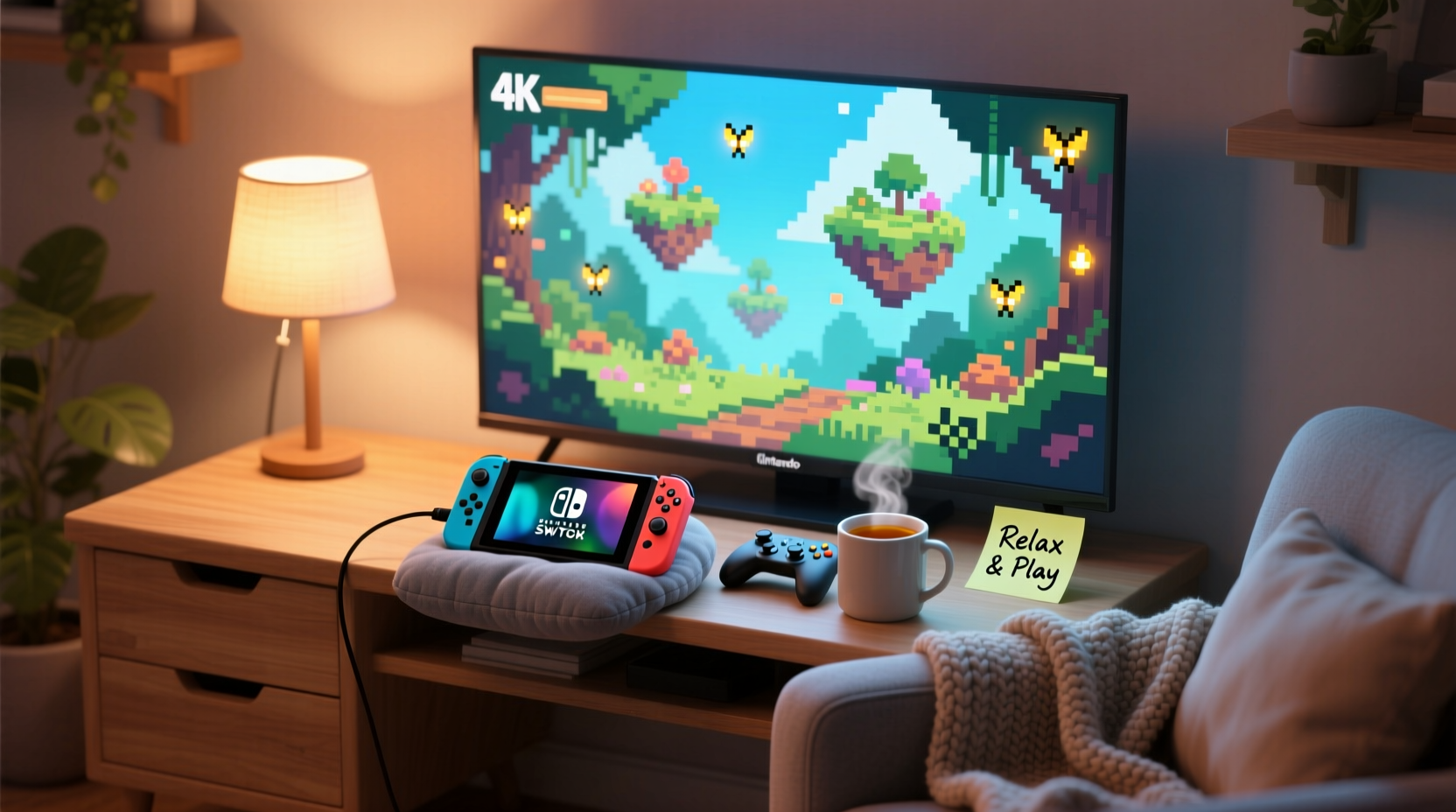
The appeal of cozy games lies not in challenge or achievement, but in presence. After hours of decision-making, screen fatigue, and cognitive load, the brain craves simplicity. Cozy games fulfill this need by removing urgency. There’s no timer, no failure state, and rarely any conflict. Instead, players engage in rhythm-based routines: watering plants, cooking meals, chatting with villagers, or walking through forests.
Game designer Robin Hunicke once said:
“Games can be more than competition—they can be invitations to breathe.”This philosophy underpins many modern cozy titles. These games often emphasize procedural comfort—small actions that yield visible results over time, like watching flowers bloom or seeing a friendship level increase. That sense of gradual progress without pressure mirrors real-life self-care practices.
Moreover, their aesthetic choices reinforce tranquility. Soft color palettes, hand-drawn art styles, and acoustic or piano-driven soundtracks contribute to an atmosphere of safety and warmth. Titles like *Stardew Valley* or *A Short Hike* don’t just look inviting—they feel emotionally accessible, even to non-gamers.
Top 7 Cozy Games for the Nintendo Switch
The following list highlights standout titles known for their calming mechanics, emotional resonance, and accessibility. All are playable in handheld mode, making them ideal for couch lounging, commutes, or winding down before bed.
1. Stardew Valley
A farming simulation masterpiece, *Stardew Valley* lets you inherit a neglected farm and rebuild it at your own pace. You plant crops, raise animals, mine resources, and form relationships with townspeople. What sets it apart is its depth of choice—there’s no single path to fulfillment. You can focus on agriculture, become a master fisher, explore crafting, or simply spend days wandering the woods.
The game’s seasonal cycles encourage natural breaks. Winter, for instance, slows crop growth, prompting reflection and indoor projects. Its pixel art style is warm and nostalgic, while the soundtrack by composer Eric Barone (ConcernedApe) is widely praised for its emotional nuance—from cheerful spring melodies to melancholic winter themes.
2. Animal Crossing: New Horizons
No list of cozy games would be complete without *Animal Crossing*. Released during global lockdowns, it became a cultural phenomenon for offering social connection and creative freedom during isolation. Players build and customize an island paradise, interact with quirky animal residents, and participate in seasonal events.
Its real-time clock syncs with your local time, so sunrises, holidays, and shop hours mirror reality. This subtle integration makes the world feel alive without being overwhelming. Whether redecorating your home, catching bugs, or trading custom designs online, every activity promotes creativity and routine without obligation.
3. A Short Hike
Brief but unforgettable, *A Short Hike* follows a young bird named Claire visiting her grandmother on a national park island. With limited battery life on her phone and no map, she explores freely—climbing hills, swimming, biking, and chatting with other visitors. The goal is to reach the summit, but how you get there is entirely up to you.
What makes it special is its emotional honesty. Conversations touch on loneliness, financial stress, and finding joy in small things—all delivered gently through everyday interactions. The ability to glide and eventually fly gives a literal sense of uplift, matching the game’s thematic arc of personal growth.
4. Unpacking
*Unpacking* tells a life story through eight stages of moving homes. As you unpack boxes room by room, you piece together the identity of the protagonist—a woman navigating childhood, college, relationships, and independence. Objects reveal personality: favorite books, worn-out sneakers, framed photos.
There’s no dialogue or narration. The narrative emerges silently through context. It’s meditative, almost therapeutic, encouraging mindfulness about possessions and memory. Each move ends with a moment of stillness—lights off, door closed—as if honoring the chapter that’s passed.
5. Coffee Talk
Set in a late-night café in a fantasy version of Seattle, *Coffee Talk* blends barista simulation with visual novel storytelling. As the barista, you brew drinks for mythical customers—elves, orcs, succubi—who share personal struggles while sipping matcha lattes or blueberry tea.
You learn recipes through trial and error, adjusting ingredients based on customer cues. Their stories unfold across multiple nights, touching on imposter syndrome, long-distance love, and creative burnout. The lo-fi jazz soundtrack and rain-soaked window visuals make it perfect for nighttime play.
6. Spiritfarer
A management game wrapped in a spiritual journey, *Spiritfarer* casts you as a ferry master guiding spirits to the afterlife. You build a boat, craft meals, play minigames, and bond with characters before bidding them farewell. Despite its theme of death, the tone is tender and celebratory.
Every spirit has a backstory and final wish. Fulfilling these creates closure—for them and for the player. The animation style is watercolor-soft, and the music swells with empathy. It doesn’t shy from grief, but frames it as part of a natural cycle, making it oddly comforting.
7. Dorfromantik
In *Dorfromantik*, you place hexagonal tiles to expand a serene countryside landscape. Rolling hills, forests, rivers, and villages grow outward as you match terrain edges. The goal is harmony, not points—though a score tracks your efficiency.
There’s a tranquil strategy element: placing tiles wisely extends your game, but the true reward is the evolving scenery. Birds chirp, wind rustles trees, and a minimalist melody plays softly. An optional zen mode removes scoring altogether, turning it into pure environmental creation.
Choosing the Right Game for Your Mood
Not all cozy games suit every type of exhaustion. Mental fatigue calls for different engagement than emotional depletion or sensory overload. Matching the game to your state enhances its restorative effect.
| If You Feel... | Try This Game | Why It Helps |
|---|---|---|
| Overwhelmed by decisions | Dorfromantik (Zen Mode) | Removes pressure; focuses on pattern recognition and visual peace |
| Lonely or disconnected | Animal Crossing: New Horizons | Simulates social warmth and community presence |
| Needing creative expression | Stardew Valley | Offers deep customization and long-term project ownership |
| Reflective or nostalgic | Unpacking | Invites introspection through object-based storytelling |
| Grieving or processing loss | Spiritfarer | Provides symbolic rituals for saying goodbye |
Building a Relaxation Routine with Cozy Games
Integrating cozy games into a daily wind-down ritual increases their effectiveness. Like journaling or meditation, consistency matters more than duration. Here’s a simple step-by-step approach to turn gaming into mindful recovery:
- Set a fixed time slot – Choose 30–60 minutes after work ends, before dinner or bedtime.
- Prepare your space – Sit comfortably, silence notifications, and use the Switch in handheld mode.
- Select your game intentionally – Match it to your energy level (see table above).
- Engage without goals – Avoid chasing achievements; focus on sensation and interaction.
- End with reflection – Pause before quitting. Ask: How do I feel now compared to ten minutes ago?
This structure transforms passive play into active restoration. Over time, your brain begins to associate the game with safety and release, much like a Pavlovian cue for relaxation.
“Games that prioritize care over conquest teach us new ways to relate to ourselves—with patience, curiosity, and kindness.” — Dr. Sarah Grey, Digital Wellness Researcher
Mini Case Study: Recovering from Burnout with A Short Hike
James, a 34-year-old software developer, began experiencing chronic fatigue and irritability after months of remote work. He found himself scrolling endlessly at night, unable to disconnect. On a friend’s recommendation, he downloaded *A Short Hike* one evening, expecting little.
He played for 20 minutes, exploring the beach and helping a rabbit fix a kite. There was no tutorial, no menu—he just walked, then glided, then climbed. By the time he reached the mountain lookout, the sun was setting in-game. He sat there, controller in hand, watching the colors shift.
“It felt like taking a breath I didn’t know I was holding,” he later wrote in a forum post. “I didn’t solve my problems, but for the first time in weeks, I wasn’t thinking about them.”
He now plays for 30 minutes each weekday, using it as a transition ritual. “It’s not escapism,” he says. “It’s re-centering.”
Frequently Asked Questions
Are cozy games only for casual players?
No. While accessible to beginners, many cozy games have deep systems—crafting, resource management, relationship trees—that satisfy experienced gamers. The difference is in pacing and intent. These games reward attention, not speed.
Can children enjoy these games too?
Yes, most cozy games are rated E for Everyone. *Animal Crossing*, *Stardew Valley*, and *A Short Hike* are especially popular with younger audiences due to their gentle tone and lack of violence. Parents often play alongside kids, fostering shared experiences.
Do I need to play every day to benefit?
Not at all. Even occasional play can provide relief. The key is intentionality. A single mindful session can reset your mood, just as a walk in nature might. Consistency helps, but presence matters more.
Final Checklist: Starting Your Cozy Gaming Practice
- ✅ Choose one game from the list to try this week
- ✅ Schedule a 30-minute window post-work for uninterrupted play
- ✅ Use headphones and reduce screen brightness for comfort
- ✅ Start in a low-commitment mode (e.g., Zen Mode in Dorfromantik)
- ✅ Reflect afterward: Did your breathing slow? Did tension ease?
Conclusion
In a world that glorifies productivity, taking time to do nothing—except perhaps water a few pixelated tomatoes or brew tea for a dragon—is revolutionary. The best cozy games for the Switch aren’t distractions from life; they’re gentle mirrors reflecting what we often forget: that rest is valuable, slowness is strength, and joy lives in small moments.
Pick up your Switch tonight not to conquer, but to care—for a garden, a village, a feeling. Let these games remind you that you, too, deserve gentleness. Start small. Breathe. Glide down a hill. Watch the stars appear. You’ve earned this peace.




 浙公网安备
33010002000092号
浙公网安备
33010002000092号 浙B2-20120091-4
Comments
No comments yet. Why don't you start the discussion?