
For programmers who spend 8 to 12 hours a day typing, wrist pain isn't just an occasional discomfort—it can become a chronic condition that affects productivity, sleep, and quality of life. Repetitive strain injuries (RSIs), carpal tunnel syndrome, and tendonitis are common among developers, often stemming from poor posture and non-ergonomic equipment. The keyboard is one of the most critical tools in your setup, and choosing the right ergonomic model can significantly reduce strain and prevent long-term damage.
This guide focuses on keyboards specifically designed to support natural hand alignment, reduce ulnar deviation, and promote neutral wrist positioning. We’ve evaluated top models based on split design, tenting capability, key switch type, build quality, and real-world performance in coding environments.
Why Ergonomic Keyboards Matter for Programmers
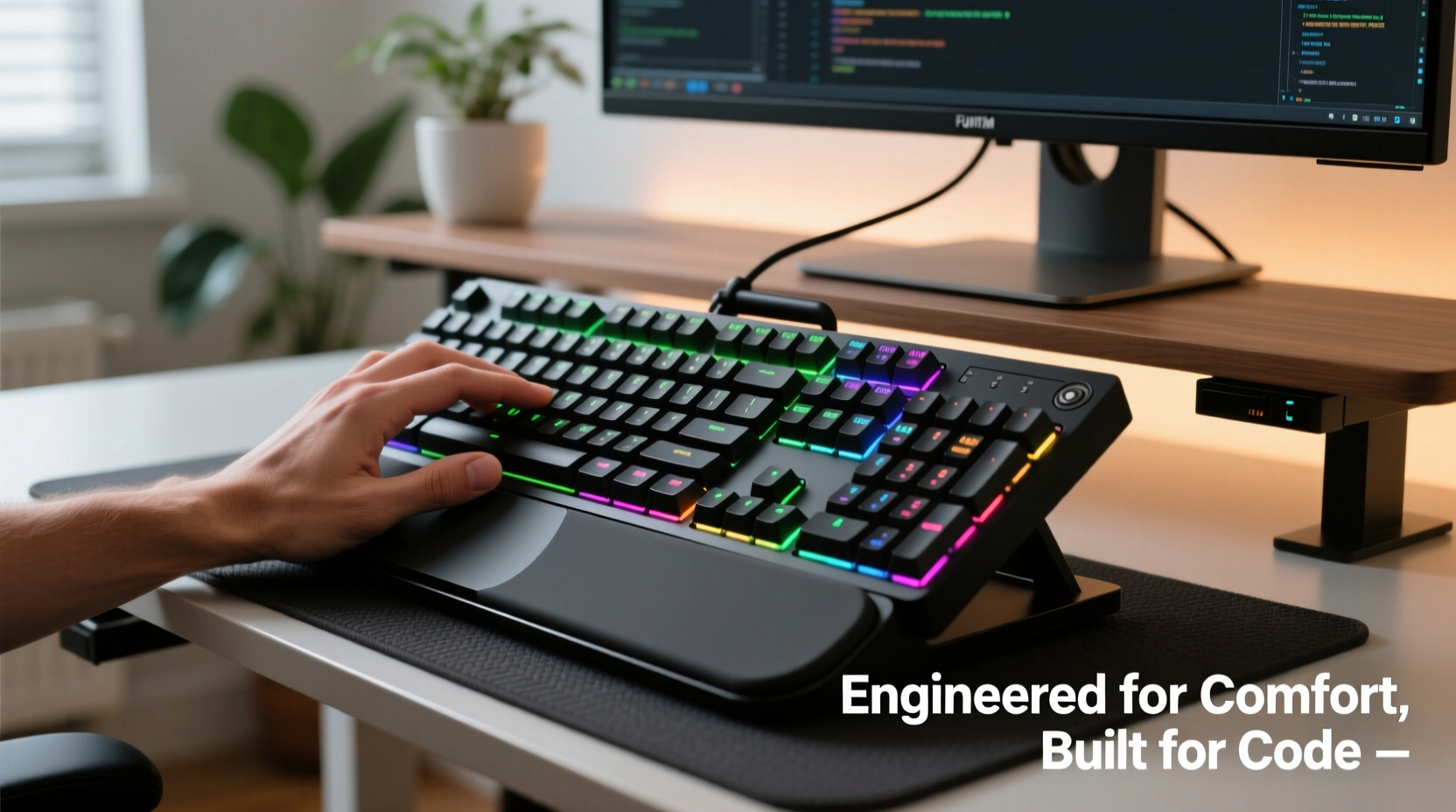
Standard flat keyboards force your hands into a pronated position—palms down, wrists bent slightly upward or outward. Over time, this unnatural posture places constant pressure on the median nerve and tendons in the wrist. For programmers, who frequently use modifier keys (Ctrl, Alt, Shift) and navigate through complex syntax, the repetitive motion amplifies the risk.
Ergonomic keyboards address these issues by:
- Splitting the key layout to align with shoulder width
- Allowing tenting (tilting the keyboard inward) to keep forearms parallel
- Reducing reach distance to commonly used keys
- Encouraging a relaxed shoulder and elbow position
“Switching to an ergonomic keyboard reduced my numbness within three weeks. It’s not a cure-all, but it’s the most impactful single change I made.” — Daniel Park, Senior Backend Developer and RSI Advocate
Top 5 Ergonomic Keyboards for Programmers with Wrist Pain
The market offers dozens of ergonomic keyboards, but not all are suitable for heavy coding work. Below is a curated list of models proven effective for developers managing wrist discomfort.
| Keyboard Model | Type | Tenting Support | Key Switches | Best For |
|---|---|---|---|---|
| Kinesis Freestyle Pro 2 | Split mechanical | Yes (with accessory) | Cherry MX Brown/Blue | Customizable layouts, full-size needs |
| ErgoDox EZ | Fully split, programmable | Yes (adjustable feet + risers) | Kailh Low Profile | Max customization, macro-heavy workflows |
| Microsoft Sculpt Ergonomic Keyboard | Semi-split membrane | Limited (fixed curve) | Quiet membrane | Budget option, quiet typing |
| ZSA Moonlander Mark II | Highly adjustable split | Yes (magnetic tenting) | Low-profile mechanical | Premium comfort, advanced ergonomics |
| Anne Pro 2 (with Ergo42 mod kit) | Compact wireless split | Yes (mod required) | Gateron Red/Brown | Portable setups, minimalist coders |
Kinesis Freestyle Pro 2
A favorite among enterprise developers, this keyboard features a fully detachable split design with durable mechanical switches. Its low profile and flexible cable allow users to position each half independently. With optional palm supports and tenting kits, it adapts well to various desk heights and chair configurations. The tactile feedback of Cherry MX switches helps reduce bottoming-out force, minimizing impact on joints.
ErgoDox EZ
Open-source firmware and ortholinear layout make this keyboard ideal for programmers who want complete control over their key mappings. The square grid layout eliminates diagonal finger stretches common in traditional staggered keyboards. While the learning curve is steep, many report significant reductions in finger fatigue after two weeks of use. Built-in tenting options and columnar staggering support natural hand angles.
ZSA Moonlander Mark II
Priced at a premium, the Moonlander delivers unparalleled adjustability. Magnetic tenting legs, thumb clusters, and per-key programmability let you tailor every aspect of your typing experience. Its split design encourages a wide, relaxed arm posture, and the soft actuation of its low-profile switches reduces finger strain during long debugging sessions. Integration with ZSA’s Oryx configurator makes remapping IDE shortcuts effortless.
How to Set Up Your Ergonomic Keyboard Correctly
Even the best keyboard won’t help if it’s not positioned correctly. Proper setup ensures your body reaps the full benefits of ergonomic design.
- Align splits with shoulders: Position each half so that your elbows form a 90–110° angle and your arms hang naturally. The inner edges should point toward your body’s midline.
- Tent appropriately: Use risers or magnetic legs to tilt each half inward (typically 15°–30°). This keeps your pinky side slightly elevated, aligning the forearm bones (ulna and radius) without twisting.
- Maintain negative tilt: Avoid upward tilting. If your keyboard has feet, leave them down or use a negative tilt stand.
- Center your body: Sit with your torso centered between the two halves. Don’t hunch to one side to reach the mouse—consider a vertical mouse or center-positioned trackball.
- Use wrist rests wisely: Only rest palms during pauses. Typing directly onto a wrist rest increases pressure on the carpal tunnel.
Real-World Case: Recovering from Early-Onset Carpal Tunnel
Jessica Tran, a full-stack developer at a fintech startup, began experiencing tingling in her right hand after six months of remote work. She initially dismissed it as temporary fatigue, but within a year, she struggled to type for more than 30 minutes without sharp pain radiating up her forearm.
After a diagnosis of mild carpal tunnel syndrome, her occupational therapist recommended eliminating her flat keyboard. She switched to the ErgoDox EZ and paired it with a standing desk, vertical mouse, and daily stretching routine. Within eight weeks, her nighttime numbness disappeared. By week 12, she was able to return to full-time coding without painkillers.
“The keyboard didn’t fix everything,” she says, “but it removed the main source of aggravation. Now I can’t imagine going back to a standard layout.”
Essential Features Checklist for Pain Relief
When shopping for an ergonomic keyboard, verify these key features to ensure long-term comfort:
- ✅ Split design with independent halves
- ✅ Tenting capability (built-in or accessory-supported)
- ✅ Columnar stagger (keys aligned vertically by finger, not row)
- ✅ Programmable keys for common IDE commands
- ✅ Mechanical or low-force switches to reduce keystroke effort
- ✅ Durable build with stable wrist pads (optional but helpful)
- ✅ Compatibility with your OS and development tools
Common Mistakes That Undermine Ergonomic Benefits
Many users invest in high-end ergonomic gear but fail to see improvement because of avoidable errors:
- Improper height: A desk too high forces shoulder shrugging; too low causes wrist bending.
- No transition period: Jumping straight into 8-hour coding sessions on a new layout leads to frustration and strain.
- Ignoring mouse placement: An ergonomic keyboard paired with a far-off mouse reintroduces reach strain.
- Over-relying on wrist rests: Continuous contact compresses nerves. Use them only between typing bursts.
- Skipping warm-ups: Cold tendons are more prone to injury. Begin sessions with hand stretches.
“Ergonomics is a system, not a single product. A perfect keyboard can’t compensate for a poorly arranged workstation.” — Dr. Lena Rodriguez, Occupational Health Specialist
FAQ: Your Ergonomic Keyboard Questions Answered
Can an ergonomic keyboard cure carpal tunnel syndrome?
While no keyboard can “cure” carpal tunnel, switching to an ergonomic model can alleviate symptoms by reducing pressure on the median nerve. Combined with rest, therapy, and proper technique, it’s often a critical step in recovery—but consult a medical professional for diagnosis and treatment.
How long does it take to adapt to a split keyboard?
Most programmers adjust within 1–3 weeks. Expect a dip in typing speed initially. Practice for 30–60 minutes daily, focusing on accuracy over speed. Full adaptation typically occurs after 20–30 hours of cumulative use.
Are mechanical switches better for wrist pain?
It depends on preference. Mechanical switches offer tactile feedback, which can reduce the need to press keys all the way down. However, lighter linear switches (like Gateron Reds) require less force and may be gentler for sensitive hands. Avoid stiff clicky switches if you’re prone to finger fatigue.
Final Recommendations and Next Steps
If you're experiencing wrist pain as a programmer, don’t wait for symptoms to worsen. Start by evaluating your current setup and identifying misalignments. The Kinesis Freestyle Pro 2 offers the best balance of affordability and functionality for most users. For those willing to invest in maximum customization and comfort, the ZSA Moonlander is unmatched.
Remember, the keyboard is just one component. Pair it with proper posture, regular movement breaks, and hand-strengthening exercises for lasting relief. Consider using tools like Stretchly or Time Out to enforce micro-pauses every 20–30 minutes.




 浙公网安备
33010002000092号
浙公网安备
33010002000092号 浙B2-20120091-4
Comments
No comments yet. Why don't you start the discussion?