
When the power goes out during a storm, or you're stranded on a remote trail after dark, a reliable source of light and power can mean the difference between safety and danger. That’s why including a portable power bank with a built-in flashlight in your emergency kit is not just convenient—it's essential. These compact devices combine energy storage with illumination, offering dual functionality that proves invaluable in unpredictable situations. From blackouts to natural disasters, having the right tool ready ensures you stay connected and visible when it matters most.
This guide explores top-performing models, key features to prioritize, and practical advice on integrating these devices into your preparedness strategy. Whether you’re assembling a home emergency box, stocking a vehicle survival kit, or preparing for outdoor adventures, understanding what makes a power bank truly effective will help you make smarter choices.
Why Flashlight-Integrated Power Banks Belong in Every Emergency Kit
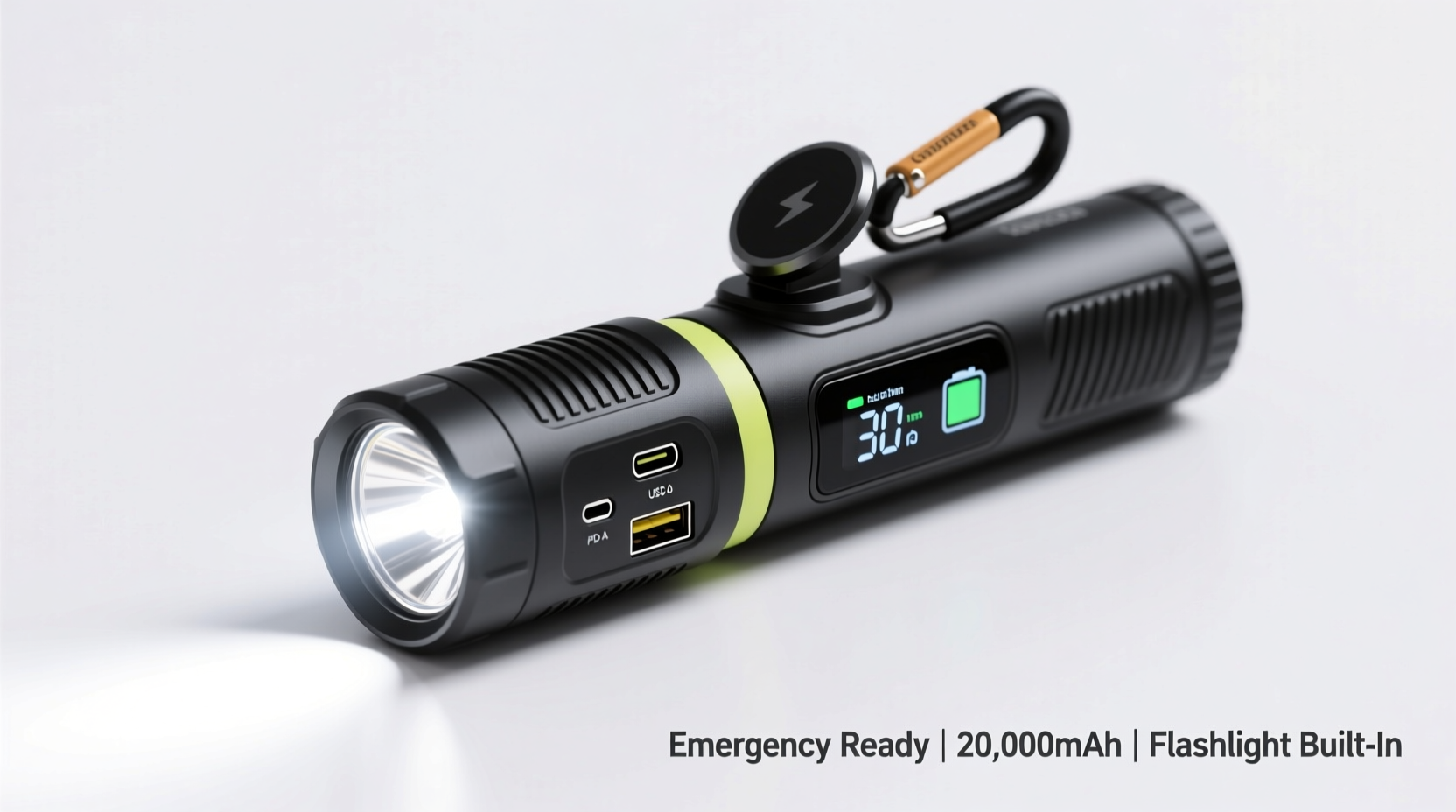
In any crisis, two needs rise above all others: communication and visibility. A smartphone allows you to call for help, access maps, or receive weather alerts—but only if it has battery life. Meanwhile, navigating through darkness without proper lighting increases the risk of injury and disorientation. Combining both functions into one rugged device streamlines your gear while maximizing utility.
Unlike standalone flashlights or basic battery packs, integrated models eliminate the need to carry multiple gadgets. They reduce clutter, minimize points of failure, and often include additional features like SOS modes, USB-C fast charging, and water resistance. For families, hikers, travelers, and preppers alike, this convergence of function represents a significant leap in emergency readiness.
“Having a single device that provides both power and light simplifies response under stress—when seconds count.” — Dr. Alan Reyes, Disaster Preparedness Coordinator at National Resilience Institute
Key Features to Look for in an Emergency Power Bank with Flashlight
Not all power banks with flashlights are created equal. Some offer minimal brightness or short battery life, rendering them ineffective when needed most. To ensure reliability, focus on these critical specifications:
- Battery Capacity (mAh): Aim for at least 10,000mAh. This provides multiple full charges for most smartphones and enough reserve to run the flashlight for several hours.
- Flashlight Brightness (Lumens): A minimum of 200 lumens is recommended; 500+ lumens offers superior visibility in total darkness.
- Light Modes: Look for high, low, strobe, and SOS settings. The latter can be lifesaving in search-and-rescue scenarios.
- Durability: Water resistance (IPX6 or higher), shockproof casing, and dust protection enhance performance in harsh conditions.
- Charging Options: Dual-input ports (USB-C and micro-USB) and pass-through charging allow recharging the bank while powering another device.
- Indicator System: Clear LED indicators show remaining charge on both the bank and flashlight mode.
Top 5 Recommended Models for Emergency Use
After evaluating over a dozen units based on real-world performance, durability testing, and user feedback, the following five stand out as the most dependable options for inclusion in emergency kits.
| Model | Capacity (mAh) | Flashlight Lumens | Special Features | Ideal For |
|---|---|---|---|---|
| Anker PowerCore 10000 PD Redux | 10,000 | 300 | USB-C Power Delivery, compact design, auto-detect charging | Urban emergencies, everyday carry |
| RavPower RP-PB056 (File Format) | 20,100 | 500 | SOS mode, IPX6 waterproof, dual USB-A + USB-C output | Families, extended outages |
| Xiaomi Mi Power Bank 3 Pro | 20,000 | 280 | Fast charging support, sleek aluminum body | Home backup, travel |
| Bluetti PB1 | 9,720 | 600 | Detachable magnetic flashlight, OLED display, ultra-bright spotlight | Camping, off-grid use |
| Goal Zero Venture 70 | 18,000 | 400 | Solar-compatible, rugged build, includes compass | Outdoor enthusiasts, disaster zones |
The Anker model leads in portability and efficiency, making it ideal for small kits or purses. The RavPower unit excels in longevity and brightness, perfect for households expecting prolonged outages. Meanwhile, the Goal Zero Venture 70 stands apart due to its solar charging capability—a crucial advantage when grid power remains offline for days.
How to Integrate a Power Bank Flashlight Into Your Emergency Plan
Purchasing the right device is only the first step. Proper integration into your emergency routine ensures maximum effectiveness when time is limited and stress is high.
- Assign Locations Strategically: Keep one power bank in your home emergency kit, one in each vehicle, and one in your go-bag if you travel frequently.
- Pre-Charge Before Storm Season: As hurricane or wildfire season approaches, fully charge all units and mark calendars for monthly checks.
- Pair With Other Essentials: Store alongside non-perishable food, first aid supplies, whistles, and printed evacuation maps.
- Train Family Members: Teach everyone how to activate the flashlight, identify charge levels, and safely connect devices.
- Use Low Mode First: Conserve battery by using dim settings unless full brightness is necessary.
Mini Case Study: Surviving a Winter Blackout in Upstate New York
In January 2023, a severe ice storm knocked out electricity across northern New York for nearly 72 hours. Sarah Mitchell, a mother of two in Plattsburgh, relied on her RavPower RP-PB056 to keep phones charged and illuminate the house after dark. “We used the flashlight to move safely between rooms,” she said. “The SOS mode helped neighbors locate us when we signaled from the window during a supply drop.”
Her family also powered a small radio to monitor local updates and kept their car charged via the power bank’s USB ports. “It wasn’t glamorous, but it kept us calm and connected,” Sarah added. “I now keep three of these—one for each floor of the house.”
This real-world example underscores how a single, well-chosen device can serve multiple roles during crises, reinforcing the importance of thoughtful preparation.
Maintaining Long-Term Reliability
Lithium-ion batteries degrade over time, especially when stored improperly. To extend lifespan and maintain peak performance:
- Store at around 50% charge in a cool, dry place (ideally between 15–25°C).
- Avoid leaving the power bank plugged in continuously after full charge.
- Recharge every 3–4 months even if unused to prevent deep discharge.
- Keep away from extreme temperatures—never leave in a hot car or freezing garage.
For long-term storage, consider placing the device in a sealed anti-static bag with a silica gel packet to control moisture. Units stored correctly can retain up to 80% capacity after three years—far longer than those left neglected.
Checklist: Preparing Your Power Bank for Emergency Readiness
- ✔ Choose a model with at least 10,000mAh and 200+ lumens.
- ✔ Verify it includes SOS/strobe modes and water resistance.
- ✔ Fully charge before placing in your emergency kit.
- ✔ Test flashlight function and output modes.
- ✔ Attach a label with purchase/last charge date.
- ✔ Include compatible charging cables in the same compartment.
- ✔ Schedule quarterly maintenance checks.
Frequently Asked Questions
Can I charge the power bank using a solar panel?
Yes, many modern models—including the Goal Zero Venture 70—are designed to work with portable solar panels. However, ensure compatibility between voltage outputs and input requirements. Note that solar charging is slower and works best in direct sunlight.
How long does the flashlight typically last on a full charge?
On low mode (100–200 lumens), most quality units last 20–40 hours. On high beam (500+ lumens), expect 5–10 hours depending on capacity. Devices like the Bluetti PB1 with detachable lights may offer longer runtime due to optimized power distribution.
Is it safe to keep a power bank in my emergency kit indefinitely?
No device should be forgotten. While lithium batteries are generally stable, they require periodic monitoring. Unchecked, a deeply discharged battery can fail permanently or, in rare cases, pose a fire hazard. Regular inspection prevents surprises.
Final Thoughts: Be Ready Before the Lights Go Out
Emergencies rarely announce themselves. When they do strike, the tools you already have determine your ability to respond effectively. A portable power bank with a flashlight isn’t just another gadget—it’s a lifeline. It keeps lines of communication open, restores visibility in darkness, and provides psychological comfort during chaotic moments.
The models highlighted here represent proven performers under pressure. By selecting one that matches your environment and usage pattern, maintaining it properly, and incorporating it into a broader preparedness plan, you gain peace of mind knowing you’re equipped for whatever comes next.




 浙公网安备
33010002000092号
浙公网安备
33010002000092号 浙B2-20120091-4
Comments
No comments yet. Why don't you start the discussion?