
As the holiday season approaches, one of the most common frustrations for homeowners is remembering to turn on their Christmas lights each evening. Manually flipping a switch every day is not only inconvenient but also easy to forget—especially during busy December schedules. The solution? A smart plug that can automate your lighting routine with precision and reliability.
Modern smart plugs offer more than just remote control—they allow you to schedule devices down to the minute, set recurring events, sync with sunrise and sunset times, and even integrate with voice assistants like Alexa and Google Assistant. When it comes to Christmas lights, automation ensures your home shines brightly every night without lifting a finger.
This guide explores the top smart plugs ideal for automating seasonal lighting, evaluates key features such as scheduling accuracy, app usability, compatibility, and durability in cold weather, and provides real-world insights to help you choose the best option for your needs.
Key Features to Look for in a Smart Plug for Holiday Lighting
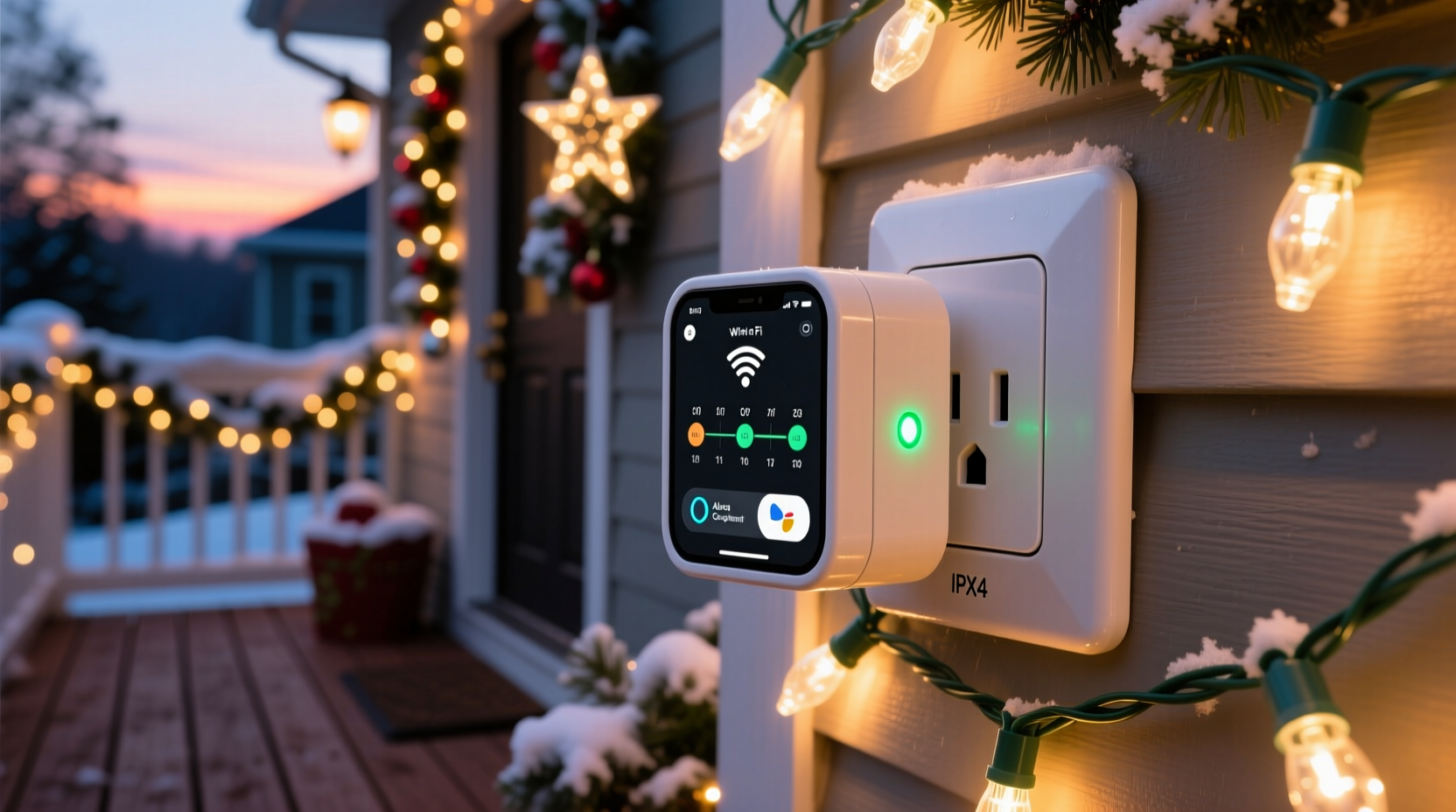
Not all smart plugs are created equal—especially when used outdoors or under seasonal conditions. To ensure reliable performance throughout the holiday season, consider these essential criteria:
- Scheduling Precision: The ability to set exact on/off times and recurring daily schedules is critical. Look for apps that support multiple daily routines (e.g., turn on at 5 PM, off at 11 PM).
- Sunset/Sunrise Scheduling: Some advanced models let you trigger lights based on local sunset and sunrise times, which change daily. This keeps your display perfectly timed year-round.
- Weather Resistance: If your outlet is outdoors, ensure the smart plug has an outdoor-rated version or is protected by a weatherproof cover.
- Wi-Fi Reliability: A stable connection prevents missed triggers. Avoid plugs known for frequent disconnections or slow response times.
- Voice Assistant Compatibility: Integration with Alexa, Google Assistant, or Siri allows for voice commands and broader home automation.
- Energy Monitoring: While not essential, this feature helps track electricity usage from decorative lights, especially useful if running them for several hours nightly.
- App Usability: A cluttered or buggy app makes scheduling frustrating. Prioritize brands with intuitive interfaces and regular software updates.
Top 5 Smart Plugs for Automating Christmas Lights
After evaluating dozens of models based on user reviews, technical specs, and real-world performance, five smart plugs stand out for reliably managing holiday lighting schedules.
| Model | Scheduling Options | Outdoor Use | Compatibility | Price Range |
|---|---|---|---|---|
| Kasa Smart Wi-Fi Plug (KP115) | Daily timers, sunrise/sunset, countdowns | No (indoor only) | Alexa, Google Assistant, Kasa app | $15–$20 |
| TP-Link Tapo P110 | Custom daily schedules, geofencing | No | Alexa, Google Assistant, Tapo app | $13–$18 |
| Wemo Mini Smart Plug | Advanced rules, sunrise/sunset, randomize on/off | No | Alexa, Google Assistant, Apple HomeKit | $25–$30 |
| Meross Smart Outdoor Plug (MSS620) | Daily schedules, sunrise/sunset, delayed shutdown | Yes (IP65 weather-resistant) | Alexa, Google Assistant, Meross app | $20–$25 |
| Amazon Smart Plug (4th Gen) | Daily routines, energy tracking, preset scenes | No | Alexa-only, no third-party apps | $25–$30 |
The Meross MSS620 earns top marks for users with outdoor displays due to its weather resistance and robust scheduling. For indoor use, the Kasa KP115 offers exceptional value with accurate sunset-based automation and excellent app stability. Meanwhile, Apple ecosystem users will appreciate the Wemo Mini for its seamless integration with HomeKit and advanced logic options like randomized on-times for security-like effects.
“Reliable scheduling isn’t just about convenience—it’s about consistency. A smart plug that fails to activate on time breaks the magic of holiday lighting.” — Daniel Reeves, Smart Home Automation Consultant
Step-by-Step Setup for Automatic Evening Lighting
Setting up automatic Christmas light control takes less than 15 minutes. Follow this timeline to get everything running smoothly before the first snowfall.
- Week 1: Choose and Purchase Your Smart Plug
Select a model based on location (indoor/outdoor), ecosystem compatibility, and desired features. Order early to avoid shipping delays. - Week 2: Install and Connect the Plug
Plug into a grounded outlet, download the companion app, and follow setup instructions. Ensure your Wi-Fi signal is strong at the installation point. - Week 3: Test Basic On/Off Control
Use the app to manually turn the plug on and off. Confirm your Christmas lights respond correctly and there are no flickering issues. - Week 4: Program the Schedule
Navigate to the scheduling section in the app. Set “On” time for 30 minutes before sunset and “Off” after midnight (or adjust based on local ordinances). - Final Week: Enable Sunset Mode (if available)
In Kasa, Meross, and Wemo apps, toggle the “Sunset to Sunrise” automation. This dynamically adjusts daily so your lights stay in sync with changing daylight. - Day of Launch: Verify Operation
Monitor the first two evenings to confirm lights activate on time. Check the app logs if anything fails.
For households using multiple strands, daisy-chaining is acceptable as long as total wattage stays below the plug’s maximum load (typically 1,800 watts). However, avoid overloading; use separate plugs for large displays to reduce fire risk and improve reliability.
Real Example: How One Family Automated Their Entire Display
The Thompson family in Minneapolis had been stringing lights manually for over a decade. With both parents working late and kids in winter sports, someone often forgot to turn the display on. In 2022, they invested in two Meross MSS620 outdoor smart plugs—one for roof lights, another for yard inflatables.
Using the Meross app, they created a schedule that activates both plugs at local sunset and turns them off at 11:30 PM. They enabled “auto-adjust for daylight changes,” so the timing shifts gradually through December. During a week-long vacation, they verified remote access worked flawlessly via mobile data.
“We didn’t miss a single night,” said Sarah Thompson. “Neighbors thought we were home the whole time. It felt like magic.”
Their total cost was under $50, and they reused the plugs for Easter and Halloween decorations the following year, proving the investment pays off beyond the holidays.
Tips for Maximizing Performance and Safety
While smart plugs simplify automation, proper usage ensures longevity and safety—especially when left unattended for weeks.
- Use surge protectors for added electrical safety, particularly in areas prone to power fluctuations.
- Avoid covering smart plugs with insulation or fabric, which can cause overheating.
- Update firmware regularly—manufacturers often release patches for bugs affecting scheduling accuracy.
- If using extension cords, ensure they’re rated for outdoor use and not buried under snow or ice.
- Consider setting up email or push notifications for power loss alerts, so you know if the circuit trips.
Checklist: Preparing Your Smart Plug for Holiday Duty
Before the season starts, go through this checklist to ensure smooth operation:
- ✅ Confirm Wi-Fi network strength near the outlet
- ✅ Test plug responsiveness via smartphone app
- ✅ Create and save a daily lighting schedule
- ✅ Enable sunset/sunrise automation if available
- ✅ Verify voice assistant pairing (e.g., “Alexa, turn on Christmas lights”)
- ✅ Inspect cord connections for wear or moisture damage
- ✅ Set end date for schedule (e.g., January 7) to avoid leaving lights on indefinitely
Frequently Asked Questions
Can I use a smart plug with LED Christmas lights?
Yes, nearly all modern LED Christmas lights work seamlessly with smart plugs. Unlike older incandescent sets, LEDs draw minimal power and pose little risk of overloading the circuit. Just verify the total wattage of your display doesn’t exceed the plug’s limit (usually 1,800W).
What happens if my Wi-Fi goes down?
Most smart plugs lose remote and scheduled functionality during outages unless they support local control (like some Thread/Zigbee models). However, once Wi-Fi returns, they typically reconnect automatically and resume the next scheduled event. For critical reliability, consider a plug with battery backup or mesh networking support.
Do smart plugs increase my electric bill?
The plug itself consumes negligible power (under 1 watt). Any increase comes from the connected lights. However, automation can actually reduce energy use by ensuring lights aren’t left on accidentally overnight. With precise scheduling, many users see lower bills compared to manual control.
Conclusion: Make This Holiday Season Effortless
Automating your Christmas lights with the right smart plug transforms a tedious nightly chore into a seamless, joyful experience. Whether you choose the affordable Kasa KP115, the rugged Meross outdoor model, or the Apple-friendly Wemo Mini, the key is selecting a device that matches your environment, schedule needs, and existing tech ecosystem.
With accurate sunset tracking, dependable Wi-Fi performance, and simple app controls, your holiday display can glow brightly every evening—without lifting a finger. The small upfront investment pays dividends in convenience, energy savings, and neighborhood admiration.




 浙公网安备
33010002000092号
浙公网安备
33010002000092号 浙B2-20120091-4
Comments
No comments yet. Why don't you start the discussion?