
Starting a creative project—whether it’s writing a novel, designing a brand, composing music, or launching an art series—often feels like standing at the edge of a cliff. The idea excites you, but the blank page, empty canvas, or silent studio paralyzes you. This isn’t laziness; it’s procrastination rooted in fear, perfectionism, and uncertainty. The good news? It’s not permanent. With the right mindset and practical techniques, you can break through inertia and build momentum that carries you forward.
Creative blocks are universal. Even acclaimed artists, writers, and designers face them. What separates those who finish from those who stall is not talent, but strategy. Below are proven, field-tested methods to help you overcome hesitation, silence inner critics, and start creating with purpose.
Understand the Real Causes of Creative Procrastination
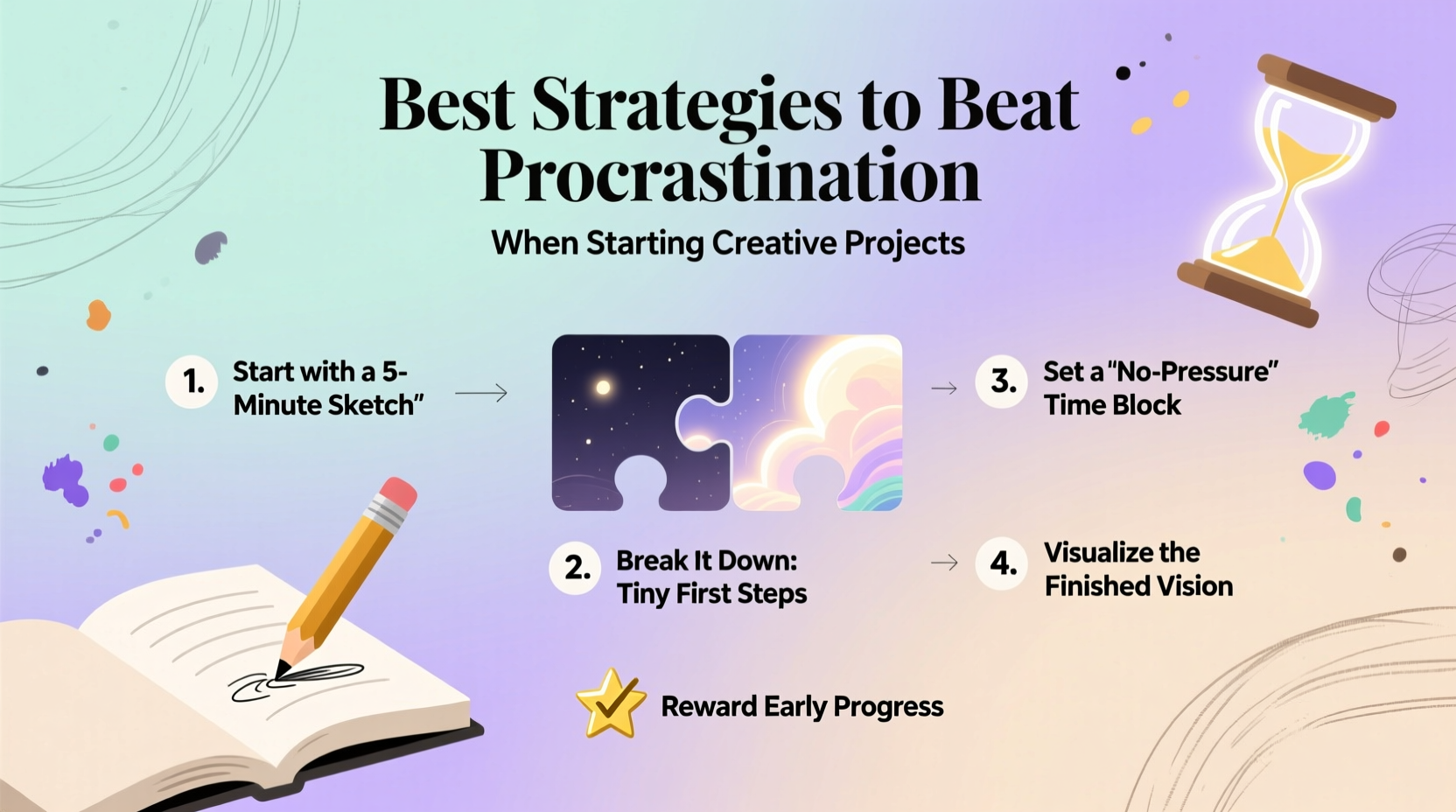
Before applying solutions, recognize what’s really holding you back. Procrastination on creative work rarely stems from poor time management. Instead, it’s often emotional: fear of failure, fear of judgment, or fear that your work won’t live up to expectations. Psychologist Dr. Piers Steel, author of *The Procrastination Equation*, explains:
“Procrastination is an emotion regulation problem, not a time management problem. We delay tasks that make us feel anxious, insecure, or overwhelmed—even if we know they’re important.” — Dr. Piers Steel
In creative work, these emotions are amplified. Unlike structured tasks with clear guidelines, creative projects are open-ended. There’s no single “right” way to begin, which leads to decision paralysis. Acknowledging this emotional component is the first step toward overcoming it.
Break the Project into Micro-Starts
The biggest mistake creatives make is assuming they need to begin with brilliance. They wait for inspiration, the perfect conditions, or a fully formed vision. But creativity doesn’t flow from waiting—it flows from doing.
Instead of aiming to write a chapter, commit to writing one sentence. Instead of designing a full website, sketch one element. These micro-starts bypass resistance by making the task feel trivial. Once you begin, momentum takes over.
Author Anne Lamott calls this approach the “one-inch picture frame” method—focusing only on the small section directly in front of you, not the entire canvas.
- Define the smallest possible action that counts as progress (e.g., “open document,” “sketch three thumbnail ideas”)
- Set a timer for 5 minutes and complete only that step
- Stop after 5 minutes—or continue if you feel inspired
This technique leverages the Zeigarnik Effect: our brains remember uncompleted tasks more vividly than completed ones. Starting creates psychological tension that pulls you back to finish.
Create a Pre-Work Ritual
Rituals signal to your brain that it’s time to shift into creative mode. Without them, starting requires constant willpower. With them, you automate the transition from distraction to focus.
A pre-work ritual doesn’t need to be elaborate. It could be:
- Brewing tea and opening a specific notebook
- Listening to the same instrumental playlist
- Writing down one intention for the session (“Today, I’ll draft the opening scene”)
The key is consistency. Over time, your brain begins to associate the ritual with creative output, reducing the friction of beginning.
Use Time-Boxing to Defeat Perfectionism
Perfectionism is the archenemy of creative progress. It demands flawless execution from the very first stroke, which is impossible—and paralyzing. Time-boxing dismantles this by limiting how long you can work on a task, forcing you to prioritize action over polish.
For example, instead of saying, “I’ll work on my painting until it’s done,” say, “I’ll paint for 30 minutes without stopping or judging.” This shifts your goal from producing a masterpiece to simply showing up and experimenting.
| Unproductive Goal | Time-Boxed Alternative |
|---|---|
| Write the perfect blog post | Write for 25 minutes without editing |
| Design a flawless logo | Spend 20 minutes sketching 10 rough concepts |
| Compose a hit song | Record one melody idea in 15 minutes |
Time-boxing also prevents burnout. Knowing you only have to focus for a short burst makes starting easier. And surprisingly, constraints often spark greater creativity.
Build Accountability Through Public Commitment
One of the most effective ways to overcome procrastination is to make your intentions visible. When you tell someone—especially publicly—that you’re working on something, social pressure helps keep you on track.
Writer James Clear used this principle when he committed to publishing an article every Monday and Thursday. By announcing his schedule, he created external accountability that forced consistency, even on days he didn’t feel inspired.
“If you want to take something seriously, make it a public promise. The discomfort of breaking your word becomes stronger than the discomfort of doing the work.” — James Clear, author of *Atomic Habits*
You don’t need a large audience. Simply telling a friend, posting in a community group, or sharing weekly updates on social media can create enough accountability to sustain momentum.
Mini Case Study: From Idea to Exhibition in 90 Days
Sophie, a freelance illustrator, had wanted to launch her first solo exhibition for years. Each time she began planning, she’d get overwhelmed by the scope—curating 20 original pieces, securing a venue, promoting the event—and abandon the effort within days.
Her breakthrough came when she shifted focus from the final outcome to daily micro-actions. She committed to:
- Creating one small sketch per day (10 minutes max)
- Posting each sketch on Instagram with the hashtag #90DayGallery
- Holding herself accountable by tagging two friends weekly
Within three months, she had not only completed 90 sketches but also built an audience excited about her work. A local café owner saw her posts and offered space for the exhibition. Sophie’s project went from stalled dream to reality—not because she became more talented, but because she stopped waiting for motivation and started building systems.
Adopt the “Draft Zero” Mindset
Most creative people never finish because they never truly begin. They edit as they go, delete sentences seconds after typing them, or discard sketches immediately. This is the trap of premature editing.
To escape it, embrace “Draft Zero”—a version so rough it doesn’t need to be good. Its only purpose is to exist. Give yourself permission to write poorly, draw clumsily, or compose awkward melodies. You’re not creating a final product; you’re mining raw material.
Once Draft Zero exists, refinement becomes possible. As sculptor Michelangelo said, “I saw the angel in the marble and carved until I set him free.” He didn’t expect the angel to appear instantly—he knew creation was a process of removal, not instant manifestation.
Step-by-Step Guide: Launch Your Creative Project in 7 Days
Follow this timeline to transform an idea into tangible progress:
- Day 1: Define your project in one sentence (e.g., “I’m writing a 10-chapter children’s book about a robot who learns to garden.”)
- Day 2: Break it into 5–7 major milestones (e.g., outline, Chapter 1 draft, character sketches, etc.)
- Day 3: Choose one milestone and split it into micro-tasks (e.g., “Write opening paragraph”)
- Day 4: Schedule three 25-minute work blocks using time-boxing
- Day 5: Perform your first micro-task with zero pressure to be good
- Day 6: Share your progress with one person or online community
- Day 7: Review what you’ve created and plan the next micro-step
By Day 7, you’ll have moved from idea to action—and built a foundation for continued progress.
Checklist: Beat Creative Procrastination Now
Use this checklist before your next creative session:
- ☐ Identify the smallest possible first step
- ☐ Set a timer for 5–25 minutes
- ☐ Perform your pre-work ritual (tea, music, etc.)
- ☐ Turn off notifications and distractions
- ☐ Start without editing or judging
- ☐ Share your progress with at least one person
- ☐ Celebrate completion, no matter how small
FAQ
What if I start but lose motivation after a few days?
Motivation naturally fades. That’s why systems matter more than feelings. Stick to your scheduled time blocks and rituals even when uninspired. Action often precedes motivation, not the other way around.
How do I deal with self-doubt during early stages?
Self-doubt is normal. Reframe it: instead of asking “Is this good?” ask “Is this moving me forward?” Progress builds confidence. Also, remind yourself that all great works began as messy drafts.
Can these strategies work for team-based creative projects?
Absolutely. Teams benefit even more from time-boxing, micro-milestones, and public commitments. Use shared documents, regular check-ins, and collaborative deadlines to maintain collective momentum.
Conclusion: Start Before You’re Ready
The most powerful force against procrastination is action—not perfect action, not inspired action, but any action. Creativity thrives not in the absence of fear, but in spite of it. Every finished project began with someone deciding to begin poorly, to show up imperfectly, and to keep going.
You don’t need more time, more tools, or more confidence. You need to start—today, now, with whatever small step is in front of you. Open the document. Pick up the pen. Press record. Let your first attempt be flawed, incomplete, and gloriously real.




 浙公网安备
33010002000092号
浙公网安备
33010002000092号 浙B2-20120091-4
Comments
No comments yet. Why don't you start the discussion?