
Choosing a pet fish is often seen as a low-effort alternative to cats or dogs. But behind the glass of an aquarium lies a complex ecosystem that demands attention, knowledge, and consistency. Two of the most popular freshwater species for beginners are betta fish and goldfish. Both are colorful, widely available, and frequently marketed as “easy” pets. Yet, their care requirements differ significantly — and misunderstanding those differences leads to high mortality rates among both species.
The myth that either fish can thrive in a tiny bowl with minimal maintenance persists despite overwhelming evidence to the contrary. The real question isn’t just which fish lives longer, but which one aligns better with realistic beginner capabilities, space constraints, and long-term commitment. To answer this, we need to examine water conditions, diet, tank setup, health concerns, and common misconceptions.
Understanding the Natural Needs of Each Species
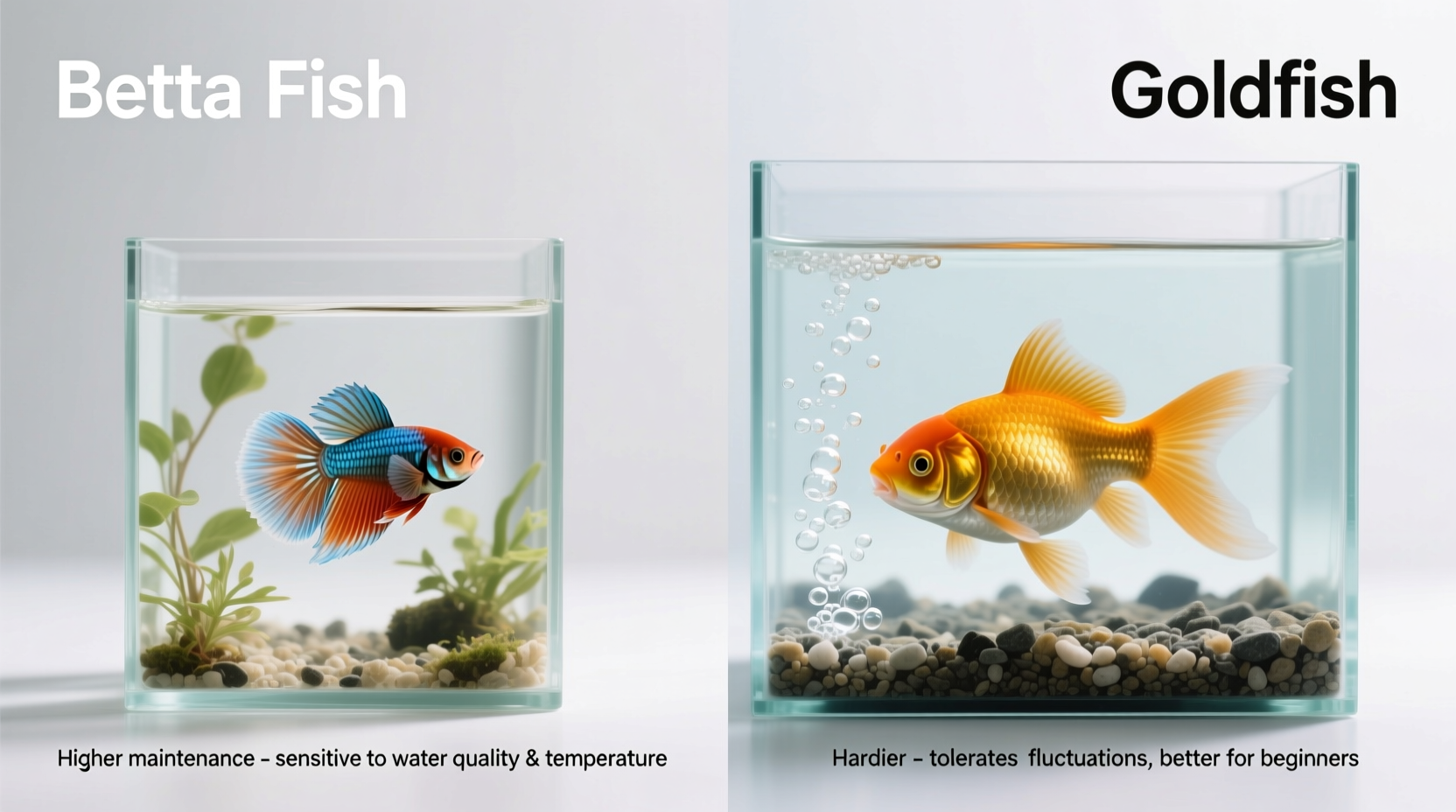
Betta fish (Betta splendens) originate from shallow rice paddies, slow-moving streams, and floodplains in Southeast Asia. Their ability to breathe atmospheric air via a labyrinth organ allows them to survive in oxygen-poor waters — a trait often misinterpreted as permission to live in unfiltered, stagnant containers. In reality, while they can endure poor conditions temporarily, they do not thrive in them.
Goldfish (Carassius auratus), on the other hand, are coldwater fish native to East Asia. They inhabit ponds, lakes, and slow rivers. Unlike bettas, goldfish require highly oxygenated, cool water and produce significant waste due to their inefficient digestive systems. Despite being sold in small bowls at fairs and pet stores, goldfish grow large — some varieties exceeding 12 inches — and can live over a decade with proper care.
Their biological differences set the foundation for divergent care standards. Mistaking survival for suitability has led generations of owners to unintentionally shorten their fish’s lives.
Care Complexity Compared
To determine which fish is truly easier to keep alive, we must compare key aspects of care: tank size, filtration, water temperature, diet, social behavior, and maintenance frequency.
| Factor | Betta Fish | Goldfish |
|---|---|---|
| Minimum Tank Size | 5 gallons (single male) | 20+ gallons (common), 10+ gallons (fancy) |
| Water Temperature | 76–82°F (heater required) | 65–72°F (no heater typically needed) |
| Filtration | Necessary, low-flow filter | Strong filtration essential |
| Waste Production | Moderate | Very high |
| Diet | Carnivorous (protein-rich) | Omnivorous (vegetable + protein) |
| Social Compatibility | Solitary (males aggressive) | Schooling (can live in groups) |
| Lifespan (with proper care) | 3–5 years | 10–15+ years |
| Common Health Issues | Ick, fin rot, swim bladder | Dropsy, constipation, ammonia poisoning |
At first glance, bettas appear simpler: smaller tank, less waste, shorter lifespan. But simplicity isn't solely about scale. Goldfish don’t need heaters, reducing equipment cost and failure risk. However, their massive bioload demands rigorous filtration and frequent water changes — a challenge for inexperienced aquarists.
Bettas, while needing warmer water, are more sensitive to sudden temperature shifts. A heater is non-negotiable, but overheating or inadequate monitoring can be deadly. Their labyrinth organ doesn’t eliminate the need for clean, cycled water; it merely provides a backup breathing method when conditions deteriorate.
“Many people think bettas are disposable because they’re sold so cheaply. But they’re sentient creatures with specific needs. A well-cared-for betta shows personality, color, and activity — signs of true health.” — Dr. Laura Chen, Aquatic Veterinarian
Setting Up the Right Environment
A successful aquarium starts before the fish arrives. Cycling the tank — establishing beneficial bacteria that convert toxic ammonia into nitrites and then nitrates — takes 4–6 weeks. Skipping this step causes “new tank syndrome,” a leading cause of early fish death.
For bettas: A 5-gallon heated and filtered tank with a lid is ideal. Use soft lighting and include hiding spots like silk plants or ceramic caves. Avoid strong currents; bettas have long fins that make swimming against flow exhausting. Substrate isn’t mandatory but improves aesthetics and supports plant growth.
For goldfish: Fancy varieties (like Orandas or Fantails) need at least 10 gallons for one fish, plus 5–10 gallons per additional fish. Commons and comets grow much larger and require outdoor ponds or 30+ gallon tanks. Sponge or canister filters work best. Gravel should be smooth to prevent mouth injury during foraging.
Step-by-Step: First Month of Tank Setup
- Week 1: Set up tank with substrate, decorations, filter, and heater (for betta). Fill with dechlorinated water.
- Week 2: Begin cycling process. Add ammonia source (e.g., pure ammonia or fish food) to feed bacteria. Test water daily for ammonia, nitrite, and nitrate.
- Week 3–4: Ammonia spikes, then declines as nitrites rise. Eventually, nitrites drop and nitrates appear — indicating cycle completion.
- After Cycle Complete: Perform a 50% water change, retest parameters, and slowly acclimate your fish.
This process is identical for both species. Where they differ is post-setup maintenance. Goldfish tanks require weekly 30–50% water changes due to heavy waste. Betta tanks need 25–30% weekly changes, slightly less labor-intensive but still critical.
Feeding and Health Maintenance
Diet plays a major role in longevity. Overfeeding is the second-leading cause of fish death after poor water quality.
- Bettas need high-protein foods: freeze-dried bloodworms, brine shrimp, or quality pellet food designed for carnivores. Feed once or twice daily, only what they consume in 2 minutes.
- Goldfish benefit from a mix of sinking pellets, blanched vegetables (peas, zucchini), and occasional treats. Peas help prevent constipation and swim bladder issues.
Both species suffer from overfeeding. Uneaten food decays, spiking ammonia levels. Goldfish are especially prone to bloating due to gulping air while eating at the surface. Sinking pellets reduce this risk.
Health monitoring is vital. Signs of illness include lethargy, clamped fins, rapid gilling, white spots (ich), or floating imbalance. Early detection allows treatment with medications like methylene blue (for fungus) or aquarium salt (for parasites).
“I treated a goldfish with severe buoyancy issues caused by chronic pea deficiency. After dietary correction and Epsom salt baths, it recovered fully within three weeks.” — Mark Reynolds, Aquarium Technician, Midwest Aquarium Society
Realistic Ownership Scenarios
Consider two hypothetical first-time fish owners:
Jessica, age 28, lives in a small apartment with limited space. She works long hours but wants a visually appealing pet. She buys a male betta and a 5-gallon kit with heater, filter, and LED light. She researches online, learns about cycling, and waits six weeks before introducing her fish. She performs weekly water changes, feeds appropriately, and avoids tank mates. Her betta lives 4.5 years, displaying vibrant colors and active behavior.
Tyler, age 12, receives a goldfish at a school fair. It comes in a plastic bag, later transferred to a 1-gallon bowl without a filter or heater. His parents assume it needs “a little water and some flakes.” Within three weeks, the fish becomes listless and dies. They replace it twice before giving up, concluding goldfish are “hard to keep.”
Jessica succeeded because she respected the betta’s needs despite its reputation for hardiness. Tyler failed not due to the fish’s difficulty, but because the environment was fatally inadequate — a fate far more common with goldfish due to outdated cultural myths.
Common Misconceptions Debunked
- Myth: Bettas can live in vases or flower bowls. Truth: These setups lack space, filtration, and stable temperatures. Long-term confinement leads to stress, disease, and early death.
- Myth: Goldfish have a 3-second memory. Truth: Studies show goldfish remember tasks and environments for months. They learn feeding routines and recognize owners.
- Myth: You don’t need a filter if you change the water often. Truth: Beneficial bacteria reside in filters. Without them, ammonia builds rapidly between changes, poisoning the fish.
Beginner-Friendly Checklist
Use this checklist to ensure success with either species:
- Choose the right tank size (5+ gal for betta, 10+ gal for fancy goldfish)
- Install proper filtration (low-flow for betta, high-capacity for goldfish)
- Add a heater if keeping bettas (maintain 78°F)
- Cycle the tank before adding fish (4–6 weeks)
- Use dechlorinated water for all changes
- Feed appropriate food in small amounts once or twice daily
- Perform weekly water changes (25–50%)
- Test water regularly for ammonia, nitrite, and nitrate
- Observe fish daily for signs of illness
- Research compatible tank mates — if any (betta males should be alone)
Frequently Asked Questions
Can I keep a betta and a goldfish together?
No. Their temperature, dietary, and space needs are incompatible. Goldfish prefer cooler water (65–72°F), while bettas require warmth (76–82°F). Housing them together stresses both and shortens lifespans.
Do goldfish really grow to the size of their tank?
No. This is a dangerous myth. Goldfish may stunt in small tanks — a sign of malnutrition and poor health, not adaptation. Stunted fish suffer organ damage and die prematurely.
Are bettas lonelier than goldfish?
Bettas are territorial and do not require companionship. In fact, male bettas fight to the death if housed together. Goldfish are social and do better in pairs or groups — provided the tank is large enough.
Conclusion: Which Is Actually Easier?
The answer depends on context. For someone with limited space, a predictable schedule, and willingness to maintain warm, clean water, a betta fish is generally easier to keep alive. The smaller tank footprint, lower waste output, and reduced filtration demands make initial setup more manageable.
However, goldfish are not inherently harder — they are simply misunderstood. Their lack of heating needs reduces one variable, but their high bioload demands diligence in filtration and water changes. With proper education, a goldfish can be just as viable a beginner pet — and potentially more rewarding due to their intelligence and longevity.
In truth, neither fish is “easy” if “easy” means neglect-proof. Both require informed care, consistent maintenance, and respect for their biology. The ease comes not from the species, but from the owner’s commitment to learning and acting on that knowledge.
If you're choosing based on which species gives a beginner the highest chance of success with minimal prior experience, **the betta wins narrowly** — but only when kept in a properly cycled, heated, and filtered 5-gallon tank. Any smaller, and the advantage vanishes.




 浙公网安备
33010002000092号
浙公网安备
33010002000092号 浙B2-20120091-4
Comments
No comments yet. Why don't you start the discussion?