
When selecting onions at the market, size is more than just a matter of convenience—it directly influences flavor intensity, cooking behavior, and yield in recipes. Large onions are among the most widely used vegetables in global cuisines, prized not only for their availability and affordability but also for their versatility. Understanding what defines a \"big\" onion, how its size impacts culinary applications, and when to choose one over smaller varieties empowers cooks to make better decisions in meal preparation. Whether you're building a stew, roasting vegetables, or crafting a raw salsa, recognizing the role of onion size ensures consistency, efficiency, and superior taste.
Definition & Overview
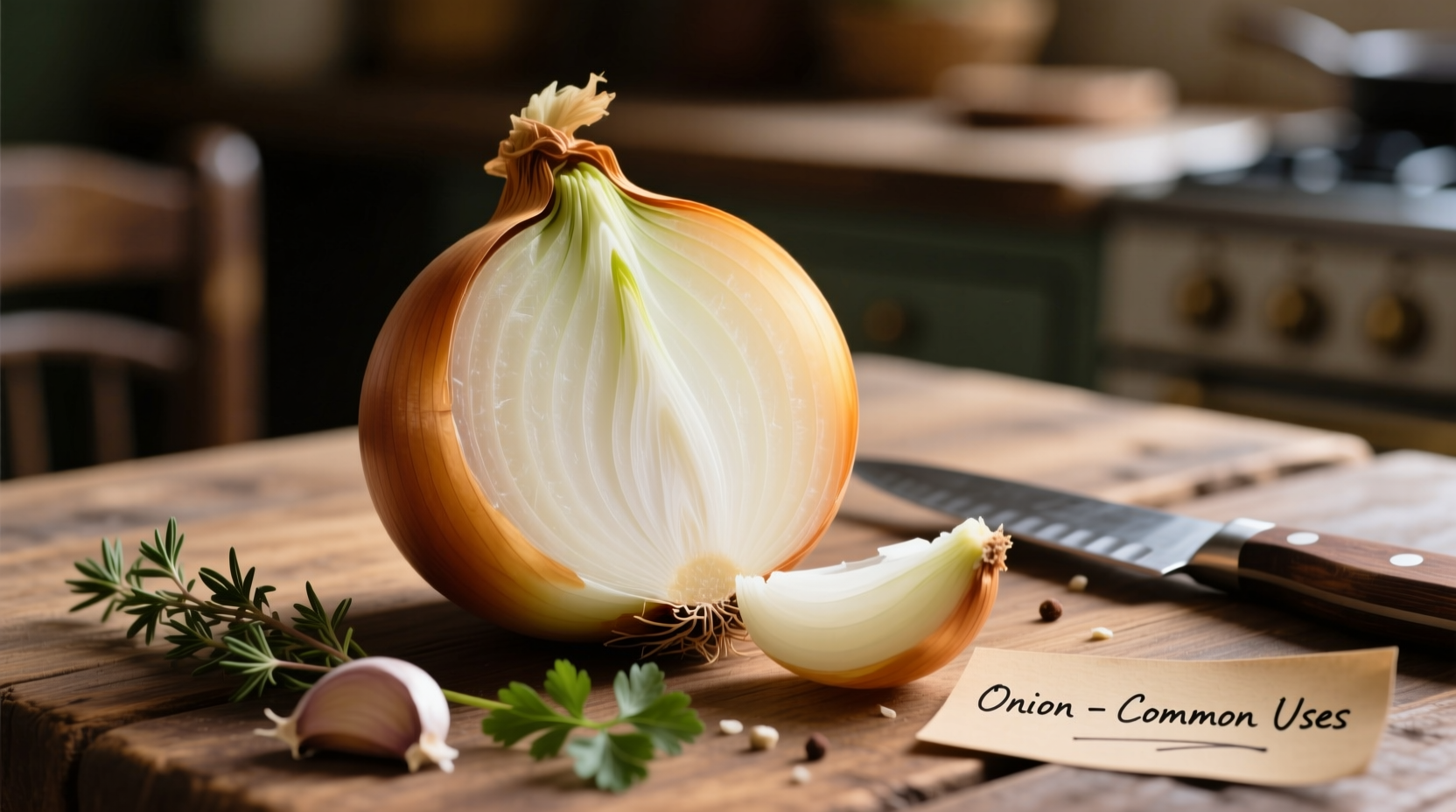
A \"big onion\" typically refers to mature, full-sized bulbs of common onion cultivars (Allium cepa), usually measuring 3 to 4 inches (7.5–10 cm) in diameter and weighing between 8 and 16 ounces (225–450 grams). These are distinct from young or green onions, pearl onions, or shallots, which differ in maturity, structure, and culinary function. The most common type of large onion found in supermarkets is the yellow storage onion, though white and red (purple) varieties also appear in similar sizes.
Onions have been cultivated for over 5,000 years, originating in Central Asia and spreading globally through trade and agriculture. Today, they form the aromatic foundation—often called the \"holy trinity\" or \"mirepoix\"—in countless savory dishes across cultures. Their pungency comes from sulfur-containing compounds released when cells are cut, which transform during cooking into sweet, umami-rich flavors. A large onion represents the peak of bulb development: firm, layered, and capable of delivering both volume and depth to cooked and raw preparations alike.
Key Characteristics of Big Onions
The physical and chemical properties of large onions define their performance in the kitchen. Unlike small or specialty onions, big onions offer greater mass and structural integrity, making them ideal for slicing, dicing, grilling, and long-cooking methods.
| Characteristic | Description |
|---|---|
| Flavor Profile | Sharp and pungent when raw; develops sweetness and complexity when sautéed, roasted, or caramelized. Yellow onions are more robust, while red and white tend to be slightly milder. |
| Aroma | Pronounced sulfurous scent when cut, especially in yellow varieties. Diminishes with heat and transforms into a rich, savory fragrance during cooking. |
| Color/Form | Firm, round bulbs with dry outer skins (brown, white, or purple-red). Inner layers are crisp and translucent, ranging from white to pale lavender depending on variety. |
| Heat Level (Pungency) | Moderate to high when raw. Pungency varies by type: yellow > white > red. Cooking reduces bite significantly. |
| Culinary Function | Serves as an aromatic base, thickener, flavor enhancer, and textural component. Adds moisture and body to sauces, soups, stews, and braises. |
| Shelf Life | 3–4 weeks at room temperature in a cool, dark, well-ventilated space. Up to 2 months under optimal storage conditions. Once cut, refrigerate and use within 5–7 days. |
Practical Usage: How to Use Big Onions in Cooking
Large onions excel in recipes that require bulk, even cooking, and consistent texture. Their size allows for efficient prep—fewer onions needed per dish—and uniform results when chopped or sliced. Because they contain more water and sugar than smaller types, big onions caramelize beautifully and contribute substantial volume to composite dishes.
Dicing and Slicing for Everyday Meals
One medium-large onion yields approximately 1 to 1.5 cups of diced onion, enough to flavor a four-serving stir-fry, soup, or sauce. When preparing, remove the root and stem ends, peel away papery skin, halve pole-to-pole, then slice crosswise or dice finely based on recipe needs. For sautés and simmered dishes, a fine to medium dice ensures even cooking. Coarser cuts work well in stocks or roasted vegetable medleys where texture is less critical.
Caramelization and Slow-Cooking Applications
Big onions are ideal for caramelizing due to their higher sugar content and dense layering. To caramelize properly, slice one large onion thinly (about ⅛ inch), cook slowly in fat (butter or oil) over medium-low heat for 30–45 minutes, stirring occasionally until deep golden brown. The process breaks down sugars and amino acids via the Maillard reaction, creating complex umami notes essential in French onion soup, gravy bases, or pizza toppings.
Grilling and Roasting Whole
Because of their size and firmness, large onions can be grilled or roasted whole or in thick wedges. Cut into ½-inch slices, brush with olive oil, season with salt and pepper, and grill over medium heat for 4–6 minutes per side. Grilled onions develop smoky-sweet flavors and soft textures, perfect for burgers, kebabs, or grain bowls. Alternatively, roast halved onions cut-side up at 400°F (200°C) for 30–40 minutes alongside meats or root vegetables.
Use in Sauces, Stews, and Braises
In long-cooked dishes like beef bourguignon, chili, or tomato sauce, large onions dissolve partially during simmering, contributing thickness and background sweetness. Finely minced, they integrate seamlessly without leaving fibrous chunks. For clarity in consommés or refined sauces, some chefs sweat diced onion gently, then strain it out after flavor extraction—a technique known as *sweating aromatics*.
Pro Tip: When a recipe calls for “1 large onion,” assume about 1 cup diced. If substituting smaller onions, adjust quantity accordingly—two medium shallots ≈ one-third cup, so three to four would equal one large onion. Always taste raw onion first; if overly sharp, rinse briefly under cold water to reduce bite before using raw in salads or salsas.
Variants & Types of Big Onions
While all large onions share general characteristics, specific cultivars vary in color, flavor, and best-use scenarios. Choosing the right type enhances dish balance and authenticity.
- Yellow Onions: Most common large onion. Strong, pungent when raw; becomes deeply sweet and savory when cooked. Ideal for frying, roasting, soups, and stews. Accounts for ~80% of onions consumed in North America.
- White Onions: Crisper and slightly milder than yellow. Often used in Mexican cuisine (e.g., pico de gallo, guacamole) and white sauces where color matters. Less sweet when caramelized but excellent in quick-cook applications.
- Red (Purple) Onions: Vibrant hue and moderately spicy when raw. Best for salads, sandwiches, pickling, and garnishes. Retains some crunch after light cooking. Color fades when heated, turning blue-gray unless acidified (e.g., vinegar in pickling).
- Spanish Onions: A subtype of yellow or white onion grown for size and mildness. Typically larger (up to 5 inches), flatter, and sweeter. Excellent for onion rings, grilling, or eating raw in sandwiches.
- Walla Walla & Vidalia Onions: Seasonal sweet onions available spring through summer. Lower in pyruvic acid (responsible for eye irritation), hence minimal burn. Require no cooking to enjoy; superb sliced on burgers or in salads.
| Type | Best Used For | Raw Use? | Cooked Use? | Storage Duration |
|---|---|---|---|---|
| Yellow | Soups, stews, roasts, caramelizing | Moderate – can be sharp | Excellent – develops deep flavor | 3–4 months |
| White | Mexican dishes, salsas, white sauces | Good – clean, crisp bite | Very good – retains texture | 2–3 months |
| Red | Salads, pickles, sandwiches, garnish | Excellent – colorful, tangy | Fair – color changes with heat | 1–2 months |
| Spanish | Grilling, frying, sandwiches | Very good – mild | Very good – holds shape | 1–2 months |
| Vidalia/Walla Walla | Raw applications, light sautéing | Outstanding – virtually no burn | Fair – delicate when cooked | 3–6 weeks (refrigerate) |
Comparison with Similar Ingredients
Despite visual similarities, not all alliums are interchangeable with large onions. Substitutions may alter flavor balance, texture, or cooking time.
| Ingredient | How It Differs from Big Onion | When to Substitute |
|---|---|---|
| Shallots | Much smaller, more delicate, with subtle garlic notes. Sweeter and less acidic when raw. Higher cost per ounce. | In vinaigrettes, fine sauces, or dishes requiring nuanced flavor. Use 1½ parts shallot for 1 part large onion. |
| Green Onions (Scallions) | Young, unbulbed plants. Mild, grassy flavor. White base has slight bite; green tops are herbaceous. | As garnish, in stir-fries, or raw applications. Not suitable for long cooking. Replace only the green portion of a recipe. |
| Pearl Onions | Small (1-inch), round, often used whole. Milder than large onions but denser texture. | In stews, casseroles, or pickled form. Require peeling—time-consuming unless blanched first. |
| Leeks | Elongated, layered stalks. Sweeter and subtler than onions. Require thorough cleaning to remove grit. | In creamy soups (e.g., vichyssoise), gratins, or braised sides. Use white and light green parts only. |
| Garlic | Individual cloves; intensely aromatic and spicy. Belongs to same family but functions as seasoning, not base vegetable. | Never a direct substitute. Enhances rather than replaces onion. Use sparingly to complement. |
“Understanding onion size isn’t just about quantity—it’s about predicting how much flavor, moisture, and texture your dish will gain. One large yellow onion can build the entire foundation of a braise. That’s power.” — Chef Elena Torres, Culinary Instructor, Institute of Sustainable Cuisine
Practical Tips & FAQs
How do I reduce tearing when cutting a big onion?
Cutting damages cell walls, releasing syn-propanethial-S-oxide, a volatile compound that irritates eyes. To minimize tears: chill the onion for 30 minutes before cutting, use a sharp knife to reduce cell rupture, cut near running water or under a vent hood, or wear goggles. Avoid cutting the root end until last—the root contains the highest concentration of enzymes.
Can I freeze a cut big onion?
Yes. Chop or slice, spread on a tray to freeze individually, then transfer to a sealed bag. Frozen onions lose crispness but work well in cooked dishes like soups, sauces, and casseroles. No need to thaw before use. Expect slight flavor degradation after 3 months.
Are big onions less flavorful than small ones?
No. Flavor depends more on variety and freshness than size. However, larger onions may taste milder per bite due to higher water content. For concentrated flavor, reduce slowly or use raw in small quantities.
What’s the best way to store a half-used big onion?
Wrap tightly in plastic wrap or place cut-side down on a plate covered with a bowl. Refrigerate and use within 5–7 days. Exposure to air accelerates spoilage and odor absorption.
How many cups of chopped onion does one large onion yield?
Approximately 1 to 1.5 cups, depending on exact size and chop method. A standard “large” onion in recipes assumes ~1 cup diced. Weighing (around 12 oz / 340 g) offers the most accuracy.
Is there a nutritional difference between large and small onions?
Nutritionally, they are nearly identical per serving. One cup of chopped onion (regardless of original size) provides ~60 calories, 15 g carbohydrates, 3 g fiber, and significant vitamin C, B6, and antioxidants like quercetin. Larger bulbs simply allow more servings per unit.
Storage Checklist:
✔ Store whole, unpeeled onions in a cool, dark, dry place with airflow (not plastic bags)
✔ Keep away from potatoes—they emit moisture and ethylene gas, speeding spoilage
✔ Discard if soft, moldy, or sprouting excessively
✔ Never store whole onions in the refrigerator unless very high humidity (e.g., crisper drawer)
✔ Label frozen portions with date—use within 3 months for best quality
Summary & Key Takeaways
Large onions are foundational ingredients in home and professional kitchens, offering unmatched utility due to their size, flavor development, and adaptability. Measuring 3–4 inches in diameter and yielding 1–1.5 cups when diced, they provide efficient volume for feeding multiple people without compromising taste. Yellow, white, and red varieties each serve distinct roles—yellow for cooking, red for raw presentation, white for cultural authenticity—while sweet types like Vidalia shine in seasonal, fresh applications.
Their ability to caramelize, dissolve into sauces, hold shape on the grill, and enhance umami makes big onions indispensable. Proper handling—such as minimizing tears during prep, storing correctly, and understanding substitutions—ensures optimal performance. Compared to shallots, leeks, or green onions, large onions deliver bulk and depth that cannot be replicated by smaller alliums.
Mastering the use of big onions elevates everyday cooking. From building flavor bases to transforming into sweet, golden condiments, these versatile bulbs remain one of the most important tools in a cook’s pantry. Choose wisely, store properly, and leverage their full potential—one slice at a time.
Next time you reach for an onion, consider not just the color—but the size. Your recipe’s texture, yield, and flavor profile depend on it.




 浙公网安备
33010002000092号
浙公网安备
33010002000092号 浙B2-20120091-4
Comments
No comments yet. Why don't you start the discussion?