
At first glance, a chain dangling from a pocket might seem like just another punk-inspired accessory. But within subcultures, fashion circles, and motorcycle communities, the details matter. The debate between biker pants chains and wallet chains isn’t just about semantics—it’s about purpose, placement, construction, and cultural identity. While both involve metal links attached to clothing or accessories, their roles diverge in subtle but significant ways that affect durability, styling, and even personal safety.
Understanding the distinction helps avoid missteps in fashion choices, ensures functional reliability, and respects the roots of each piece. Whether you're building a rugged biker look, refining an edgy streetwear ensemble, or simply curious about urban accessories, knowing what sets these chains apart makes all the difference.
Origins and Cultural Significance
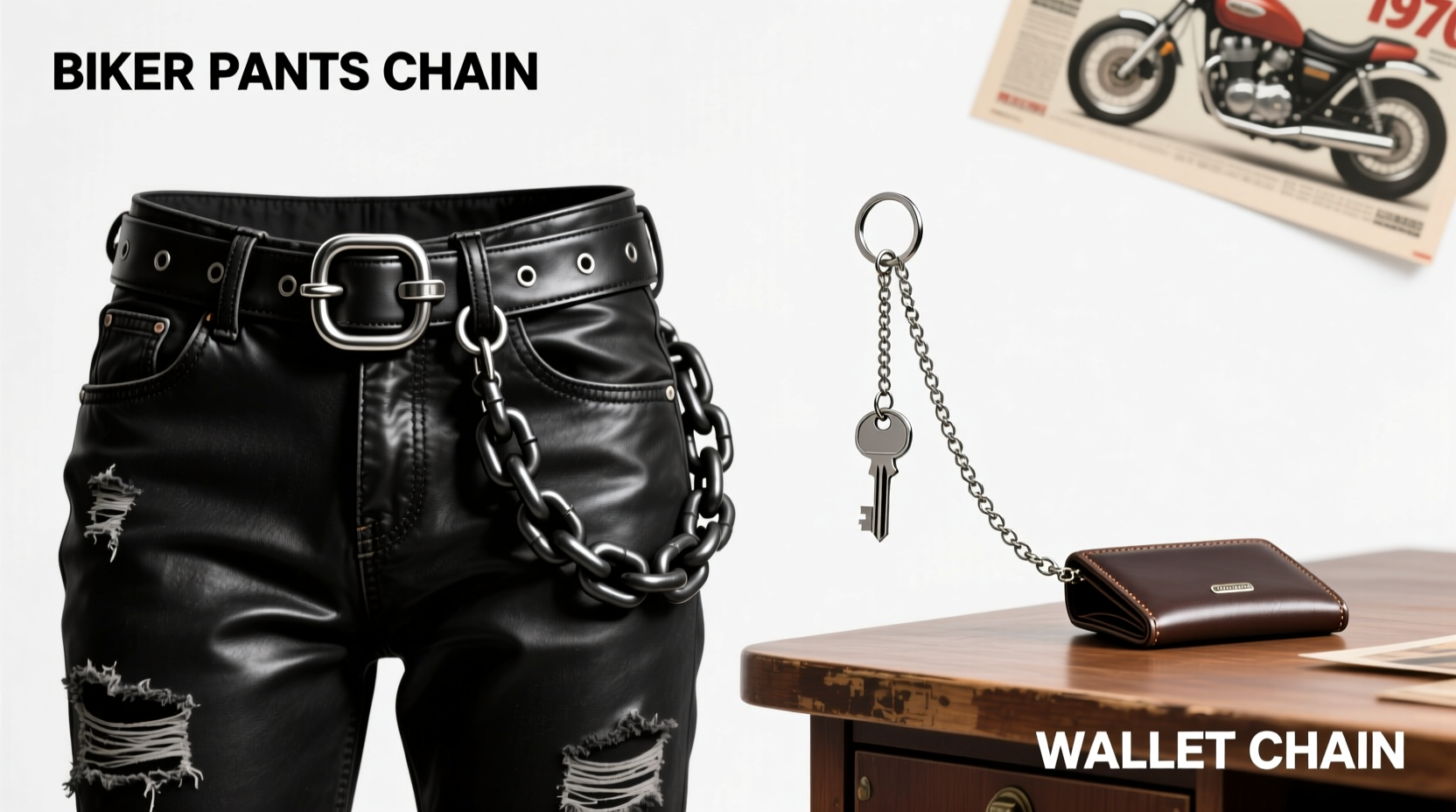
The use of chains in men’s fashion traces back to early 20th-century industrial workers and motorcyclists. Factory laborers used watch chains to secure timepieces in vest pockets, while bikers adopted similar hardware for both utility and rebellion. By the 1950s and 60s, motorcycle clubs began incorporating heavy-duty chains into their gear—not only as symbols of defiance but as practical tools to prevent lost items during rides.
Wallet chains emerged directly from this tradition. Riders would attach one end to their wallet and the other to a belt loop or pants pocket to keep valuables secured on open bikes. Over time, the design evolved into a staple of punk, goth, and alternative styles. Biker pants chains, meanwhile, were often integrated into denim or leather chaps as decorative elements—sometimes symbolic, sometimes structural.
“Chains in biker culture aren’t just fashion—they’re part of a language. Every link has a story.” — Marcus Reed, curator at the American Motorcycle Heritage Foundation
Today, the lines blur as mainstream fashion adopts these once-niche accessories. Yet purists still distinguish between functional wallet security and aesthetic embellishment found in pant-side chains.
Functional Differences: Purpose and Design
Despite visual similarities, biker pants chains and wallet chains serve fundamentally different purposes—and that shapes their design.
- Wallet chains are built for security. They connect a wallet to a belt loop, inner pocket, or D-ring on jeans. Their primary job is to prevent loss, especially on motorcycles, in crowds, or during movement.
- Biker pants chains, also known as \"drape chains\" or \"style chains,\" are typically affixed from one side pocket to another or from pocket to belt loop purely for visual impact. They don’t usually connect to anything removable.
This distinction affects several key features:
| Feature | Wallet Chain | Biker Pants Chain |
|---|---|---|
| Attachment Points | Two ends: one to wallet (via grommet or clip), one to garment | Both ends fixed to clothing (e.g., front pocket to rear loop) |
| Chain Type | Heavy-duty, cut-resistant (e.g., double-ended bolt rings, locking clasps) | Decorative; may use thinner gauge or ornamental links |
| Length | Shorter (4–8 inches) to minimize slack and snag risk | Longer (8–14 inches) for visible drape effect |
| Material Strength | Reinforced steel, chrome-plated brass, or titanium-coated alloys | Variety of metals; some prioritize shine over strength |
| Primary Function | Utility – prevents wallet theft or loss | Style – enhances rugged or rebellious aesthetic |
How to Wear Each With Intention
Wearing either chain without understanding its role can lead to awkward moments—or worse, broken hardware or lost belongings. Here’s how to integrate each into your wardrobe appropriately.
Wearing a Wallet Chain Correctly
- Choose a wallet with a built-in loop or grommet designed for chains.
- Select a chain length that allows the wallet to sit flush in your pocket without excess slack.
- Attach one end securely to the wallet, the other to a reinforced belt loop or jean rivet.
- Avoid letting the chain drag on the ground; this increases wear and tripping hazard.
- Opt for low-profile designs if riding a motorcycle—long chains can catch in moving parts.
Styling a Biker Pants Chain
- Position the chain diagonally from front pocket to rear belt loop for classic asymmetry.
- Use chains with brushed or matte finishes for a subtler, modern edge.
- Match metal tones to other hardware (belt buckles, zippers) for cohesion.
- On leather pants, consider custom-installed rivets to anchor the chain securely.
- Pair with boots and layered denim for full biker-inspired outfits.
“I’ve seen people wear flashy wallet chains upside down—attached to nothing. That defeats the whole point.” — Dana Lopez, vintage apparel restorer and stylist
Real-World Example: Two Riders, Two Approaches
Consider two motorcyclists: Jake and Amir. Both ride café racers and dress in black denim and leather jackets. But their approach to chains reveals distinct priorities.
Jake wears a 6-inch stainless steel wallet chain connecting his slim RFID wallet to a custom D-ring on his right pocket. He values function—he once leaned over at a gas station and felt his wallet slide halfway out. The chain caught it. “Saved me $300 and my license,” he says.
Amir, on the other hand, wears a 12-inch curb-link chain draped from his left front pocket to his hip belt loop. It doesn’t attach to anything inside. “It’s about the look,” he explains. “The way it moves when I walk—it’s part of my presence.”
Neither is wrong. But confusing the two could mean Amir loses his wallet—or Jake ends up with a chain that snags on his bike’s chain drive.
Step-by-Step Guide to Choosing the Right Chain
- Assess Your Need: Do you want to secure a wallet or enhance your silhouette?
- Determine Attachment Style: For wallets, choose double-ended chains with secure connectors. For style, look for single-ended or looped chains meant for fabric attachment.
- Check Material Quality: Look for hardened steel or brass cores. Avoid hollow or plated chains that chip easily.
- Test Fit: Attach the chain to your intended item and move around. Does it restrict motion? Does it hang naturally?
- Evaluate Durability: Run a light file test—if the metal scratches too easily, it won’t last.
- Style Match: Ensure the chain complements your existing wardrobe: rugged for biker looks, sleek for urban edge.
Frequently Asked Questions
Can I use a biker pants chain as a wallet chain?
Not safely. Most pants chains lack the secure attachment points needed for wallets. Using them this way risks losing your wallet or damaging the chain.
Are wallet chains still practical today?
Absolutely. In crowded environments—concerts, festivals, public transit—a wallet chain acts as a passive theft deterrent. It’s also useful for motorcyclists and active lifestyles where pockets aren’t secure.
Do chains damage jeans over time?
Potentially. Constant friction can wear fabric thin, especially near attachment points. Reinforce pockets with rivets or use lined loops to extend garment life.
Final Thoughts: Form, Function, and Identity
The difference between biker pants chains and wallet chains isn’t trivial—it reflects a deeper choice between expression and utility. One celebrates rebellion through aesthetics; the other protects against real-world loss. Recognizing this empowers smarter decisions in fashion and function.
In an era where trends recycle endlessly, honoring the origin of accessories adds authenticity to personal style. Whether you're securing your essentials or sculpting your silhouette, choose intentionally. A well-chosen chain does more than dangle—it declares independence, preparedness, and attention to detail.




 浙公网安备
33010002000092号
浙公网安备
33010002000092号 浙B2-20120091-4
Comments
No comments yet. Why don't you start the discussion?