
For shift workers, quality sleep isn’t just about duration—it’s about consistency, depth, and timing. When your work hours fall outside the traditional 9-to-5 window, your body’s natural circadian rhythm is disrupted. Sunlight becomes an enemy when you're trying to sleep during the day, making light management a critical factor in achieving restorative rest. Two of the most popular tools for blocking light are blackout curtains and sleep masks. But which one truly supports better sleep for those working night shifts, early mornings, or rotating schedules?
The answer isn't universal. It depends on individual preferences, sleeping environments, and lifestyle habits. However, understanding the strengths and limitations of each option can help shift workers make informed decisions that align with their unique needs.
How Light Disruption Impacts Shift Workers’ Sleep
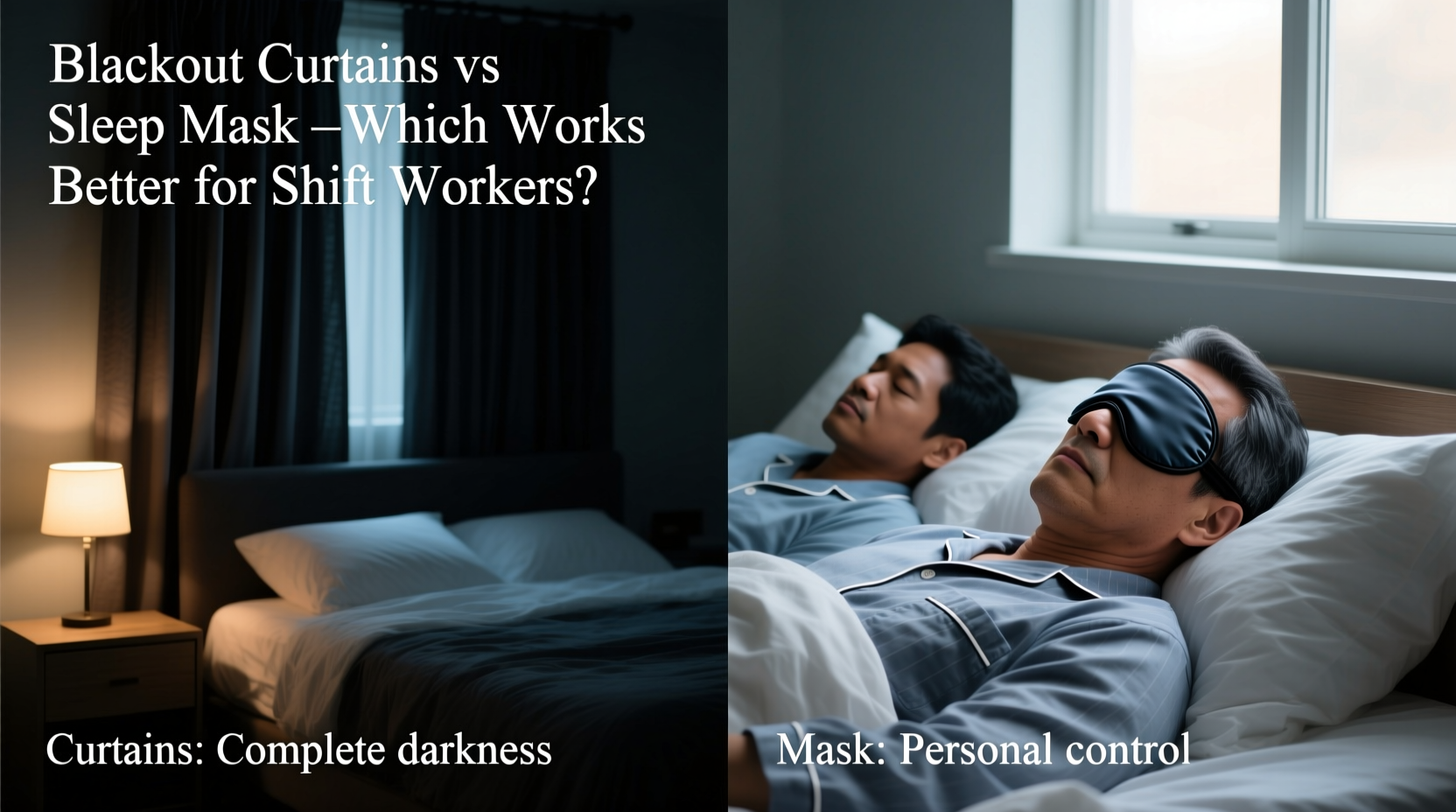
Human biology is wired to respond to light as a primary cue for wakefulness. Exposure to sunlight—or even bright artificial light—triggers the suppression of melatonin, the hormone responsible for regulating sleep. For someone working nights and attempting to sleep between 8 a.m. and 3 p.m., morning sunlight streaming through windows can interfere with both falling asleep and staying asleep.
A study published in the Journal of Clinical Sleep Medicine found that daytime sleep for shift workers is typically 1–3 hours shorter than nighttime sleep, with more frequent awakenings. Environmental light is a major contributor to this discrepancy. Even small amounts of light—such as streetlamps, passing cars, or digital device glow—can fragment sleep cycles and reduce REM and deep sleep stages.
“Controlling ambient light is non-negotiable for shift workers who want to protect their sleep architecture.” — Dr. Lena Patel, Circadian Rhythm Specialist
This is where light-blocking solutions come into play. Both blackout curtains and sleep masks aim to eliminate visual stimulation and support melatonin production, but they do so in fundamentally different ways.
Blackout Curtains: Room-Wide Darkness with Long-Term Benefits
Blackout curtains are thick, tightly woven window coverings designed to block 99–100% of external light. Unlike regular drapes or thermal blinds, true blackout curtains often feature multiple layers, including foam or rubberized backing, to prevent any light leakage around edges.
When properly installed, these curtains transform a bedroom into a dark sanctuary, mimicking nighttime conditions regardless of the time of day. This environmental consistency signals the brain that it’s safe to sleep, helping regulate internal clocks over time.
Beyond light control, high-quality blackout curtains offer additional benefits:
- Thermal insulation: They help maintain room temperature by reducing heat transfer through glass.
- Noise reduction: The dense fabric absorbs some ambient sound, such as traffic or neighborhood activity.
- Privacy: Complete visual blockage ensures no prying eyes from outside.
For individuals sharing a space with others—especially families or roommates—blackout curtains provide a passive solution. Everyone in the room benefits without needing personal gear. This makes them ideal for partners who have different schedules or children who nap during the day.
Sleep Masks: Personalized, Portable Light Blocking
In contrast, sleep masks are wearable accessories made from soft fabrics like silk, cotton, or memory foam. Designed to fit snugly over the eyes, they block light directly at the source. Their portability makes them a favorite among travelers, hospital patients, and shift workers on the go.
Unlike curtains, sleep masks don’t alter the room environment—they create a personal zone of darkness. This allows users to lie in bed with lights on (e.g., for reading) and then simply pull the mask down when ready to sleep. Some models even include contoured designs that avoid pressure on the eyelids, preserving comfort for side sleepers.
One of the biggest advantages of sleep masks is flexibility. A nurse finishing a night shift at 7 a.m. can wear a mask during a short nap before running errands, without needing access to a fully blacked-out room. Similarly, flight attendants or truck drivers on layovers rely on masks to sleep in unfamiliar or suboptimal environments.
However, sleep masks come with notable drawbacks:
- Frequent slippage: Movement during sleep can displace the mask, letting light in.
- Discomfort: Tight straps may cause headaches; low-quality materials can irritate sensitive skin.
- Limited sensory control: While they block light, they do nothing to reduce noise or room temperature issues.
Additionally, some users report difficulty breathing or feelings of claustrophobia, especially with padded or sealed designs.
Comparative Analysis: Blackout Curtains vs Sleep Mask
To determine which solution offers superior support for shift workers, consider the following key factors:
| Feature | Blackout Curtains | Sleep Mask |
|---|---|---|
| Light Blockage | Blocks 99–100% of ambient light in entire room | Blocks direct light to eyes only; gaps may allow leakage |
| Comfort | No physical contact; doesn’t affect sleep posture | May shift or press on eyes/ears; strap discomfort possible |
| Mobility | Fixed installation; not portable | Highly portable; usable anywhere |
| Setup Time | Requires measurement and mounting (one-time effort) | Instant use—just put it on |
| Circadian Support | Creates full-environment darkness, reinforcing sleep cues | Partial cue; brain still registers light in periphery |
| Cost Over Time | $40–$100 upfront; lasts 5+ years | $10–$30; may need replacement every 6–18 months |
| Shared Use | Benefits all occupants in the room | Individual-only use |
The data suggests that while sleep masks win in convenience and cost-efficiency, blackout curtains provide a more holistic and biologically supportive sleep environment. They align better with long-term circadian health by transforming the bedroom into a consistent, predictable sleep space.
Real-World Example: Nurse Sarah’s Shift Sleep Strategy
Sarah, a 34-year-old ICU nurse in Chicago, works three 12-hour night shifts per week. After her first year on the job, she struggled with chronic fatigue, poor concentration, and mood swings. Her daytime sleep was frequently interrupted by sunlight filtering through thin blinds and neighborhood noise.
She initially tried a $15 sleep mask, which helped briefly—but found it slipped off during the night and left marks on her face. She also noticed she’d wake up if her partner turned on a lamp or used their phone nearby.
After consulting a sleep coach, Sarah invested in custom-fit blackout curtains for her bedroom. She paired them with white noise and a cool room temperature (67°F). Within two weeks, her average sleep duration increased from 5.2 to 6.8 hours, and she reported feeling more alert during shifts.
“The difference was immediate,” she said. “I didn’t have to worry about covering the windows with towels or fighting with my husband over lighting. My body finally felt like it was sleeping at ‘night.’”
While she still uses a lightweight sleep mask during quick naps at her parents’ house (where blackout curtains aren’t installed), her home setup remains centered on environmental control.
Expert Recommendations and Combined Approaches
Many sleep specialists advocate for using both tools together—not as alternatives, but as complementary layers of defense against light disruption.
“The best outcomes I see are from patients who combine environmental modifications with personal aids. Think of blackout curtains as the foundation, and the sleep mask as insurance.” — Dr. Rajiv Mehta, Neurologist & Sleep Disorder Clinician
This layered approach maximizes protection. Curtains eliminate overhead and peripheral light, while the mask ensures complete darkness even if a crack of light appears under the door or from electronic devices.
Consider this step-by-step strategy for optimizing sleep hygiene:
- Assess your bedroom: Identify all sources of light (windows, LED indicators, door gaps).
- Install blackout curtains: Choose high-opacity, floor-length panels with side tracks if possible.
- Add secondary sealing: Use draft stoppers or遮光布 tape to block light under doors or around window frames.
- Select a comfortable sleep mask: Opt for contoured, hypoallergenic designs with adjustable straps.
- Test and adjust: Sleep for a few days with curtains only, then with both, noting differences in sleep onset and continuity.
Frequently Asked Questions
Can I use regular curtains instead of blackout ones?
Standard curtains typically block only 20–50% of light. For shift workers, this level of filtration is insufficient. True blackout curtains are specifically engineered with opaque linings and tight weaves to achieve near-total darkness. If budget is a concern, look for \"room darkening\" options as a middle ground.
Are there downsides to wearing a sleep mask every day?
Prolonged daily use can lead to skin irritation or accelerated wrinkles if the material is rough or the fit is too tight. Silk or satin masks reduce friction. Also, improper cleaning can contribute to acne or eye infections. Replace your mask every 6–12 months or sooner if it shows signs of wear.
Do blackout curtains really improve sleep quality?
Yes. Research from the International Journal of Environmental Research and Public Health shows that participants using blackout curtains experienced faster sleep onset, fewer awakenings, and higher melatonin levels compared to controls. The effect was most pronounced in urban environments with high light pollution.
Final Recommendation: Build a Sleep-Conducive Environment First
While sleep masks offer undeniable convenience, they should not be the primary tool for managing light exposure in shift workers. Relying solely on a mask places the burden of sleep support on a fragile, easily displaced accessory. In contrast, blackout curtains create a stable, repeatable sleep environment that reinforces healthy circadian rhythms over time.
The ideal approach combines both: use blackout curtains as the cornerstone of your sleep space, and keep a high-quality sleep mask on hand for travel, temporary stays, or added assurance. Pair these with other sleep hygiene practices—consistent bedtime routines, limited screen exposure before sleep, and controlled room temperature—for optimal results.
Ultimately, better sleep for shift workers isn’t about quick fixes—it’s about building systems that honor the body’s biological needs despite unnatural schedules. Investing in your sleep environment today pays dividends in energy, focus, and long-term health tomorrow.




 浙公网安备
33010002000092号
浙公网安备
33010002000092号 浙B2-20120091-4
Comments
No comments yet. Why don't you start the discussion?