
The evolution of professional and elevated casual dressing has brought renewed attention to two wardrobe staples: coordinated blazer and skirt sets and their more flexible counterparts—separates. Once dismissed as outdated corporate uniforming, matching sets have reemerged with a modern twist, championed by designers and influencers alike. Meanwhile, separates continue to dominate wardrobes for their adaptability and cost efficiency. So, which approach truly serves today’s dynamic lifestyle? The answer isn’t binary. It depends on personal style, occasion demands, budget, and long-term wearability.
The Resurgence of the Matching Set
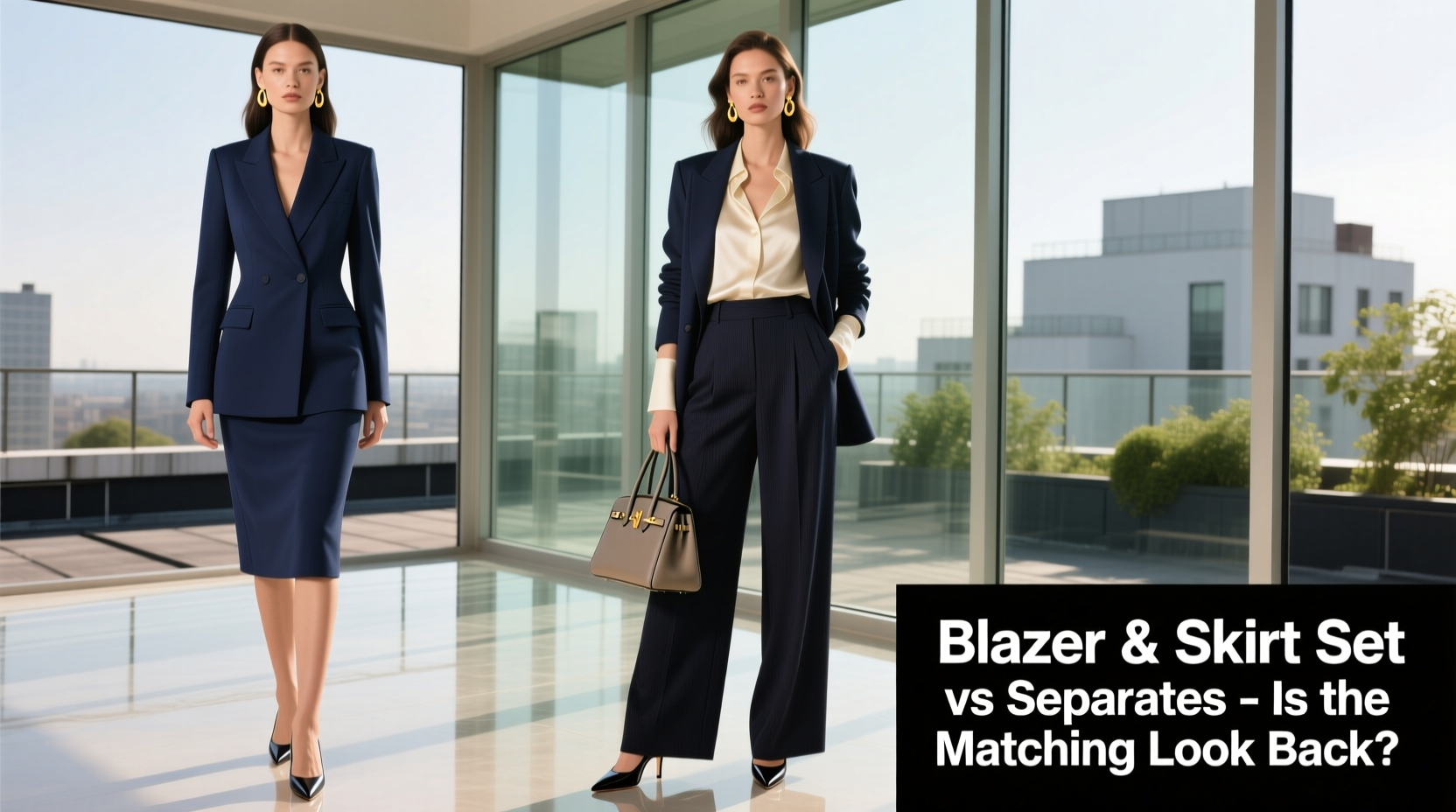
Fashion cycles are cyclical, and the tailored two-piece suit—once the hallmark of 1980s power dressing—is enjoying a sophisticated revival. Today’s versions are softer, more fluid, and often come in unexpected fabrics like linen, bouclé, or even sustainable blends. Designers from Bottega Veneta to Khaite have embraced the concept, offering sets that blur the line between formal and editorial fashion.
What makes the matching set compelling now is its effortless polish. A perfectly coordinated blazer and skirt eliminate guesswork. There’s no risk of clashing textures or mismatched tones. For high-stakes environments—client meetings, presentations, or media appearances—a cohesive look projects confidence and intentionality.
“Today’s matching sets aren’t about conformity—they’re about curated ease. They say, ‘I know what works, and I didn’t have to think too hard about it.’” — Lila Monroe, Fashion Stylist & Editorial Director at *The Style Edit*
Additionally, social media has amplified the appeal. Outfits that photograph well—clean lines, tonal harmony—are favored by influencers and algorithms alike. The “set” aesthetic thrives in this visual economy, where looking put-together instantly matters.
Why Separates Still Reign Supreme
Despite the allure of coordination, separates remain the backbone of practical dressing. Their strength lies in versatility. A single blazer can pair with trousers, jeans, skirts, or dresses. A pencil skirt can be dressed up with a silk blouse or down with a tucked-in tee. This flexibility extends the life of each piece and maximizes wardrobe ROI.
Consider a working professional with limited closet space. Investing in three separates—a navy blazer, a black pencil skirt, and a cream tweed skirt—allows for at least six distinct outfits. In contrast, a single matching set offers one primary combination, with limited options for breaking it apart without visual imbalance.
Beyond utility, separates support sustainable consumption. When only the top or bottom needs replacing due to wear or fit changes, you avoid discarding an entire ensemble. This modular approach aligns with slow fashion principles and reduces textile waste.
Comparative Breakdown: Sets vs Separates
| Factor | Matching Set | Separsates |
|---|---|---|
| Style Impact | High—immediately polished, runway-ready appearance | Moderate to high—depends on coordination skill |
| Versatility | Low—designed as a unit; harder to split | High—endless mix-and-match potential |
| Cost Efficiency | Lower—two items bought together, but less reuse | Higher—each piece reused across multiple outfits |
| Occasion Suitability | Ideal for formal events, photo shoots, interviews | Suitable for office, casual outings, travel |
| Wardrobe Longevity | Shorter if trends shift; harder to update individually | Longer—pieces evolve with changing styles |
Real-World Example: Two Professionals, Two Approaches
Take Sarah, a marketing executive who frequently appears in client-facing roles. She invested in a beige linen-blend blazer and skirt set for her Q2 campaign launch. Paired with minimalist jewelry and pointed heels, the look projected cohesion and authority. Photos from the event went viral internally, and she received compliments on her “effortless elegance.” However, she found herself hesitant to wear the pieces apart—the skirt felt too formal with casual tops, and the blazer looked incomplete without the matching bottom.
In contrast, Maya, a freelance consultant, built her capsule wardrobe around separates. Her navy wool blazer has been worn with wide-leg trousers, a floral midi skirt, dark jeans, and even over a turtleneck dress. By rotating combinations, she maintains variety without expanding her closet. When asked about her style philosophy, she says, “I want to look intentional, not costumed.”
Both approaches work—but serve different lifestyles. Sarah benefits from the symbolic power of the set; Maya values functional diversity.
When to Choose a Set (and When Not To)
Matching sets shine in scenarios where image precision matters. Consider them for:
- Job interviews in conservative industries
- Speaking engagements or panel appearances
- Formal events requiring elevated dressing
- Photography sessions or brand collaborations
On the other hand, avoid full sets when:
- You prioritize long-term wearability over trendiness
- Your schedule varies widely (office, errands, dinner)
- You're building a minimalist or sustainable wardrobe
- The fabric or cut is highly fashion-forward and likely to date quickly
Step-by-Step: Building a Balanced Wardrobe
- Assess your lifestyle needs. How many formal vs. casual days do you have per month?
- Start with separates. Invest in one high-quality blazer and two versatile skirts in complementary colors.
- Add a matching set as a statement piece. Choose timeless fabric and cut—avoid bold patterns or extreme silhouettes.
- Test mix-and-match potential. Can the blazer from the set work with your existing separates? If yes, the investment pays off.
- Evaluate after 3 months. Track how often each item is worn. Adjust future purchases accordingly.
FAQ
Can I wear just one piece of a matching set?
Yes, but only if the individual piece is designed to stand alone. Neutral-toned blazers from sets often work well with contrasting bottoms. Skirts may be trickier if they feature unique textures or trims that look odd without their counterpart.
Are matching sets appropriate for everyday wear?
It depends on the fabric and fit. A structured polyester set may feel too formal for daily use, but a soft cotton or knit set in a relaxed cut can transition seamlessly from office to weekend outings.
Do matching sets look cheap or outdated?
Not inherently. Poor fit, low-quality fabric, or overly shiny materials contribute to a dated appearance. Modern sets in matte finishes, natural fibers, and updated cuts appear current and luxurious.
Final Verdict: Balance Over Dogma
The debate isn’t about which option is universally better—it’s about strategic selection. The matching blazer and skirt set has reclaimed its place in fashion, not as a rigid uniform, but as a tool for intentional dressing. It offers instant sophistication and visual impact, ideal for moments when perception matters most.
Yet, separates remain the cornerstone of intelligent wardrobe planning. Their adaptability, longevity, and economic value make them indispensable for real-world living. The most stylish women don’t choose one over the other—they integrate both. A carefully chosen set elevates key occasions; a thoughtfully curated collection of separates handles the rest.
Rather than following trends blindly, assess what you actually wear, where, and why. Build outward from there. Whether you reach for a coordinated duo or mix components from across your closet, the goal remains the same: to feel confident, composed, and authentically dressed.




 浙公网安备
33010002000092号
浙公网安备
33010002000092号 浙B2-20120091-4
Comments
No comments yet. Why don't you start the discussion?