
It’s December. The tree is up. The playlist is curated—think Mariah Carey layered over Vince Guaraldi—and your living room feels like a snow globe stuck on repeat. But before the first cookie crumbles or the third round of “All I Want for Christmas Is You” hits, one question lingers: Does your speaker system match the mood? Not just in volume—but in spirit, convenience, and sonic authenticity? Bluetooth Christmas speakers have exploded onto shelves with candy-cane stripes, built-in light shows, and voice-controlled reindeer chants. Meanwhile, traditional wired or high-fidelity speakers quietly hold ground in audiophile corners and multi-room home setups. The real question isn’t which is “better”—it’s whether they can coexist, complement, and even collaborate to make your holiday gatherings richer, louder, and more joyful.
What Makes a Speaker “Christmas-Ready”?
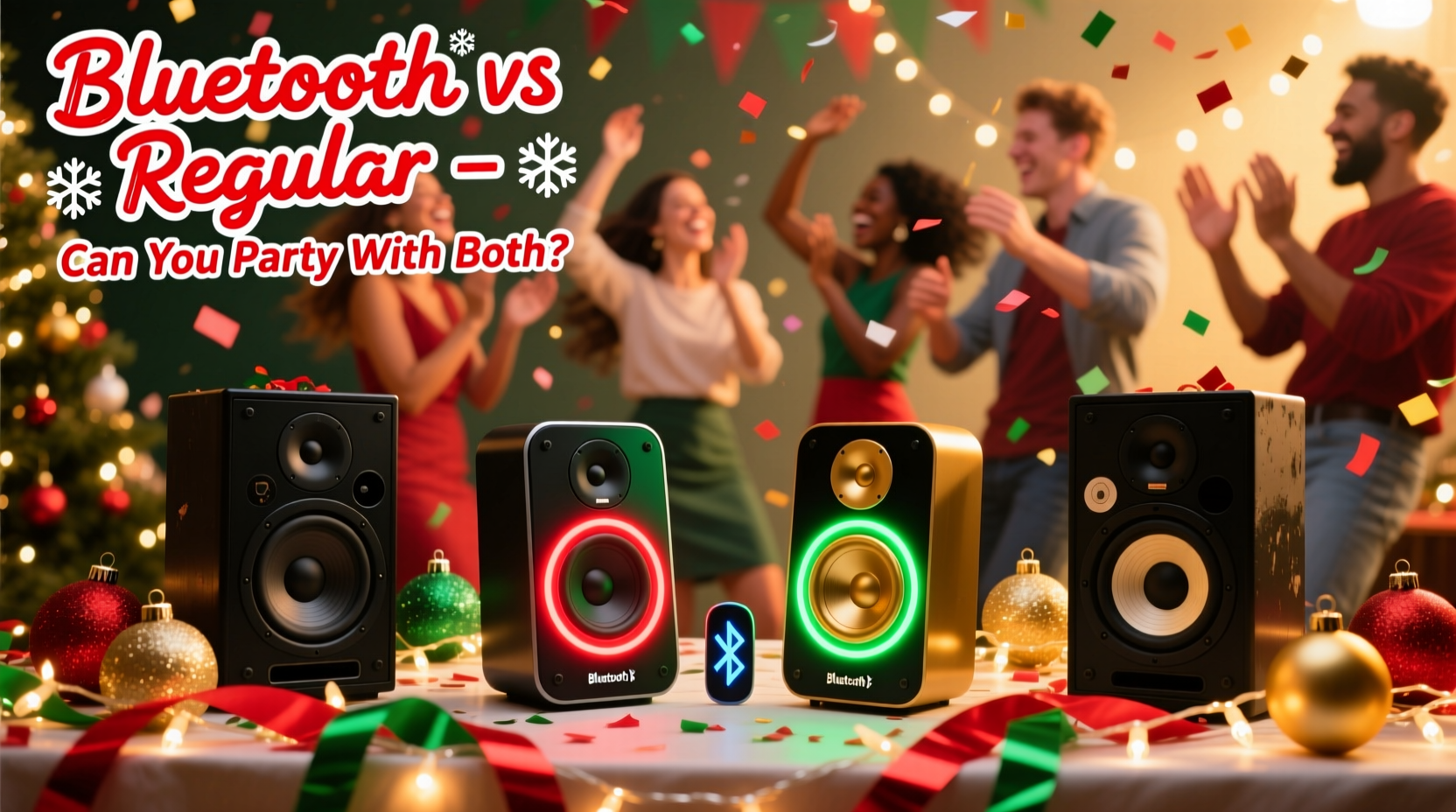
A “Christmas speaker” isn’t defined by a certification—it’s defined by intention. These devices are engineered for seasonal use: compact enough for mantel placement, durable enough for porch parties, and embedded with features that lean into the festive rhythm. Think synchronized LED patterns that pulse with “Jingle Bell Rock,” preloaded holiday EQ presets (warmer bass, brighter chimes), and even NFC-enabled carol swapping. Many include built-in microphones for karaoke-style singalongs or voice commands like “Hey Santa, play ‘Winter Wonderland’.” They’re designed for immediacy—not studio precision.
In contrast, regular speakers prioritize fidelity, longevity, and integration. A bookshelf speaker from a reputable audio brand might deliver flatter frequency response, lower distortion at high volumes, and seamless compatibility with AV receivers or multi-zone systems. Its job isn’t to twinkle—it’s to reproduce the subtle breath before Bing Crosby’s vibrato or the delicate reverb on a choir’s final “Amen.”
The distinction matters less than context. Your 200-watt floor-standing speaker may outperform any Bluetooth unit in raw acoustic accuracy—but it won’t fit inside a gingerbread house display or survive a snowball fight soundtrack session. Likewise, a $49 light-up Bluetooth speaker won’t reveal the inner harmonics of a live Nat King Cole recording—but it will keep kids dancing while cookies bake.
Sound Quality: Where Festivity Meets Fidelity
Let’s address the elephant in the room: Bluetooth Christmas speakers rarely compete with mid-tier wired or powered monitors on technical metrics. Their drivers are smaller, enclosures are often plastic and resonance-prone, and Bluetooth codecs (especially SBC) introduce compression artifacts that dull transient detail—noticeable in complex arrangements like orchestral carols or layered vocal harmonies.
That said, modern Bluetooth Christmas models have narrowed the gap significantly. Many now support aptX HD or LDAC, and premium units (like the JBL Party Box Encore Christmas Edition or UE Megaboom 3 Holiday Bundle) use passive radiators and tuned ports to bolster low-end warmth—critical for “Sleigh Ride” percussion or gospel choir basslines. In real-world listening—especially at moderate volumes in open-plan living spaces—the difference between a well-engineered Bluetooth Christmas speaker and a standard entry-level bookshelf speaker is often perceptual, not absolute.
Where regular speakers shine is consistency. They don’t sacrifice clarity for light effects. They don’t compress dynamics to accommodate battery life. And crucially, they don’t force you to choose between “sound good” and “look festive.”
Practicality & Setup: Portability, Power, and Plug-and-Play
This is where Bluetooth Christmas speakers earn their keep. Most operate on rechargeable lithium-ion batteries (8–20 hours runtime), feature IP67 water and dust resistance, and pair instantly via Bluetooth 5.3 or later. You can carry one from the kitchen to the backyard patio without tripping over cables—or worrying about outlet proximity during outdoor tree-lighting ceremonies.
Regular speakers, especially passive or higher-end active models, usually require AC power, speaker wire (for passive), or fixed placement near an amplifier or receiver. While some powered bookshelf models offer Bluetooth, few include festive design cues or ruggedized builds. Their strength lies in stability—not mobility.
But here’s what many overlook: Bluetooth Christmas speakers rarely support true stereo pairing *across brands*. You can’t seamlessly pair a Bose SoundLink Flex with a JBL Flip 6 for left/right separation unless both support the same proprietary protocol (e.g., JBL PartyBoost). Regular speakers, however, integrate effortlessly into stereo or surround configurations—whether wired or via Wi-Fi platforms like Sonos or HEOS.
| Feature | Bluetooth Christmas Speakers | Regular Speakers |
|---|---|---|
| Battery Operation | ✅ Standard (8–24 hrs) | ❌ Rare (except select portable models) |
| Weather Resistance (IP Rating) | ✅ Common (IP65–IP67) | ❌ Mostly indoor-rated |
| Stereo Pairing Flexibility | ⚠️ Brand-locked (e.g., only JBL + JBL) | ✅ Universal (wired or via Wi-Fi) |
| EQ Customization | ✅ Presets (“Holiday,” “Choir,” “Fireplace”) + app control | ✅ Full parametric EQ (via receiver or software) |
| Multi-Room Sync | ❌ Limited (unless part of ecosystem like Sonos Roam) | ✅ Native (Sonos, Denon HEOS, Yamaha MusicCast) |
Can You Party With Both? A Real-World Strategy
Yes—you absolutely can. And many households already do, without realizing it’s a strategic advantage.
Consider Sarah, a music teacher in Portland who hosts annual “Carol & Cocoa” evenings for her students’ families. Last year, she used a pair of vintage KEF LS50s (regular, wired, bi-amped) in her formal living room for intimate piano-and-voice performances—delivering nuanced phrasing and natural vocal timbre. In the adjacent sunroom, she set up two JBL Party Box 1000 Holiday Edition units (Bluetooth Christmas speakers) synced to a single source via JBL’s PartyBoost. That space hosted dancing, hot chocolate bar chatter, and impromptu drum circles. Volume levels were managed independently; the KEFs stayed warm and articulate at 78 dB, while the JBLs pushed energetic, full-spectrum energy at 92 dB without clipping.
She didn’t replace her regular speakers—she elevated them with purpose. The Bluetooth units handled crowd-scale energy; the regulars anchored emotional intimacy. No compromise. Just intelligent layering.
This dual-speaker approach works because holiday gatherings are rarely monolithic. They shift: quiet reflection → lively mingling → exuberant dancing → cozy wind-down. One speaker type rarely serves all phases equally well.
“High-fidelity audio creates presence. Festive audio creates participation. The most memorable holiday moments happen when both are present—not competing, but conversing.” — Dr. Lena Torres, Audio Psychologist and author of Sonic Rituals: How Sound Shapes Celebration
How to Integrate Both Without Chaos: A 5-Step Setup Guide
- Map Your Spaces: Identify zones by activity—not just room names. E.g., “Piano Nook” (intimacy), “Dance Floor Zone” (energy), “Porch Hangout” (casual). Assign speaker types accordingly.
- Choose Your Primary Source Hub: Use a device that supports multiple outputs—like an Apple TV 4K (AirPlay 2 to different speakers), a Chromecast Audio (discontinued but still functional), or a modern AV receiver with Bluetooth input + zone outputs. Avoid relying solely on phone Bluetooth—latency and dropouts increase with distance.
- Standardize Volume Logic: Set baseline volume on your regular speakers at -12 dB (reference level). Use Bluetooth speakers’ physical buttons or companion apps to match perceived loudness—not metered output. Human hearing perceives bass-heavy holiday tracks as “louder,” so reduce Bluetooth gain by 2–3 dB relative to regular speakers playing the same track.
- Sync Lighting & Audio (Optional but Effective): Use a smart hub (e.g., Home Assistant or SmartThings) to trigger lights based on audio metadata—e.g., “When ‘Let It Snow’ plays, fade dining room LEDs to cool white; when ‘Rockin’ Around the Christmas Tree’ starts, pulse kitchen lights red/green.” This bridges the aesthetic gap between speaker types.
- Test Before Guests Arrive: Play three representative tracks—“O Holy Night” (vocal dynamic range), “Santa Claus Is Coming to Town” (upbeat rhythm), and “Silent Night” (minimalist, ambient)—and walk through each zone. Adjust EQ, balance, and timing. Note where transitions feel natural—and where they don’t.
Frequently Asked Questions
Can I connect a Bluetooth Christmas speaker to my existing stereo system?
Yes—if your stereo has a Bluetooth receiver input or an auxiliary (3.5mm or RCA) input. Many modern receivers include Bluetooth as a source option. Simply pair the speaker to the receiver in “transmitter mode” (if supported) or use a Bluetooth transmitter dongle plugged into your receiver’s headphone jack or preamp output. Note: This adds latency and may degrade quality slightly due to double compression.
Do Bluetooth Christmas speakers drain phone batteries faster?
Marginally—yes. Streaming over Bluetooth uses more power than local playback, especially with extended sessions and high-bitrate codecs. To conserve battery, download holiday playlists ahead of time and enable offline mode in Spotify or Apple Music. Also, disable background app refresh for non-essential apps during parties.
Are there regular speakers with holiday aesthetics—without sacrificing sound?
Absolutely. Brands like Audioengine (B3+ with wood veneer finishes), Klipsch (Heritage series in cherry red or forest green), and even vintage-inspired models from Fluance or Edifier offer tasteful seasonal styling—think brushed brass accents, matte red cabinets, or etched snowflake grilles—while retaining full-range drivers, proper cabinet damping, and neutral tuning. These bridge the aesthetic and acoustic divide elegantly.
Conclusion: Harmony Over Hierarchy
Holiday audio isn’t about choosing sides—it’s about designing resonance. Bluetooth Christmas speakers bring spontaneity, resilience, and inclusive energy. Regular speakers bring depth, truth, and quiet reverence. Neither is “lesser.” Each fulfills a distinct human need in the seasonal rhythm: one invites movement, the other invites listening; one fills space, the other shapes silence.
You don’t need to replace your trusted speakers to embrace the festive wave. Nor do you need to abandon convenience for purity of sound. Start small: Add one Bluetooth Christmas speaker to your patio setup this year. Keep your regular pair centered in the living room. Next year, sync them intelligently—not technically, but intentionally. Let the choir swell on the KEFs while the tambourine shakes on the JBL. Let the crackle of the fireplace play through both, unified by shared joy, not identical specs.
Your holiday soundtrack deserves dimension—not dogma. So unplug the guilt, charge both devices, and press play on abundance.




 浙公网安备
33010002000092号
浙公网安备
33010002000092号 浙B2-20120091-4
Comments
No comments yet. Why don't you start the discussion?