
As holiday decor becomes increasingly tech-integrated, the Bluetooth speaker Christmas tree has emerged as a festive favorite—offering both seasonal charm and built-in audio functionality. These novelty trees combine twinkling lights, pine-scented aesthetics, and wireless speakers into one compact unit, often marketed as a fun way to stream holiday playlists. But beyond ambiance, a growing number of consumers are asking: can these decorative gadgets actually serve as functional party sound systems?
The short answer is: sometimes. While Bluetooth speaker Christmas trees can enhance small gatherings with background music and visual flair, their ability to function as true party sound systems depends on several factors—audio output, connectivity, room size, and listener expectations. This article dives deep into their capabilities, limitations, and practical applications for holiday hosting.
Understanding the Design and Functionality
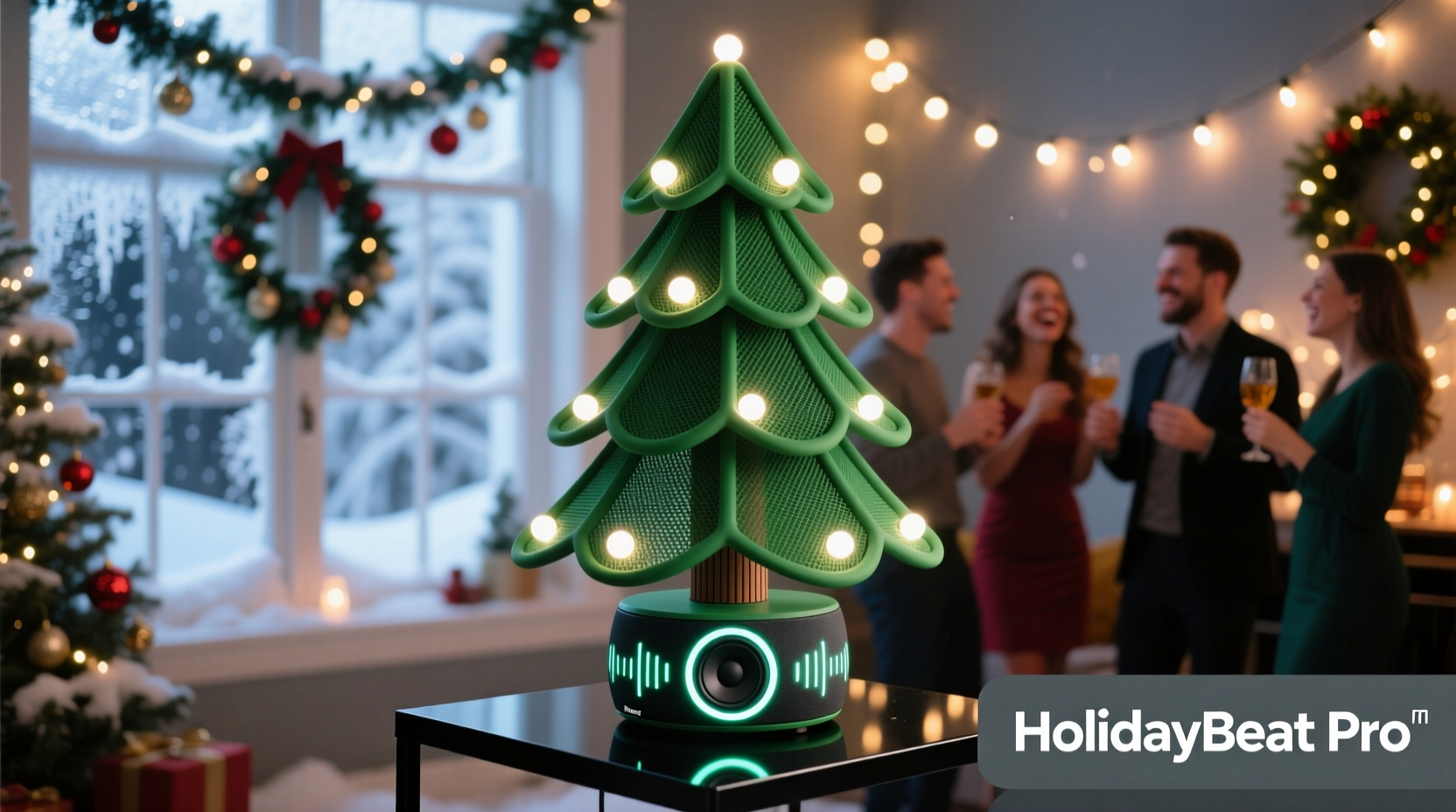
Bluetooth speaker Christmas trees are typically miniature artificial trees ranging from 12 to 24 inches in height. They’re constructed with flexible branches made of PVC or silicone, embedded LED lights, and a central base housing a rechargeable battery, Bluetooth receiver, amplifier, and one or more small speakers. Most models connect via standard Bluetooth 5.0 or later, support AUX input, and offer basic controls like volume, play/pause, and light mode cycling.
Manufacturers market them as multi-purpose holiday items—ideal for dorm rooms, office desks, or cozy apartment corners. Their appeal lies in dual utility: decoration plus music. However, this hybrid design comes with trade-offs. The internal speaker components are constrained by space, power, and cost, limiting their acoustic potential compared to dedicated portable speakers.
Audio quality varies significantly between models. Entry-level versions often produce thin, tinny sound with minimal bass response, suitable only for quiet environments. Higher-end variants may include dual drivers or passive radiators to improve depth and clarity, but even these rarely match mid-tier standalone Bluetooth speakers like the JBL Flip 6 or Sony XB34.
Performance Evaluation: Can It Handle a Party?
To determine whether a Bluetooth speaker Christmas tree can double as a party sound system, consider four key performance metrics: volume output, sound clarity, coverage area, and battery life.
Volume and Coverage
Most speaker trees deliver 70–85 decibels (dB) at peak volume—comparable to normal conversation levels or a loud TV. In a quiet living room or bedroom, this may suffice for background music. However, when guests gather, ambient noise rises quickly. A typical holiday party generates 60–75 dB of chatter alone, requiring music playback at 85–90+ dB to remain audible over conversation.
At that level, many Bluetooth Christmas trees begin to distort or clip, especially when bass-heavy tracks play. Their small drivers struggle to maintain fidelity under load, resulting in muffled highs and weak low end. Moreover, their omnidirectional output lacks projection; sound dissipates rapidly beyond a 6-foot radius. This makes them ineffective in open-concept spaces or rooms larger than 200 square feet.
Battery and Connectivity Limits
Battery life ranges from 4 to 12 hours depending on volume and light usage. While adequate for a dinner party or evening get-together, extended events require either frequent recharging or access to an outlet—limiting placement flexibility. Additionally, Bluetooth range is typically line-of-sight up to 30 feet, which can cause dropouts if the host’s phone moves into another room.
“Hybrid devices like speaker trees are great for mood-setting, but don’t mistake novelty for necessity. For actual parties, dedicated audio gear still wins.” — Marcus Lin, Audio Engineer & Home Theater Consultant
When Speaker Trees Work—and When They Don’t
Bluetooth speaker Christmas trees excel in specific scenarios where atmosphere matters more than audio dominance. Understanding these contexts helps set realistic expectations.
Suitable Use Cases
- Intimate gatherings: Small dinners, family movie nights, or couples’ celebrations where music plays softly in the background.
- Dorm or desk decoration: College students using the tree as a personal playlist hub during study breaks or mini-holidays.
- Themed photo setups: As part of a holiday vignette for social media content, where lighting and subtle audio enhance visuals.
- Children’s parties: Lower volume needs and shorter durations make these trees a safe, engaging option for kids’ events.
Limits in Real-World Scenarios
In larger or more dynamic environments, speaker trees fall short. Consider a real example:
Mini Case Study: Holiday Mixer in a Brooklyn Loft
Jamie hosted a pre-Christmas cocktail hour for 25 friends in her open-plan loft. She placed a popular 20-inch Bluetooth speaker tree on the coffee table, hoping its warm glow and music would create a cozy vibe. She paired it with her phone and started a jazz playlist.
Initially, the setup worked well—soft lighting and gentle melodies filled the space. But as more guests arrived and conversations grew louder, Jamie increased the volume to maximum. Within minutes, the audio began distorting on bass notes, and guests near the tree complained of harsh treble. By the second hour, the battery dropped to 20%, forcing her to plug it in, which limited movement and created a tripping hazard.
She eventually connected a portable JBL Charge 5 from a side table. The difference was immediate: fuller sound, consistent volume, and wider coverage. The speaker tree remained lit but was muted for the rest of the night.
This scenario illustrates a common pattern: speaker trees contribute to ambiance but rarely sustain audio demands once social energy rises.
Maximizing Your Speaker Tree’s Potential: A Step-by-Step Guide
If you already own a Bluetooth speaker Christmas tree—or plan to use one this season—you can optimize its performance through smart setup and complementary strategies.
- Assess your space: Measure the room size and expected guest count. If the area exceeds 250 sq ft or will host more than 10 people, treat the tree as supplemental, not primary, audio.
- Pair with a secondary speaker: Use a smartphone or tablet to simultaneously connect the tree and a stronger Bluetooth speaker. Some devices support dual pairing; others may require a splitter app or auxiliary routing.
- Optimize placement: Position the tree away from walls and corners to reduce sound reflection. Elevate it on a stable surface for better dispersion.
- Manage audio sources: Choose lossless audio files or high-bitrate streams. Avoid compressed formats that exaggerate poor speaker limitations.
- Balance lights and sound: Disable flashing light modes if they drain battery too quickly. Steady illumination preserves power for longer playback.
- Pre-charge and monitor: Fully charge the unit before the event and keep a charging cable nearby. Monitor battery status periodically.
Comparison: Speaker Trees vs. Dedicated Party Speakers
| Feature | Bluetooth Speaker Tree | Dedicated Party Speaker |
|---|---|---|
| Typical Output | 5–12W | 20–100W+ |
| Max Volume | 70–85 dB | 90–110+ dB |
| Battery Life | 4–12 hrs | 10–24 hrs |
| Coverage Area | Up to 200 sq ft | 500+ sq ft |
| Sound Quality | Fair to moderate (lacks bass) | Good to excellent (balanced profile) |
| Primary Use | Decorative + ambient audio | Music-focused events |
| Price Range | $25–$60 | $80–$300+ |
This comparison highlights why speaker trees are best viewed as lifestyle accessories rather than serious audio equipment. Their value lies in convenience and seasonal charm, not sonic performance.
Checklist: Can Your Speaker Tree Handle the Party?
Before relying on your Bluetooth speaker Christmas tree for event audio, run through this checklist:
- ✅ Is your guest list under 15 people?
- ✅ Is the party space smaller than 200 square feet?
- ✅ Will music be background ambiance, not the focus?
- ✅ Does the speaker have at least 8W output and good reviews for clarity?
- ✅ Is it fully charged and placed centrally?
- ✅ Do you have a backup speaker available just in case?
If you answered “no” to two or more, consider supplementing or replacing the tree with a more powerful audio solution.
FAQ
Can I connect multiple Bluetooth speaker trees together?
Most models do not support stereo pairing or multi-speaker syncing. Some brands offer proprietary apps for limited coordination, but true synchronization like JBL Connect or Ultimate Ears PartyBoost is rare. You may achieve basic dual output by connecting two devices from a single source that supports multi-point Bluetooth, though timing delays are common.
Do these trees damage phones or devices during pairing?
No. Bluetooth connectivity follows standard protocols and poses no risk to smartphones or tablets. However, ensure the tree is from a reputable brand with proper electrical certification (FCC, CE) to avoid battery or charging hazards.
Are there waterproof or outdoor-rated models?
Virtually all Bluetooth speaker Christmas trees are designed for indoor use only. They lack IP ratings for water or dust resistance. Exposure to moisture, snow, or outdoor humidity can damage internal electronics. Never use them on patios, porches, or near drink stations without protection.
Conclusion: Festive Flair Meets Functional Reality
Bluetooth speaker Christmas trees are delightful novelties that blend holiday spirit with modern convenience. They bring warmth, light, and melody to seasonal spaces in ways traditional decor cannot. For quiet evenings, intimate dinners, or decorative displays with soft audio, they perform admirably.
But when the party heats up, so do the demands on your sound system. True party environments need volume, clarity, and reliability—qualities that most speaker trees cannot deliver alone. Rather than viewing them as replacements for capable audio gear, embrace them as complementary elements: the sparkle alongside the substance.
By setting realistic expectations, optimizing placement, and integrating them into a broader audio strategy, you can enjoy both the magic of a glowing tree and the energy of great music. Whether you're hosting a soirée or simply enjoying a solo holiday film night, let the speaker tree enhance the moment—without carrying the entire load.




 浙公网安备
33010002000092号
浙公网安备
33010002000092号 浙B2-20120091-4
Comments
No comments yet. Why don't you start the discussion?