
In living rooms, kitchens, parks, and even high-end studios, a quiet but profound shift is underway: people are cutting the cord. Once standard, wired speakers are increasingly being replaced by sleek Bluetooth models that promise freedom, portability, and seamless integration with modern lifestyles. But is this trend driven by genuine improvements in audio quality, or is it more about convenience and culture? The answer lies at the intersection of technology, behavior, and evolving expectations.
For decades, audiophiles championed wired systems as the gold standard—offering stable connections, lossless audio transmission, and minimal latency. Yet today, even discerning listeners are opting for wireless solutions. Understanding this transition requires looking beyond marketing hype and examining how our relationship with sound has fundamentally changed.
The Rise of Mobility and Lifestyle Integration
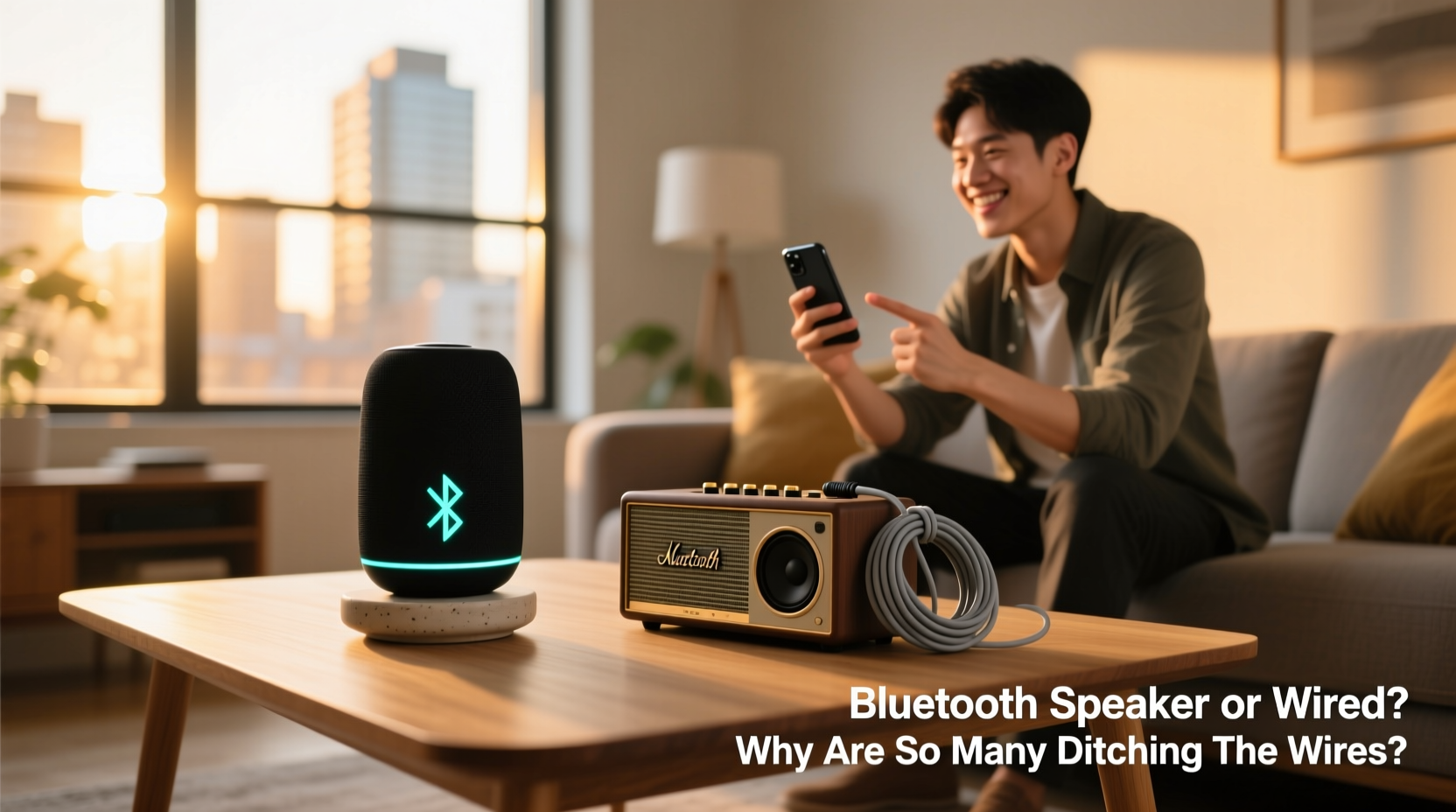
One of the most compelling reasons people are abandoning wired speakers is mobility. Modern life demands flexibility. People no longer listen to music only from a fixed position in a living room. They want sound while cooking, walking through the house, commuting, or lounging by the pool. Bluetooth speakers deliver audio without anchoring users to a single location.
Consider a typical weekday morning: someone might start their day with a podcast on a Bluetooth speaker in the bathroom, carry it to the kitchen while making coffee, then place it on a balcony during a work break. This fluid use case is impossible with traditional wired setups, which require outlets and physical cables tethering devices together.
Audio Quality: Has Wireless Caught Up?
A common argument against Bluetooth speakers used to be sound fidelity. Early wireless models suffered from compression, latency, and inconsistent signal strength. However, advancements in Bluetooth codecs like aptX HD, LDAC, and AAC have significantly narrowed the gap between wired and wireless audio quality.
Today’s premium Bluetooth speakers can transmit high-resolution audio with minimal compression, especially when paired with compatible source devices. While purists may still detect subtle differences in dynamic range and detail retrieval, the average listener finds modern wireless sound not just acceptable—but impressive.
“Bluetooth isn’t just good enough anymore—it’s genuinely excellent for 95% of listening scenarios.” — David Lin, Senior Audio Engineer at SoundReview Labs
Moreover, speaker manufacturers now invest heavily in acoustic engineering. Many portable Bluetooth units feature multi-driver arrays, passive radiators, and digital signal processing (DSP) to enhance bass response and clarity—capabilities once reserved for bulky wired systems.
Convenience vs. Control: A Trade-Off Worth Making?
Wired systems offer precision and reliability. There's no pairing, no interference, no battery anxiety. Plug in, play, and expect consistent performance. But that simplicity comes at the cost of rigidity.
Bluetooth introduces variables—signal dropouts, pairing delays, limited range—but also unlocks new levels of user control. Most modern Bluetooth speakers support voice assistants, app-based EQ tuning, stereo pairing, and multi-room synchronization. These features transform a simple speaker into a smart audio hub.
Additionally, Bluetooth eliminates cable clutter. No more tangled wires behind entertainment centers or tripping hazards across floors. In minimalist homes and compact apartments, this reduction in visual noise enhances both aesthetics and functionality.
Bluetooth vs. Wired: Key Differences at a Glance
| Feature | Bluetooth Speaker | Wired Speaker |
|---|---|---|
| Mobility | High – fully portable | Low – fixed setup |
| Audio Latency | Variable (100–300ms) | Negligible (~5ms) |
| Sound Quality (Typical) | Good to Excellent | Excellent to Reference |
| Battery Dependency | Yes – requires charging | No – powered via outlet |
| Setup Complexity | Simple – one-button pairing | Moderate – cabling required |
| Lifestyle Fit | Ideal for casual, mobile use | Better for dedicated listening spaces |
Real-World Shift: A Mini Case Study
Take the example of Maya Tran, a graphic designer in Portland who upgraded her home office last year. She previously used bookshelf speakers connected to her desktop via RCA cables. While the sound was crisp, she rarely used them outside work hours. After receiving a mid-range Bluetooth speaker as a gift, she began placing it in different rooms—playing ambient tracks in the bathroom, jazz in the kitchen, and audiobooks on her patio.
Within weeks, the wired system gathered dust. “I realized I wasn’t listening more—I was just enjoying sound more,” she said. “The speaker goes where I go. It fits my rhythm instead of forcing me to adapt to it.”
Her experience reflects a broader pattern: people aren’t just adopting Bluetooth for novelty—they’re integrating it into daily rituals because it aligns with how they live now.
When Wires Still Matter
Despite the momentum behind wireless audio, wired speakers remain relevant in specific contexts. Professional studios, home theaters, and critical listening environments still rely on wired connections for zero-latency monitoring and maximum fidelity. Musicians syncing audio with video editing, for instance, cannot afford the slight delay inherent in Bluetooth transmission.
Additionally, wired systems don’t depend on batteries. For continuous playback—such as background music in retail stores or all-day events—wired setups offer uninterrupted operation without recharging.
There’s also the longevity factor. Well-maintained wired speakers can last decades. Many vintage models from the 1970s and 80s are still functional today. In contrast, Bluetooth speakers often become obsolete due to non-replaceable batteries or outdated wireless standards.
Step-by-Step: Choosing the Right Option for Your Needs
- Assess your primary use case: Are you moving around frequently, or do you have a dedicated listening space?
- Evaluate your audio sources: Do you mainly use smartphones, tablets, or laptops? These favor Bluetooth compatibility.
- Determine sound priorities: If studio-grade accuracy matters, lean toward wired. For balanced, enjoyable sound on the go, Bluetooth suffices.
- Check battery and durability needs: Outdoor use or travel demands rugged, long-lasting Bluetooth models.
- Test before committing: Listen to both options side-by-side if possible. Personal preference plays a major role.
Frequently Asked Questions
Can Bluetooth speakers match the bass of wired ones?
Modern Bluetooth speakers with passive radiators and tuned enclosures can produce deep, punchy bass that rivals many wired models. However, large subwoofers in wired systems still dominate in sheer output and low-frequency extension.
Is Bluetooth audio secure?
Bluetooth uses encrypted connections, making casual eavesdropping unlikely. However, older versions (pre-4.2) have known vulnerabilities. Always pair devices in private settings and keep firmware updated.
Do wired speakers degrade over time?
Physical wear—like frayed cables or aging capacitors—can affect performance, but well-built wired speakers often outlive their wireless counterparts. Unlike Bluetooth units, they rarely suffer from obsolete technology or dead batteries.
Final Thoughts: The Future Is (Mostly) Wireless
The move away from wires isn’t just about technology—it’s about human behavior. We’ve shifted from stationary entertainment to on-demand, personalized audio experiences. Bluetooth speakers meet that demand with elegance and efficiency. They may not replace every wired system, but they’ve redefined what most people expect from sound.
That doesn’t mean abandoning quality or permanence. It means choosing tools that serve both ears and lifestyle. Whether you keep a vintage hi-fi setup for Sunday afternoons or toss a rugged Bluetooth speaker in your backpack for weekend hikes, the goal remains the same: to make sound an effortless part of life.




 浙公网安备
33010002000092号
浙公网安备
33010002000092号 浙B2-20120091-4
Comments
No comments yet. Why don't you start the discussion?