
In a world overflowing with digital distractions, many people are turning back to pen and paper to regain control of their time and thoughts. Bullet journaling has emerged as one of the most flexible and effective analog systems for organization, mindfulness, and goal tracking. Unlike rigid planners, a bullet journal adapts to your needs—whether you're managing a busy schedule, tracking habits, or simply trying to declutter your mind.
For beginners, the idea of starting a bullet journal can feel overwhelming. The internet is filled with beautifully illustrated spreads that look more like art projects than practical tools. But the truth is, bullet journaling doesn’t require artistic talent or expensive supplies. At its core, it’s about clarity, intentionality, and simplicity. This guide walks through beginner-friendly layouts that help you stay organized without the pressure of perfection.
What Is Bullet Journaling—and Why It Works
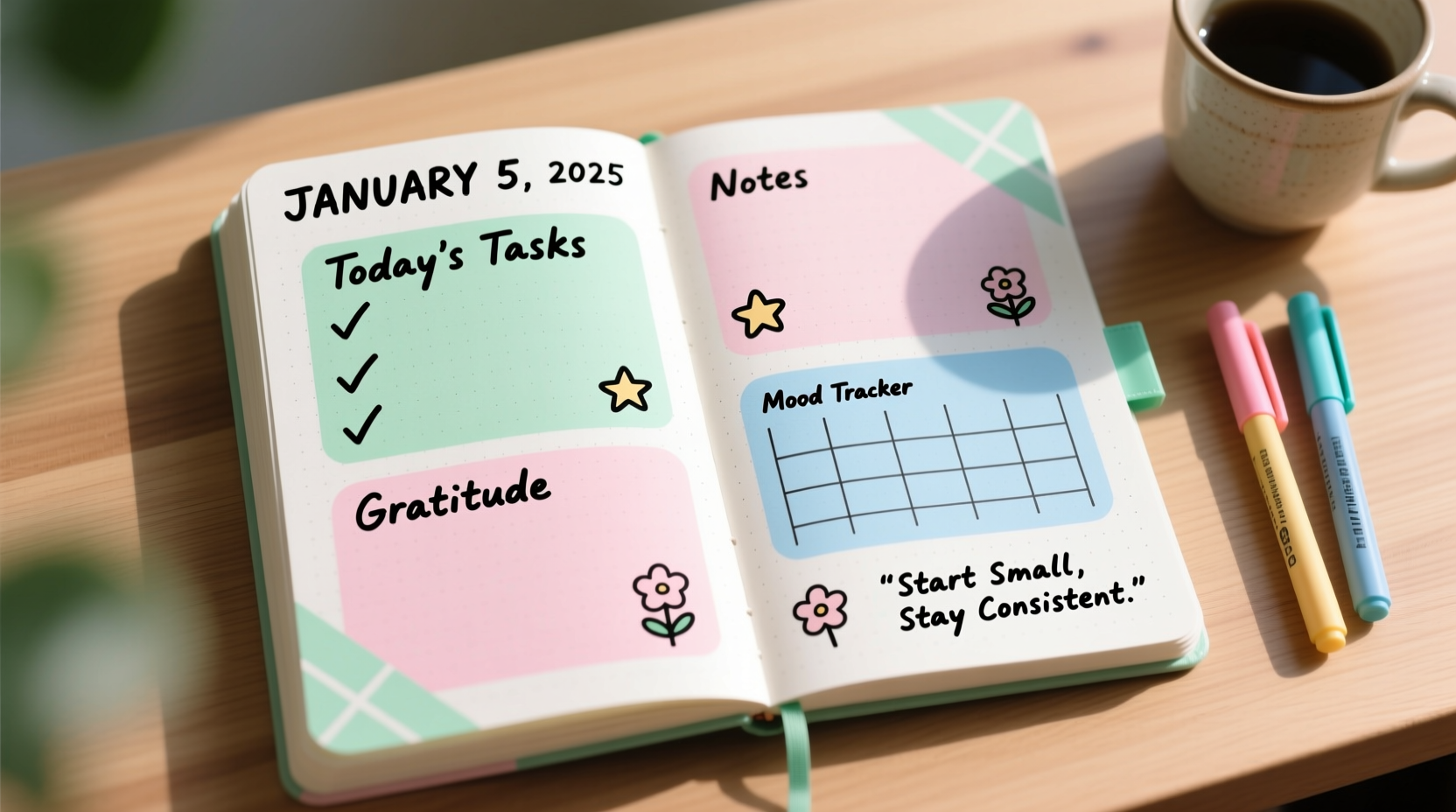
Bullet journaling was created by designer Ryder Carroll as a method to organize tasks, events, and notes using rapid logging—a system of short entries marked with bullets and symbols. What began as a personal productivity tool has evolved into a global movement, embraced by students, professionals, and creatives alike.
The power of bullet journaling lies in its structure. It combines elements of a planner, diary, to-do list, and tracker—all in one notebook. Because you build it yourself, it reflects your priorities and rhythms. You decide what to include, how detailed to be, and when to review your progress.
“Your bullet journal is a reflection of your life. It should grow and change as you do.” — Ryder Carroll, creator of the bullet journal method
Unlike digital apps that send constant notifications, a bullet journal encourages mindful engagement. Writing by hand improves memory retention and reduces mental clutter. Studies show that people who journal regularly experience lower stress levels and improved focus. When done simply, bullet journaling becomes less about aesthetics and more about function—making it sustainable over time.
Essential Supplies: Start Simple
You don’t need a fancy notebook or a rainbow of pens to begin. In fact, starting too elaborate often leads to burnout. The key is to choose tools that support consistency, not creativity.
Here’s what you actually need:
- Notebook: Any notebook will work, but a dotted or grid-style one (like Leuchtturm1917 or a budget-friendly alternative) gives flexibility for layout design.
- Pen: A fine-tip pen that doesn’t bleed through pages. A basic rollerball or gel pen is sufficient.
- Ruler (optional): Helps draw clean lines, especially when setting up monthly spreads.
- Pencil and eraser (optional): Useful for sketching layouts before committing with ink.
Avoid buying excessive accessories at the start. Stickers, washi tape, and colored markers may seem fun, but they can turn journaling into a craft project rather than a productivity tool. Focus on utility first. You can always add creative touches later—if they serve your purpose.
Simple Layouts Every Beginner Should Try
The beauty of bullet journaling is customization. However, new users benefit from starting with foundational spreads that establish rhythm and routine. These five layouts are practical, easy to set up, and highly effective for staying organized.
1. Index Page
Your index helps you find content quickly. Label the first two pages of your notebook as “Index.” As you add new sections or collections, record their titles and page numbers here.
2. Future Log
This is a six- to twelve-month overview where you note upcoming events, deadlines, birthdays, and goals. Divide a two-page spread into six boxes (for each month), and jot down key dates as they arise.
3. Monthly Spread
Create this at the start of each month. Include a simple calendar view and a task list. On the left page, draw a grid with days of the month. On the right, list monthly goals and to-dos. Update it weekly to stay on track.
4. Weekly Spread
This is your operational hub. A basic weekly layout includes seven daily columns (one per day) with space for tasks, appointments, and notes. Keep it minimal: three to five priority tasks per day are enough. At week’s end, migrate unfinished items to the next week.
5. Task & Habit Tracker
Track recurring responsibilities or behaviors you want to build. Create a table with habits as rows (e.g., drink water, exercise, read) and days of the month as columns. Mark each day you complete the habit with an “X” or dot. Over time, you’ll see patterns and progress.
| Habit | Mon | Tue | Wed | Thu | Fri | Sat | Sun |
|---|---|---|---|---|---|---|---|
| Meditate 5 min | ✓ | ✓ | ✓ | ✓ | ✓ | ||
| Drink 8 glasses water | ✓ | ✓ | ✓ | ✓ | ✓ | ||
| Exercise | ✓ | ✓ | ✓ |
Step-by-Step: Setting Up Your First Bullet Journal
Starting your bullet journal doesn’t have to take hours. Follow this streamlined process to create a functional system in under 30 minutes.
- Choose your notebook and pen. Open to the first page and label it “Index.”
- Create your future log. Flip to the next available two-page spread. Divide it into sections for each month. Add known dates like vacations or deadlines.
- Set up your current month. Dedicate two pages to your monthly spread: one for the calendar, one for goals and tasks.
- Design your weekly layout. Use the next two pages for your first week. Draw seven vertical columns—one for each day. Leave space for top priorities and notes.
- Add a habit tracker. Find a blank page near the front and create a simple grid to monitor 3–5 key habits.
- Begin rapid logging. As tasks, events, or ideas come up, write them in the appropriate section using bullet symbols.
- Review weekly. Every Sunday, reflect on what was accomplished, migrate unfinished tasks, and plan the week ahead.
This setup evolves with you. After a few weeks, you might realize you need a meal planner, expense tracker, or gratitude log. Add those as “collections”—personalized pages for specific themes. The journal grows organically based on your real-life needs.
Real Example: How Sarah Stayed Organized During a Busy Semester
Sarah, a college sophomore, felt overwhelmed balancing classes, part-time work, and extracurriculars. She downloaded multiple planning apps but rarely used them consistently. On a friend’s recommendation, she tried bullet journaling with a $10 dotted notebook and a black pen.
She started with the basics: index, future log (with exam dates and project deadlines), monthly calendar, and a simple weekly spread. Each Sunday, she spent 15 minutes planning her week—listing assignments, shifts, and self-care goals like “sleep by 11 p.m.” and “call mom.”
After four weeks, Sarah noticed she was missing fewer deadlines and feeling less anxious. Her habit tracker revealed she only exercised twice a month, so she adjusted her schedule to include short walks between classes. By semester’s end, her bullet journal had become her go-to tool for staying grounded and productive—no colors or stickers required.
Sarah’s success wasn’t due to artistic flair but consistency and simplicity. She adapted the system to fit her life, not the other way around.
Common Mistakes to Avoid as a Beginner
Even with the best intentions, new bullet journalers often stumble into pitfalls that derail momentum. Recognizing these early can save time and frustration.
- Overcomplicating layouts: Spending 45 minutes designing a weekly spread defeats the purpose of quick logging. Stick to clean, reusable templates.
- Skipping migration: If you never review and move unfinished tasks, your journal becomes outdated. Schedule a short weekly review.
- Waiting for the “perfect” time: Don’t wait until January or Monday to start. Begin today with whatever notebook you have.
- Comparing to others: Social media showcases highlight reels. Your journal only needs to work for you—not impress anyone else.
- Using the wrong notebook: If pages bleed through or the size is awkward, you’ll avoid using it. Test pens before committing.
“The best bullet journal is the one you actually use.” — Productivity coach Laura Nelson
FAQ: Answers for New Bullet Journalers
How often should I update my bullet journal?
Update it daily for task logging and weekly for planning and review. The monthly spread is set up once per month. Habit trackers are updated as you complete each habit. Consistency matters more than frequency—spend 5–10 minutes a day maintaining it.
What if I miss a day or skip a week?
It happens to everyone. Simply resume where you left off. Cross out missed days if needed, or create a catch-up entry titled “Leftovers” to migrate overdue tasks. Perfection isn’t the goal—progress is.
Can I use a bullet journal digitally?
While traditional bullet journaling is analog, some people adapt the system using apps like Notion, GoodNotes, or OneNote. However, writing by hand enhances cognitive processing and reduces screen fatigue. Try the physical version first to experience its full benefits.
Get Started Today: Your Journal, Your Rules
Bullet journaling isn’t about flawless handwriting or symmetrical layouts. It’s about creating a personalized system that brings clarity to your days and purpose to your actions. The simplest spreads—index, future log, monthly and weekly views, and a habit tracker—are more than enough to transform how you manage time and energy.
Start small. Use what you have. Focus on consistency, not complexity. Let your journal evolve as you learn what works for your lifestyle. Whether you’re a student, parent, entrepreneur, or someone just trying to stay sane, bullet journaling offers a quiet space to prioritize what truly matters.




 浙公网安备
33010002000092号
浙公网安备
33010002000092号 浙B2-20120091-4
Comments
No comments yet. Why don't you start the discussion?