
Keeping track of daily habits and emotional well-being doesn’t require complex tools or expensive apps. A bullet journal offers a flexible, low-tech solution that puts you in control of your mental health and personal growth. For beginners, the idea of starting a bullet journal can feel overwhelming—pages of intricate spreads and artistic doodles dominate social media. But at its core, bullet journaling is about clarity, intention, and consistency. This guide focuses on simple, effective layouts specifically designed to help newcomers track habits and mood without pressure or perfectionism.
Ryder Carroll, the creator of the bullet journal method, emphasizes simplicity: “The system isn’t about productivity; it’s about mindfulness.” By focusing on just two key areas—habits and mood—you create a foundation for self-awareness that supports long-term change. Whether you’re aiming to drink more water, reduce screen time, or simply understand your emotional patterns, these beginner-friendly layouts make tracking accessible and sustainable.
Why Track Habits and Mood?
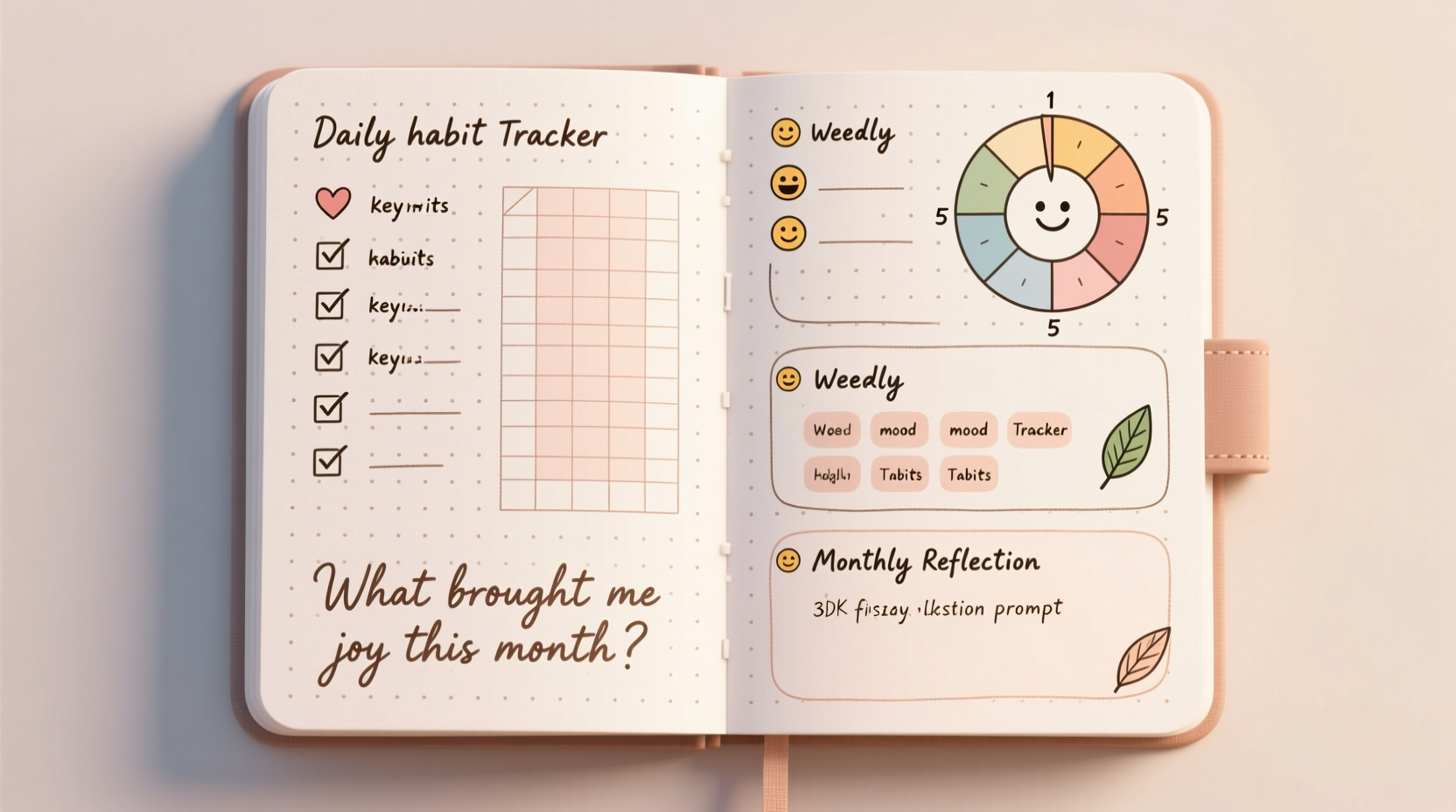
Habits shape our lives more than we realize. Small actions repeated daily—like stretching, journaling, or checking your phone first thing in the morning—accumulate into lasting outcomes. Similarly, mood tracking reveals patterns in how external events, sleep, diet, and routines affect your emotional state. When recorded consistently, this data becomes insight.
Unlike digital apps that may distract or overwhelm, a bullet journal provides a tactile, focused space to reflect. Writing by hand slows you down, encouraging deeper engagement with your experiences. Over time, you’ll notice trends—perhaps you feel anxious on days you skip breakfast, or more energetic when you walk daily. These observations empower intentional choices.
“Tracking your habits and moods isn’t about judgment—it’s about gathering information to live more intentionally.” — Dr. Sarah Lin, Clinical Psychologist
Essential Supplies and Setup
You don’t need fancy materials to begin. All you need is:
- A notebook (ruled, dotted, or blank)
- A pen (any reliable one will do)
- A ruler (optional, for clean lines)
- A pencil and eraser (for drafting layouts)
Dotted notebooks are ideal because they support both writing and light sketching without visible lines interfering. However, any notebook works. The key is consistency, not aesthetics.
Step-by-Step Journal Setup
- Label your pages – Number each page in the bottom corner as you go.
- Create an index – Reserve the first 2–3 pages. Update it as you add new sections.
- Add a future log – Use 2 pages to note upcoming events or goals beyond the current month.
- Begin monthly logs – At the start of each month, dedicate 1–2 pages for habit and mood tracking.
- Use daily entries – Keep these minimal: date, tasks, events, and a quick mood note.
This structure keeps your journal organized without overcomplicating it. As you grow comfortable, you can expand—but simplicity is your ally in the beginning.
Simple Habit Tracker Layouts
A habit tracker helps you visualize consistency across chosen behaviors. The goal isn’t perfection but awareness. Choose 3–5 habits to focus on. Too many can feel overwhelming and lead to abandonment.
Basic Grid Tracker
The most beginner-friendly format is a grid. Create a table with habits listed vertically and dates horizontally.
| Habit | 1 | 2 | 3 | 4 | 5 | 6 | 7 | ... | 30 |
|---|---|---|---|---|---|---|---|---|---|
| Drink 8 glasses of water | ✓ | ✓ | ✓ | ✓ | ✓ | ... | |||
| Morning stretch (5 min) | ✓ | ✓ | ✓ | ✓ | ✓ | ... | ✓ | ||
| No screens after 9 PM | ✓ | ✓ | ✓ | ✓ | ... |
Mark each day with a checkmark, “X,” or color code. At month’s end, review what worked and adjust accordingly.
Vertical Habit Tracker
If horizontal space is limited, flip the layout. List dates down the left side and habits across the top.
This version works well in narrow notebooks or when tracking fewer habits. It also makes it easier to scan progress week by week.
Effective Mood Tracking Methods
Mood tracking increases emotional literacy. Over time, you learn to identify triggers, cycles, and progress. Like habit tracking, keep it simple to ensure consistency.
Daily Mood Scale
Create a scale from 1 to 5, where:
- 1 = Very low / overwhelmed
- 2 = Down / tired
- 3 = Neutral / okay
- 4 = Good / energized
- 5 = Great / joyful
Each evening, circle the number that best reflects your overall mood. Add a brief keyword if helpful (e.g., “stressed,” “calm,” “excited”).
Weekly Mood Calendar
Draw a simple weekly grid with days of the week across the top and space below each for a mood rating. Optionally, use colored pencils or pens to represent different emotions:
- Blue = sad
- Yellow = happy
- Red = angry
- Green = calm
- Gray = numb
Coloring a small box each day creates a visual timeline. After four weeks, you’ll see clusters—perhaps lower moods midweek or improved energy on weekends with outdoor activity.
“Mood charts are powerful diagnostic tools. Many patients discover seasonal patterns or stress triggers only after consistent tracking.” — Dr. Alan Reyes, Psychiatrist
Monthly Mood Reflection
At the end of each month, spend 5–10 minutes reviewing your mood data. Ask yourself:
- Which week had the highest average mood? What contributed to it?
- Were there recurring low points? Any common factors?
- Did any habit correlate with better emotional states?
This reflection turns raw data into meaningful insight. Write a short summary in your journal to capture key takeaways.
Mini Case Study: Starting Small Yields Big Results
Maya, a 29-year-old teacher, struggled with low energy and inconsistent routines. She wanted to improve her wellness but felt discouraged by failed app attempts. On a friend’s suggestion, she bought a $10 dotted notebook and began a basic bullet journal.
She started with just two trackers:
- Habit: Drink a glass of water upon waking
- Mood: Rate daily on a 1–5 scale
Using a grid layout, she tracked both for 30 days. She didn’t aim for perfection—some days were missed. But by month’s end, she noticed she drank water on 22 days and rated her mood as 4 or 5 on 18 of those days, compared to only 6 high-mood days on no-water days.
This correlation motivated her to add a third habit: 10 minutes of stretching. Within three months, Maya reported higher baseline energy and greater self-awareness. Her journal remained simple—no art, no stickers—just consistent tracking.
Her experience proves that small, sustainable systems outperform elaborate ones.
Common Pitfalls and How to Avoid Them
Many beginners abandon bullet journaling within weeks. Often, it’s not lack of interest but unrealistic expectations. Here are frequent mistakes and solutions:
| Pitfall | Why It Happens | Solution |
|---|---|---|
| Overcomplicating layouts | Inspired by Pinterest-perfect journals | Stick to grids and lists. Focus on function over form. |
| Tracking too many habits | Enthusiasm leads to overload | Limits to 3–5 habits max. Add only after mastery. |
| Skipping entries due to perfectionism | Missing one day feels like failure | Missed a day? Just resume. Progress > perfection. |
| Forgetting to review | Tracking without reflection loses value | Schedule a monthly 10-minute review session. |
Your First Month: A Step-by-Step Plan
Follow this 4-week plan to build confidence and consistency:
- Week 1: Set Up & Launch
Choose 2 habits and a mood scale. Create a grid tracker. Fill out daily, even if briefly. - Week 2: Observe Patterns
Notice which days you succeed or struggle. Jot one sentence each night: “Today was ___ because ___.” - Week 3: Adjust & Simplify
If a habit feels too hard, modify it (e.g., “drink water” → “drink one glass”). Keep what works. - Week 4: Reflect & Reset
Review your month. Celebrate consistency, not perfection. Plan next month’s trackers based on insights.
This timeline builds routine without burnout. Each week deepens your understanding and strengthens the habit of tracking.
Frequently Asked Questions
How long should I track a habit before deciding if it’s working?
Give each habit at least 30 days. Behavior change takes time, and early inconsistency is normal. Use the full month to assess trends, not isolated days.
Can I use a bullet journal if I’m not artistic?
Absolutely. Bullet journaling is functional first. Simple lines, clear labels, and consistent entries matter more than drawing skills. Many effective journals are entirely text-based.
What if I miss several days?
Resume where you left off. Don’t erase or start over. Missing days is part of real life. The goal is long-term awareness, not flawless tracking.
Final Checklist: Getting Started Right
- ☐ Choose a notebook and pen you enjoy using
- ☐ Pick 2–3 habits to track (start small)
- ☐ Define a simple mood scale (1–5 or descriptive words)
- ☐ Create a monthly grid tracker for habits and mood
- ☐ Commit to 5 minutes per day for entry and reflection
- ☐ Schedule a monthly review (e.g., last Sunday of the month)
Start Today, Grow Over Time
Bullet journaling isn’t about creating a masterpiece. It’s about showing up for yourself with honesty and curiosity. The simplest layouts often yield the deepest insights. By tracking just a few habits and your mood, you gain clarity that apps and calendars can’t provide.
Every checkmark, every circled number, is a quiet act of self-care. Over weeks and months, these small acts accumulate into greater self-knowledge and resilience. You don’t need motivation—just consistency. Open your notebook tonight. Draw two lines. Label them “Habits” and “Mood.” That’s all it takes to begin.




 浙公网安备
33010002000092号
浙公网安备
33010002000092号 浙B2-20120091-4
Comments
No comments yet. Why don't you start the discussion?