
In today’s fast-paced world, emotional exhaustion is common. Many people report feeling drained, unmotivated, or overwhelmed. But how do you know if what you're experiencing is burnout — a work-related state of chronic stress — or clinical depression, a diagnosable mental health condition? While the two share overlapping symptoms, their causes, duration, and treatment approaches differ significantly. Understanding these distinctions is crucial for taking appropriate action and protecting your long-term well-being.
Understanding Burnout: More Than Just Being Tired
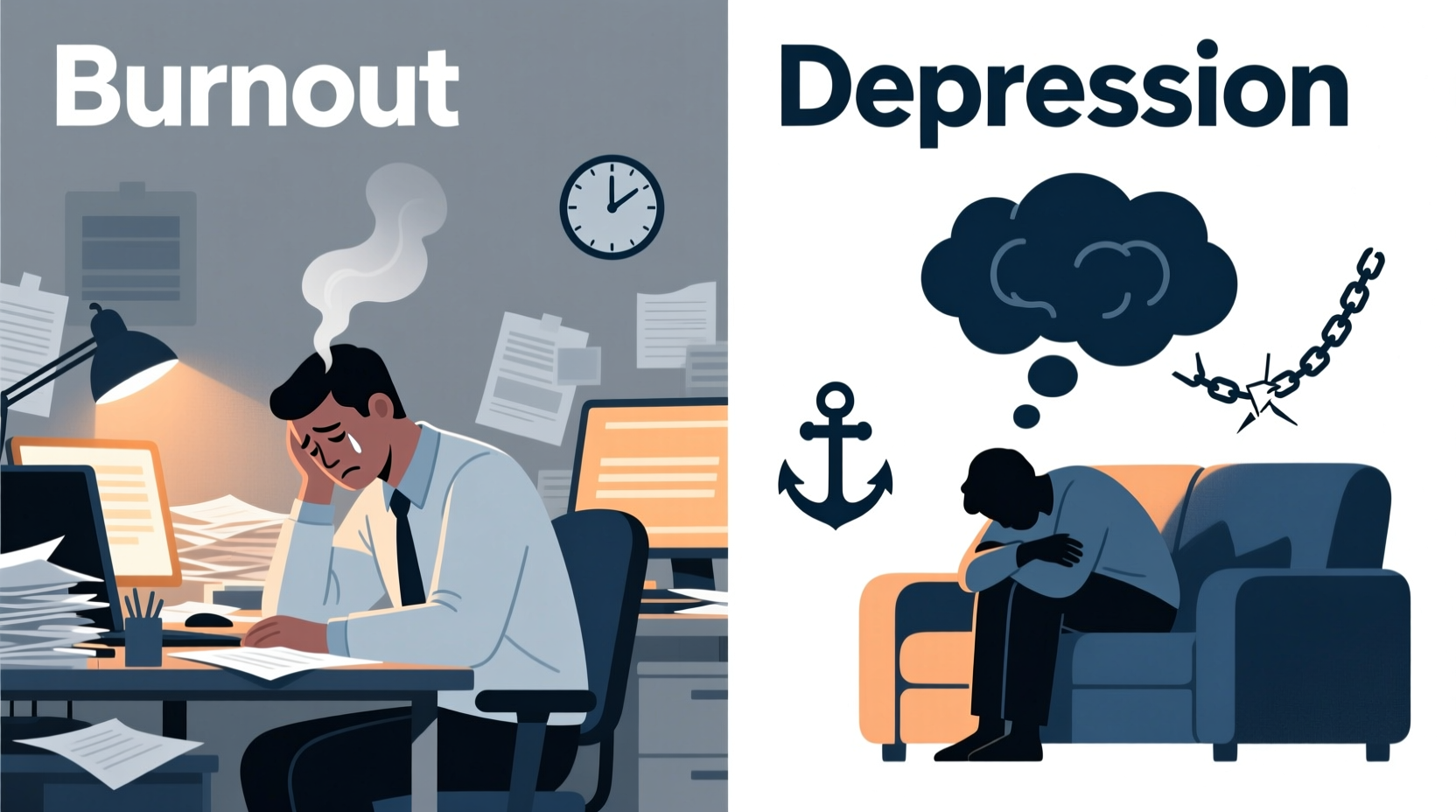
Burnout is not simply fatigue from a busy week. It's a prolonged response to unmanaged workplace stress that erodes motivation, reduces performance, and impacts physical and emotional health. The World Health Organization (WHO) classifies burnout as an \"occupational phenomenon\" resulting from chronic workplace stress that has not been successfully managed.
It typically develops gradually. You might start by pushing through long hours, skipping breaks, or ignoring early signs of strain. Over time, this leads to emotional detachment, cynicism about work, and a sense of ineffectiveness. Unlike temporary stress, burnout doesn’t resolve with a weekend off. It requires structural changes — in workload, environment, or mindset — to reverse.
Common Signs of Burnout
- Chronic fatigue and low energy, especially at work
- Increased irritability or frustration with colleagues
- Reduced productivity and difficulty concentrating
- Physical symptoms like headaches, stomach issues, or muscle tension
- Emotional detachment or indifference toward responsibilities
- Loss of satisfaction or meaning in your job
- Withdrawal from team interactions or social activities at work
What Is Clinical Depression?
Depression is a mood disorder characterized by persistent sadness, hopelessness, and a lack of interest in life. It affects how you think, feel, and function across all areas — work, relationships, self-care, and hobbies. Unlike burnout, which is tied to specific environments, depression is pervasive and not limited to occupational settings.
The Diagnostic and Statistical Manual of Mental Disorders (DSM-5) outlines criteria for major depressive disorder, including at least five of the following symptoms present most of the day, nearly every day, for two weeks or more:
- Depressed mood (e.g., sadness, emptiness, tearfulness)
- Markedly diminished interest or pleasure in activities
- Significant weight loss or gain, or changes in appetite
- Insomnia or hypersomnia
- Psychomotor agitation or retardation
- Fatigue or loss of energy
- Feelings of worthlessness or excessive guilt
- Diminished ability to think, concentrate, or make decisions
- Recurrent thoughts of death or suicide
Depression can stem from biological, psychological, and environmental factors — including genetics, trauma, hormonal imbalances, or major life events. It often requires medical intervention such as therapy, medication, or both.
“Burnout is situational; depression is systemic. One is rooted in external pressures, the other in internal chemistry and cognition.” — Dr. Lena Patel, Clinical Psychologist
Key Differences Between Burnout and Depression
Because symptoms overlap, misdiagnosis is common. Someone with depression might blame their struggles on a demanding job, while someone with severe burnout might fear they’re becoming clinically depressed. Clarity comes from examining context, triggers, and scope.
| Factor | Burnout | Depression |
|---|---|---|
| Cause | Chronic workplace stress, overwork, lack of control | Biological, genetic, psychological, or environmental factors |
| Scope | Limited to work or role-specific contexts | Affects all areas of life (work, home, relationships) |
| Mood Pattern | Worse during workdays, improves on days off | Persistent low mood regardless of activity or setting |
| Self-Esteem | May feel incompetent at work, but self-worth remains intact outside it | Pervasive feelings of worthlessness or guilt |
| Energy Levels | Fatigue tied to cognitive overload or emotional labor | Generalized lethargy, even after rest |
| Treatment Focus | Workplace adjustments, boundaries, stress management | Therapy, medication, lifestyle changes, medical support |
When Symptoms Overlap: What Should You Do?
It’s possible to experience both burnout and depression simultaneously. In fact, chronic burnout can increase the risk of developing depression, especially in individuals with predisposing factors. For example, prolonged exposure to high-stress environments can alter brain chemistry, disrupt sleep, and erode coping mechanisms — all of which contribute to depressive episodes.
If you notice that your low mood persists even during vacations, or that you no longer enjoy activities you once loved — whether at work or in personal life — this may signal depression rather than burnout alone.
Mini Case Study: Sarah’s Story
Sarah, a 34-year-old project manager, began noticing she was snapping at her team, dreading Monday mornings, and struggling to focus. She attributed it to a heavy workload and started working later to catch up. After three months, she felt physically exhausted and emotionally numb. On weekends, she’d sleep 10 hours but still wake up tired.
She took a week off and expected to return refreshed. Instead, she felt worse — guilty for “wasting time” and convinced she was failing professionally. Her husband noticed she wasn’t laughing anymore and had stopped attending book club meetings she used to love.
After consulting a therapist, Sarah learned she had crossed from burnout into a mild depressive episode. The initial stressor was work-related, but the prolonged strain had triggered deeper emotional and physiological changes. Her treatment plan included reducing her workload, starting cognitive behavioral therapy (CBT), and incorporating daily walks and mindfulness practices. Within two months, her mood stabilized, and she regained a sense of agency.
Sarah’s case illustrates how burnout can act as a gateway to depression when left unaddressed.
Step-by-Step Guide to Assessing Your Mental State
If you’re uncertain whether you’re dealing with burnout, depression, or both, follow this practical timeline to gain clarity and take action:
- Week 1: Track Your Mood and Energy
Record your emotional state three times a day (morning, afternoon, evening). Note where you are, what you’re doing, and how you feel. Look for patterns related to environment or activity. - Week 2: Evaluate Functionality
Assess how well you’re managing daily tasks — at work, home, and socially. Are you missing deadlines? Avoiding calls? Neglecting hygiene? Widespread dysfunction suggests depression. - Week 3: Test Environmental Relief
Take a short break — even a long weekend. If symptoms improve significantly away from work, burnout is likely. If mood remains low, consider professional evaluation for depression. - Week 4: Consult a Professional
Reach out to a licensed therapist or primary care provider. Share your journal and observations. They can conduct formal assessments and recommend next steps. - Ongoing: Implement Supportive Changes
Whether it’s adjusting your schedule, starting therapy, or exploring medication, commit to consistent care. Recovery is not linear — patience and persistence matter.
Action Checklist: Recognizing and Responding Early
Use this checklist to monitor your well-being and take timely action:
- ✅ Notice persistent fatigue despite adequate sleep
- ✅ Identify growing irritability or emotional numbness
- ✅ Assess whether symptoms improve outside work environments
- ✅ Evaluate changes in appetite, sleep, or concentration
- ✅ Reflect on self-perception — do you feel worthless or just ineffective at work?
- ✅ Talk to a trusted friend or colleague about how you’re feeling
- ✅ Schedule an appointment with a mental health professional
- ✅ Set boundaries at work (e.g., no emails after 7 PM)
- ✅ Reintroduce small pleasures (e.g., music, walks, reading)
- ✅ Consider a temporary leave if symptoms impair daily functioning
Frequently Asked Questions
Can burnout lead to depression?
Yes. Chronic burnout can deplete emotional resilience, disrupt sleep, and affect neurochemical balance, increasing vulnerability to depression — especially in those with a personal or family history of mood disorders. Early intervention in burnout can reduce this risk.
Is burnout recognized as a medical diagnosis?
No. Burnout is classified by the WHO as an occupational phenomenon, not a medical condition. However, its impact is real and clinically significant. It is not listed in the DSM-5 as a standalone diagnosis, but healthcare providers recognize it as a serious stress-related issue requiring attention.
Should I quit my job if I’m burned out?
Not necessarily. While some people benefit from leaving a toxic environment, others recover by renegotiating responsibilities, setting firmer boundaries, or shifting roles. A therapist can help you evaluate whether the issue is the job itself or broader patterns in how you manage stress and expectations.
Know When to Seek Help
Seeking help is not a sign of weakness — it’s an act of courage and self-awareness. If you’ve tried self-care strategies like better sleep, exercise, or time off without improvement, professional support is essential. Immediate help is needed if you experience thoughts of self-harm or suicide. Contact a crisis line, therapist, or go to the nearest emergency room.
Early intervention leads to faster recovery. Whether it’s burnout, depression, or both, effective treatments exist. Therapy, particularly CBT and mindfulness-based approaches, has strong evidence for improving both conditions. In cases of depression, medication such as SSRIs may be recommended alongside counseling.
“The sooner you name what you’re going through, the sooner you can reclaim your life.” — Dr. Marcus Reed, Psychiatrist
Conclusion: Take Back Control of Your Well-Being
Distinguishing between burnout and depression isn’t about labeling yourself — it’s about understanding your experience so you can respond effectively. Burnout signals a need for change in your environment or habits. Depression calls for compassionate, structured care. Either way, ignoring the signs only deepens the struggle.
You don’t have to wait until you’re completely overwhelmed to act. Start small: reflect honestly on your symptoms, talk to someone you trust, and reach out to a professional. Your mental health is not secondary to your productivity — it is the foundation of everything you do.




 浙公网安备
33010002000092号
浙公网安备
33010002000092号 浙B2-20120091-4
Comments
No comments yet. Why don't you start the discussion?