
In a world that glorifies productivity and constant motion, it’s easy to mislabel what we’re truly experiencing. When tasks feel overwhelming and motivation vanishes, the immediate assumption is often self-criticism: “I’m just being lazy.” But beneath that label might lie something far more serious—burnout. The difference between burnout and laziness isn’t just semantics; it’s critical for your mental health, performance, and long-term well-being. Understanding which state you’re in determines whether you should push through with discipline—or step back into deep rest.
Burnout is a psychological syndrome rooted in chronic workplace or life stress. Laziness, on the other hand, is typically a temporary lack of motivation or effort without an underlying emotional or physical cost. Confusing the two can lead to harmful decisions: pushing through burnout worsens symptoms, while treating laziness as burnout may reinforce avoidance patterns. This article breaks down the signs, causes, and solutions so you can respond wisely—not reactively.
The Core Difference: Burnout Is Exhaustion, Laziness Is Avoidance
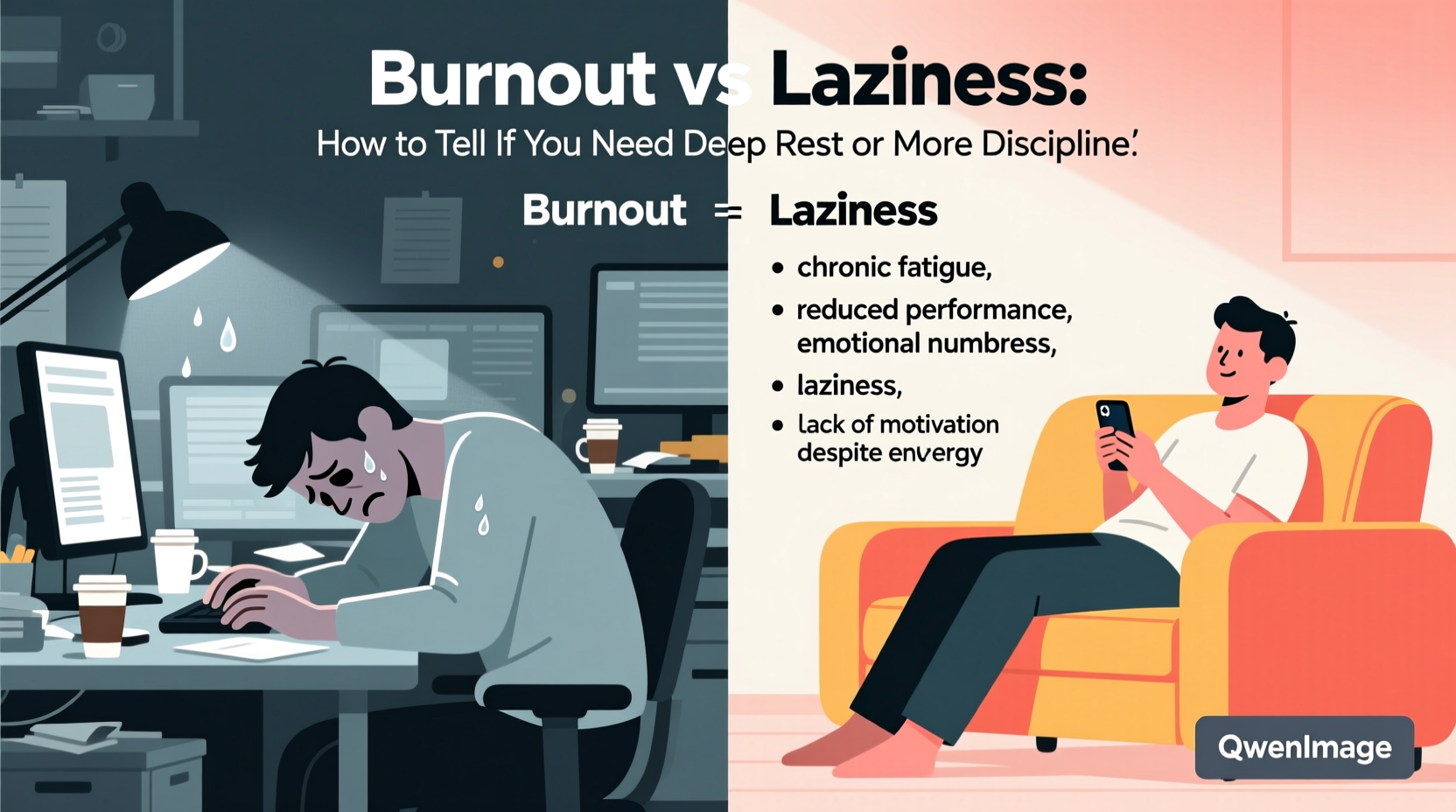
Burnout stems from prolonged stress that depletes emotional, mental, and physical resources. It’s not a character flaw—it’s a signal that your system has been overused without adequate recovery. The World Health Organization classifies burnout as an occupational phenomenon characterized by three dimensions:
- Feelings of energy depletion or exhaustion
- Increased mental distance from one’s job, or feelings of negativism or cynicism related to work
- Reduced professional efficacy
Laziness, by contrast, doesn’t carry the same emotional toll. It’s a reluctance to act, often due to boredom, lack of interest, or short-term fatigue. A lazy person might avoid a task because it feels tedious or unrewarding—but they don’t typically experience dread, guilt, or physical symptoms like insomnia or stomach issues when thinking about work.
The key distinction? Burnout leaves you feeling broken. Laziness just makes you feel unmotivated.
How to Diagnose Your State: Signs and Symptoms
Telling the difference requires honest self-assessment. Below is a comparison table outlining behavioral, emotional, and physical indicators of both states.
| Indicator | Burnout | Laziness |
|---|---|---|
| Motivation Level | Severely diminished; even meaningful tasks feel pointless | Low for uninteresting tasks, but responsive to rewards or urgency |
| Emotional Response | Anxiety, numbness, irritability, hopelessness | Indifference, mild guilt, boredom |
| Physical Symptoms | Fatigue, headaches, disrupted sleep, weakened immunity | Rare; occasional tiredness that improves with rest |
| Response to Rest | Still exhausted after days off; rest doesn’t recharge | Re-energized after short breaks or leisure time |
| Self-Talk | “I can’t do anything right,” “What’s the point?” | “I’ll do it later,” “This isn’t worth my time” |
| Impact on Identity | Loss of confidence, questioning self-worth | No identity threat; still sees self as capable |
If you’ve been functioning at high capacity for months—juggling deadlines, personal obligations, and emotional labor—and now feel emotionally flatlined, burned out is the more likely culprit. Laziness tends to be episodic and situational, not cumulative.
Real Example: Sarah’s Breaking Point
Sarah, a project manager at a tech startup, used to thrive under pressure. She prided herself on delivering ahead of schedule and mentoring junior team members. Over nine months, her workload doubled due to staff cuts. She began skipping lunch, working late, and answering emails on weekends. At first, she told herself she was “just being dedicated.”
By month ten, she started dreading Mondays. Simple reports took hours. She snapped at colleagues over minor issues. Her sleep became erratic, and she lost interest in hobbies she once loved. When her partner suggested she take a weekend off, she replied, “I can’t—I’m too lazy already. If I stop now, I’ll never catch up.”
Her therapist gently corrected her: “You’re not lazy. You’re depleted. What you’re describing is burnout.” After two weeks of unplugged rest, Sarah returned with clarity. She wasn’t behind—she’d simply needed restoration, not more discipline.
Sarah’s story illustrates how high achievers often mistake burnout for failure or weakness. The truth? Pushing harder in this state is like revving a car engine with no oil.
“We often confuse resilience with relentless output. True resilience includes knowing when to pause.” — Dr. Elena Torres, Clinical Psychologist and Workplace Wellness Researcher
When to Rest Deeply: A Step-by-Step Recovery Plan
If you’ve identified signs of burnout, rest isn’t optional—it’s non-negotiable. But not all rest is equal. Passive scrolling or binge-watching won’t heal systemic exhaustion. Deep rest requires intentional disengagement from stressors and engagement in regenerative practices.
Follow this five-step timeline to restore your energy:
- Step 1: Acknowledge the Reality (Day 1)
Admit you’re burned out. Write down how you’ve been feeling without judgment. Use phrases like “I am exhausted” or “I feel disconnected” to validate your experience. - Step 2: Create Immediate Boundaries (Days 1–3)
Turn off work notifications. Delegate urgent tasks. Communicate your need for space—even if only for a few days. This isn’t quitting; it’s triage. - Step 3: Prioritize Physical Restoration (Days 4–7)
Focus on sleep hygiene, hydration, and nutrition. Walk daily in nature. Avoid caffeine after noon. These foundational habits rebuild your nervous system’s stability. - Step 4: Reconnect with Joy (Days 8–14)
Do things purely for pleasure: draw, garden, listen to music, cook a favorite meal. No productivity allowed. The goal is to reawaken your sense of self beyond achievement. - Step 5: Reassess and Reintegrate (Day 15+)
Gradually return to responsibilities. Ask: What boundaries must stay? Which tasks can be eliminated or automated? Design a sustainable rhythm, not a sprint.
When Discipline Is the Right Move: A Checklist for Action
On the flip side, if your lack of action stems from procrastination, distraction, or low accountability, then structure and discipline are appropriate. But apply them wisely—not as punishment, but as empowerment.
Use this checklist to determine if discipline—not rest—is what you need:
- ✅ You’ve had adequate sleep and downtime recently
- ✅ You feel physically capable but mentally resistant
- ✅ Tasks seem manageable when broken into small steps
- ✅ You respond well to deadlines or external accountability
- ✅ There’s no history of chronic stress or emotional withdrawal
- ✅ You enjoy the activity but are avoiding starting (common with creative work)
If most apply, consider these disciplined actions:
- Set a 10-minute timer and commit to starting. Often, initiation is the hardest part.
- Use the “two-minute rule”: If a task takes less than two minutes, do it immediately.
- Pair work with a reward: e.g., “After I finish this email, I’ll have a piece of dark chocolate.”
- Work in 25-minute sprints with 5-minute breaks (Pomodoro method).
- Share your goal with someone who will check in—social accountability increases follow-through.
Discipline works best when it’s compassionate. Instead of berating yourself for inaction, ask: “What support do I need to move forward?”
Frequently Asked Questions
Can you be both burned out and lazy at the same time?
Not exactly. Burnout can look like laziness from the outside, but the internal experience is vastly different. Someone recovering from burnout may appear inactive during rest, but that’s healing—not laziness. Once recovered, they often return with renewed focus. True laziness lacks the emotional residue of burnout and doesn’t require recovery.
How long does it take to recover from burnout?
Recovery varies. Mild burnout may resolve in 2–3 weeks with proper rest. Severe cases—especially those involving trauma or long-term overwork—can take months. The key is consistency in recovery practices, not speed. Rushing back often leads to relapse.
Is it possible to prevent burnout without reducing workload?
To some extent, yes. Micro-recovery habits—like taking real lunch breaks, setting communication boundaries, and practicing mindfulness—can buffer stress. However, if demands chronically exceed capacity, structural changes (e.g., delegation, role adjustment) are necessary. Prevention isn’t just personal; it’s systemic.
Conclusion: Honor Your Limits to Unlock Your Potential
Recognizing whether you need rest or discipline isn’t about labeling yourself—it’s about responding with wisdom. Misdiagnosing burnout as laziness leads to self-punishment and deeper collapse. Mistaking laziness for burnout can excuse avoidant patterns that hinder growth. The goal isn’t endless productivity, but sustainable alignment with your values and energy.
Listen to your body. Respect your emotions. And remember: rest is not the opposite of productivity—it’s its foundation. Whether you need a disciplined push or a deep reset, the most powerful move you can make is to act with self-awareness, not self-judgment.




 浙公网安备
33010002000092号
浙公网安备
33010002000092号 浙B2-20120091-4
Comments
No comments yet. Why don't you start the discussion?