
It’s common to hear someone say, “I just need a vacation to recharge.” And while a few days off can provide temporary relief from daily pressures, it often fails to address the deeper issue: burnout. Many people conflate burnout with stress, assuming they’re interchangeable states that rest alone can resolve. But burnout is not simply an extended version of stress—it’s a distinct psychological condition rooted in chronic workplace or life imbalance. Without understanding the difference, even the most luxurious getaway may offer little more than a fleeting reprieve.
The World Health Organization (WHO) officially recognized burnout as an occupational phenomenon in 2019, defining it by three dimensions: feelings of energy depletion or exhaustion, increased mental distance from one’s job, and reduced professional efficacy. Stress, on the other hand, is a broader physiological and emotional response to external pressures. While both affect well-being, their causes, progression, and treatment paths differ significantly.
Understanding the Core Differences: Burnout vs Stress
Stress is typically situational and time-limited. A looming deadline, financial strain, or family conflict can trigger acute stress, which motivates action. The body releases cortisol and adrenaline, heightening alertness and focus. Once the pressure subsides, so does the stress—provided there’s adequate recovery.
Burnout, however, develops gradually. It’s the result of prolonged exposure to unmanaged stress without sufficient recovery. Unlike stress, which often makes you feel “overloaded,” burnout makes you feel “emptied out.” You don’t just feel tired—you feel indifferent. Tasks that once energized you now drain you. Motivation evaporates. Emotional resilience crumbles.
Consider this comparison:
| Aspect | Stress | Burnout |
|---|---|---|
| Nature | Acute, reactive | Chronic, cumulative |
| Emotional State | Anxious, overwhelmed | Detached, hopeless |
| Motivation | High (driven to act) | Low (feels pointless) |
| Physical Symptoms | Insomnia, tension, headaches | Fatigue, weakened immunity, chronic pain |
| Recovery Time | Hours to days | Weeks to months |
| Response to Vacation | Often effective | Limited or temporary benefit |
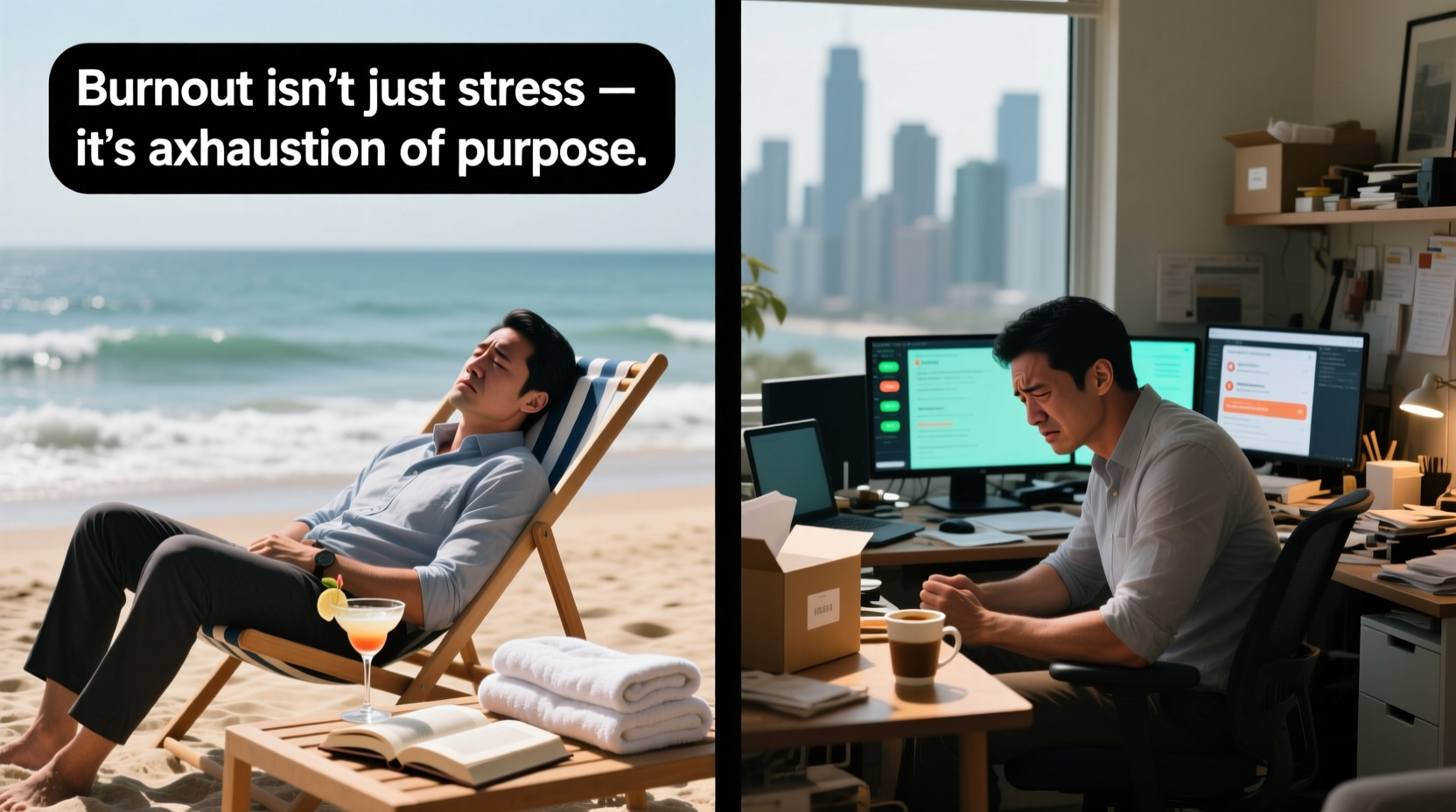
This distinction explains why a beach vacation might ease stress but leave burnout untouched. If you return to the same environment that caused your burnout—same workload, same lack of autonomy, same toxic culture—the symptoms will resurface, sometimes within days.
Why Vacations Fall Short in Healing Burnout
Vacations are designed for relaxation, not rehabilitation. They offer a break from routine but rarely address the root causes of burnout: unsustainable workloads, lack of control, misalignment of values, or insufficient recognition. Think of burnout like a deep tissue injury. A vacation is akin to resting the limb for a few days—helpful, but not healing if the underlying damage isn’t treated.
Moreover, many people use vacations inefficiently. They over-schedule activities, check work emails, or return to overflowing inboxes, negating any real disconnection. Others experience “leisure guilt”—the nagging sense that they should be working—preventing true mental detachment.
Dr. Christina Maslach, a pioneer in burnout research and co-creator of the Maslach Burnout Inventory, emphasizes this point:
“Burnout isn’t cured by a week in the sun. It’s reversed by changes in the work environment and personal boundaries. Recovery requires structural shifts, not just time off.” — Dr. Christina Maslach, Psychologist and Burnout Researcher
She identifies six key areas that must be addressed to prevent and recover from burnout: workload, control, reward, community, fairness, and values. A vacation does nothing to alter these conditions.
Real-Life Example: The Executive Who Couldn’t Recharge
James, a 42-year-old marketing director at a fast-growing tech firm, took a two-week vacation to Bali after months of 70-hour workweeks. He returned tanned and rested, but within three days, his irritability, insomnia, and dread returned. His team noticed he was less engaged, slower to respond, and quick to snap during meetings.
He assumed he hadn’t rested enough and booked another trip three weeks later. This time, he barely enjoyed it—constantly checking Slack and worrying about missed opportunities. His doctor diagnosed him with moderate burnout, not stress. The problem wasn’t fatigue; it was a fundamental mismatch between his role and his capacity.
Only when James renegotiated his responsibilities, delegated key projects, and set strict email boundaries did he begin to recover. The turning point wasn’t a destination—it was redesigning his daily reality.
Step-by-Step Guide to Recovering from Burnout
If you suspect you're experiencing burnout, here’s a practical, evidence-based timeline to initiate recovery. Unlike stress, burnout recovery is not linear, but consistent effort yields results.
- Week 1–2: Acknowledge and Assess
Admit that this is burnout, not just a rough patch. Use tools like the Maslach Burnout Inventory or a simple self-audit: Are you emotionally exhausted? Cynical about work? Feeling ineffective? - Week 3–4: Disengage Strategically
Create real separation from work. Turn off notifications, set email autoresponders, and avoid work-related conversations. Use this time to reflect: What aspects of your role drain you? Which give energy? - Month 2: Redefine Boundaries
Establish non-negotiable limits. Examples: No emails after 7 PM, no weekend calls unless urgent, lunch breaks away from the desk. Communicate these clearly to colleagues and managers. - Month 3: Realign Workload and Values
Identify tasks that align with your strengths and purpose. Propose shifting or delegating those that don’t. Seek roles or projects that restore a sense of meaning. - Ongoing: Build Resilience Systems
Incorporate sustainable habits: regular exercise, therapy or coaching, peer support groups, and quarterly “burnout check-ins” with yourself.
This process takes months, not days. But unlike a vacation, it builds lasting protection against recurrence.
Actionable Checklist: Signs You Need More Than a Vacation
Use this checklist to evaluate whether you’re dealing with stress or burnout—and whether a vacation alone will suffice.
- ☑ I feel empty or numb, not just tired
- ☑ I’ve lost interest in work I used to enjoy
- ☑ I dread going to work, even after time off
- ☑ I’m more cynical or detached than usual
- ☑ My productivity has dropped despite working longer hours
- ☑ I feel guilty when not working
- ☑ Physical symptoms (headaches, stomach issues) persist
- ☑ I’ve stopped setting personal goals
If you checked three or more, you’re likely experiencing burnout. A vacation may help, but it should be part of a broader recovery plan—not the entire solution.
Prevention: Building Burnout-Resistant Habits
Just as companies invest in fire prevention rather than waiting for emergencies, individuals must build systems that protect against burnout. Prevention isn’t about doing more—it’s about doing differently.
Start by auditing your work environment using Maslach’s six risk factors:
- Workload: Is your workload manageable and realistic?
- Control: Do you have autonomy over how and when you work?
- Reward: Do you receive adequate recognition and compensation?
- Community: Is your workplace supportive, not hostile or isolating?
- Fairness: Are decisions transparent and equitable?
- Values: Does your work align with your personal ethics and purpose?
Address gaps proactively. For example, if you lack control, negotiate flexible hours. If community is weak, initiate peer check-ins. Small, consistent adjustments prevent erosion over time.
Frequently Asked Questions
Can burnout happen outside of work?
Yes. While the WHO defines burnout as occupational, similar symptoms can arise from caregiving, parenting, or intense academic pressure. The mechanism—chronic stress without recovery—is the same. The key is identifying the source and adjusting the demands or support system accordingly.
How long does it take to recover from burnout?
Recovery varies widely. Mild cases may improve in 4–6 weeks with proper intervention. Severe burnout can take 6 months or longer, especially if structural changes are needed. Early recognition and action shorten recovery time significantly.
Is burnout the same as depression?
No, though they share symptoms like fatigue and hopelessness. Depression is a clinical mental health disorder that affects all areas of life, regardless of context. Burnout is specifically tied to work or role-related stress. However, untreated burnout can increase the risk of developing depression. Always consult a healthcare provider for accurate diagnosis.
Conclusion: Healing Requires Change, Not Just Time Off
A vacation can refresh, but it cannot repair a broken relationship with work. Burnout isn’t a sign of weakness—it’s a signal that your current environment is unsustainable. Treating it effectively means more than escaping; it means evolving. It requires honest reflection, boundary-setting, and often, courageous conversations with employers or teams.
True recovery begins when you stop asking, “How can I endure this?” and start asking, “How can I change this?” Whether through delegation, role redesign, career transition, or improved support systems, the path forward is built on intentionality, not isolation.




 浙公网安备
33010002000092号
浙公网安备
33010002000092号 浙B2-20120091-4
Comments
No comments yet. Why don't you start the discussion?