
Gifting is less about the object and more about what it represents. A well-chosen present doesn’t just occupy space—it occupies memory. When deciding between a camellia (often gifted as a live plant, pressed bloom, or floral-inspired keepsake) and an engraved keychain, the real question isn’t price or convenience. It’s intentionality. Which of these options signals that you didn’t just grab something off a shelf, but instead paused, reflected, and selected with care?
The answer depends on context, relationship depth, and symbolic resonance. One leans into timeless elegance and natural beauty; the other into personalization and permanence. Let’s break down what each option communicates—and when one clearly outshines the other in demonstrating genuine thought.
The Language of Symbolism: What Camellias Mean
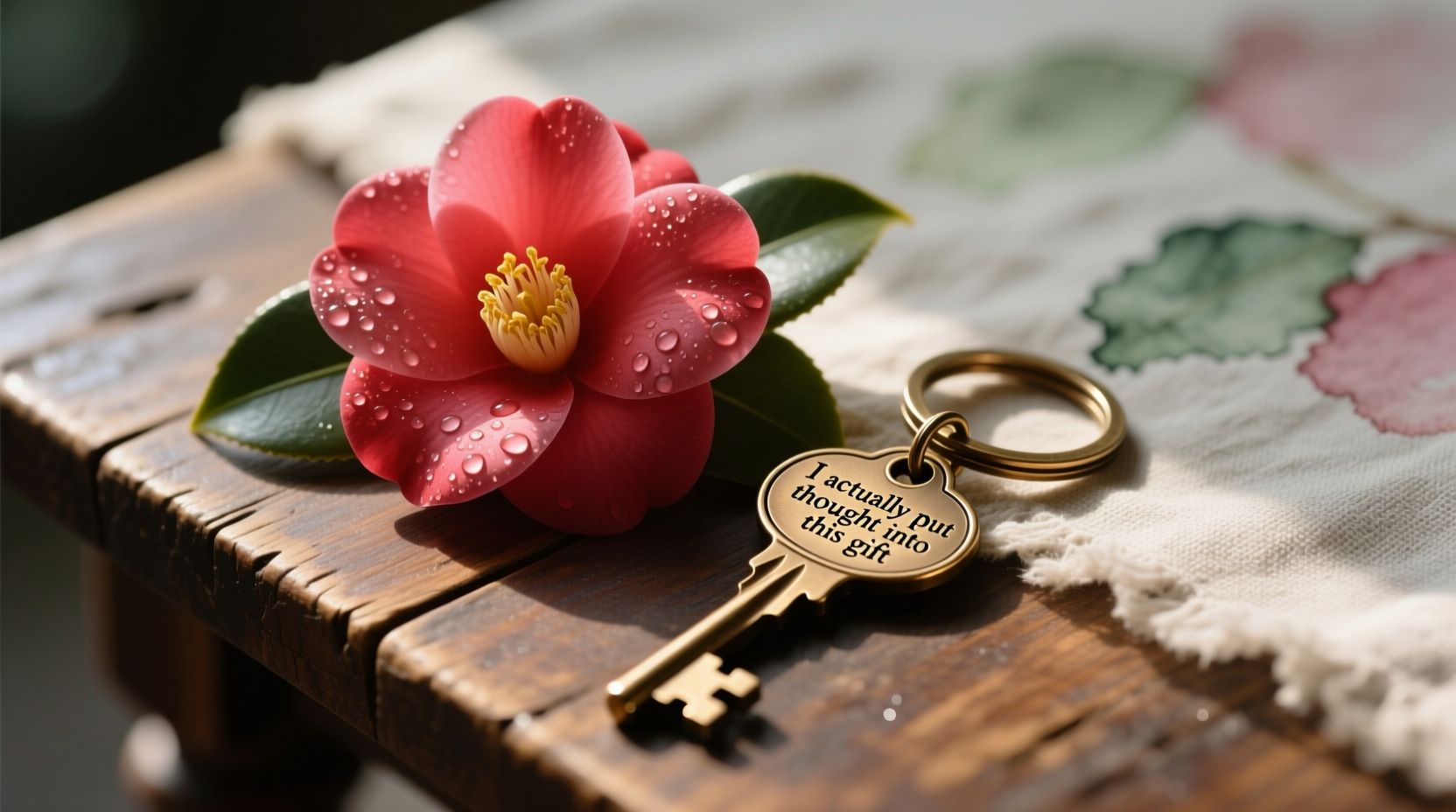
The camellia flower carries centuries of cultural weight. In Japan, it symbolizes devotion and perfection. In Victorian floriography, a red camellia whispered “you’re beautiful,” while white stood for adoration without showiness. Unlike fleeting cut flowers, a camellia plant can live for decades, blooming year after year—a quiet metaphor for enduring affection.
Gifting a camellia, whether potted or preserved, suggests contemplation. It implies research: Did you learn their favorite bloom? Did you consider the meaning behind its color? A living plant requires ongoing care, mirroring the nurtured nature of meaningful relationships. Even a pressed camellia in a locket or frame conveys effort—harvested at peak bloom, dried with patience, then presented with reverence.
“Flowers given with knowledge of their meaning aren’t just pretty—they’re personalized poetry.” — Dr. Lila Chen, Cultural Historian & Author of *The Silent Language of Gifts*
The Power of Personalization: Engraved Keychains
An engraved keychain, by contrast, speaks in initials, dates, coordinates, or short phrases. Its strength lies in specificity. “J + M • 06.14.23” isn’t generic. Neither is “Home is where you are” or latitude-longitude of a first meeting spot. These details require recollection, emotional investment, and deliberate selection.
Unlike mass-produced trinkets, an engraved item becomes a daily companion. Every time keys jingle, the recipient is reminded of the giver. The wear and patina over time only deepen its emotional value. But not all engravings are equal. “Best Dad” on a chrome rectangle from a gas station register lacks the nuance of a hand-selected design with a private message only two people understand.
Thoughtfulness here hinges on customization quality—not just the act of engraving, but what’s engraved and why.
Comparing Thought Signals: A Practical Breakdown
| Factor | Camellia (Plant/Keepsake) | Engraved Keychain |
|---|---|---|
| Sentiment Depth | High—rooted in tradition, nature, and sustained care | Medium to High—depends on message relevance |
| Uniqueness | High—especially if rare variety or preserved artfully | Medium—common item, but engraving makes it distinct |
| Daily Visibility | Low to Medium—displayed in home or garden | High—carried daily, seen frequently |
| Effort Perceived | High—implies research, timing, care instructions | Medium—assumes minimal effort unless message is profound |
| Lasting Impact | Potentially lifelong (if plant thrives) | Durable but may tarnish or be lost |
When the Camellia Wins: Scenarios That Demand Meaning
A camellia shines brightest in moments steeped in emotion or tradition. Consider a partner who loves gardening, someone mourning a loss, or a friend celebrating a milestone like retirement or healing. Gifting a pink camellia—symbolizing longing and admiration—for a long-distance friend carries layered significance. You’ve chosen a living thing that grows in adversity, much like your bond.
In romantic contexts, especially anniversaries or reconciliations, a camellia says, “I know you. I remember what you love. I want this to last.” It bypasses commercialism and lands in the realm of poetic sincerity.
Real Example: A Gift That Rooted a Memory
Sophie gave her mother a potted white camellia on Mother’s Day after learning it was her late grandmother’s favorite flower. She included a note: “She loved these. Now I see why—you both bloom quietly, but brilliantly.” The plant now sits on the kitchen windowsill, reblooming each winter. “It’s not just a gift,” her mother said. “It’s a conversation we never had, finally spoken.”
No engraving could have carried that weight. The thought wasn’t just in the choice, but in the listening, remembering, and connecting across generations.
When the Engraved Keychain Earns Its Keep
Keychains win when utility meets intimacy. For practical souls who carry their keys everywhere—a nurse, a tradesperson, a commuter—an engraved token becomes a silent companion. The key is making the message count.
A simple “Breathe” might comfort someone managing anxiety. Coordinates of a hiking trail where a couple got engaged turn metal into memory. Even a pet’s name after they’ve passed offers solace in small moments.
“Personalization fails when it’s obvious. It triumphs when it feels like a secret only the recipient fully gets.” — Marcus Reed, Gift Psychologist & Founder of Thoughtful Exchange Lab
Step-by-Step Guide: Crafting a Truly Thoughtful Engraved Keychain
- Reflect on a shared moment—a phrase, location, or inside joke only they’d recognize.
- Choose material wisely—brass ages beautifully; titanium resists wear; wood adds warmth.
- Limits breed creativity—stick to 20 characters or fewer. Brevity forces meaning.
- Pair it with context—include a card explaining why those words matter.
- Deliver it intentionally—don’t bury it in a pile of gifts. Hand it over with eye contact.
Checklist: Did Your Gift Pass the “Thought Test”?
- ✅ Did I consider their personality, not just my taste?
- ✅ Is there a story behind the gift they’ll appreciate?
- ✅ Does it reflect something specific about them or your relationship?
- ✅ Would someone else receiving the same gift feel equally moved?
- ✅ Am I including a handwritten note to clarify intent?
Frequently Asked Questions
Can a camellia be too obscure a gift?
Only if you don’t explain its meaning. A rare bloom with no context may confuse. Always pair symbolic gifts with a brief note: “I chose this because camellias stand for resilience—just like you.”
Isn’t an engraved keychain more practical than a flower?
Practicality isn’t the goal—thoughtfulness is. A camellia plant may require care, but so does any meaningful relationship. The “practical” gift often wins in function but loses in emotional resonance unless deeply personalized.
What if they kill the plant? Doesn’t that ruin the gesture?
Not at all. The thought was in the giving, not the survival. Many cherish dead plants as relics—a dried camellia pressed back into a book, roots preserved in memory. The gesture endures beyond biology.
Conclusion: Thought Isn’t Measured in Material, But in Meaning
Between a camellia and an engraved keychain, neither automatically proves you “put thought in.” Both can be tossed off or transformed into treasures. The difference lies in execution. A camellia says, “I considered beauty, legacy, and the quiet language of nature.” An engraved keychain says, “I remembered your words, our place, our time.”
Ultimately, the most thoughtful gift isn’t defined by petals or metal, but by the invisible labor behind it: the remembering, the researching, the tailoring to another soul. Choose the camellia when you want to speak in symbols and seasons. Choose the keychain when you want to whisper in their ear every time they unlock a door.
Either can say, “I thought of you,”—but only if you let it.




 浙公网安备
33010002000092号
浙公网安备
33010002000092号 浙B2-20120091-4
Comments
No comments yet. Why don't you start the discussion?