
Micellar water has surged in popularity over the past decade, praised for its no-rinse convenience, gentle formula, and ability to remove makeup with minimal effort. Often marketed as a “cleanser in a bottle,” many users wonder: can micellar water truly replace a traditional facial cleanser in a daily skincare routine? The answer isn’t a simple yes or no—it depends on your skin type, lifestyle, and cleansing needs. While micellar water excels in certain situations, it may fall short in others, particularly when dealing with heavy pollution, sunscreen buildup, or acne-prone skin.
To determine whether micellar water is sufficient on its own or best used as part of a broader cleansing strategy, it’s essential to understand how it works, what it removes—and what it doesn’t.
How Micellar Water Works
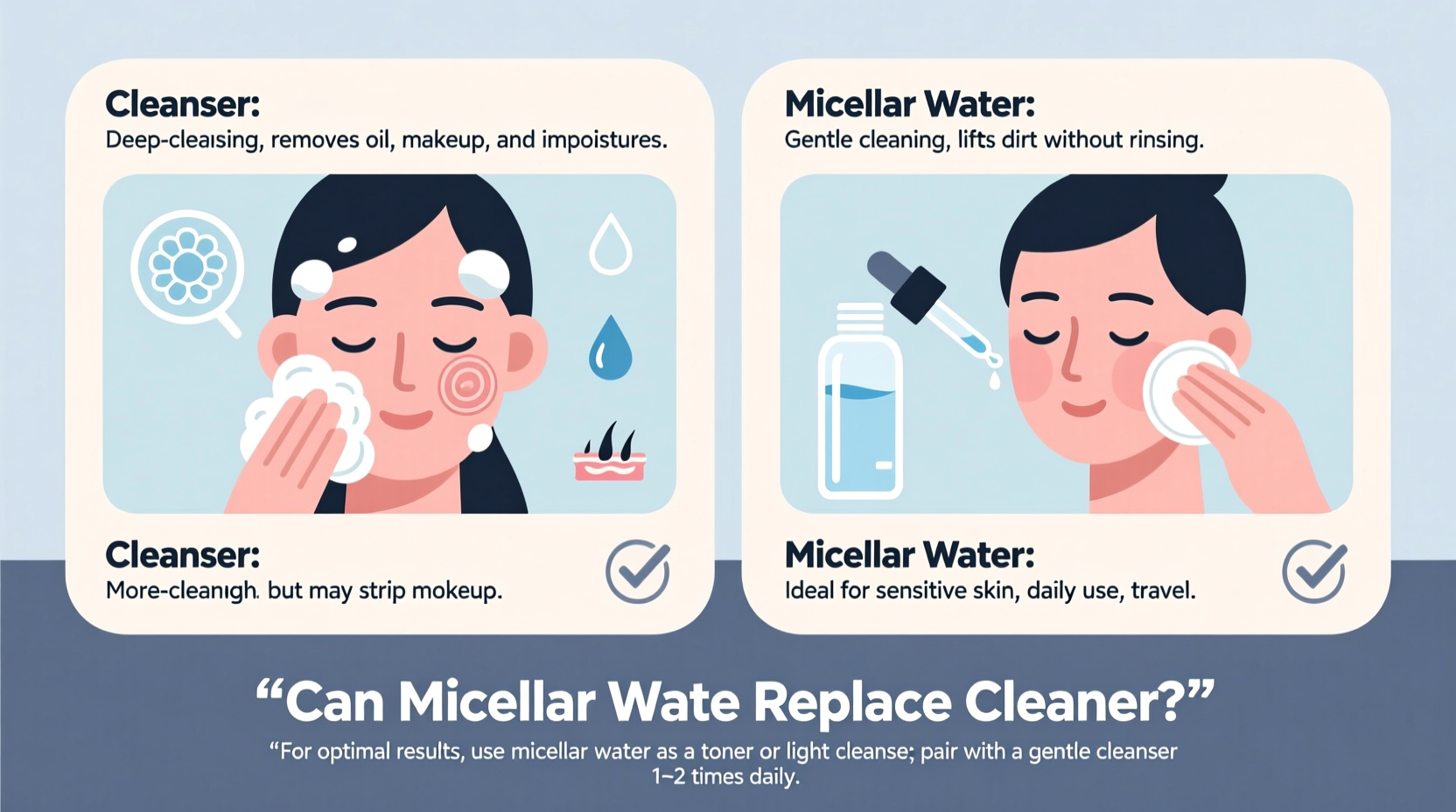
Micellar water contains tiny oil-based particles called micelles suspended in soft water. These micelles act like magnets, attracting dirt, oil, and makeup without stripping the skin of moisture. Unlike foaming cleansers that rely on surfactants to lather and lift impurities, micellar water works through physical attraction, making it ideal for sensitive or dry skin types.
The formulation typically includes purified water, mild surfactants (like PEG-6 caprylic/capric glycerides), and sometimes added hydrators such as glycerin or soothing agents like chamomile. Because it doesn’t require rinsing, it’s often favored by those who want a quick cleanse after travel, late nights, or workouts.
When Micellar Water Can Replace a Cleanser
In specific scenarios, micellar water performs well enough to stand in for a traditional cleanser. These include:
- Light Makeup Removal: For minimal makeup—such as tinted moisturizer, light concealer, or lip balm—micellar water effectively lifts surface impurities.
- Sensitive Skin: Those with rosacea, eczema, or reactive skin often find micellar water less irritating than lathering cleansers.
- Emergency Cleansing: When you're traveling, lack access to running water, or are too tired for a full routine, micellar water offers a practical solution.
- Double-Cleansing First Step: In the popular double-cleansing method, micellar water acts as an excellent first step to dissolve makeup before using a water-based cleanser.
However, relying solely on micellar water every day—even if your skin feels clean afterward—may leave behind residues that accumulate over time.
The Limitations of Micellar Water
Despite its appeal, micellar water has notable drawbacks when used as a standalone cleanser:
- Doesn’t Remove Sunscreen Thoroughly: Many sunscreens, especially mineral or hybrid formulas, are designed to be water-resistant and adhere strongly to the skin. Micellar water may not fully break them down, leaving a film that can clog pores.
- Limited Oil Control: If you have oily or acne-prone skin, micellar water may not remove excess sebum deep within pores, increasing the risk of breakouts.
- No Exfoliation Benefit: Unlike some cleansers containing AHAs or BHAs, micellar water does not exfoliate dead skin cells, which can lead to dullness over time.
- Residue Buildup: Some formulations contain ingredients like poloxamers or fragrance that, if not rinsed off, may irritate or congest the skin with prolonged use.
“Micellar water is excellent for removing surface debris, but it shouldn't be the only step in your cleansing routine—especially if you wear sunscreen daily.” — Dr. Lena Patel, Board-Certified Dermatologist
Comparing Micellar Water vs. Traditional Cleansers
| Feature | Micellar Water | Traditional Cleanser (Gel/Foam/Cream) |
|---|---|---|
| Makeup Removal | Excellent for light to moderate makeup | Good to excellent, depending on formula |
| Sunscreen Removal | Fair – may leave residue | Very good, especially oil-based or balm cleansers |
| Pore Cleansing | Surface-level only | Deep-cleans pores when massaged properly |
| Rinsing Required? | No (but recommended for thorough removal) | Yes |
| Ideal For | Dry, sensitive, or reactive skin; quick touch-ups | All skin types, especially oily, combination, or acne-prone |
| Exfoliation | None | Available in some formulas (e.g., salicylic acid) |
This comparison highlights that while micellar water is convenient and gentle, it lacks the depth of cleansing provided by most traditional washes—particularly when environmental pollutants, sweat, and long-wear products are involved.
Who Should Avoid Replacing Cleanser with Micellar Water?
Certain individuals should think twice before eliminating their regular cleanser:
- Oily or Acne-Prone Skin: Without proper pore cleansing, sebum and bacteria can accumulate, leading to clogged pores and breakouts.
- Urban Dwellers: Pollution particles bind tightly to the skin and require more robust cleansing agents to remove.
- Heavy Makeup Wearers: Full-coverage foundation, waterproof mascara, and long-wear lipstick often need emulsifying cleansers or oils to dissolve completely.
- Nighttime Routine Users: Skipping a rinse-off cleanser at night reduces the efficacy of serums and moisturizers applied afterward, as active ingredients penetrate less effectively through residue-laden skin.
A Real-World Example: Maria’s Skincare Shift
Maria, a 29-year-old graphic designer living in downtown Chicago, relied solely on micellar water for her evening cleanse for nearly two years. She appreciated the speed and comfort—no splashing water, no tightness. But over time, she noticed persistent small bumps along her jawline and forehead. Her dermatologist identified closed comedones caused by product and pollution buildup.
After switching to a double-cleansing routine—starting with micellar water to remove makeup, followed by a foaming cleanser with salicylic acid—her skin cleared within six weeks. “I didn’t realize something so gentle could actually cause congestion,” Maria said. “Now I use micellar water smarter—not as my only step, but as the first one.”
Her experience underscores a key point: even non-comedogenic products can contribute to issues if they aren’t fully removed.
Best Practices: How to Use Micellar Water Effectively
If you choose to incorporate micellar water into your routine, follow this step-by-step guide for maximum benefit:
- Shake the Bottle: Micelles settle at the bottom. Shake well before each use to activate the cleansing agents.
- Use a Soft Cotton Pad: Choose reusable bamboo pads or high-quality disposable ones to minimize friction.
- Press, Don’t Rub: Gently press the soaked pad onto your skin for 10–15 seconds to allow micelles to attract impurities, then swipe softly.
- Clean All Areas: Don’t forget eyelids, sides of the nose, hairline, and under the chin.
- Follow with a Rinse-Off Cleanser (Recommended): Especially at night, follow up with a water-based cleanser to ensure complete removal.
- Tone and Moisturize: Complete your routine to restore pH balance and hydration.
For mornings, micellar water can serve as a refreshing alternative to washing your face—particularly if you don’t wear makeup overnight and prefer a minimalist routine.
Checklist: Is Micellar Water Enough for You?
Answer the following questions to determine if micellar water alone meets your skincare needs:
- ☑ Do you wear only minimal or no makeup?
- ☑ Do you skip sunscreen during the day?
- ☑ Is your skin dry, sensitive, or easily irritated?
- ☑ Do you live in a low-pollution area?
- ☑ Have you experienced no breakouts or texture issues?
If you answered “yes” to all, micellar water might suffice. If any answer is “no,” consider adding a rinse-off cleanser, especially at night.
Frequently Asked Questions
Can I sleep with micellar water on my face?
While micellar water is gentle, leaving it on overnight isn’t advisable. Ingredients like surfactants and preservatives can disrupt the skin barrier over time, potentially causing irritation or clogged pores. Always follow with moisturizer, and ideally, rinse or proceed with a full routine.
Is micellar water bad for acne?
Not inherently—but used alone, it may not adequately address acne triggers like excess oil and trapped debris. Some formulations contain fragrance or alcohol, which can aggravate breakouts. Opt for non-comedogenic, fragrance-free versions if you’re acne-prone.
Do dermatologists recommend micellar water?
Many do—especially for sensitive skin patients or as a first step in double cleansing. However, most dermatologists agree it shouldn’t replace thorough cleansing in most skincare regimens. “It’s a tool, not a total solution,” says Dr. Anita Rao, clinical dermatologist.
Final Verdict: A Supportive Player, Not a Standalone Hero
Micellar water is a valuable addition to modern skincare, offering speed, gentleness, and efficiency. It shines in removing light makeup and refreshing the skin without water. However, it cannot fully replicate the deep-cleansing action of a traditional facial wash, particularly in removing sunscreen, environmental grime, and excess sebum.
For most people, the optimal approach is integration rather than replacement. Use micellar water as a first cleanse or morning refresher, then follow with a targeted cleanser suited to your skin type. This layered method ensures your skin remains truly clean, balanced, and ready to absorb the benefits of serums and moisturizers.
The goal of skincare isn’t just convenience—it’s long-term health and clarity. While micellar water makes cleansing easier, true effectiveness comes from understanding your skin’s evolving needs and adjusting your routine accordingly.




 浙公网安备
33010002000092号
浙公网安备
33010002000092号 浙B2-20120091-4
Comments
No comments yet. Why don't you start the discussion?