
Tight jeans have long been a staple in modern wardrobes, praised for their sleek silhouette and fashion-forward appeal. However, beneath the stylish exterior lies a growing concern: could consistently wearing tightly fitted denim contribute to digestive discomfort and postural imbalances over time? While occasional wear may pose little risk, daily reliance on restrictive waistbands and hip-hugging cuts might silently undermine both gastrointestinal function and spinal alignment. This article examines the physiological mechanisms at play, supported by medical insights and real-world observations, to help you make informed choices about your everyday clothing.
The Digestive System Under Pressure
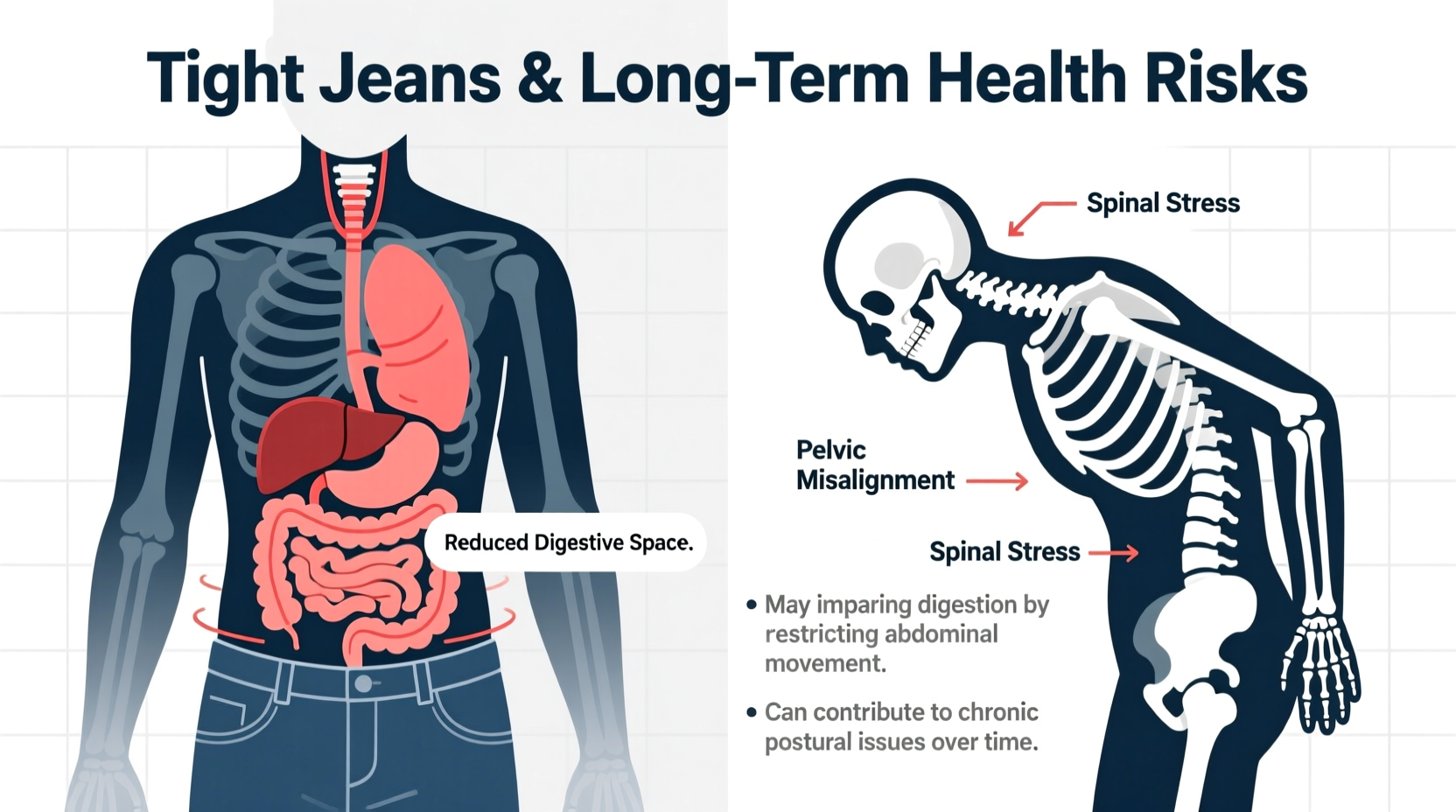
The human digestive tract operates optimally when internal organs can move freely and abdominal pressure remains balanced. When tight jeans are worn—particularly those with high compression around the waist and lower abdomen—they exert external force on the stomach, intestines, and diaphragm. This mechanical pressure can interfere with normal digestive processes in several ways.
One of the most immediate effects is reduced gastric expansion. After eating, the stomach naturally expands to accommodate food. A constricting waistband limits this expansion, potentially leading to early satiety, bloating, or acid reflux. The pressure can push stomach contents upward, weakening the lower esophageal sphincter (LES) and increasing the likelihood of gastroesophageal reflux disease (GERD) symptoms, especially when bending or sitting.
Additionally, compression of the intestinal tract may slow peristalsis—the rhythmic contractions that move food through the digestive system. Slowed motility contributes to constipation, gas buildup, and discomfort. Over time, chronic restriction could exacerbate conditions like irritable bowel syndrome (IBS), where abdominal sensitivity is already heightened.
Postural Changes Linked to Tight Denim
Posture is not solely determined by muscle strength or skeletal structure—it’s also influenced by clothing. Tight jeans, particularly those with rigid denim or non-stretch fabric, restrict natural movement at the hips and pelvis. This limitation forces compensatory adjustments in gait and spinal alignment, often without the wearer noticing.
One common adaptation is anterior pelvic tilt, where the pelvis rotates forward to accommodate restricted hip flexion. This shift increases the curve in the lower back (lumbar lordosis), placing strain on lumbar vertebrae and surrounding muscles. Over time, this altered posture can lead to chronic lower back pain, muscle imbalances, and reduced core stability.
Fabrics lacking elasticity also limit full range of motion during walking or bending. To compensate, individuals may adopt a shuffling gait, shorten their stride, or arch their back excessively. These micro-adjustments accumulate over months or years, reinforcing poor postural habits that become difficult to reverse.
“Clothing that restricts movement can subtly alter neuromuscular control and joint mechanics. What starts as a minor adaptation can evolve into a persistent postural dysfunction.” — Dr. Lena Torres, Physical Therapist and Posture Specialist
Real-Life Impact: A Mini Case Study
Sophie, a 32-year-old marketing professional, wore high-waisted skinny jeans nearly every workday for over five years. Initially drawn to their polished look, she began noticing recurring mid-afternoon bloating and heartburn, especially after lunch meetings. She also developed a dull ache in her lower back by midweek, which worsened after long days at her desk.
After consulting a gastroenterologist and physical therapist, Sophie learned that her symptoms were closely tied to her clothing choices. The constant pressure from her jeans was contributing to functional dyspepsia and mild GERD. Her posture assessment revealed moderate anterior pelvic tilt and weakened gluteal activation—both linked to restricted hip mobility from tight denim.
Upon switching to mid-rise pants with stretch fabric and reserving tight jeans for special occasions, Sophie reported significant improvement within six weeks. Her digestive discomfort decreased, and targeted exercises helped correct her pelvic alignment. Her experience illustrates how seemingly minor lifestyle factors can have cumulative health consequences.
Do’s and Don’ts of Denim Wear: A Practical Table
| Category | Do | Don’t |
|---|---|---|
| Digestive Health | Wear looser bottoms during and after meals | Eat large meals while wearing tight waistbands |
| Posture & Mobility | Choose jeans with at least 2% elastane for flexibility | Wear stiff, non-stretch denim for extended periods |
| Frequency | Limit tight jeans to 1–2 days per week | Wear them daily without breaks |
| Fit | Ensure you can fit two fingers under the waistband | Size down for a \"snug\" fit that leaves indentations |
Building a Health-Conscious Wardrobe: A Step-by-Step Guide
Transitioning to a more body-friendly approach to denim doesn’t require abandoning style. Follow these steps to protect your long-term health while maintaining a polished appearance.
- Assess Your Current Jeans: Try on your most frequently worn pair. Sit down, take a few steps, and breathe deeply. If you feel pinching, restricted breathing, or skin indentation, the jeans are too tight.
- Measure Waistband Flexibility: Use a tape measure to check how much the waistband stretches. Quality jeans should expand at least 1–1.5 inches beyond their labeled size.
- Incorporate Stretch Fabrics: Look for blends containing 1–3% spandex or elastane. These provide shape retention with improved comfort and mobility.
- Rotate Your Bottoms: Alternate between jeans, chinos, skirts, and trousers to avoid prolonged pressure on the same areas.
- Listen to Your Body: Pay attention to signs like midday bloating, back pain, or numbness in the legs—these may indicate circulatory or nerve compression from tight clothing.
- Invest in Tailored Fits: Off-the-rack sizing often prioritizes aesthetics over ergonomics. Consider tailored options that match your proportions without squeezing.
Expert Insights on Long-Term Effects
Medical professionals increasingly recognize the role of clothing in musculoskeletal and digestive health. Dr. Alan Reeves, a gastroenterologist at Boston Digestive Institute, notes:
“We see patients with unexplained bloating and reflux who improve dramatically once they eliminate tight waistbands. Clothing isn’t just cosmetic—it’s biomechanical.” — Dr. Alan Reeves, MD
Likewise, orthopedic specialists caution against the cumulative impact of restrictive garments. “Posture is dynamic,” explains Dr. Miriam Cho, a spine health researcher. “When clothing alters how we move even slightly, it changes muscle recruitment patterns. Over time, this leads to asymmetries and joint stress that can persist long after the jeans come off.”
FAQ: Common Questions About Tight Jeans and Health
Can tight jeans cause nerve damage?
Yes, in rare cases. Meralgia paresthetica—a condition involving numbness and tingling in the outer thigh—is often linked to compression of the lateral femoral cutaneous nerve, commonly caused by tight waistbands. Symptoms usually resolve when pressure is removed, but chronic compression may prolong recovery.
Are high-waisted jeans worse than low-rise ones?
Not inherently, but high-waisted styles often extend above the natural waistline, applying pressure directly to the stomach and lower ribs. This can increase intra-abdominal pressure more than low-rise cuts, especially if the fabric is inflexible. The key factor is fit and material, not rise alone.
How long does it take for posture to improve after stopping tight jeans?
Improvement varies by individual. Most people notice reduced discomfort within days of switching to looser clothing. Structural postural corrections, however, typically require 6–12 weeks of consistent movement retraining and strengthening exercises, particularly for the core and glutes.
Practical Checklist for Healthier Denim Habits
- ✅ Perform a “sit test” before buying new jeans—ensure comfort when seated
- ✅ Choose denim with at least 1% stretch for better mobility
- ✅ Avoid wearing tight jeans during or after meals
- ✅ Monitor for signs of meralgia paresthetica (thigh numbness)
- ✅ Limit daily tight denim use to less than three consecutive days
- ✅ Incorporate posture-checking routines (e.g., mirror checks, stretching breaks)
- ✅ Rotate denim with breathable, flexible alternatives like cotton twill or stretch chinos
Conclusion: Style Shouldn’t Come at the Cost of Health
Fashion trends evolve, but long-term well-being depends on sustainable choices. While tight jeans may offer a flattering look, their potential impact on digestion and posture warrants thoughtful consideration. Small shifts—like opting for stretch blends, limiting wear frequency, and tuning into bodily signals—can prevent years of avoidable discomfort. You don’t need to give up jeans entirely; instead, prioritize fit, flexibility, and function alongside aesthetics.




 浙公网安备
33010002000092号
浙公网安备
33010002000092号 浙B2-20120091-4
Comments
No comments yet. Why don't you start the discussion?