
After the holiday season ends, many households face the same question: what should be done with a real Christmas tree? Tossing it into the trash is not only wasteful but also harmful to the environment. The good news is that yes — you absolutely can compost your real Christmas tree, and doing so is one of the most sustainable ways to close the loop on your holiday tradition.
Natural trees are biodegradable and rich in organic material, making them ideal candidates for composting or mulching. When processed correctly, they return valuable nutrients to the soil, reduce landfill waste, and support local green initiatives. This guide walks you through everything you need to know about composting your real tree, including how to prepare it, where to drop it off, and what happens to it afterward.
Why Composting Your Real Tree Matters
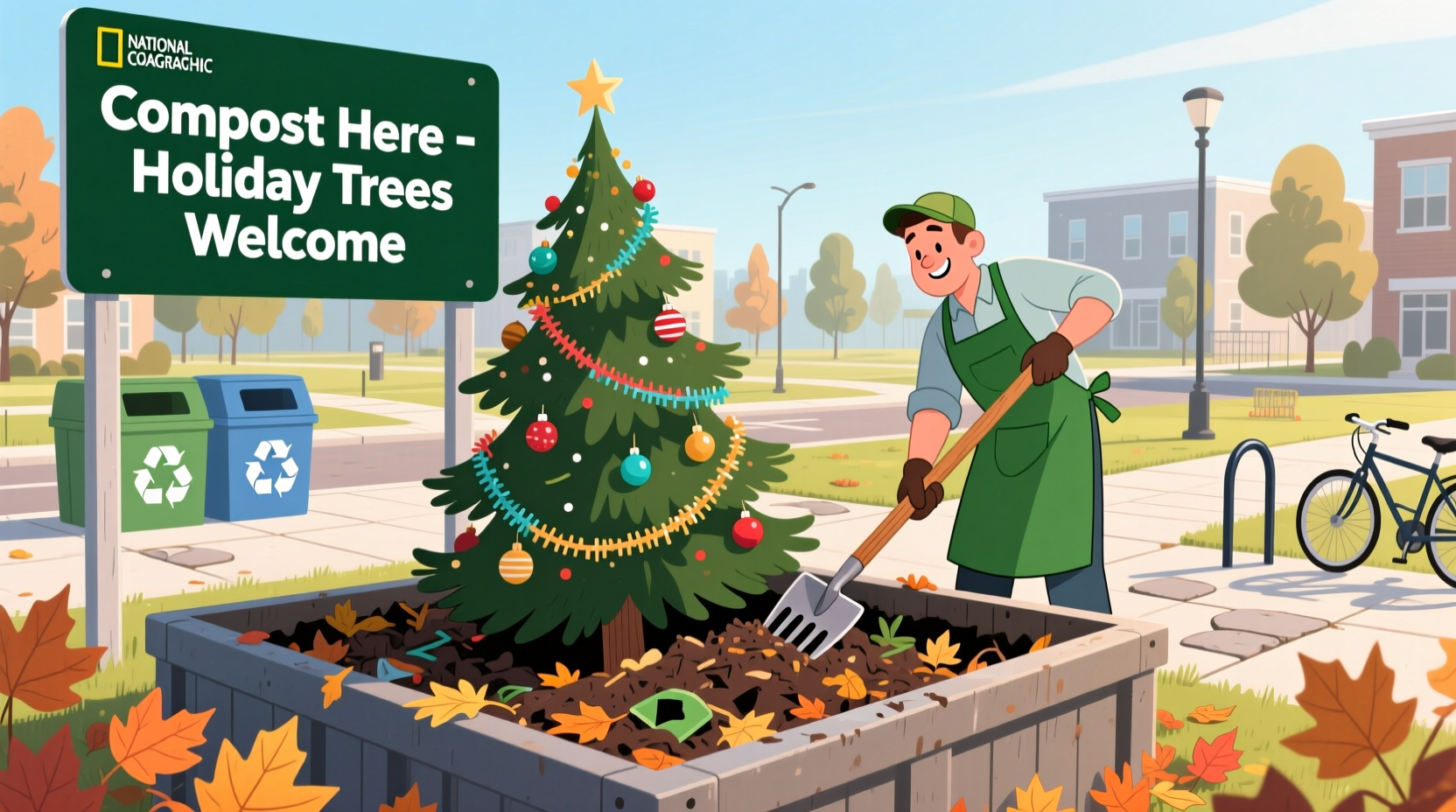
Every year, millions of real Christmas trees are discarded after the holidays. According to the Environmental Protection Agency (EPA), yard trimmings — including Christmas trees — make up nearly 15% of municipal solid waste. When these trees end up in landfills, they decompose anaerobically (without oxygen), producing methane, a potent greenhouse gas that contributes to climate change.
Composting offers a far better alternative. When trees are chipped and added to compost systems, they break down aerobically, significantly reducing emissions. The resulting mulch or compost enriches soil, suppresses weeds, retains moisture, and supports plant growth in parks, gardens, and urban landscapes.
Municipal composting programs across North America have embraced Christmas tree recycling as part of broader sustainability efforts. Cities like New York, Seattle, and Toronto run annual \"tree take-back\" programs that collect thousands of trees each January, turning them into usable landscaping materials.
“Diverting Christmas trees from landfills isn’t just about waste reduction — it’s about resource recovery. These trees become soil enhancers that benefit entire communities.” — Dr. Lena Pruitt, Urban Sustainability Researcher, University of Washington
How to Prepare Your Tree for Composting
Not every tree dropped at a collection site can be composted. To ensure your tree qualifies, follow these essential preparation steps:
- Remove all non-organic decorations: Take off tinsel, lights, ornaments, garlands, and plastic stands. Even small amounts of synthetic material can contaminate an entire batch of compost.
- Check for flocking or sprays: Artificial snow (flocking) often contains chemicals and adhesives that don’t break down safely. Trees treated with flame retardants or preservatives may also be excluded from composting programs.
- Cut if necessary: Some drop-off locations require trees to be under a certain height (often 8 feet). If needed, trim the base or top before transport.
- Shake out debris: Remove loose needles, dirt, and any hidden ornaments. A clean tree processes more efficiently.
- Leave the stand behind: Metal or plastic stands are not compostable and should be stored for next year.
What Disqualifies a Tree from Composting?
Even natural trees may be rejected from composting programs under certain conditions. Be aware of these common exclusions:
- Trees wrapped in plastic netting or burlap treated with synthetic coatings
- Flocked trees (artificially snow-covered)
- Artificial trees — these are made of PVC and metal and cannot be composted
- Trees contaminated with paint, glue, or excessive tinsel
- Pre-cut trees sold with stands already attached (often include plastic bases)
Where to Drop Off Your Tree: Municipal and Community Programs
The easiest way to compost your real tree is through a local drop-off program. Most cities and towns offer seasonal collection events in early January. Here’s how to find one near you:
1. Check Your Municipality’s Website
Visit your city or county’s public works or sanitation department website. Look for terms like “Christmas tree recycling,” “holiday tree pickup,” or “yard waste collection.” Many municipalities schedule special curbside pickups during the first two weeks of January.
For example:
- New York City residents can place trees at curbside on regular recycling days during the first two full weeks of January — no bags, no tags.
- Seattle provides free drop-off at designated parks and transfer stations, with chips later used in city landscaping.
- Toronto operates “Garbage Week” pickups, collecting trees along with other organics for composting at its facility in Dufferin County.
2. Use Online Recycling Locators
If your city doesn’t offer direct services, national tools can help:
- Earth911.com: Enter your zip code and search “Christmas tree recycling” for nearby options.
- Recycle.net: Lists community events and nonprofit-led collection drives.
- National Christmas Tree Association: Offers a searchable directory of state-level recycling programs.
3. Support Local Nonprofits and Fundraisers
Many environmental nonprofits, scout troops, and schools host tree recycling as a fundraiser. For a small fee ($10–$20), volunteers will pick up your tree or accept drop-offs. Proceeds often go toward conservation projects or youth programs.
In Austin, Texas, the Boy Scouts run “Scout Tree Recycling,” collecting over 10,000 trees annually. In Denver, nonprofits partner with parks departments to chip trees for trail erosion control.
Step-by-Step Guide to Dropping Off Your Tree
Follow this timeline to ensure your tree gets composted efficiently:
- January 1–3: Remove all decorations, stands, and lights. Store reusable items properly.
- January 4: Confirm your local drop-off window via city website or hotline.
- January 5–7: Transport your tree to the designated site or place it curbside by 7 a.m. on collection day.
- January 8–10: Trees are collected and transported to processing centers.
- January 11–14: Trees are chipped and mixed with other organic matter for composting.
- February onward: Finished mulch is distributed to parks, gardens, or made available to residents for free.
What Happens After You Drop It Off?
Once collected, your tree enters a transformation process:
- Chipping: Trees are fed into industrial shredders, turning them into wood chips.
- Sorting: Any remaining contaminants (like wire or plastic fragments) are removed mechanically or manually.
- Composting: Chips are mixed with food scraps, leaves, and grass clippings in large windrows (long compost piles). Over several months, microbes break down the material into nutrient-rich compost.
- Distribution: The final product is screened and used in public spaces — think flower beds in city parks, erosion control on hiking trails, or even offered to residents for home gardening.
In some regions, like California’s Bay Area, recycled trees are used in habitat restoration projects. Their mulch helps retain moisture in native plant nurseries and reduces irrigation needs.
Real Example: Chicago’s Green Initiative
In Chicago, the Department of Streets and Sanitation runs the “Bring One for the Chip” program. Each January, residents bring trees to one of 15 drop-off sites across the city. In 2023 alone, the program collected over 12,000 trees.
These were chipped and turned into mulch, which was then distributed to community gardens and park districts. Local gardeners praised the quality, noting improved soil texture and reduced weed growth. One gardener in Humboldt Park said, “We use the city’s mulch every spring — it’s free, effective, and feels good knowing it came from someone’s holiday tree.”
Do’s and Don’ts of Christmas Tree Composting
| Do | Don’t |
|---|---|
| Remove all lights, tinsel, and ornaments | Leave plastic netting or synthetic garlands attached |
| Drop off during official collection windows | Wait until late January — most programs end by the 15th |
| Use the free mulch when offered by your city | Burn your tree in a fire pit — it releases harmful resins and pollutants |
| Check if your HOA or building offers group pickup | Assume curbside pickup is automatic — confirm with local authorities |
| Support charity-led recycling drives | Try composting flocked or chemically treated trees |
FAQ
Can I compost my tree at home?
You can, but it’s challenging without proper equipment. Whole trees take years to decompose naturally. If you have a powerful chipper, you can shred the tree and add small amounts to your compost bin over time. Otherwise, municipal programs are far more efficient and effective.
Are living potted trees compostable?
Living trees in pots aren’t meant to be composted — they’re designed to be replanted. If you purchased a potted tree with roots intact, consider planting it in your yard or donating it to a local park. Only dead, cut trees should go into composting streams.
What if there’s no drop-off near me?
Contact your waste hauler or local garden center — some private companies offer pickup for a fee. Alternatively, check with nearby farms or stables; some accept trees for erosion control or animal enrichment (e.g., goats love chewing on pine branches).
Checklist: Preparing Your Tree for Composting
- ☐ Remove all ornaments, lights, and tinsel
- ☐ Take off tree topper (especially if metallic or plastic)
- ☐ Discard plastic stands or bags
- ☐ Confirm drop-off location and date
- ☐ Trim tree if over height limit (usually 8 feet)
- ☐ Shake out excess needles and debris
- ☐ Transport tree to site by deadline
- ☐ Mark your calendar for next year’s program
Conclusion: Turn Your Holiday Tradition Into Year-Round Impact
Composting your real Christmas tree is more than a disposal method — it’s a meaningful act of environmental stewardship. With minimal effort, you can transform a symbol of seasonal joy into lasting ecological value. From enriching soil to supporting community green spaces, your tree’s life doesn’t end on January 6th. It evolves.
As you take down decorations this year, remember that sustainability starts with small, intentional choices. By participating in tree recycling, you’re contributing to cleaner air, healthier soil, and smarter waste systems. And who knows — the mulch from your tree might nourish the very flowers that bloom outside your door this spring.




 浙公网安备
33010002000092号
浙公网安备
33010002000092号 浙B2-20120091-4
Comments
No comments yet. Why don't you start the discussion?