
Outdoor and indoor lighting plays a pivotal role in setting the mood during holiday seasons and special events. Among the most popular choices are icicle lights—those cascading strands that mimic frozen droplets—and traditional string lights, which offer uniform spacing and consistent glow. But what happens when you want to use both? Can you blend icicle lights with regular string lights without creating visual chaos? The short answer is yes—but only if done with intention, coordination, and attention to detail.
Mixing lighting types isn’t inherently problematic; in fact, it can elevate your decor when approached strategically. The key lies in understanding how light color, length, placement, and rhythm interact. When mismatched, these elements create clutter. When harmonized, they produce depth, dimension, and visual interest.
Understanding the Visual Differences
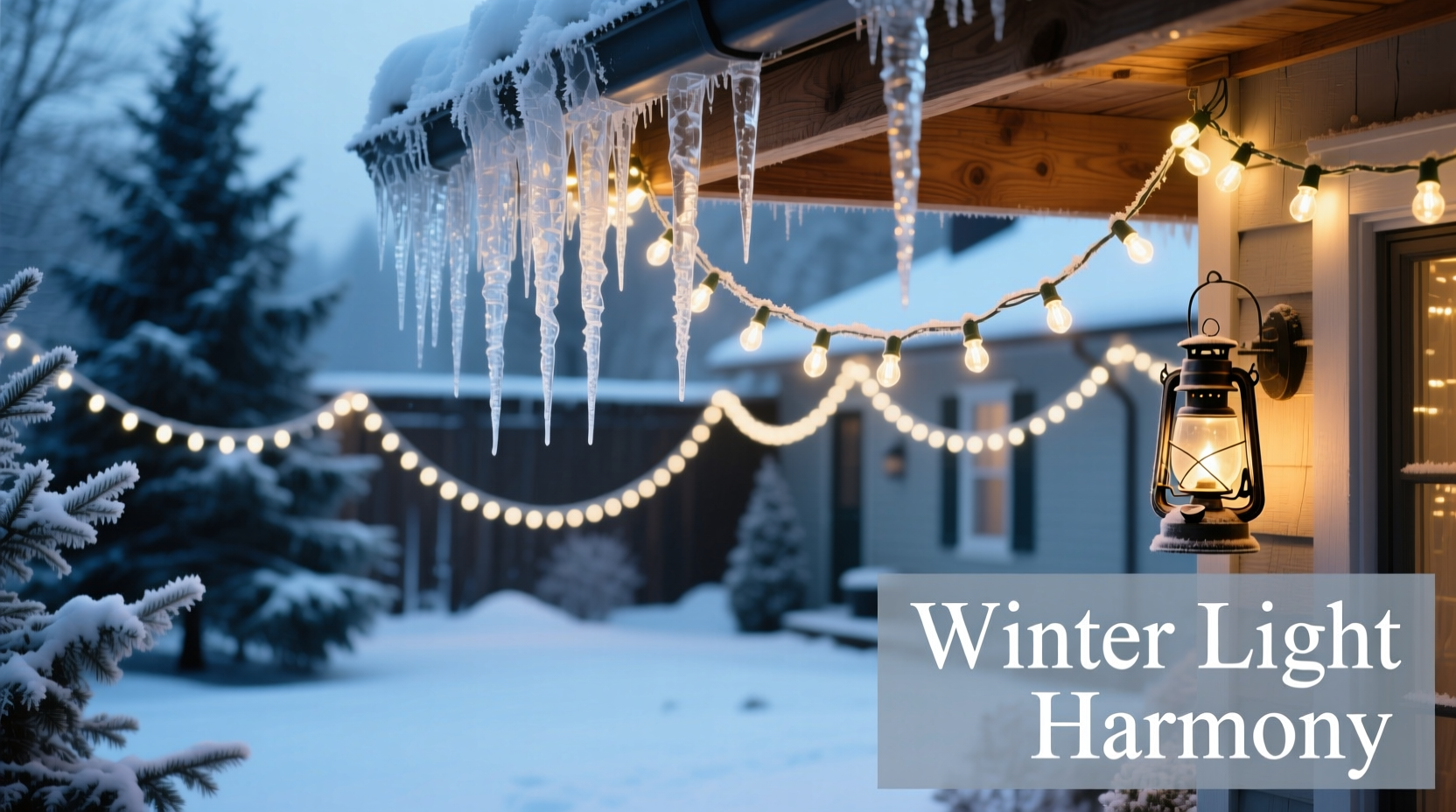
Icicle lights and standard string lights serve different aesthetic purposes. Icicle lights are designed to simulate falling water or snow from eaves, gutters, and window frames. Their staggered lengths create movement and draw the eye downward. In contrast, regular string lights—often referred to as \"fairy\" or \"twinkle\" lights—are evenly spaced and typically used to wrap railings, outline windows, or drape across walls and ceilings.
The primary challenge in mixing them arises from their differing rhythms:
- Icicle lights have an irregular, organic flow due to variable strand lengths.
- Regular string lights provide a steady, predictable pattern of illumination.
When placed haphazardly together, this contrast can appear jarring rather than complementary. However, by treating each type as a design element with a specific function, you can achieve balance and cohesion.
Key Factors for Successful Light Mixing
To blend icicle and string lights seamlessly, consider the following design principles:
1. Match Color Temperature
One of the most common mistakes is combining warm white icicles with cool white string lights. Even slight differences in hue become glaring under low-light conditions. Stick to one color temperature across all strands—typically warm white (2700K–3000K) for a cozy, inviting feel, or cool white (5000K–6500K) for a crisp, modern look.
2. Maintain Consistent Bulb Size and Shape
Using C9 bulb icicles alongside mini LED string lights creates a scale imbalance. For harmony, pair similar-sized bulbs. For example:
- Mini icicle lights (SMD or T5) with mini fairy lights
- C7 or C9 icicles with larger decorative string sets
3. Align Light Density Thoughtfully
Icicle lights often have higher bulb density per foot compared to standard strings. If you place dense icicles next to sparse strings, the disparity will stand out. Aim for balanced brightness by choosing string lights with similar spacing (e.g., 4 inches between bulbs).
4. Control Lighting Direction and Placement
Strategic placement prevents overlap and confusion. A well-designed layout assigns roles:
- Icicle lights: Hang vertically from roof edges, balconies, or pergolas.
- String lights: Run horizontally along pathways, fences, or wrapped around pillars.
“Lighting is architecture after dark. You wouldn’t mix crown molding with exposed beams without a plan—don’t do it with lights either.” — Daniel Reyes, Landscape Lighting Designer
Step-by-Step Guide to Blending Lights Cohesively
Follow this sequence to integrate icicle and string lights without compromising your aesthetic:
- Assess Your Space: Walk around your home’s exterior or event area. Identify natural lines—rooflines, windows, doors, railings—that can guide where each light type belongs.
- Choose a Dominant Light Type: Decide whether icicle or string lights will be the focal point. This determines volume and placement priority.
- Select Matching Specifications: Ensure all lights share color temperature, voltage (if hardwired), and ideally, come from the same brand series for uniform appearance.
- Install Icicle Lights First: Begin with hanging icicle strands along gutters or eaves. Allow them to hang freely, ensuring even spacing (usually 6–12 inches apart).
- Add String Lights as Complements: Install string lights on adjacent horizontal surfaces—window frames, porch rails, or tree trunks—to frame the icicle drops.
- Test Before Finalizing: Turn on all lights at dusk. Observe from multiple angles. Adjust any areas that appear too bright, dim, or disjointed.
- Use Timers and Dimmers: Program lights to turn on simultaneously. Consider smart controllers to fine-tune brightness levels and avoid overpowering effects.
Do’s and Don’ts: A Quick Reference Table
| Do | Don't |
|---|---|
| Use matching color temperatures across all lights | Mix warm white icicles with cool white strings |
| Place icicles vertically and strings horizontally | Drape both types randomly over the same surface |
| Choose similar bulb sizes and shapes | Combine large C9 icicles with tiny fairy lights |
| Layer lights to create depth (background + foreground) | Clump all lights together in one dense section |
| Use timers to synchronize on/off cycles | Let some lights turn off earlier than others |
Real Example: A Cozy Front Porch Makeover
Jamie, a homeowner in Portland, wanted to enhance her craftsman-style bungalow for the winter holidays. She loved the romantic cascade of icicle lights but also wanted the warmth of soft-glow string lights along her porch railing.
Her initial attempt created visual noise—she draped both types over the same eave, resulting in tangled layers and uneven brightness. After reassessing, she reinstalled:
- Icicle lights along the front roofline, allowing them to fall naturally toward the edge of the porch.
- Warm white mini string lights wrapped tightly around the wooden railing and posts.
- A single strand of globe lights strung diagonally from the porch column to the front door, acting as a bridge between the two styles.
The result was layered yet orderly. The icicles drew the eye upward and down, while the string lights grounded the space with ambient warmth. Neighbors commented that her porch felt “inviting, not overwhelming.”
Checklist: Pre-Installation Planning
Before hanging a single strand, go through this checklist:
- ☐ Confirm all lights are the same color temperature (warm, cool, or daylight white)
- ☐ Measure distances for rooflines, railings, and other features
- ☐ Calculate total linear feet needed for each zone
- ☐ Purchase lights with compatible plug types (avoid adapter overload)
- ☐ Check if lights are rated for outdoor use (if applicable)
- ☐ Plan power source locations and extension cord routes
- ☐ Test all strands before installation to catch burnt-out bulbs
- ☐ Decide which light type dominates each architectural feature
Frequently Asked Questions
Can I connect icicle lights and string lights to the same power strip?
Yes, provided the total wattage does not exceed the strip’s capacity. Always check the manufacturer’s specifications. Most LED versions are energy-efficient and safe to run together, but avoid daisy-chaining more than three sets unless labeled as such.
Will mixing light types look tacky?
Not if done intentionally. Tacky results come from randomness—not variety. As long as you maintain consistency in color, scale, and placement logic, combining types adds richness, not clutter.
Can I use smart string lights with non-smart icicle lights?
You can, but control will be limited. Smart lights can be scheduled or dimmed via app, while non-smart ones will turn on/off with the power source. For best results, either upgrade both to smart-compatible systems or use a shared timer switch for synchronized operation.
Final Thoughts: Harmony Through Design
Mixing icicle lights with regular string lights isn’t just possible—it can be transformative. The goal isn’t uniformity, but harmony. Just as a well-composed photograph uses foreground and background elements to tell a story, effective lighting design layers different types of illumination to create atmosphere.
The risk of a “ruined aesthetic” comes not from using multiple light styles, but from applying them without purpose. With careful planning, attention to detail, and respect for design fundamentals, you can craft a display that feels intentional, elegant, and full of seasonal charm.
Whether you're decorating for Christmas, a wedding, or year-round ambiance, remember: lights are more than decoration—they’re emotion made visible. Choose combinations that reflect your taste, suit your space, and bring joy every time you see them lit.




 浙公网安备
33010002000092号
浙公网安备
33010002000092号 浙B2-20120091-4
Comments
No comments yet. Why don't you start the discussion?