
Mixing matte and glossy ornaments on the same Christmas tree isn’t just acceptable—it’s one of the most effective ways to create depth, contrast, and visual interest in your holiday decor. When done thoughtfully, combining these two finishes elevates a simple tree into a curated centerpiece that feels both modern and timeless. The key lies in balance, intentionality, and an understanding of how light interacts with different surfaces.
Glossy ornaments reflect ambient light, drawing attention and creating sparkle, while matte pieces absorb light, offering softness and sophistication. Together, they form a dynamic interplay that mimics natural textures—like frost-kissed pinecones beside icy windowpanes. But without a guiding strategy, this combination can appear chaotic or unintentional. This guide walks through proven techniques to harmonize matte and glossy ornaments for a cohesive, professional-quality tree.
Understanding Finish Contrast and Visual Weight
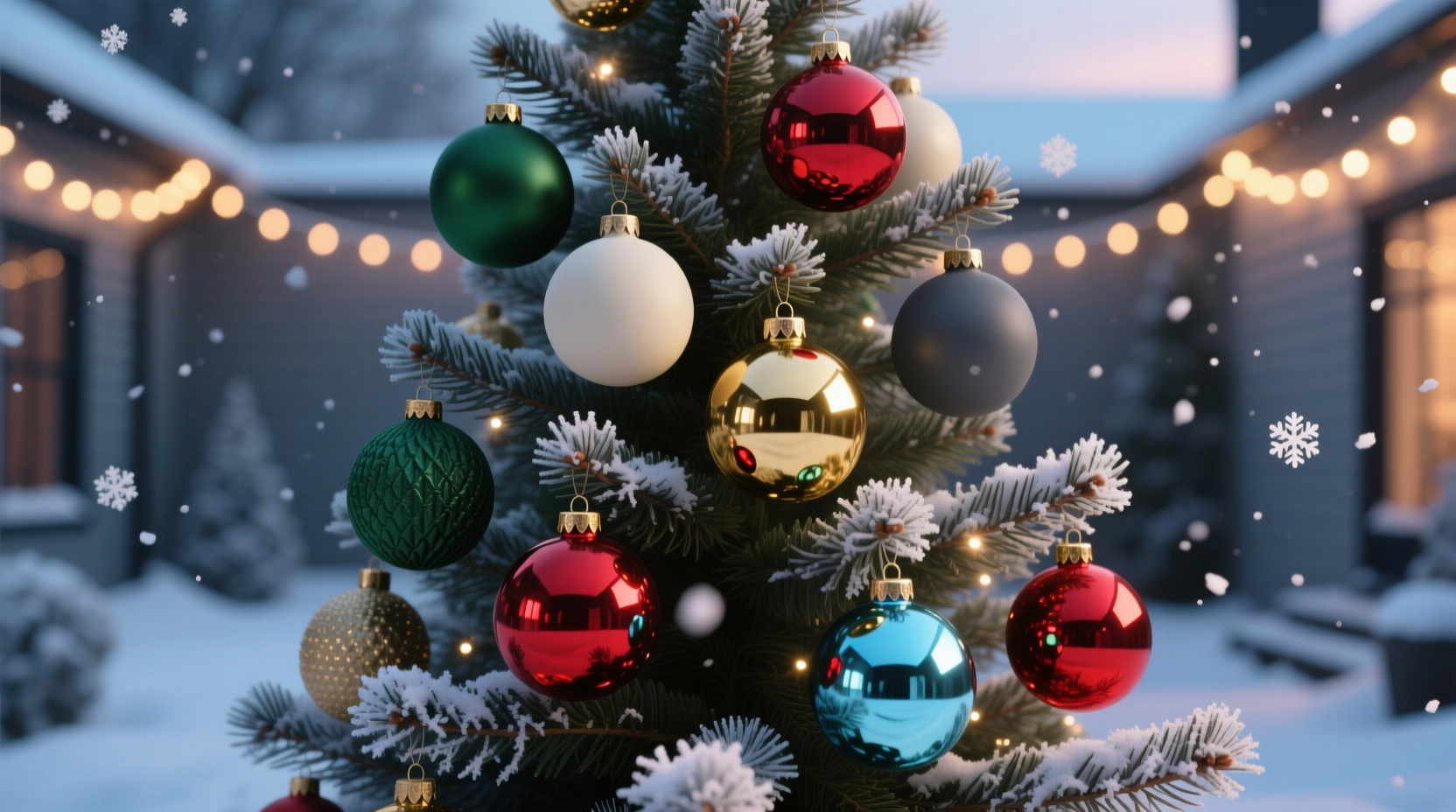
The decision to mix finishes hinges on an awareness of visual weight—the perceived heaviness or lightness of an object within a space. Glossy ornaments typically carry more visual weight because they catch the eye through reflection. A single mirrored ball can dominate a branch line if not balanced correctly. Matte ornaments, by contrast, recede slightly, allowing other elements to shine.
This doesn’t mean glossy should be avoided. Instead, treat them like accent lighting: strategic highlights rather than blanket coverage. For example, placing a cluster of three small glossy red balls among deep green foliage creates a focal point, much like candlelight would. Surrounding them with matte-finish pine sprays or fabric-wrapped stars softens the overall effect, preventing glare overload.
“Contrast is the soul of design. A tree with only shiny ornaments lacks dimension; one with only matte feels flat. The magic happens where they meet.” — Lila Montgomery, Interior Stylist & Holiday Design Consultant
Design Principles for Mixing Finishes Successfully
To blend matte and glossy ornaments effectively, apply foundational design principles used by professional decorators:
1. Establish a Dominant Finish
Choose one finish as your base—usually matte for a modern, organic look, or glossy for a classic, festive feel. Use the dominant finish for 60–70% of your ornament selection. Then layer in the secondary finish for contrast. This prevents visual competition and gives the eye a consistent rhythm.
2. Distribute Strategically, Not Randomly
Scattering shiny ornaments haphazardly leads to “sparkle fatigue.” Instead, place them intentionally at varying heights and depths. Position glossy pieces near the outer edges of branches where they’ll catch room light, and tuck matte ones deeper into the tree for texture and warmth.
3. Repeat Shapes in Both Finishes
Use the same shape—such as spheres, teardrops, or stars—in both matte and glossy versions. Repeating the silhouette creates unity, allowing the difference in finish to become a feature rather than a distraction. For instance, pairing matte gold spheres with high-gloss gold spheres adds richness without clutter.
Step-by-Step Guide to Layering Matte and Glossy Ornaments
Follow this five-step process to build a balanced, visually engaging tree:
- Start with lights and ribbon. Ensure your base layer is evenly lit and styled with wide ribbon weaved through branches. This sets the stage for ornament placement.
- Add large statement ornaments first. Place oversized matte pieces (e.g., felted wool balls, woven rattan stars) deep in the canopy. These anchor the design.
- Introduce medium glossy accents. Space out mid-sized shiny ornaments—mirrored, metallic, or glass-coated—at eye level and near the front planes. Limit clusters to no more than three per quadrant.
- Fill in with smaller matte decorations. Use miniature matte baubles, dried citrus slices, or fabric poms to add volume without competing for attention.
- Final polish with mixed-finish details. Hang a few delicate pieces that combine both finishes—like a matte body with a glossy edge, or a transparent glass ornament with a frosted interior pattern.
This layering method ensures depth and avoids overcrowding. It also allows each ornament type to serve a purpose: structure, highlight, texture, or detail.
Color Coordination and Finish Harmony
Color plays a critical role when mixing finishes. A mismatched palette can undermine even the most thoughtful textural balance. Consider these approaches:
- Monochromatic with Texture Variation: Stick to one color family (e.g., sage green) and vary finishes across ornaments. This creates elegance and cohesion, ideal for minimalist or Scandinavian-inspired trees.
- Neutral Base with Metallic Accents: Use matte cream, taupe, or charcoal ornaments as the foundation, then introduce glossy gold, silver, or copper for shimmer. This works well in modern farmhouse or urban loft settings.
- Vibrant Colors in Balanced Proportions: For traditional or bold themes, use glossy red and green as primary colors but temper them with matte black, white, or wood-tone accents to ground the look.
| Design Style | Dominant Finish | Accent Finish | Recommended Ratio |
|---|---|---|---|
| Modern Minimalist | Matte | Glossy (metallic) | 70% matte / 30% glossy |
| Classic Traditional | Glossy | Matte (wood, fabric) | 60% glossy / 40% matte |
| Rustic Farmhouse | Matte | Glossy (clear glass) | 80% matte / 20% glossy |
| Glamorous Luxe | Glossy | Matte (velvet, suede) | 75% glossy / 25% matte |
The right ratio depends on your aesthetic goals. A luxe theme embraces shine, so glossy dominates. A rustic tree relies on organic materials, making matte the natural lead.
Real Example: A Brooklyn Brownstone Tree Makeover
A client in Brooklyn wanted to refresh her 7-foot pre-lit tree without buying all new ornaments. She had a collection of vintage glossy mercury glass balls, newer matte ceramic snowmen, and some handmade felt stars from her children. Initially, she arranged them randomly, resulting in a disjointed look—too many shiny pieces clustered at the front, while the back felt dull.
The solution was reorganization, not replacement. We began by removing all ornaments and sorting them by size, color, and finish. We established a 60/40 glossy-to-matte ratio based on her preference for a “classic with a modern twist” style. Large matte ornaments were placed deeper in the tree to add body, while glossy pieces were spaced evenly around the outer third of each branch tier. We added wide ivory velvet ribbon in a spiral pattern to unify the layers.
The final result transformed the tree from cluttered to curated. Guests consistently remarked on the “expensive-looking” glow—not because of cost, but due to intentional finish contrast. The mercury glass now sparkled as accents, not distractions, and the matte elements provided warmth and balance.
Tips for Long-Term Ornament Care by Finish Type
Proper storage preserves both appearance and structural integrity, especially when mixing delicate finishes.
- Glossy ornaments: Prone to scratching and fingerprint smudges. Clean gently with a microfiber cloth dampened with water and a drop of mild dish soap. Avoid paper towels.
- Matte ornaments: Susceptible to moisture damage and staining. Never use liquid cleaners on fabric, felt, or chalk-finished ceramics. Dust with a soft brush or low-suction vacuum attachment.
- Packaging: Use compartmentalized ornament boxes with padded dividers. Wrap glossy glass pieces in white tissue (colored ink may transfer).
“Ornaments are heirlooms in the making. How you store them today determines whether they’ll shine—or shatter—for generations.” — Daniel Ruiz, Museum Collections Conservator
Checklist: Pre-Hang Tree Evaluation
Before assembling your tree, run through this checklist to ensure a polished outcome:
- ☐ Inventory all ornaments and sort by finish, size, and color
- ☐ Choose a dominant finish based on desired aesthetic
- ☐ Test light interaction—hold ornaments near tree lights to see reflection patterns
- ☐ Plan placement zones (top, middle, bottom, front, back)
- ☐ Allocate glossy ornaments sparingly as accents, not fillers
- ☐ Balance visual weight across all sides of the tree
- ☐ Step back frequently during hanging to assess overall harmony
Frequently Asked Questions
Can I mix matte and glossy ornaments on a colored tree?
Yes, and it can be especially effective. On a white or black tree, the contrast becomes even more dramatic. Use matte ornaments to soften harsh reflections on dark trees, and glossy ones to add pop on white trees that might otherwise feel flat.
Will mixing finishes make my tree look messy?
Only if done without intention. A random mix of too many glossy pieces can feel chaotic. Apply a ratio strategy and distribute deliberately to maintain order. Unity comes from repetition of shape and color, not uniformity of finish.
Are there any finishes I should never mix?
Avoid combining ultra-reflective chrome with heavily textured matte (like rough burlap or stucco-finish ceramics) unless you’re aiming for an avant-garde look. The contrast can be too extreme for traditional spaces. Opt for satin or semi-gloss as a bridge between extremes.
Conclusion: Embrace Contrast with Confidence
Mixing matte and glossy ornaments isn’t just permissible—it’s a hallmark of sophisticated holiday styling. The interplay of light and texture brings a tree to life in a way that uniform finishes cannot match. By understanding visual balance, applying thoughtful ratios, and placing ornaments with purpose, you can create a display that feels both festive and refined.
Your tree is more than decoration; it’s a reflection of your personal taste and seasonal spirit. Don’t shy away from contrast—lean into it. Experiment with combinations, document what works, and refine your approach year after year. With these strategies, you’re not just decorating a tree—you’re crafting an experience.




 浙公网安备
33010002000092号
浙公网安备
33010002000092号 浙B2-20120091-4
Comments
No comments yet. Why don't you start the discussion?