
Face masks have become a routine part of public health practices, especially in crowded spaces or during seasonal illness outbreaks. While single-use masks are convenient, they contribute to waste and cost over time. Many people now ask: can face masks be reused safely? The answer depends on the type of mask, how it's used, and whether it’s cleaned or stored properly. This guide breaks down which masks can be reused, how to clean them effectively, and what precautions to take based on material, design, and exposure level.
Understanding Mask Types and Reusability
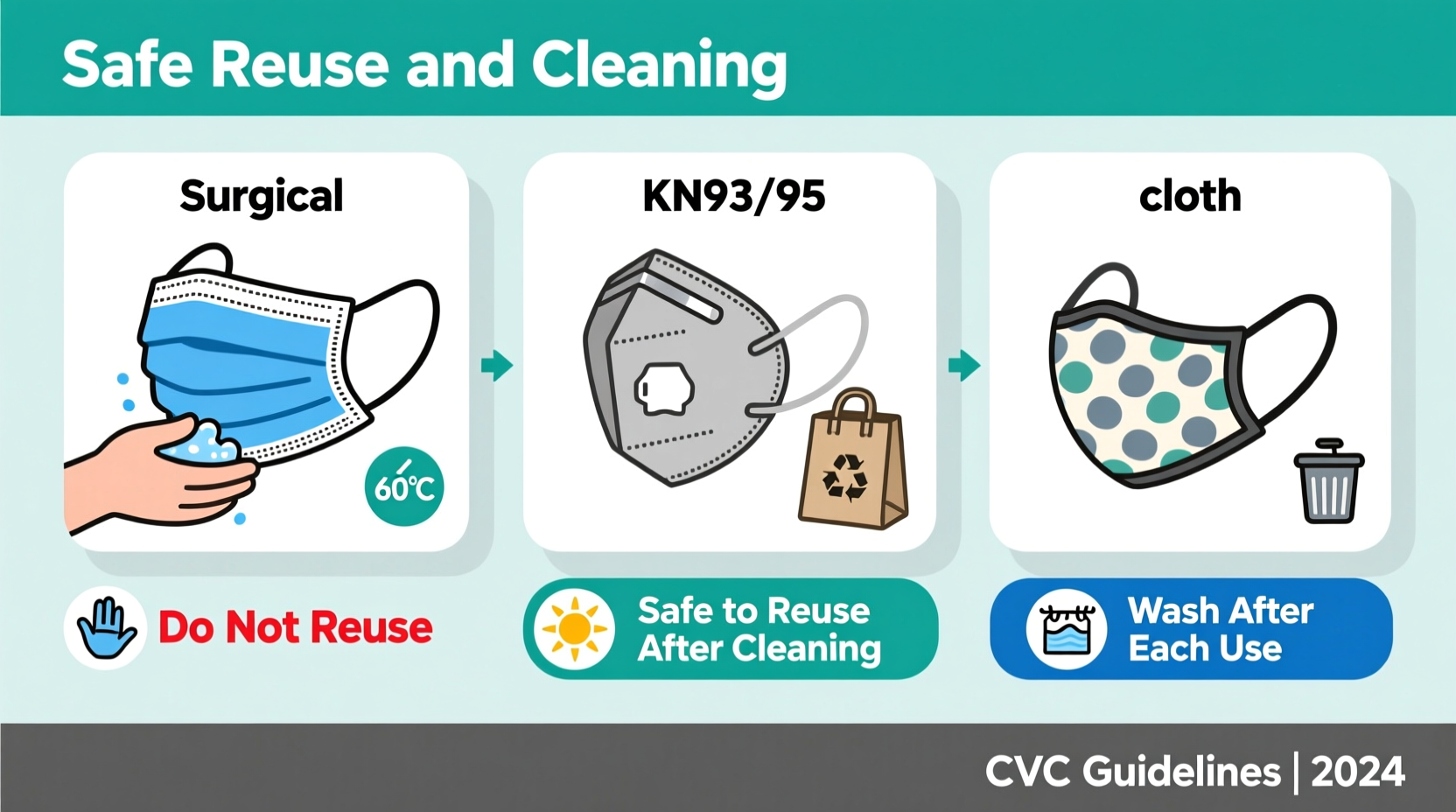
Not all face masks are created equal. Their reusability hinges on construction, filtration efficiency, and intended use. Broadly, face masks fall into three categories: cloth masks, surgical masks, and respirators like N95s. Each has different guidelines for reuse and cleaning.
- Cloth masks: Designed for repeated use. Made from cotton, polyester blends, or other fabrics, these are washable and durable if cared for correctly.
- Surgical masks: Typically disposable. These loose-fitting, three-ply masks are meant for one-time use but may be reused under specific low-risk conditions with proper handling.
- N95 respirators and similar (e.g., KN95, FFP2): Certified for high filtration. While designed for limited reuse in healthcare settings, extended wear requires strict protocols to preserve integrity.
The U.S. Centers for Disease Control and Prevention (CDC) states that cloth masks are the only type recommended for regular home laundering and reuse. However, in shortages or low-exposure scenarios, limited reuse of surgical and N95 masks may be acceptable—if done carefully.
How to Clean Cloth Masks Properly
Cloth masks are the most sustainable option when cleaned correctly. Washing removes respiratory droplets, oils from skin, and environmental contaminants that degrade fabric performance.
Step-by-Step Guide to Washing Cloth Masks
- Remove filters (if applicable): If your mask uses a replaceable filter, take it out and discard or clean according to manufacturer instructions.
- Pre-soak if visibly soiled: Soak in warm water with mild detergent for 10–15 minutes to loosen debris.
- Machine wash: Use regular laundry detergent and the warmest appropriate water setting (usually 60°C/140°F). Wash with similar colors and fabrics.
- Hand wash alternative: Scrub gently with soap and hot water for at least 20 seconds, ensuring all layers are cleaned.
- Rinse thoroughly: Residual soap can irritate skin and reduce breathability.
- Dry completely: Air dry in direct sunlight if possible, or tumble dry on high heat. Ensure no moisture remains before storage.
A study published in *The Journal of Hospital Infection* found that standard machine washing effectively decontaminates cloth masks without compromising filtration after multiple cycles—provided high-quality, tightly woven fabric is used.
“Cloth masks should be treated like underwear—washed after every use, especially after prolonged wear in public.” — Dr. Linsey Marr, Environmental Engineer and Airborne Pathogen Expert
Can You Reuse Surgical Masks? Guidelines and Risks
Surgical masks are not designed for washing or long-term reuse. They lose electrostatic charge—the key mechanism for filtering small particles—when exposed to moisture or detergents. However, in situations where supplies are limited, limited reuse may be considered under controlled conditions.
Safe Practices for Limited Reuse
- Use only if the mask remains dry, intact, and unsoiled.
- Limited to 3–5 uses maximum, provided no contact with bodily fluids or high-risk environments.
- Store between uses in a breathable paper bag, labeled with date and user name.
- Avoid touching the front surface; handle by ear loops only.
- Discard immediately if damp, crumpled, or difficult to breathe through.
Never attempt to wash or sanitize surgical masks with alcohol, bleach, or UV light. These methods damage the melt-blown polypropylene layer responsible for particle capture.
| Maintenance Method | Suitable for Surgical Masks? | Reason |
|---|---|---|
| Washing with soap and water | No | Destroys filtration layer; causes structural breakdown |
| Alcohol spray | No | Neutralizes electrostatic charge; weakens fibers |
| Air drying in paper bag | Yes | Allows virus decay over time; preserves shape |
| UV-C light (medical grade) | Limited | May decontaminate surfaces but risks material fatigue |
Reusing N95 Respirators: When and How It’s Possible
N95 respirators are critical protective equipment, typically reserved for healthcare workers. During pandemics or supply shortages, CDC and NIOSH have issued guidance for extended use and limited reuse under emergency protocols.
Extended Use vs. Limited Reuse
Extended use means wearing the same N95 for multiple encounters without removing it (e.g., during an 8-hour shift). This is preferred over repeated donning and doffing, which increases contamination risk.
Limited reuse involves wearing the same respirator across multiple shifts, removing it between uses. The CDC allows up to five uses per device, provided:
- The respirator remains functional and fits snugly.
- It hasn’t been contaminated with bodily fluids.
- It wasn’t used during aerosol-generating procedures.
- It’s stored properly between uses.
Decontamination Methods (For Emergency Use Only)
In institutional settings, validated decontamination systems such as vaporized hydrogen peroxide (VHP) or moist heat (60–70°C at 80% humidity) are used. These are not feasible at home.
Home attempts to sterilize N95s—such as boiling, microwaving, or using household cleaners—will likely destroy their filtration capacity and fit. The static charge essential for capturing submicron particles is highly sensitive to moisture and solvents.
Storage and Handling Best Practices
Proper storage is as important as cleaning. Even well-maintained masks can become contaminated if stored incorrectly.
Do’s and Don’ts of Mask Storage
| Do’s | Don’ts |
|---|---|
| Store in a clean, breathable container like a paper bag | Leave masks dangling from rearview mirrors or tossed on counters |
| Label bags with date and time of last use | Store damp masks in sealed plastic containers (promotes mold) |
| Keep away from pets, dust, and direct sunlight | Stack multiple masks together loosely (increases cross-contamination) |
| Wash hands before and after handling any mask | Touch the inner or outer surface unnecessarily |
For frequent users, consider a dedicated mask caddy with individual compartments. This keeps rotation organized and reduces contamination risk.
Mini Case Study: A Teacher’s Mask Routine
Sarah, a middle school teacher in Chicago, wears a mask daily during flu season. She uses two high-thread-count cotton masks with replaceable PM2.5 filters. Each evening, she removes the filter and places the mask in her laundry hamper. On laundry day, she washes both masks with her regular load using fragrance-free detergent.
She rotates them: one wears Monday-Wednesday, the other Tuesday-Thursday. Friday, she hand-washes both and lets them dry overnight. Filters are replaced weekly unless visibly dirty. Over two winters, she reported fewer colds and no skin irritation, attributing this to consistent hygiene and avoiding cheap, ill-fitting alternatives.
Her approach aligns with public health recommendations: rotation, proper washing, and timely filter replacement. By treating her masks like essential hygiene tools—not disposable accessories—she maximizes protection and longevity.
Frequently Asked Questions
Can I put my cloth mask in the dishwasher?
No. Dishwashers use high-pressure jets and harsh detergents that can damage fabric layers and elastic. Stick to machine washing with clothes or hand washing with soap and hot water.
How often should I replace my cloth mask?
Replace when signs of wear appear: fraying edges, stretched ear loops, thinning fabric, or poor fit. With proper care, a good-quality cloth mask lasts 3–6 months of regular use.
Is steaming a safe way to disinfect masks?
Steaming can kill some germs but may degrade certain materials, especially non-washable filters or adhesive layers in surgical masks. For cloth masks, washing is more effective and reliable. Steaming is not recommended for N95s.
Checklist: Safe Mask Reuse at a Glance
- Identify your mask type—only cloth masks should be washed.
- Inspect before each use: look for damage, soiling, or deformation.
- Wash cloth masks after every use with hot water and detergent.
- Air-dry completely in sunlight or use a dryer on high heat.
- Store clean masks in breathable containers, away from contaminants.
- Rotate surgical and N95 masks only when necessary and follow safety limits.
- Never wash or chemically treat disposable masks.
- Replace filters regularly and discard damaged masks immediately.
Conclusion: Prioritize Safety Without Sacrificing Sustainability
Reusing face masks can be safe—but only when done correctly. Cloth masks offer the best balance of protection, comfort, and environmental responsibility when laundered regularly. Surgical masks and N95s have limited reuse potential under strict conditions, but never through home cleaning methods.
The goal isn't just convenience—it's maintaining effectiveness. A poorly maintained mask gives false confidence while offering little real defense. By understanding the differences between mask types and following science-based care routines, you protect yourself, others, and the planet.




 浙公网安备
33010002000092号
浙公网安备
33010002000092号 浙B2-20120091-4
Comments
No comments yet. Why don't you start the discussion?