
Decorating for the holidays brings joy, but it can also bring unexpected electrical issues—especially when strings of Christmas lights overload circuits and trip breakers. Many homeowners turn to power strips as a convenient way to connect multiple light strands, but doing so without understanding electrical limits can lead to nuisance trips, damaged equipment, or even fire hazards. The short answer is: yes, you can run Christmas lights on a power strip, but only if done correctly and within safe electrical parameters.
The key lies in understanding your home’s electrical system, knowing the capacity of your power strip, and calculating the total wattage of your decorations. When approached with care, power strips can be a safe and effective tool for holiday lighting displays. This guide breaks down everything you need to know—from load management to product selection—so your lights stay on all season long.
Understanding Electrical Load and Circuit Capacity
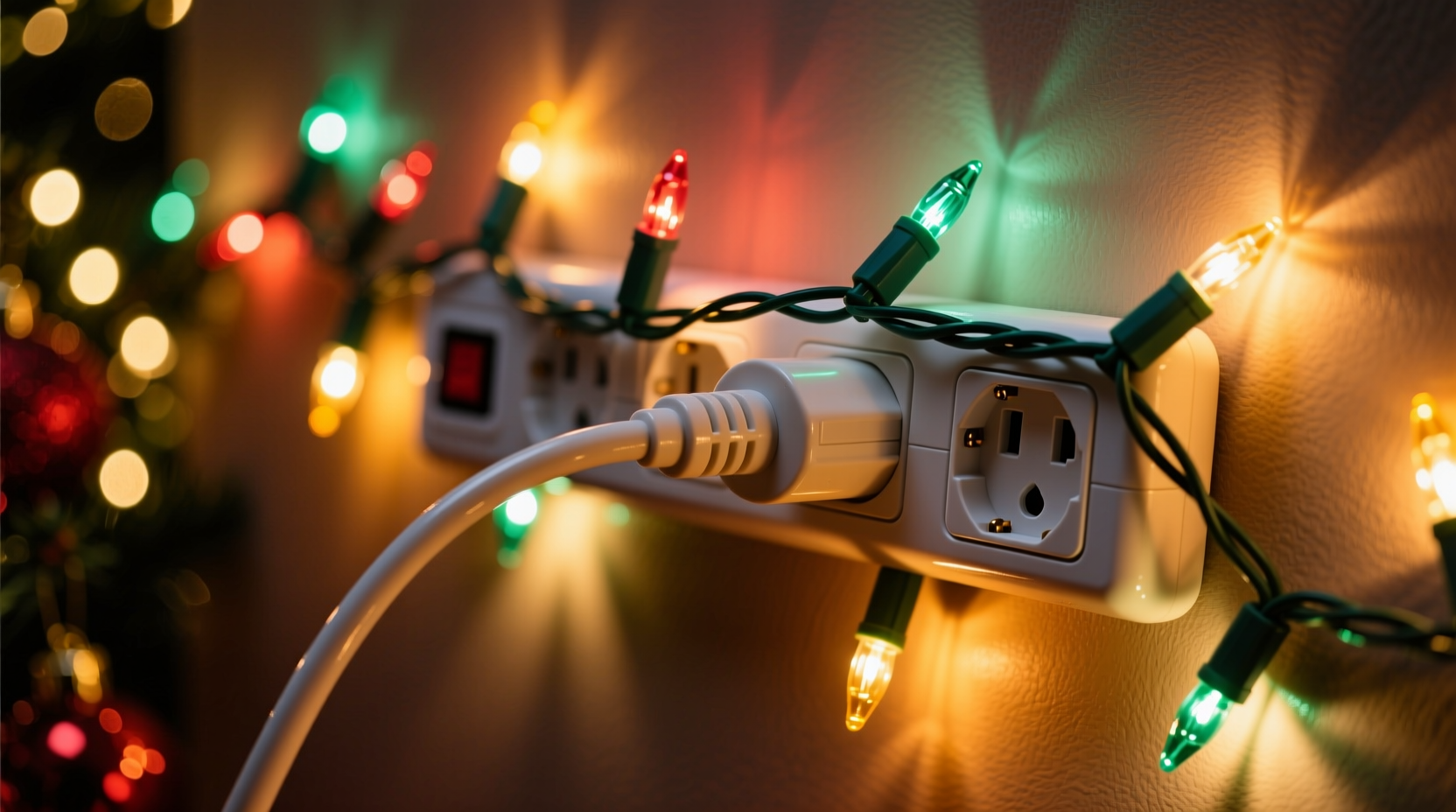
Every home circuit has a maximum electrical load it can handle before the breaker trips to prevent overheating. Most standard household circuits in the U.S. are rated for 15 or 20 amps at 120 volts. To determine how much power you’re using, you need to convert amperage into watts using the formula:
Watts = Volts × Amps
A 15-amp circuit at 120 volts can handle up to 1,800 watts (120 × 15). However, electrical codes recommend using only 80% of a circuit’s capacity for continuous loads (those running for three hours or more), which reduces the safe limit to 1,440 watts. A 20-amp circuit allows up to 1,920 watts at 80% load.
Christmas lights vary widely in power consumption. Traditional incandescent mini-lights can use 40–50 watts per 100-light strand, while LED versions typically use only 4–7 watts for the same length. This dramatic difference means you can connect far more LED strands safely than incandescent ones.
Power strips themselves also have limits. Most consumer-grade models are rated for 15 amps or 1,800 watts. Exceeding this—even if the wall circuit can handle it—can overheat the strip and create a fire risk.
Choosing the Right Power Strip for Holiday Lights
Not all power strips are created equal. For holiday lighting, especially outdoor displays, selecting the right model is crucial. Look for the following features:
- High joule rating (for surge protection): At least 1,000 joules to protect against voltage spikes.
- Individual switchable outlets: Allows control over sections of lights without unplugging.
- Weather resistance (for outdoor use): Choose a strip rated for outdoor use with a protective cover over the outlets.
- Heavy-duty cord and housing: Thicker gauge wiring handles more current with less heat buildup.
- UL certification: Ensures the product meets safety standards set by Underwriters Laboratories.
For large displays, consider commercial-grade power strips designed for stage and event use. These often support 20-amp loads and include rugged construction for durability.
Avoid daisy-chaining multiple power strips together—a common mistake that increases resistance and fire risk. Instead, plug each strip directly into a wall outlet or dedicated circuit.
“Using a non-rated or overloaded power strip with holiday lights is one of the most common causes of residential electrical fires during December.” — National Fire Protection Association (NFPA) Safety Report
Step-by-Step Guide to Safely Connecting Christmas Lights
Follow this sequence to ensure your display operates safely and reliably:
- Inventory your lights: List each string of lights, noting type (LED/incandescent), length, and wattage. If wattage isn’t labeled, calculate it using: Watts = Volts × Amps. Many LED strings draw about 0.04–0.08 amps.
- Calculate total load: Add the wattage of all lights you plan to connect to one power strip. Ensure the sum stays below 80% of the strip’s rated capacity (e.g., under 1,440 watts for a 15-amp strip).
- Check the circuit: Identify which wall outlet is connected to which breaker. Plug in a lamp or radio, turn off breakers one by one until the device shuts off. Label the correct breaker.
- Test the circuit load: Use a plug-in watt meter to measure actual draw when all lights are on. This helps catch hidden loads from other devices on the same circuit.
- Plug in and monitor: Turn on the lights and let them run for 15–30 minutes. Touch the power strip and cord—neither should feel warm. If they do, reduce the load immediately.
- Use timers: Set lights to turn off during peak usage hours (e.g., 6–9 PM) to avoid overloading circuits when other appliances are running.
This method ensures you stay within safe limits and prevents surprise outages during gatherings or evening viewings.
Do’s and Don’ts: Holiday Lighting Safety Table
| Do | Don’t |
|---|---|
| Use LED lights to reduce energy consumption | Connect more than 3 incandescent strands end-to-end |
| Choose UL-listed power strips with surge protection | Daisy-chain multiple power strips together |
| Spread lights across multiple circuits | Run cords under rugs or furniture |
| Use outdoor-rated cords and strips outside | Leave lights on unattended or overnight without a timer |
| Inspect cords for frays or damage before use | Overload outlets with adapters or multi-plug inserts |
Real Example: A Homeowner’s Breaker Tripping Problem
Mark, a homeowner in Ohio, installed a festive outdoor display featuring 15 strands of incandescent mini-lights, two inflatable snowmen, and a rotating spotlight—all plugged into a single power strip connected to his garage outlet. Within minutes of turning everything on, the breaker tripped.
He reset it twice, only for the same thing to happen. After checking the wattage, he discovered the incandescent lights alone drew over 700 watts, the inflatables used 300 watts each, and the spotlight added another 150. Total: 1,450 watts—just under the 1,440-watt safe limit, but the startup surge from the inflatables pushed the initial draw over the edge.
The solution? Mark replaced all incandescent strings with LED equivalents (reducing light load to under 100 watts), moved one inflatable to an outlet on a different circuit, and installed a heavy-duty outdoor power strip with individual switches. The display now runs smoothly every night without a single trip.
His experience highlights the importance of not just total wattage, but also surge demand and circuit distribution.
Expert Tips for Preventing Overloads
Electrical professionals emphasize proactive planning when managing holiday lighting loads. Here are their top recommendations:
- Use a dedicated circuit: If possible, reserve one circuit exclusively for holiday displays. Avoid sharing it with refrigerators, space heaters, or microwaves.
- Upgrade to smart power strips: Some models automatically shut off when they detect overload or overheating. Others integrate with smart home systems for remote monitoring.
- Label everything: Tag each power strip and corresponding breaker for quick identification during troubleshooting.
- Consider GFCI protection outdoors: Ground Fault Circuit Interrupter (GFCI) outlets or power strips cut power instantly if moisture causes a short, preventing shocks.
- Keep vents clear: Ensure power strips aren’t buried under mulch, snow, or decorations, which can trap heat.
“When I inspect homes after holiday fires, the pattern is almost always the same: too many lights, poor-quality strips, and no load calculation. It’s preventable with five minutes of planning.” — James Liao, Licensed Electrician and NFPA Consultant
FAQ: Common Questions About Power Strips and Christmas Lights
How many strings of Christmas lights can I plug into one power strip?
It depends on the type of lights and the strip’s rating. For LED strings (5 watts each), you could safely connect up to 250 on a 1,440-watt limit. For incandescent (40 watts), that drops to around 35. Always follow manufacturer guidelines—many recommend no more than 3 incandescent strands daisy-chained.
Is it safe to leave Christmas lights on overnight?
It’s safer to use a timer that turns lights off after midnight. Continuous operation increases heat buildup, especially with older bulbs or enclosed fixtures. UL-certified LED lights and quality power strips reduce risk, but automatic shutoff adds an extra layer of safety.
Can I use an extension cord with my power strip?
Yes, but choose a heavy-duty, outdoor-rated extension cord with a gauge appropriate for the distance and load. For runs over 25 feet, use 14-gauge or lower (thicker) wire. Never use indoor cords outside, and avoid coiling excess cord, which traps heat.
Final Checklist Before Turning On Your Display
Before flipping the switch on your holiday lights, go through this final checklist to ensure safety and reliability:
- ✅ All lights are LED or verified low-wattage incandescent
- ✅ Power strip is UL-listed and rated for outdoor use (if applicable)
- ✅ Total wattage is under 80% of the strip’s capacity
- ✅ No daisy-chaining of power strips or extension cords
- ✅ Cords are not pinched, frayed, or under foot traffic
- ✅ GFCI protection is active for outdoor circuits
- ✅ Timer is set to turn lights off during high-use evening hours
- ✅ Breaker panel is labeled so you can identify the circuit quickly
Conclusion: Enjoy the Holidays Without the Hazards
Running Christmas lights on a power strip doesn’t have to mean tripped breakers or safety risks. With proper planning, the right equipment, and attention to electrical limits, you can create a dazzling display that’s both festive and secure. The holiday season should be about celebration, not emergency repairs or fire scares. By respecting the physics of electricity and investing a little time upfront, you ensure your lights shine brightly—and safely—all season long.




 浙公网安备
33010002000092号
浙公网安备
33010002000092号 浙B2-20120091-4
Comments
No comments yet. Why don't you start the discussion?