
Music and mood lighting have long been partners in creating immersive environments—whether it’s a cozy evening at home or a full-on dance party in the living room. Today, many people expect their lights to pulse with the beat, shift color with the melody, or dim as the tempo slows. But what if your lights aren’t smart-enabled? And what if all you have is a Bluetooth speaker playing your favorite playlist? Can you still achieve synchronized light effects?
The short answer is: not directly. Bluetooth speakers alone cannot send control signals to non-smart lights. However, with a bit of creativity, some external tools, and an understanding of how audio-reactive systems work, you can simulate music synchronization even with standard bulbs and fixtures.
Understanding the Limitations of Bluetooth Speakers and Non-Smart Lights
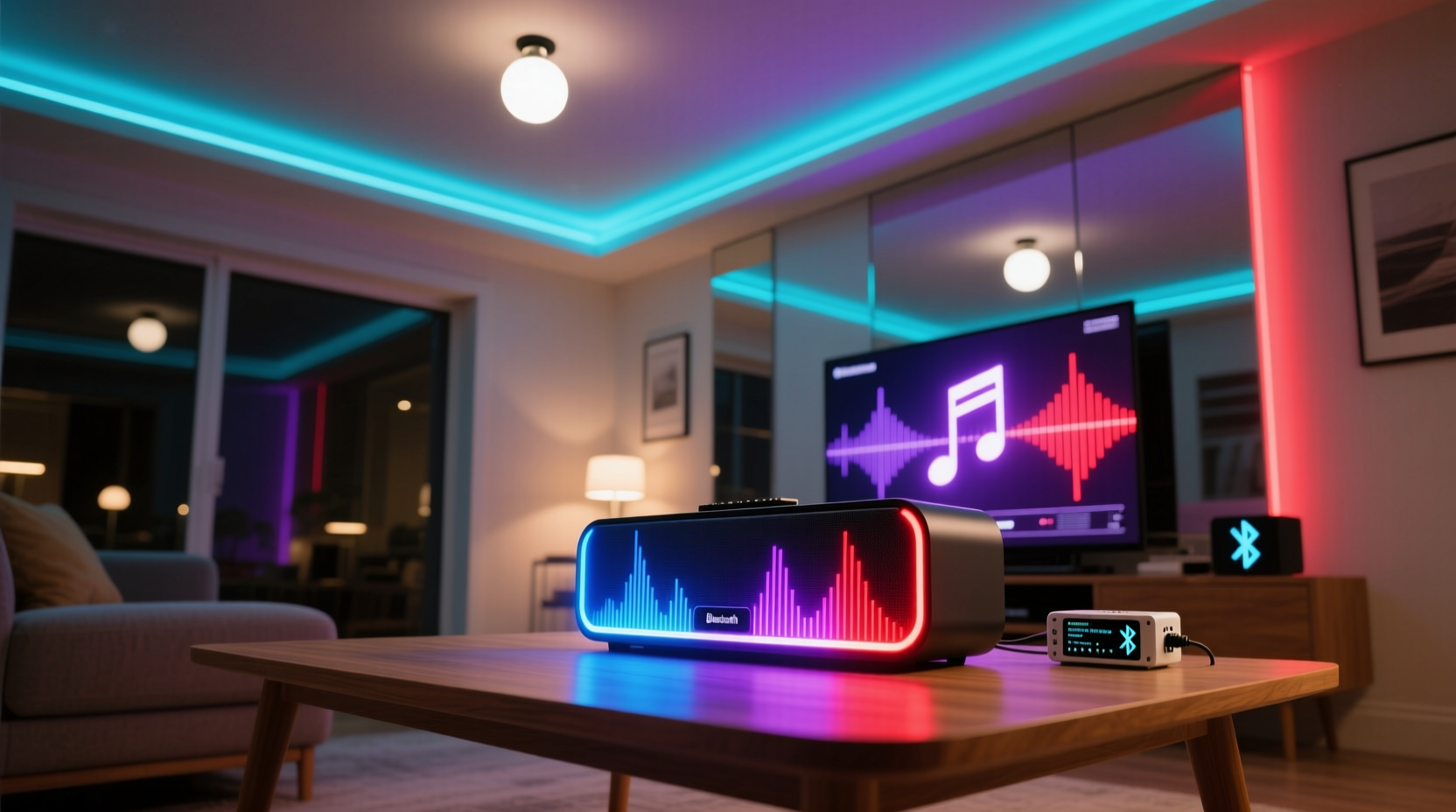
Bluetooth is designed for wireless audio transmission—not device control. When you pair your phone to a Bluetooth speaker, the connection carries sound data from the source to the output device. It does not carry metadata about volume peaks, bass drops, or rhythm patterns that could be used to trigger external responses like light changes.
Non-smart lights—incandescent, LED bulbs without Wi-Fi/Bluetooth/Zigbee, or basic plug-in lamps—are passive devices. They only respond to on/off commands from switches or power sources. Without an intermediary controller or sensor, they remain unaware of ambient sound levels or musical cues.
This creates a technological gap: your speaker plays the music, but your lights don't \"hear\" it. To bridge this gap, you need either:
- A way for the lights to react to sound (via sensors),
- An external system that interprets audio and triggers lighting changes, or
- A retrofit solution that adds intelligence to existing fixtures.
“Synchronization between audio and lighting requires a shared language—one that Bluetooth speakers don’t natively speak with traditional bulbs.” — Marcus Lin, Audio-Visual Integration Specialist
Workarounds to Sync Music with Non-Smart Lights
While direct synchronization isn’t possible out of the box, several indirect methods allow you to create dynamic lighting effects tied to your music—even when using only a Bluetooth speaker and regular lights.
1. Use Sound-Activated Switches or Plugs
Sound-activated power sockets detect ambient noise and toggle connected devices based on volume thresholds. These are often marketed as “disco” or “party” plugs and can be paired with colored bulbs or string lights.
Place the plug near your Bluetooth speaker. As music plays, volume spikes trigger the plug to turn on or blink the connected lamp. While crude compared to modern RGB syncing, this method delivers real-time reactivity without requiring smart home infrastructure.
2. Add a Microphone-Based Lighting Controller
Devices like the DMX sound activator or Arduino-powered LED controllers can analyze audio input from a microphone and drive connected lights accordingly. You connect such a controller to strips of addressable LEDs (e.g., WS2812B) wired into your space.
Even though your main audio comes through a Bluetooth speaker, these controllers pick up sound via a built-in mic and translate beats into color shifts, strobes, or fades. This setup works independently of your speaker’s connectivity—it only needs to hear the music.
3. Introduce a Secondary Smart Device Near the Speaker
If you own even one smart device—like a smartphone, tablet, or voice assistant—you can run apps that process audio locally and trigger actions elsewhere.
For example:
- Play music from your phone via Bluetooth to the speaker.
- Run a beat-detection app (such as LumenBeat, LightDJ, or Flux: Smart Lighting) on the same phone.
- Have the app send signals to smart bulbs elsewhere in the room (via Wi-Fi or Zigbee).
In this case, the Bluetooth speaker handles audio output while the originating device analyzes the music and controls lights separately. The result? Synchronized ambiance without routing sound through smart hardware.
Step-by-Step Guide: Creating a DIY Audio-Reactive Light Setup
Here’s how to build a functional, budget-friendly system that syncs your Bluetooth speaker’s music with visible lighting effects—no smart bulbs required.
- Gather Components
Purchase:- A sound-activated outlet or relay module ($10–$25)
- Colored LED string lights or a decorative lamp
- (Optional) An Arduino Nano + microphone sensor + Neopixel strip for advanced customization
- Set Up the Audio Source
Pair your phone or tablet to the Bluetooth speaker. Test playback to ensure consistent volume and clarity. - Position the Sound Sensor
Plug the sound-activated switch into a wall outlet. Connect your lamp or light strip. Place the unit within 3–6 feet of the speaker, facing it directly. - Calibrate Sensitivity
Most sound switches have a sensitivity dial. Start high, play music with strong bass, and adjust until lights respond reliably without flickering during quiet passages. - Enhance the Effect
Use colored gels, diffusers, or reflective surfaces to amplify visual impact. Consider multiple outlets for layered reactions across different zones. - Test and Refine
Try various genres—electronic music with steady beats works best; classical or acoustic may lack sufficient punch.
This approach won’t offer pixel-perfect waveform matching, but it delivers engaging, responsive lighting that enhances any music session.
Comparison Table: Syncing Options Without Smart Lights
| Solution | Cost | Setup Difficulty | Sync Accuracy | Works With Bluetooth Speaker? |
|---|---|---|---|---|
| Sound-Activated Plug | $10–$25 | Easy | Low – responds to volume, not rhythm | Yes |
| Arduino + Mic + LED Strip | $20–$40 | Advanced | High – customizable beat detection | Yes |
| Smartphone App + Smart Bulbs | $30+ (bulbs) | Moderate | Medium to High | Yes (if phone plays audio) |
| Standalone Disco Ball with Built-in Mic | $15–$30 | Very Easy | Low – simple flash patterns | Yes |
| Wi-Fi Speaker with Lighting API (e.g., Sonos + Hue) | $300+ | Moderate | High | No – requires non-Bluetooth ecosystem |
Note: True synchronization quality depends more on signal interpretation than transmission type. Even Bluetooth-based audio can fuel excellent lighting effects—if processed correctly by a secondary intelligent device.
Real Example: A Dorm Room Dance Party
Consider Alex, a college student living in a dorm with strict wiring rules and no access to smart lighting installations. He wants to host a small gathering and create a vibrant atmosphere using only what he owns: a JBL Flip 6 Bluetooth speaker and a string of warm-white fairy lights plugged into a desk lamp.
He purchases a $17 sound-sensitive socket online and replaces the lamp’s original plug. After positioning the lamp near the speaker and adjusting the sensitivity, the lights begin to pulse gently with each drum hit. He adds a red scarf over part of the shade to introduce color variation. Guests notice the subtle rhythm-matching effect, enhancing the energy without needing expensive gear.
It's not a concert-grade light show—but it achieves the goal: making music feel more alive through responsive visuals.
Common Pitfalls and How to Avoid Them
Many users attempt synchronization without understanding environmental factors that affect performance. Here are key issues and fixes:
- Delayed Response: Caused by poor mic placement or background noise. Solution: Move sensor closer to speaker and reduce competing sounds.
- Over-Triggering: Lights flash too frequently during quiet songs. Fix: Adjust threshold settings or use genre-specific calibration.
- No Reaction: Volume too low or sensor malfunctioning. Check battery/power and increase audio output temporarily during testing.
- Flickering: Often due to inconsistent signal or electrical interference. Use a surge protector and avoid daisy-chaining multiple devices.
Checklist: Can You Sync Your Setup?
Before attempting synchronization, verify the following:
- ✅ Do you have a stable audio source playing through the Bluetooth speaker?
- ✅ Is there a way for lights to detect sound (sensor, smart plug, microcontroller)?
- ✅ Are your lights physically capable of rapid on/off cycling? (Incandescents react slower than LEDs.)
- ✅ Is the environment relatively free of competing noise?
- ✅ Have you tested responsiveness at normal listening volume?
If most answers are “yes,” you’re ready to proceed. If not, consider upgrading one component—like switching to faster-reacting LED strings or adding a dedicated microphone module.
FAQ: Common Questions About Music-Light Syncing
Can I sync regular Christmas lights to music with just a Bluetooth speaker?
Not directly. Standard Christmas lights lack processing ability. However, if they're plugged into a sound-activated controller or a programmable relay, they can react to music played from a Bluetooth speaker—as long as the controller can hear the audio.
Do I need Wi-Fi to sync lights with music?
No. Wi-Fi enables remote control and app integration, but it’s not essential. Many standalone solutions—including microphone-driven circuits and analog sound triggers—operate without internet connectivity.
Why don’t my lights blink in time with the music even with a smart plug?
Most consumer-grade smart plugs aren’t designed for millisecond-level toggling. They’re meant for safety and convenience, not real-time audio response. For tighter sync, use dedicated lighting controllers or LED strips with onboard processors.
Conclusion: Bridging the Gap Between Sound and Light
You cannot directly sync non-smart lights to a Bluetooth speaker because neither device is built to communicate beyond audio playback. But human ingenuity has always found ways around technical limits. By introducing a middle layer—a sensor, a microcontroller, or a companion app—you can breathe interactivity into otherwise static setups.
The magic doesn’t come from the speaker itself, but from how you interpret its output. Whether you’re crafting a romantic dinner glow or transforming your basement into a makeshift club, remember: synchronization isn’t about having the latest tech—it’s about connecting elements in clever ways.
Start small. Try a $20 sound socket. Experiment with placement and music choices. Then expand as your confidence grows. The harmony between music and light isn’t reserved for smart homes—it’s available to anyone willing to listen closely and act creatively.




 浙公网安备
33010002000092号
浙公网安备
33010002000092号 浙B2-20120091-4
Comments
No comments yet. Why don't you start the discussion?