
As the holiday season approaches, many homeowners turn to decorative lighting to create festive curb appeal and indoor ambiance. One of the most common questions that arises during setup is whether it's safe to connect Christmas lights—especially those controlled by a timer—to a surge protector. The short answer is yes, but with important caveats. Used correctly, this combination can enhance both convenience and electrical safety. However, improper use can lead to overheating, fire hazards, or equipment damage. This guide breaks down everything you need to know about using timers, surge protectors, and Christmas lights together—safely and effectively.
Understanding the Components: Surge Protectors, Timers, and Christmas Lights
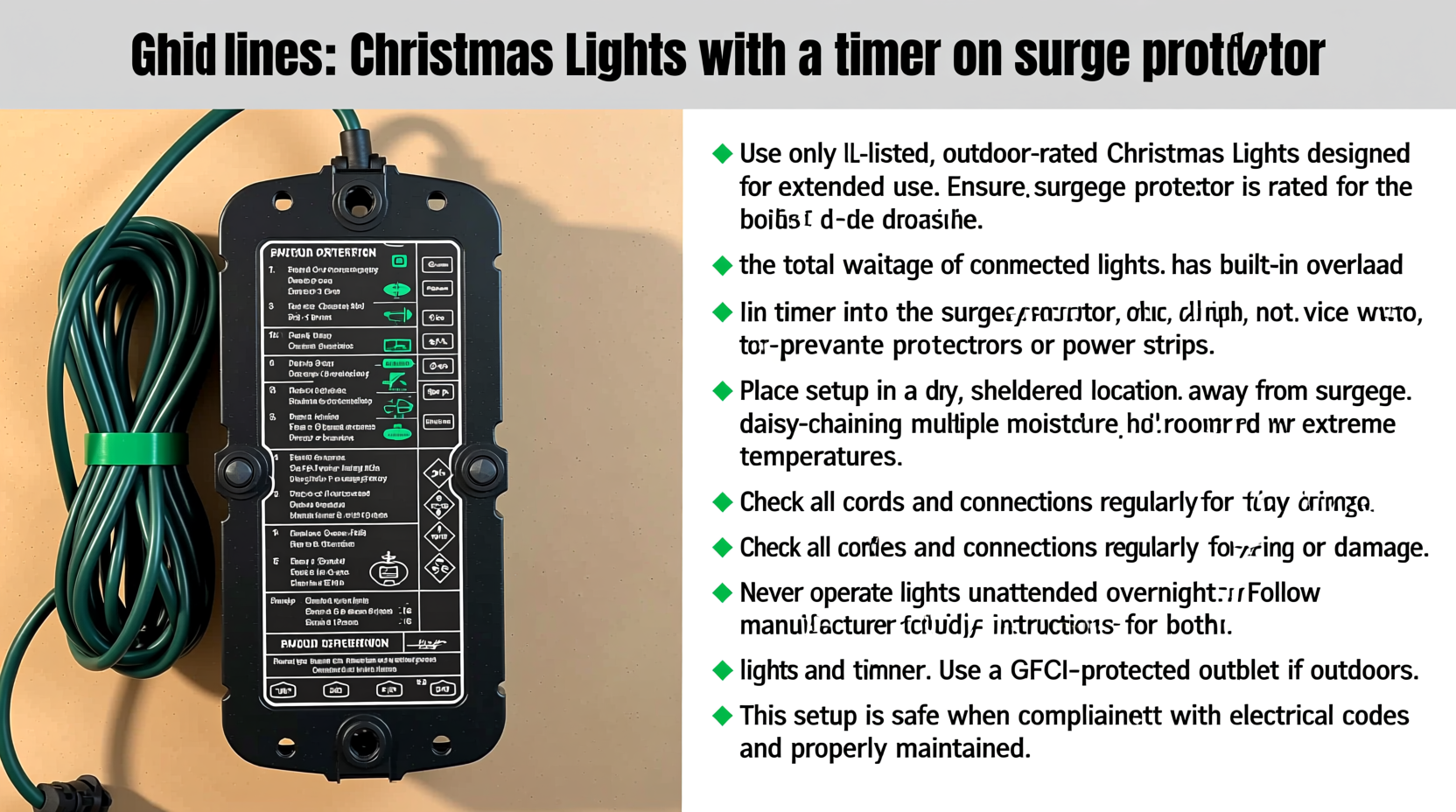
To evaluate safety, it’s essential to understand what each component does and how they interact when connected.
- Surge Protector: A device designed to protect electronic devices from voltage spikes. It diverts excess electricity away from connected devices during power surges caused by lightning strikes, grid fluctuations, or appliance cycling.
- Timer (Mechanical or Digital): A switch that automatically turns connected devices on and off at preset times. Timers are commonly used with holiday lights to maintain consistent illumination without manual intervention.
- Christmas Lights: Typically low-voltage string lights powered through standard household outlets. Modern LED versions consume significantly less power than older incandescent models, reducing load concerns.
When combined, these components offer an efficient way to manage seasonal décor—but only if the total electrical load remains within safe limits and all devices meet current safety standards.
Key Safety Considerations When Combining These Devices
The primary risk in connecting multiple devices like timers and light strings to a single surge protector isn’t inherent danger—it’s overloading and poor product quality. Below are critical factors to assess before plugging in your holiday display.
Electrical Load and Wattage Limits
Every surge protector has a maximum wattage or amperage rating, typically listed on the device or packaging. Most standard models support up to 15 amps (1,800 watts at 120 volts). Exceeding this limit—even temporarily—can cause overheating, melting, or fire.
To calculate your total load:
- Determine the wattage per string of lights (usually printed on the label).
- Multiply by the number of strings connected in series.
- Add any additional devices plugged into the same surge protector.
- Ensure the sum is under 80% of the protector’s rated capacity (e.g., no more than 1,440 watts for a 1,800-watt unit).
Avoid Daisy-Chaining Multiple Surge Protectors
One of the most dangerous practices during the holidays is daisy-chaining—plugging one surge protector into another. This bypasses built-in circuit protection and dramatically increases fire risk. The National Fire Protection Association (NFPA) reports that over 150 home fires annually are linked to decorative lighting, often due to overloaded circuits or improper extension use.
Use Outdoor-Rated Equipment for Exterior Installations
If your Christmas lights are outdoors, every component—including the surge protector and timer—must be rated for outdoor use. Look for labels such as “UL Listed for Outdoor Use” or an IP44 rating or higher. Indoor-only units exposed to moisture can short-circuit or pose electrocution risks.
“Never substitute indoor electrical equipment for outdoor applications, even temporarily. Weather-resistant design isn't optional—it's essential.” — James L. Rogers, Electrical Safety Engineer, NFPA
Best Practices for Safe Operation
Following established guidelines ensures your holiday lighting operates reliably and safely throughout the season. Here’s how to set up a secure system using a timer and surge protector.
Step-by-Step Setup Guide
- Select a high-quality surge protector with sufficient outlets, a visible circuit breaker, and a joule rating of at least 600 (higher is better).
- Verify compatibility: Ensure the timer is rated for the total load of your light strings and compatible with LED or incandescent bulbs as needed.
- Plug the timer into the surge protector (not the reverse), especially if the surge protector has advanced features like automatic shutoff during overload.
- Connect light strings to the timer, avoiding daisy-chaining beyond manufacturer limits (typically three incandescent or 10–15 LED strings).
- Test the setup during daylight hours to confirm proper operation and check for heat buildup after 30 minutes of use.
- Inspect regularly for frayed wires, warm outlets, or flickering lights, which may indicate overloading or failure.
Choose Smart Over Mechanical Timers
Modern digital or Wi-Fi-enabled timers offer greater precision and safety features. Many include overload detection, remote control via smartphone apps, and sunrise/sunset scheduling based on your location. These reduce reliance on manual adjustments and allow real-time monitoring of connected devices.
Do’s and Don’ts: Quick Reference Table
| Do | Don’t |
|---|---|
| Use a surge protector with a built-in circuit breaker | Plug space heaters or high-draw appliances into the same protector |
| Check UL certification on all components | Daisy-chain multiple surge protectors or extension cords |
| Use outdoor-rated surge protectors and covers for exterior installations | Leave damaged or frayed light strings in use |
| Limit connected loads to 80% of rated capacity | Cover surge protectors with rugs or furniture where heat can’t dissipate |
| Install GFCI-protected outlets for outdoor circuits | Use indoor-only timers or protectors outside, even under eaves |
Real-World Example: A Homeowner’s Near-Miss Incident
In suburban Ohio, Sarah M. decorated her front porch with five strands of vintage-style incandescent lights, two inflatable yard displays, and a motorized sleigh—all connected through a single indoor-rated power strip plugged into a basic surge protector. She added a mechanical timer to automate the display from 5 PM to 11 PM.
After two weeks, she noticed a burning smell near the garage outlet. Upon inspection, the surge protector was hot to the touch, and the casing had begun to warp. An electrician later determined the total load exceeded 1,700 watts—close to the 1,800-watt limit—and continuous use without adequate ventilation created thermal stress.
The solution? Sarah replaced the setup with an outdoor-rated surge protector, switched to LED lights (reducing total draw to 240 watts), and used a smart timer with remote monitoring. Her new system runs safely and efficiently, with automated logs confirming normal temperature and power levels.
Frequently Asked Questions
Can I plug a timer into a surge protector?
Yes, it is safe to plug a timer into a surge protector as long as the total load of connected devices does not exceed the protector’s rated capacity. In fact, placing the timer downstream of the surge protector allows the surge protection to cover both the timer and the lights.
Is it safe to leave Christmas lights on overnight?
With modern LED lights, quality wiring, and proper circuit protection—including a surge protector and working timer—it is generally safe to leave lights on overnight. However, always inspect for wear, avoid flammable materials nearby, and never leave incandescent-heavy displays unattended for extended periods.
Do surge protectors wear out over time?
Yes. Surge protectors degrade with each voltage spike they absorb. Most have an indicator light showing protection status. If the light goes out—or after a major power event like a lightning strike—replace the unit. As a rule of thumb, replace surge protectors every 3–5 years, even if they appear functional.
Action Checklist: Setting Up Your Holiday Lights Safely
- ☐ Confirm all components are UL-listed and properly rated for indoor/outdoor use
- ☐ Calculate total wattage of connected lights and verify it’s under 80% of surge protector capacity
- ☐ Plug the timer into the surge protector—not vice versa—unless otherwise specified by manufacturer
- ☐ Use GFCI outlets for outdoor circuits to prevent shock hazards
- ☐ Avoid running cords under carpets, rugs, or high-traffic areas
- ☐ Test the system during the day and monitor for heat, noise, or flickering
- ☐ Schedule monthly inspections for damage or wear while in use
- ☐ Replace surge protectors every 3–5 years or after known power surges
Conclusion: Enjoy the Holidays Without Compromising Safety
Using Christmas lights with a timer on a surge protector is not only possible—it’s a smart way to combine automation with electrical protection. The key lies in responsible usage: respecting load limits, choosing weather-appropriate gear, and avoiding outdated or risky practices like daisy-chaining. With LED technology reducing energy demands and smart devices offering real-time monitoring, today’s holiday displays can be both dazzling and safe.
Take a few extra minutes to plan your setup, invest in quality components, and follow proven safety protocols. Your festive spirit doesn’t have to come at the cost of peace of mind. By integrating timers and surge protectors wisely, you protect your home, your family, and your holiday joy.




 浙公网安备
33010002000092号
浙公网安备
33010002000092号 浙B2-20120091-4
Comments
No comments yet. Why don't you start the discussion?