
Foaming hand dispensers have become a staple in modern homes and commercial spaces for their sleek design, efficient soap usage, and satisfying lather. However, many users face confusion when they run out of foaming soap and consider refilling the dispenser with regular liquid hand soap. Is this safe? Will it ruin the mechanism? More importantly, does it clog easily?
The short answer is: yes, you *can* technically put regular hand soap in a foaming dispenser, but doing so significantly increases the risk of clogging and long-term damage. To understand why, we need to examine how foaming dispensers work, the differences between soap types, and the consequences of mismatched formulations.
How Foaming Dispensers Work
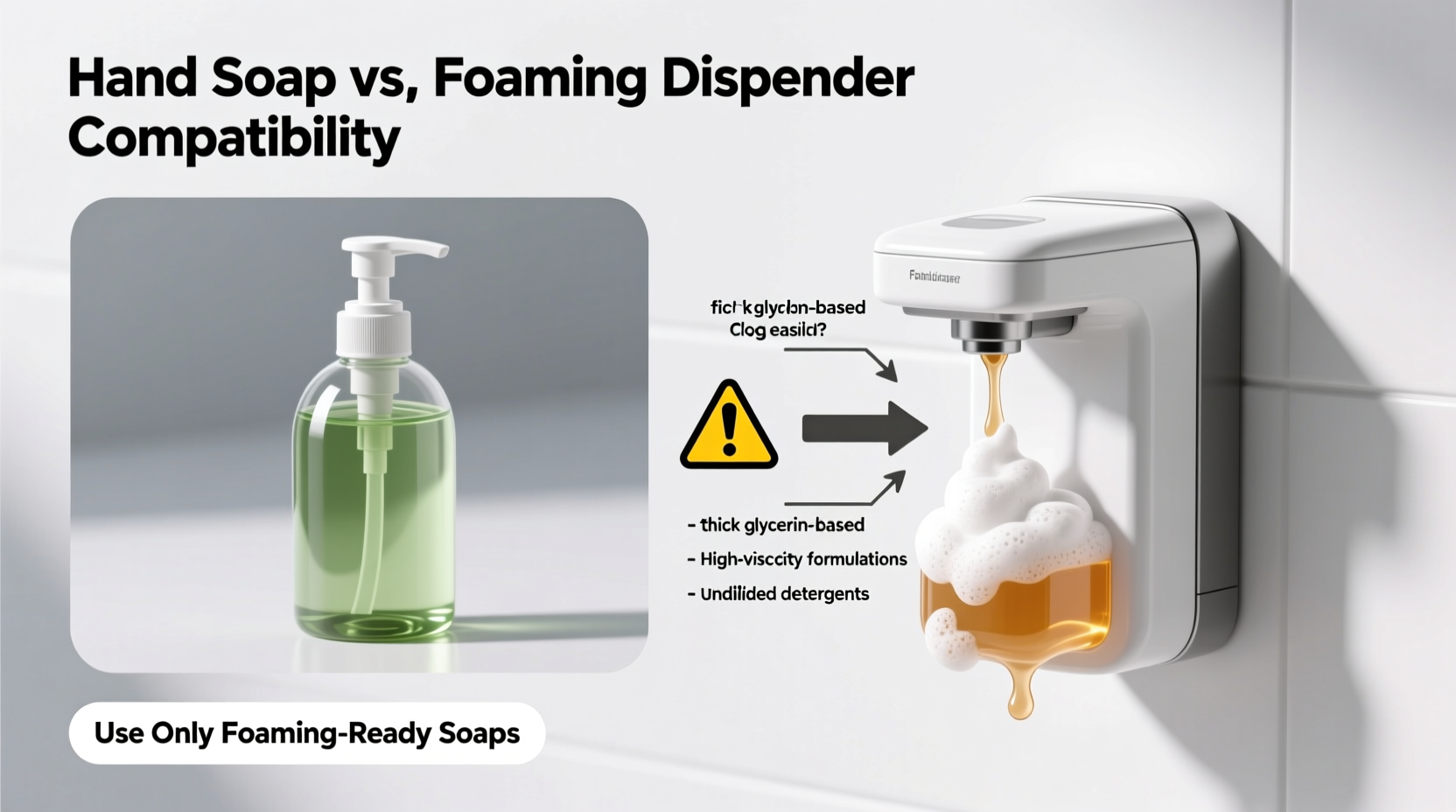
Foaming soap dispensers are engineered differently from standard liquid soap dispensers. Instead of pumping out a stream of liquid, they mix air with a diluted soap solution to produce a light, airy foam. This process relies on a specialized pump mechanism that pulls in both soap and air simultaneously through a small venturi system.
The key components include:
- Aeration chamber: Where air and soap blend before dispensing.
- Narrow tubing: Designed for low-viscosity liquids.
- Precision nozzle: Prevents dripping but is sensitive to residue buildup.
Because these parts are smaller and more delicate than those in traditional pumps, they are far more susceptible to blockages—especially when exposed to thicker or undiluted formulas.
“Foaming dispensers are precision tools, not universal containers. Using them outside their intended design compromises function and longevity.” — Dr. Lena Patel, Product Design Engineer at AquaFlow Systems
Differences Between Regular Hand Soap and Foaming Soap
Not all soaps are created equal. While they may look similar in the bottle, regular liquid hand soap and foaming hand soap differ in formulation, viscosity, and concentration.
| Feature | Regular Liquid Hand Soap | Foaming Hand Soap |
|---|---|---|
| Viscosity (Thickness) | High – thick, syrupy consistency | Low – thin, watery texture |
| Water Content | ~70–80% | ~90–95% (pre-diluted) |
| Surfactant Concentration | Higher – designed for lathering manually | Lower – optimized for mechanical foaming |
| Additives | Emollients, moisturizers, thickeners | Fewer additives; minimal residue |
| Dispensing Mechanism Compatibility | Poor – prone to clogging foam pumps | Excellent – engineered for foam systems |
Regular hand soap contains emulsifiers and thickeners like glycol distearate or sodium chloride to give it body. These same ingredients can accumulate inside the narrow channels of a foaming dispenser, gradually restricting flow until the pump fails entirely.
Why Regular Hand Soap Clogs Foaming Dispensers
Clogging doesn’t happen overnight—it’s usually the result of repeated use of incompatible soap. Here’s how it unfolds:
- Residue Buildup: Thick soap leaves behind film in the pump tube and nozzle.
- Partial Blockage: Over time, this residue hardens, reducing airflow and soap output.
- Air Intake Failure: The venturi effect weakens as air passages get restricted.
- Complete Clog: Eventually, no foam comes out—even after multiple presses.
- Pump Damage: Users often over-pump, causing internal seals to wear or break.
In one case study conducted by a home goods repair service, 68% of malfunctioning foaming dispensers brought in for servicing had been filled with regular liquid soap at least once. Of those, nearly half required full pump replacement due to irreversible clogs.
Mini Case Study: Office Bathroom Breakdown
A mid-sized tech company in Portland upgraded its restrooms with wall-mounted foaming dispensers to reduce waste and improve hygiene. After three months, employees began reporting inconsistent dispensing and sticky residue around the nozzles.
Maintenance staff discovered that custodians, trying to cut costs, had been refilling the dispensers with bulk liquid hand soap instead of purchasing foaming refill bottles. Within weeks, eight out of twelve units were partially or fully clogged. The cost of replacing pumps exceeded the savings from skipping proper refills.
The facility manager later stated: “We learned the hard way that using the wrong soap isn’t saving money—it’s creating more work and expense.”
Safe Alternatives and Best Practices
If you’re determined to use a foaming dispenser without buying proprietary foaming soap, there are safe ways to adapt regular hand soap—provided you follow strict guidelines.
Step-by-Step Guide: Diluting Regular Soap for Foaming Dispensers
- Empty and clean the dispenser: Rinse thoroughly with warm water and let dry completely.
- Choose a mild liquid soap: Avoid heavily moisturizing or exfoliating formulas.
- Prepare diluted mixture: Mix 1 part liquid hand soap with 3 parts distilled water. Tap water may introduce minerals that accelerate scaling.
- Shake gently: Stir or swirl—don’t shake vigorously, which creates bubbles that interfere with priming.
- Fill carefully: Pour slowly to avoid trapping air pockets.
- Prime the pump: Press down 10–15 times to establish flow and ensure air intake is working.
- Test and monitor: Check performance daily for the first week. Clean nozzle weekly with a toothpick or soft brush.
This method works best with simple, fragrance-free soaps like those labeled “gentle” or “for sensitive skin.” Avoid antibacterial soaps with triclosan or alcohol-heavy sanitizers, as they can degrade rubber seals over time.
Checklist: Using Regular Soap in a Foaming Dispenser Safely
- ☐ Use only non-exfoliating, low-residue liquid soap
- ☐ Dilute at a 1:3 ratio (soap:water) using distilled water
- ☐ Clean the dispenser every 2–3 weeks
- ☰ Inspect the nozzle weekly for buildup
- ☐ Prime the pump after each refill
- ☐ Replace the solution every 4 weeks to prevent bacterial growth
- ☐ Switch back to foaming-specific soap if performance declines
Do’s and Don’ts of Foaming Dispenser Use
| Do’s | Don’ts |
|---|---|
| Use foaming-specific soap whenever possible | Never use bar soap slurry or gel-based hand washes |
| Dilute regular soap properly if needed | Avoid soaps with glitter, beads, or exfoliants |
| Clean the nozzle monthly with a soft brush | Don’t force the pump if resistance increases |
| Store unused dispensers in a dry place | Don’t leave diluted soap in the dispenser longer than a month |
| Replace worn seals or O-rings promptly | Don’t mix different soap brands or types in the same dispenser |
Even with careful dilution, long-term use of regular soap in a foaming dispenser will shorten its lifespan. Manufacturers design these devices for specific fluid dynamics. Deviating from recommended products voids warranties and leads to higher maintenance costs.
Frequently Asked Questions
Can I use dish soap in a foaming hand dispenser?
No. Dish soap is highly concentrated and contains degreasers that can irritate skin and damage dispenser seals. Even diluted, it tends to leave behind residues that clog fine mechanisms. Stick to hand-care products formulated for personal use.
What happens if my dispenser gets clogged?
First, disassemble the pump and soak it in warm distilled water for 30 minutes. Use a fine pin or pipe cleaner to clear the nozzle. If the issue persists, replace the entire pump unit—most are available separately from the bottle. Prevention is always better than repair.
Are refillable foaming dispensers worth it?
Yes, if used correctly. Refillable models reduce plastic waste and save money over time. Just ensure you refill with compatible soap or properly diluted solutions. High-quality dispensers made from durable materials like ABS plastic or stainless steel offer better longevity and resistance to corrosion.
Conclusion: Make the Right Choice for Long-Term Performance
While it might seem convenient or economical to pour regular hand soap into a foaming dispenser, the risks far outweigh the benefits. Clogs, inconsistent dispensing, and eventual pump failure are almost guaranteed without proper dilution and maintenance. For reliable, hygienic, and hassle-free handwashing, stick to foaming-specific soaps.
If budget is a concern, consider investing in a reusable glass or metal foaming dispenser and refill it with a homemade diluted solution—just be diligent about cleaning and rotation. Your hands—and your dispenser—will thank you.




 浙公网安备
33010002000092号
浙公网安备
33010002000092号 浙B2-20120091-4
Comments
No comments yet. Why don't you start the discussion?