
Retinol and vitamin C are two of the most researched and effective ingredients in modern skincare. One brightens and protects against environmental damage, while the other accelerates cell turnover and reduces signs of aging. It’s no wonder many people want to include both in their routines. But can you actually use retinol with vitamin C — and if so, how do you do it without triggering irritation or reducing efficacy?
The short answer is yes — but timing, formulation, and skin tolerance matter more than most realize. When combined correctly, these actives can enhance each other’s benefits. Used incorrectly, they may lead to redness, dryness, or compromised skin barrier function.
This guide breaks down the science behind retinol and vitamin C, explores best practices for layering them, and provides a clear roadmap to help you integrate both into your regimen safely and effectively.
The Science Behind Retinol and Vitamin C
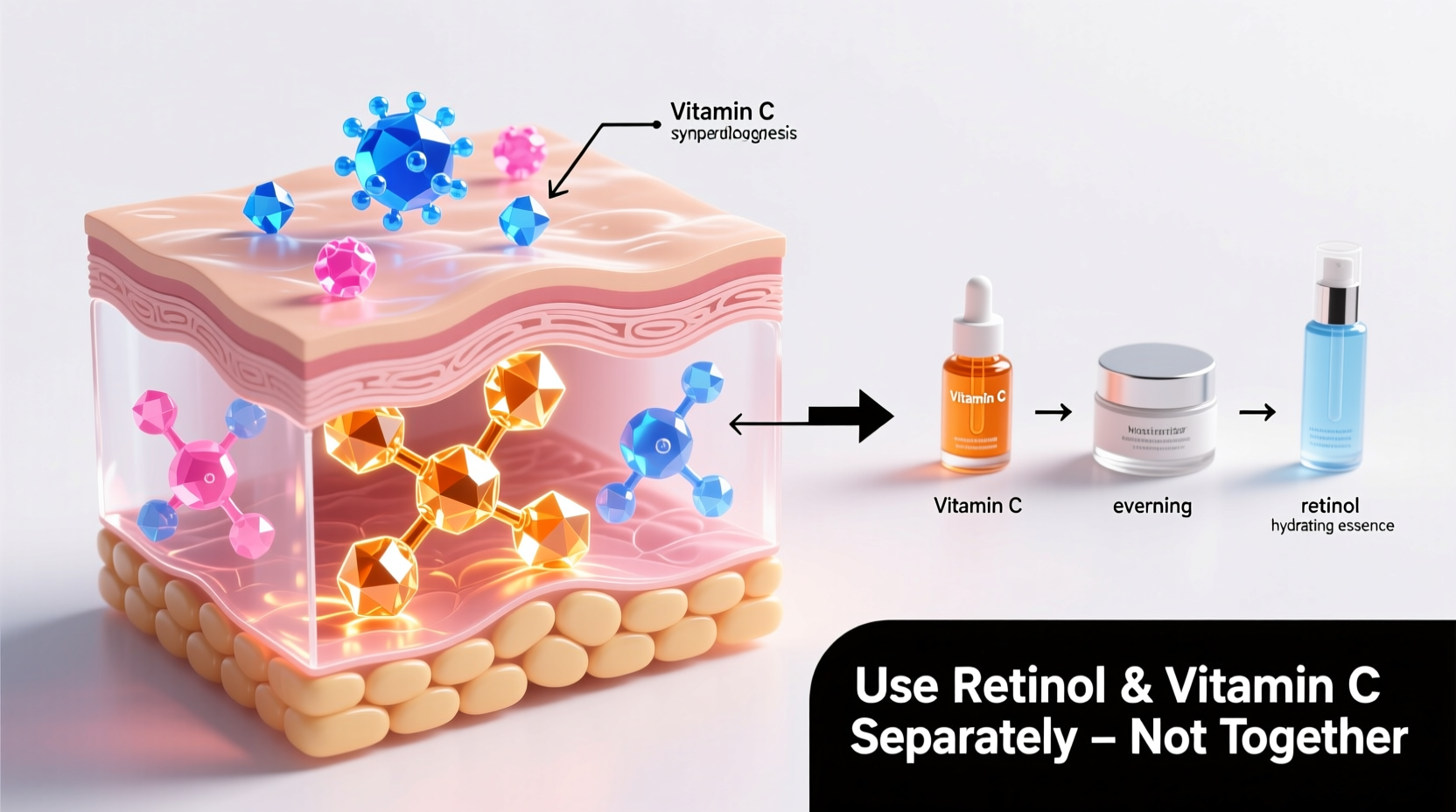
Understanding how each ingredient works is key to using them together wisely.
Vitamin C (L-ascorbic acid) is a potent antioxidant that neutralizes free radicals caused by UV exposure and pollution. It also inhibits melanin production, helping fade dark spots, and supports collagen synthesis for firmer, brighter skin. Most effective at a low pH (around 3.0–3.5), vitamin C performs best in the morning when your skin needs protection from daily aggressors.
Retinol, a derivative of vitamin A, increases cellular turnover, unclogs pores, and stimulates collagen and elastin production. Over time, it reduces fine lines, improves texture, and evens out tone. However, retinol can be irritating — especially when first introduced — and makes skin more sensitive to sunlight, which is why it's typically used at night.
Because both ingredients influence collagen and skin renewal, they complement each other well. But their ideal pH environments differ significantly: vitamin C thrives in acidic conditions, while retinol prefers a more neutral pH. Applying them simultaneously can destabilize one or both compounds, reducing potency.
“Vitamin C and retinol are both gold-standard ingredients. The issue isn’t compatibility — it’s delivery. Using them at different times of day preserves stability and maximizes results.” — Dr. Lena Patel, Board-Certified Dermatologist
Strategies for Combining Retinol and Vitamin C Safely
You don’t have to choose between these two powerhouse ingredients. With smart scheduling and product selection, you can harness both. Here are the most effective approaches:
Option 1: Morning and Night Separation (Recommended)
The safest and most widely endorsed method is using vitamin C in the morning and retinol at night.
- Morning: Apply vitamin C serum after cleansing and before moisturizer and sunscreen. This primes your skin with antioxidant protection.
- Night: After cleansing, apply retinol as part of your evening routine. Follow with moisturizer to buffer potential irritation.
Option 2: Alternate Nights
If your skin is sensitive or new to actives, alternate nights can minimize irritation.
- Night 1: Use vitamin C serum in the evening (yes, it can work at night too, though morning is optimal).
- Night 2: Use retinol.
- Night 3: Use neither — focus on hydration and recovery.
This approach gives your skin time to recover while still benefiting from both ingredients over time.
Option 3: Buffering and Layering (Advanced)
Some users prefer to apply both in the same routine. If you choose this route, proceed with caution.
To buffer:
- Cleanse and tone.
- Apply moisturizer first to create a protective barrier.
- Wait 20 minutes, then apply retinol.
- Wait another 20 minutes before applying vitamin C (less common) or vice versa.
Note: Experts generally advise against layering them directly due to pH conflict and increased risk of irritation. If attempted, do so only 1–2 times per week and monitor your skin closely.
Choosing the Right Formulations
Not all retinol or vitamin C products are created equal. Your success depends heavily on formula stability, concentration, and delivery system.
| Ingredient | Ideal Form | Avoid | Tips |
|---|---|---|---|
| Vitamin C | L-ascorbic acid (10–20%), ferulic acid + vitamin E combo | Products in clear bottles, concentrations above 20% | Look for opaque, air-tight packaging; store in a cool, dark place |
| Retinol | Encapsulated retinol, retinyl palmitate (for beginners) | High-strength formulas without buffering agents | Start with 0.25%–0.5%, use 2–3 nights per week initially |
Stable vitamin C degrades quickly when exposed to light and air. If your serum turns yellow or brown, it’s oxidized and less effective. Similarly, retinol loses potency when improperly stored. Keep both in closed cabinets away from humidity and direct light.
Step-by-Step Guide to Introducing Both Actives
Introducing powerful ingredients requires patience. Follow this 6-week timeline to build tolerance and prevent adverse reactions.
- Week 1–2: Establish a Base
Use a gentle cleanser, hydrating toner, and fragrance-free moisturizer twice daily. Begin using vitamin C every morning, starting with every other day. Observe for any stinging or redness. - Week 3–4: Introduce Retinol Slowly
At night, apply a pea-sized amount of low-concentration retinol (0.25%–0.3%) twice weekly. Avoid the eye area. Wait at least 20 minutes after cleansing to reduce irritation. Moisturize afterward. - Week 5: Assess Tolerance
If no significant dryness, peeling, or redness occurs, increase retinol to three nights per week. Continue daily vitamin C in the AM. - Week 6: Optimize Routine
Adjust frequency based on skin response. Some may tolerate retinol every other night; others may stick to 2–3 times weekly long-term. Never rush progression.
Common Mistakes to Avoid
Even well-intentioned routines can backfire. Watch out for these pitfalls:
- Applying both at the same time – This increases pH instability and irritation risk.
- Using high concentrations too soon – Start low and slow with retinol; avoid 20%+ vitamin C unless experienced.
- Skipping moisturizer – Especially with retinol, hydration helps mitigate side effects.
- Forgetting sunscreen – Retinol increases photosensitivity. Daily SPF is non-negotiable.
- Ignoring signs of overuse – Flaking, burning, tightness, or persistent redness mean you need to scale back.
Mini Case Study: Sarah’s Journey to Radiant Skin
Sarah, a 34-year-old marketing executive, struggled with dullness, post-acne marks, and early fine lines. She wanted glowing, even-toned skin but had sensitive skin that reacted poorly to new products.
She began with a 15% vitamin C serum every morning, applying it after cleansing and before her SPF 50. After two weeks with no irritation, she introduced a 0.3% encapsulated retinol at night, starting twice a week. She applied moisturizer before retinol to buffer it.
By week six, she was using retinol three nights a week and noticed improved texture and fading dark spots. After three months, her skin appeared brighter, smoother, and more resilient. Her dermatologist confirmed stronger collagen density during a follow-up visit.
Key takeaway: Consistency, gradual introduction, and proper timing made the difference.
Frequently Asked Questions
Can I use vitamin C after retinol?
It’s not recommended. Applying vitamin C after retinol may cause discomfort due to pH mismatch and increase irritation. Instead, use vitamin C in the morning and retinol at night for optimal results.
Is it safe to use both if I have sensitive skin?
Yes, but with modifications. Choose gentler forms — such as magnesium ascorbyl phosphate (a stable vitamin C derivative) and encapsulated retinol. Use them on alternate days, always moisturize, and patch test first.
Do I need both if I’m already using other actives?
Not necessarily. If you’re using prescription retinoids (like tretinoin) or chemical exfoliants, adding both vitamin C and OTC retinol may be excessive. Focus on one primary active per routine phase and consult a dermatologist if unsure.
Checklist: How to Safely Combine Retinol and Vitamin C
- ☐ Use vitamin C in the morning for antioxidant protection
- ☐ Apply retinol at night, starting 2–3 times per week
- ☐ Choose stable, well-formulated products in opaque packaging
- ☐ Always wear broad-spectrum sunscreen during the day
- ☐ Moisturize before or after retinol to reduce irritation
- ☐ Introduce one active at a time, waiting 2–3 weeks between additions
- ☐ Monitor your skin for redness, peeling, or stinging
- ☐ Avoid combining with harsh exfoliants until your skin adjusts
Final Thoughts: Synergy Through Strategy
Retinol and vitamin C are not enemies — they’re allies waiting for the right strategy. When used thoughtfully, they form a dynamic duo that addresses multiple signs of aging, discoloration, and environmental damage. The key lies in respecting their chemistry, listening to your skin, and building a sustainable routine.
There’s no universal rule that says you must use both every day. Skincare is personal. What matters is consistency, patience, and protection. Whether you're targeting hyperpigmentation, fine lines, or overall radiance, pairing these ingredients the right way can elevate your results significantly.




 浙公网安备
33010002000092号
浙公网安备
33010002000092号 浙B2-20120091-4
Comments
No comments yet. Why don't you start the discussion?