
Leather boots are a staple in many wardrobes—valued for their durability, style, and comfort. But when skies turn gray and rain starts to fall, a common question arises: can you wear leather boots in the rain without ruining them? The short answer is yes—but only if you take the right precautions. Leather is a natural material that reacts poorly to prolonged exposure to moisture if not properly cared for. Water can lead to staining, cracking, warping, and even mold growth if ignored. However, with the right knowledge and habits, wearing leather boots in wet conditions doesn’t have to mean sacrificing their lifespan or appearance.
This guide breaks down exactly how to protect your leather boots during rainy weather, what to do immediately after they get wet, and long-term strategies to maintain their integrity. Whether you're navigating city streets or rural paths, these practical steps will help you stay dry—and stylish—without compromising your footwear.
Understanding Leather and Its Reaction to Water
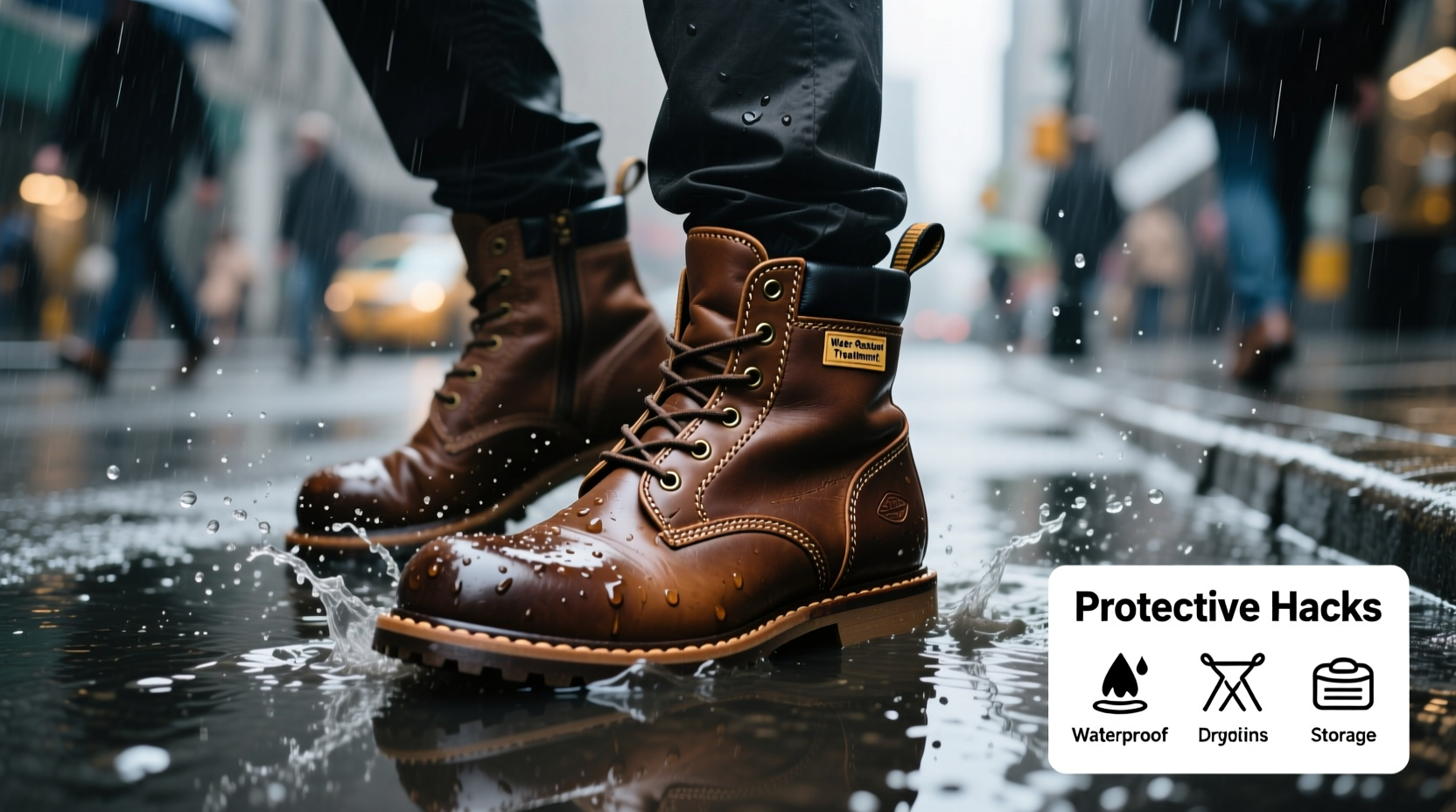
Leather is made from tanned animal hide, most commonly cowhide. While it’s naturally somewhat water-resistant due to its fibrous structure and oils, it is not waterproof. When leather absorbs water, the fibers swell and distort. As the boot dries, those fibers contract again, often unevenly, which can cause stiffness, cracking, or permanent deformation of the shape.
There are different types of leather finishes, each reacting differently to moisture:
- Full-grain leather: Most durable and naturally more resistant to water, but still vulnerable if soaked.
- Top-grain leather: Slightly less durable than full-grain; often coated with a protective finish that provides temporary water resistance.
- Suede and nubuck: Extremely sensitive to water. These unfinished leathers absorb moisture quickly and are prone to staining and darkening.
- Patent leather: Has a plastic-like coating that repels water well but can peel or crack if flexed while wet.
The key takeaway is that all leather boots benefit from proactive protection—especially in rainy conditions.
“Leather isn’t inherently waterproof, but it can be conditioned and treated to resist moisture effectively. The real damage happens not from getting wet, but from improper drying and lack of maintenance.” — Daniel Reyes, Master Cobbler & Footwear Care Specialist
Protective Hacks: How to Wear Leather Boots Safely in the Rain
You don’t need to banish your favorite leather boots from your rainy-day rotation. Instead, use these proven protective measures before, during, and after exposure to moisture.
1. Apply a Water-Repellent Treatment Before Wearing
The best defense is preparation. Before the first drop falls, treat your boots with a high-quality water-repellent product. Options include:
- Spray sealants: Silicone or fluoropolymer-based sprays create an invisible barrier on the surface. Ideal for smooth leathers.
- Wax-based conditioners: Products like Sno-Seal or wax creams penetrate deeply and offer longer-lasting protection, especially in heavy rain.
- Suede-specific protectants: Use aerosol sprays designed for napped leathers. Reapply monthly during wet seasons.
2. Use Boot Gaiters or Overshoes
For extended time in heavy rain or puddles, consider using neoprene or nylon overshoes. These slip over your boots and provide a physical barrier against water. They’re especially useful for work boots or hiking styles worn in unpredictable weather.
3. Choose the Right Laces
Cotton laces absorb water and contribute to internal dampness. Swap them for waxed or synthetic laces, which shed moisture and dry faster.
4. Avoid Prolonged Soaking
If possible, avoid standing water. Even treated leather has limits. Deep puddles can overwhelm protective coatings and soak into seams and soles.
What to Do When Your Boots Get Wet: A Step-by-Step Guide
Mistakes happen. If your boots get caught in a downpour, immediate action can prevent lasting damage. Follow this timeline to safely dry and restore them.
- Remove them as soon as possible. Continuing to wear wet boots traps moisture against the leather and footbed, increasing the risk of odor and deterioration.
- Wipe off excess water. Use a clean, dry microfiber cloth to gently blot the surface. Don’t rub—this can push water deeper into the pores.
- Remove the insoles and laces. This allows air to circulate inside the boot and speeds up drying. Insoles should be dried separately, ideally in indirect sunlight.
- Stuff with unprinted paper or cedar shoe trees. Crumpled newspaper absorbs moisture and helps retain shape. Cedar trees add mild dehumidifying properties and help neutralize odors.
- Let them air-dry at room temperature. Place boots upright in a well-ventilated area, away from direct heat sources like radiators or hairdryers. Heat causes leather to crack and glue to weaken.
- Allow 24–48 hours for complete drying. Rushing the process leads to internal dampness, which promotes mold and mildew.
- Recondition once fully dry. After drying, apply a leather conditioner to replenish lost oils. This prevents brittleness and keeps the leather supple.
Do’s and Don’ts: Caring for Wet Leather Boots
| Do’s | Don’ts |
|---|---|
| Use a soft cloth to blot water immediately | Wipe aggressively or scrub the surface |
| Stuff boots with paper or shoe trees | Place near direct heat or in a clothes dryer |
| Dry in a cool, ventilated space | Leave boots in a sealed bag or car trunk |
| Apply leather conditioner after drying | Apply conditioner to wet or damp leather |
| Reapply waterproofing every 4–6 weeks in rainy seasons | Use household oils like coconut or olive oil (they spoil and attract bacteria) |
Real-World Example: A Commuter’s Rainy Week
Mark, a graphic designer in Seattle, wears his brown leather Chelsea boots five days a week—even during the city’s notoriously wet winters. Last November, he endured a week of daily rainstorms while walking 20 minutes to the office. Rather than switching to rubber boots, he followed a simple routine: each weekend, he applied a fluoropolymer spray to his boots and used waxed cotton laces. On rainy days, he wiped his boots within 10 minutes of arriving indoors, removed the insoles, stuffed them with paper, and let them dry overnight.
After three months of consistent use, his boots showed no signs of water spotting or cracking. In fact, a colleague asked where he bought “those perfectly aged boots.” Mark credits the outcome not to luck, but to discipline: “I treat my boots like I treat my phone—if it gets wet, I act fast. Prevention and quick response make all the difference.”
Long-Term Maintenance Checklist
To ensure your leather boots remain resilient through multiple rainy seasons, follow this seasonal checklist:
- ✅ Clean boots monthly with a leather-safe cleaner
- ✅ Condition every 6–8 weeks (more often in winter)
- ✅ Reapply waterproofing spray every 4 weeks during rainy periods
- ✅ Rotate between multiple pairs to reduce moisture buildup
- ✅ Store in a breathable cotton bag or open shelf, never plastic
- ✅ Use shoe horns to prevent heel collapse, which weakens structural integrity
- ✅ Inspect stitching and soles biannually for early signs of wear
Frequently Asked Questions
Can I wear new leather boots in the rain?
New leather boots often lack sufficient conditioning and protective treatment. It’s best to apply a waterproofing product before wearing them in wet conditions. Untreated new leather is especially prone to water stains and absorption.
Why do my leather boots feel stiff after getting wet?
Stiffness occurs when water evaporates and leaves behind mineral deposits or when the leather’s natural oils are stripped away. Conditioning after drying restores flexibility. If stiffness persists, the boot may have dried too quickly or been exposed to excessive moisture.
Is it okay to use a hairdryer on low heat?
No. Even low heat can damage leather by causing it to shrink, crack, or delaminate from the sole. Always air-dry at room temperature. Patience preserves quality.
Conclusion: Smart Habits for All-Weather Boot Wear
Leather boots can absolutely withstand rain—with one crucial condition: proper care. The idea that leather and water don’t mix is outdated if you understand how to manage moisture exposure. By treating your boots proactively, responding quickly when they get wet, and maintaining them consistently, you extend their life, preserve their appearance, and enjoy their comfort in nearly any weather.
Think of your boots not just as fashion items, but as investments in quality craftsmanship. Like a good coat or watch, they deserve attention and upkeep. With the strategies outlined here—from protective treatments to intelligent drying techniques—you can confidently step into the rain without fear.




 浙公网安备
33010002000092号
浙公网安备
33010002000092号 浙B2-20120091-4
Comments
No comments yet. Why don't you start the discussion?