
When choosing a bag for daily use, weather resistance is often overlooked—until the first heavy downpour soaks through your belongings. The debate between canvas totes and nylon crossbodies isn’t just about style or convenience; it’s about how well each material stands up to moisture over time. While both have loyal followings, their behavior under rainy conditions reveals key differences in durability, maintenance, and practicality. Understanding these distinctions helps you make an informed decision based on real-world use, not just aesthetics.
Material Composition and Water Resistance
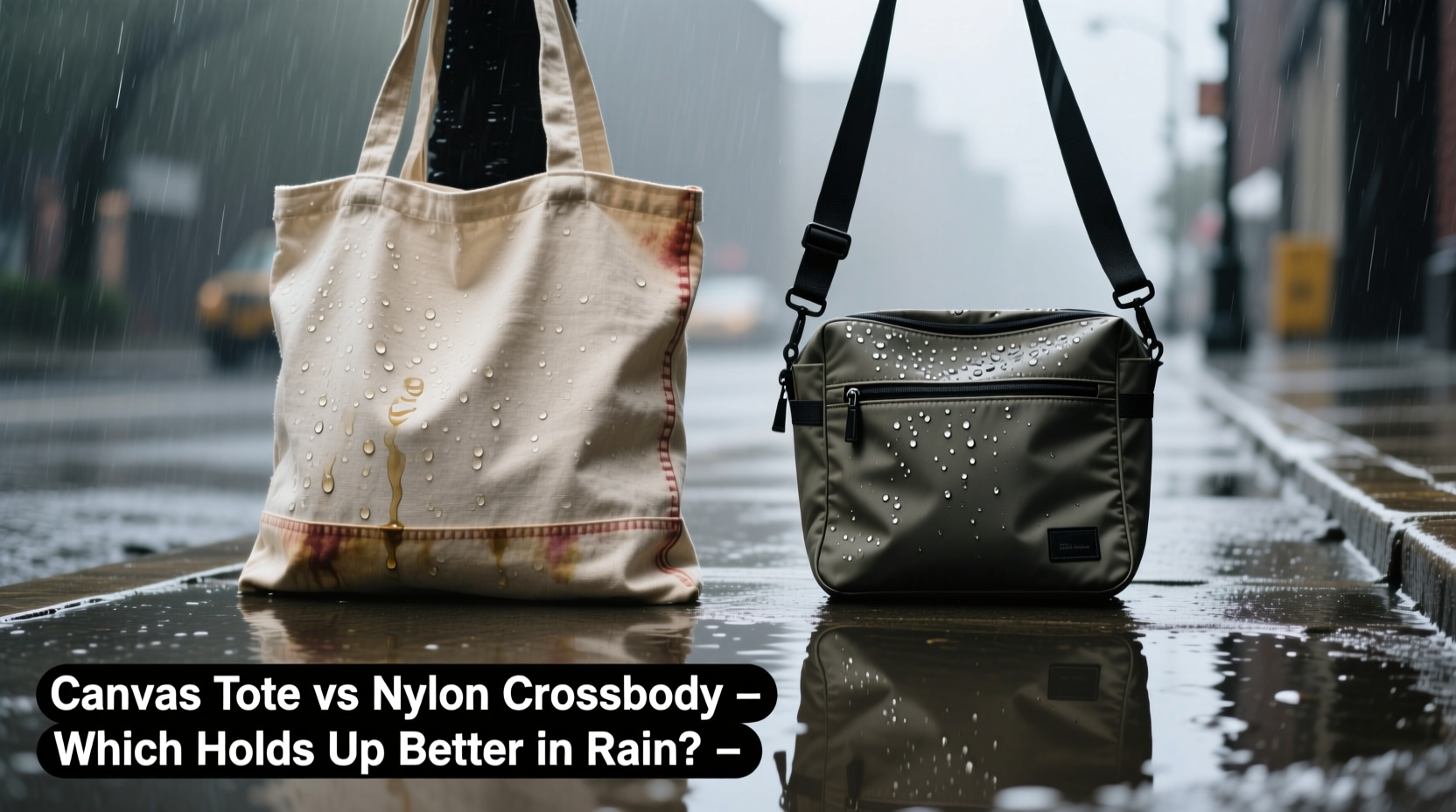
The fundamental difference between canvas and nylon lies in their molecular structure and manufacturing process. Canvas is a tightly woven cotton fabric known for its sturdiness and natural texture. It's breathable, biodegradable, and widely used in eco-conscious designs. However, being plant-based, it readily absorbs water. When exposed to rain, untreated canvas becomes saturated quickly, leading to swelling, staining, and potential mildew if not dried properly.
In contrast, nylon is a synthetic polymer originally developed for military applications. Its fibers are hydrophobic, meaning they naturally repel water. Most nylon bags also feature a polyurethane (PU) coating that enhances water resistance, creating a barrier that causes droplets to bead and roll off rather than soak in. This makes nylon inherently more resilient during unexpected showers.
How Absorption Affects Longevity
Repeated wetting without proper drying accelerates wear in any material, but especially in natural fibers like cotton. Each time a canvas tote gets wet and dries, the fibers contract and expand, weakening the weave over time. This leads to fraying seams, color fading, and eventual thinning of the fabric. In humid climates, damp canvas can develop mold within 24–48 hours if stored improperly.
Nylon, by contrast, doesn't absorb moisture—typically less than 2% of its weight even after prolonged exposure. This means it retains structural integrity far longer in wet environments. While extreme heat or UV exposure can degrade nylon over years, moisture alone has minimal impact on its tensile strength.
Structural Design and Functional Performance
Beyond material, the design of the bag plays a critical role in rain protection. Canvas totes are typically open-top with wide mouths, offering little defense against sideways rain or splashing from puddles. Even when lined with another material, the seams are often unsealed, allowing water ingress at stress points.
Nylon crossbodies, on the other hand, are designed with urban mobility in mind. They usually feature zippered closures, adjustable straps, and compact silhouettes that keep contents secure. Many models include internal waterproof pockets or laptop sleeves, adding layers of defense. Their smaller size also means fewer entry points for water compared to large tote openings.
“From a functional standpoint, nylon wins in unpredictable weather—not because it’s trendier, but because it was engineered for resilience.” — Marcus Lin, Urban Gear Designer at Trailform Labs
Weight and Load-Bearing Under Wet Conditions
One often-overlooked factor is how each material behaves when wet. A soaked canvas tote can gain significant weight due to absorbed water. A standard medium-sized tote may weigh 300 grams dry but exceed 700 grams when fully saturated. This added strain stresses stitching and handles, increasing the risk of seam failure.
Nylon adds negligible weight when wet. Even after sitting in the rain for 20 minutes, a nylon crossbody might gain only 20–30 grams from surface moisture. This consistency ensures reliable performance regardless of weather, making it ideal for commuters and travelers who carry essentials like laptops, wallets, or power banks.
Comparative Analysis: Key Factors Side-by-Side
| Factor | Canvas Tote | Nylon Crossbody |
|---|---|---|
| Water Absorption | High – absorbs moisture easily | Low – repels water due to synthetic fibers |
| Drying Time | Slow – requires full air drying to prevent mildew | Fast – dries within hours, often quicker |
| Durability in Rain | Poor – weakens with repeated exposure | Excellent – maintains strength and shape |
| Maintenance Needs | High – regular cleaning and conditioning required | Low – wipe clean, minimal upkeep |
| Environmental Impact | Better – biodegradable, renewable source | Worse – derived from petroleum, slow to decompose |
Maintenance Protocols After Rain Exposure
Even the most water-resistant bag benefits from post-rain care. How you treat your bag immediately after getting caught in the rain determines whether minor exposure becomes long-term damage.
Step-by-Step Care Routine for Nylon Crossbodies
- Remove Contents Immediately: Prevent water from spreading to electronics or documents inside.
- Wipe Down Surfaces: Use a soft, dry microfiber cloth to remove surface moisture, especially around zippers and seams.
- Air Dry Naturally: Hang in a well-ventilated area away from direct sunlight or heaters.
- Inspect Zippers and Straps: Ensure no grit or debris has entered moving parts, which could cause abrasion.
- Optional Fabric Treatment: Apply a silicone-free water-repellent spray every 3–6 months to refresh protection.
Recovery Process for Wet Canvas Totes
- Empty all items and shake out excess water gently.
- Lay flat on a clean towel in a shaded, airy space—never use a dryer or radiator.
- Rotate every few hours to ensure even drying; avoid folding until completely dry.
- If stains appear, spot-clean with diluted vinegar solution (1:3 ratio with water), then rinse with damp cloth.
- Once dry, condition leather trims (if present) with a suitable protector to prevent cracking.
Real-World Scenario: Commuting Through Monsoon Season
Sophie, a graphic designer in Seattle, relied on her favorite canvas tote for daily commutes. Durable and spacious, it carried her tablet, sketchbook, and lunch with ease. But after three consecutive weeks of drizzle, she noticed dark water spots along the sides, a musty odor, and loosening thread near the base. One morning, the bottom seam split open while walking uphill in light rain, spilling her belongings onto a wet sidewalk.
She switched to a compact nylon crossbody with a roll-top closure and internal padding. During the next rainy season, despite multiple unplanned exposures, the bag remained intact. She simply wiped it down each evening and continued using it without concern. Over two years, the nylon bag showed only minor scuffing on the corners, while maintaining full functionality.
This case illustrates a broader trend: while canvas excels in dry, controlled environments, nylon outperforms in dynamic, weather-prone settings where reliability matters most.
Long-Term Durability and Lifecycle Comparison
With proper care, a high-quality canvas tote can last 2–4 years under moderate use. However, frequent exposure to rain shortens this lifespan significantly—sometimes to under a year. Color fading, pilling, and seam degradation are common issues. Some brands offer waxed canvas options, which improve water resistance temporarily, but the treatment wears off after several washes and requires reapplication every few months.
Nylon crossbodies routinely last 5+ years, even with daily outdoor use. Their resistance to UV rays, moisture, and abrasion contributes to extended service life. Recycled nylon variants now offer similar performance with reduced environmental cost. Though not biodegradable, many can be recycled through specialized programs offered by brands like Patagonia or Tenaya.
“Material longevity isn’t just about surviving one storm—it’s about how the bag ages across hundreds of small challenges.” — Lena Choi, Sustainable Product Analyst at EcoGear Review
FAQ: Common Questions About Rain and Bag Materials
Can I make my canvas tote waterproof?
You can apply a fabric waterproofing spray designed for cotton, such as those containing fluoropolymers or waxes. However, these treatments alter the texture slightly and need reapplication every 4–6 weeks with regular use. Waxed canvas is pre-treated but heavier and less breathable.
Will nylon bags melt in the sun?
No, nylon won’t “melt” under normal conditions. It begins to degrade at temperatures above 170°C (338°F), far beyond typical outdoor exposure. However, prolonged UV radiation can weaken fibers over years, leading to brittleness. Store out of direct sunlight when possible to maximize lifespan.
Is there a hybrid option that combines benefits of both?
Yes—some brands blend materials, such as nylon-lined canvas totes or crossbodies with organic cotton overlays. These aim to balance aesthetics with function. However, the outer layer still dictates water response: if canvas is exposed, moisture will penetrate unless sealed.
Checklist: Choosing the Right Bag for Rainy Climates
- ✅ Prioritize closed-top designs with zippers or snap flaps
- ✅ Choose bags with coated or laminated exteriors
- ✅ Inspect seam sealing—fully taped seams offer superior protection
- ✅ Avoid untreated natural fabrics if rain is frequent
- ✅ Opt for removable straps and washable linings for easier maintenance
- ✅ Consider weight distribution—crossbody styles reduce hand fatigue during wet commutes
Final Verdict: Which Holds Up Better in Rain?
The evidence is clear: nylon crossbodies outperform canvas totes in rainy conditions. From inherent water resistance and faster drying times to lighter weight when wet and lower maintenance needs, nylon offers unmatched practicality for anyone facing regular precipitation. While canvas remains a stylish, eco-friendly choice for casual, indoor-focused use, it falters under sustained moisture.
That said, the best choice depends on your lifestyle. If you value sustainability and occasional use in fair weather, a canvas tote may suit you well. But if you commute daily, travel frequently, or live in a region with heavy rainfall, a nylon crossbody delivers superior protection and longevity.




 浙公网安备
33010002000092号
浙公网安备
33010002000092号 浙B2-20120091-4
Comments
No comments yet. Why don't you start the discussion?