
A capsule wardrobe is more than a minimalist fashion trend—it’s a strategic approach to dressing well with fewer pieces. The goal isn’t to wear the same outfit every day or limit self-expression. Instead, it’s about curating a collection of versatile, high-quality clothes that reflect your personal style while saving time, money, and closet space. The challenge? Many people assume building a capsule means defaulting to beige basics and endless black leggings. That doesn’t have to be the case. With thoughtful planning and smart shopping, you can create a vibrant, expressive capsule wardrobe on a tight budget—without sacrificing flair.
Why Capsule Wardrobes Work (Even on a Budget)
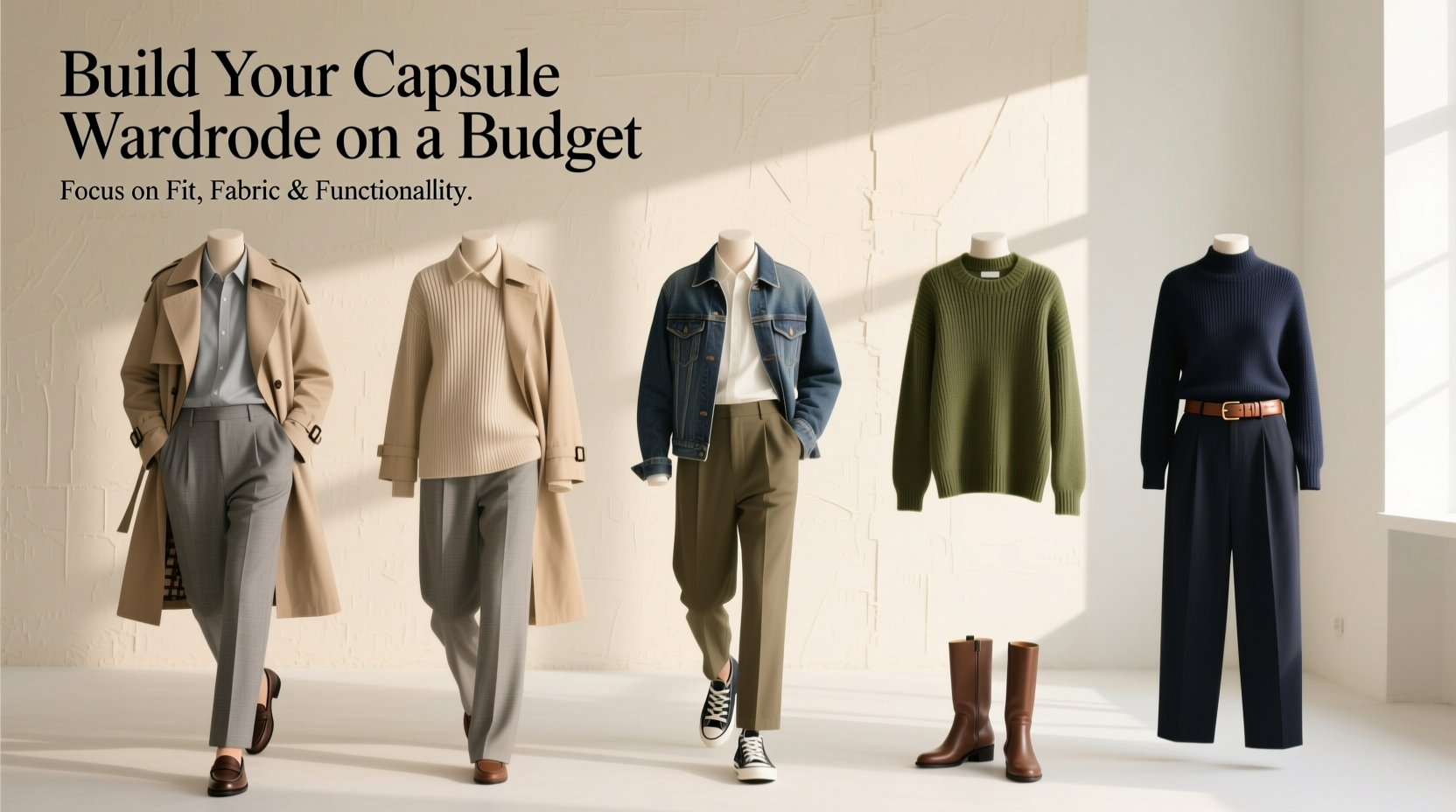
The concept originated in the 1970s with London boutique owner Susie Faux, but gained widespread popularity through designer Donna Karan’s “seven easy pieces” collection. Today, the capsule wardrobe has evolved into a sustainable lifestyle choice for those seeking simplicity without sartorial compromise.
At its core, a capsule wardrobe consists of around 30–40 interchangeable pieces—mix of tops, bottoms, dresses, outerwear, and shoes—that work across seasons and occasions. When done right, these pieces reduce decision fatigue, minimize overconsumption, and elevate daily confidence.
Contrary to myth, affordability and creativity aren’t excluded from this model. In fact, building on a budget forces smarter decisions: prioritizing fit, fabric, and function over fleeting trends. It also encourages reimagining what already exists in your closet before buying anything new.
“Simplicity doesn’t mean deprivation. It means eliminating noise so your true style can emerge.” — Courtney Carver, author of *Soulful Simplicity*
Step-by-Step Guide to Building Your Capsule
Building a budget-friendly, non-boring capsule wardrobe takes intention. Follow this six-step process to design a collection that feels fresh, functional, and uniquely yours.
- Define Your Lifestyle Needs: Start by mapping out your weekly routine. How many days do you work from home? Do you attend social events regularly? Are you often outdoors? Your clothing should serve real-life needs—not aspirational ones.
- Assess What You Already Own: Pull everything from your closet. Try on each piece. Keep only what fits well, makes you feel confident, and aligns with your current lifestyle. Set aside items that spark joy but don’t belong in your capsule (these go in a separate “seasonal” or “special occasion” rotation).
- Identify Gaps and Style Anchors: Look at what remains. Which colors dominate? Are there missing layers like a structured blazer or warm cardigan? Identify 2–3 statement pieces that define your aesthetic—perhaps a patterned midi skirt, embroidered denim jacket, or bold-colored coat.
- Create a Color Palette with Personality: Choose a base of 3–4 neutral tones (like navy, olive, cream, or charcoal) that complement your skin tone. Then add 1–2 accent colors you love (burgundy, rust, mustard). Avoid safe grays if they dull your energy; opt for richer alternatives that still mix easily.
- Shop Strategically (Not Sparingly): Only buy what fills a clear gap. Prioritize quality fabrics like cotton, wool, linen, and TENCEL™—even secondhand. Focus on tailoring and drape over brand names. Wait 48 hours before purchasing to avoid impulse buys.
- Test and Refine Over Two Weeks: Wear only your capsule pieces for 14 days. Note which combinations feel awkward or underused. Adjust accordingly—swap out ill-fitting items or add one versatile layer if needed.
How to Avoid Boring Basics Without Breaking the Bank
The biggest fear people have about capsule wardrobes is monotony. But minimalism doesn’t require uniformity. The key is choosing “quietly interesting” pieces—items that are simple in silhouette but elevated by texture, cut, or subtle detail.
- Texture over print: Swap flat cotton tees for slub knit, ribbed cotton, or loopback fabric. A waffle-knit long-sleeve tee looks more intentional than a plain crewneck.
- Versatile silhouettes: Opt for wide-leg trousers instead of basic jeans. They transition from casual to formal with a change of footwear and layering.
- Statement buttons or stitching: A shirt with contrast topstitching or mother-of-pearl buttons adds quiet luxury without being loud.
- Dyed-to-match accessories: Instead of black-on-black outfits, pair navy pants with a deep teal belt and matching loafers for tonal richness.
Investment doesn’t always mean price. Sometimes, spending $25 on a perfectly tailored thrifted blazer delivers more value than a $100 fast-fashion copy that pills after three wears.
Do’s and Don’ts of Styling a Non-Boring Capsule
| Do | Don’t |
|---|---|
| Mix matte and shiny textures (e.g., wool pants + silk cami) | Wear all flat, single-tone fabrics together |
| Use jewelry to shift an outfit’s vibe (hoops vs. pearls) | Rely solely on clothes for expression |
| Layer lightweight scarves or vests for visual interest | Avoid layering due to heat concerns—try breathable fabrics |
| Rotate shoes strategically (white sneakers vs. ankle boots) | Stick to one shoe type all season |
| Choose one \"hero\" piece per outfit (e.g., printed blouse) | Overcrowd with multiple loud elements |
Real Example: Maya’s $150 Capsule Makeover
Maya, a 32-year-old teacher from Portland, wanted to simplify her mornings without looking frumpy. Her old wardrobe was cluttered with mismatched fast-fashion pieces, most in clashing prints or poor fits. She decided to build a fall capsule on a $150 budget.
She started by clearing out 60% of her closet. From what remained, she kept: two pairs of dark jeans, a black turtleneck, a trench coat, and brown ankle boots. These became her foundation.
Next, she visited local thrift stores and used apps like Poshmark and Facebook Marketplace. Within three weeks, she added:
- Olive green corduroy pants ($12)
- Cream merino wool sweater ($20, gently used)
- Striped boatneck top in navy/white ($8)
- Denim shirt-jacket ($15)
- Patterned midi skirt with autumnal florals ($25)
- Black ballet flats ($10)
- Silk scarf with geometric design ($12)
With careful pairing, Maya created over 30 unique outfits. A striped top under the denim jacket with jeans felt casual Friday. The floral skirt with the turtleneck and trench read professional. And the silk scarf transformed the cream sweater into something special for weekend brunches.
Her total spent: $147. More importantly, she stopped feeling bored with her clothes—and got compliments on her “effortless style.”
Budget-Savvy Checklist for Your Capsule Build
- ☐ Audit your current wardrobe—keep only what fits and flatters
- ☐ Define your seasonal color palette (include 1 fun color)
- ☐ List essential categories: e.g., 5 tops, 3 bottoms, 2 dresses, 1 jacket, 2 shoes
- ☐ Research secondhand sources nearby or online
- ☐ Set a realistic budget per category (e.g., $30 max for outerwear)
- ☐ Prioritize natural fibers and timeless cuts
- ☐ Test every new item with at least 3 existing pieces
- ☐ Limit purchases to 1 new item per week to avoid overwhelm
- ☐ Document 5 go-to outfits once complete
- ☐ Schedule a monthly review to assess wearability
Frequently Asked Questions
Can I include trendy pieces in my capsule?
Yes—but selectively. One trend-focused item per season is enough. For example, if puff sleeves are popular, choose a puff-sleeve blouse in a neutral color that works with your existing bottoms. Avoid trends that alter the garment’s functionality (like ultra-wide legs or cropped lengths unless they suit your body and lifestyle).
How do I make my capsule work across seasons?
Focus on layering. A capsule built for “layerable” core pieces—like a long-sleeve tee, cardigan, and trench—can adapt to temperature changes. Store extreme-weather items (heavy parka, flip-flops) outside the main capsule but rotate them in as needed. Stick to mid-season hues that bridge summer and winter (think burgundy instead of pastel pink).
Isn’t a capsule just for minimalists or neutral lovers?
No. Capsules are frameworks, not fashion rules. You can build one around bold colors, vintage silhouettes, or cultural attire. The principle is cohesion, not conformity. If your style is maximalist, your capsule might include richly textured garments in jewel tones that all harmonize. It’s about editing, not erasing identity.
Final Thoughts: Style Is Sustainable When It’s Intentional
A capsule wardrobe shouldn’t feel restrictive. Done right, it becomes a tool for greater freedom—freedom from decision fatigue, overspending, and the guilt of unworn clothes. By focusing on what truly serves you, both aesthetically and practically, you cultivate a deeper relationship with your clothing.
You don’t need a closet full of options to feel inspired. You need a few well-chosen pieces that reflect who you are today. Whether you're drawn to earthy tones with artisanal knits or prefer graphic stripes and retro shapes, your capsule can celebrate that—with zero reliance on boring basics.
Start small. Use what you have. Shop secondhand first. And remember: the best wardrobe isn’t the fullest one. It’s the one that makes getting dressed feel like a quiet act of self-respect.




 浙公网安备
33010002000092号
浙公网安备
33010002000092号 浙B2-20120091-4
Comments
No comments yet. Why don't you start the discussion?