
Modern car key fobs are more than just tools—they’re precision electronics that unlock, start, and sometimes even track your vehicle. Yet, they're often tossed into pockets, bags, or cup holders without protection. A quality key cover can extend the life of your fob, prevent damage from drops or spills, and even enhance grip. But with countless options—silicone, hard plastic, leather, custom-fit models—how do you choose the right one? This guide cuts through the noise to help you make an informed decision based on material, fit, function, and real-world use.
Why You Should Consider a Key Cover
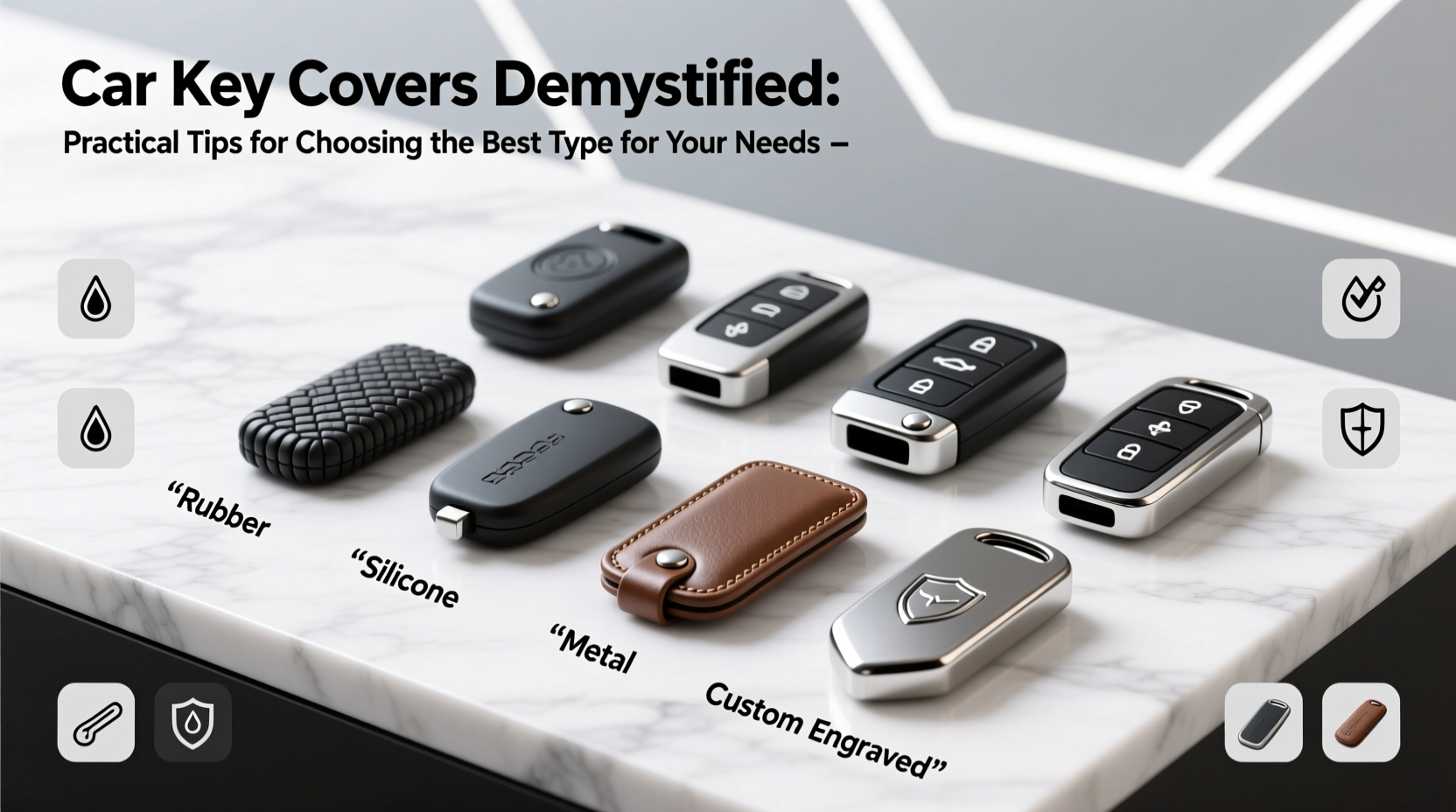
Your key fob is exposed to daily hazards: keys scratching its surface, moisture from rain or sweat, accidental drops onto pavement, and pressure when stored with other items. Over time, these small stresses lead to cracked casings, unresponsive buttons, or internal circuit damage. A well-chosen cover acts as a shock absorber and barrier against wear.
Beyond protection, a cover can improve ergonomics. Some users find factory fobs slippery or awkward to handle, especially in cold weather. A textured or contoured cover adds grip and comfort. Others appreciate the aesthetic upgrade—personalizing their fob with color or style.
Types of Key Covers: Pros and Cons
Not all key covers are created equal. The material and design significantly affect performance, longevity, and usability. Here’s a breakdown of the most common types available today.
| Type | Pros | Cons |
|---|---|---|
| Silicone | Flexible, shock-absorbent, water-resistant, affordable, wide variety of colors | May yellow over time, can feel sticky in heat, may interfere with button response if too thick |
| Hard Plastic (Polycarbonate) | Durable, slim profile, excellent button clarity, resists scratches | Limited shock absorption, less grip, may crack on impact |
| Leather-Wrapped | Premium look and feel, ages beautifully, good hand comfort | Higher cost, not waterproof, requires maintenance, may not fit tightly |
| Metal (Aluminum/Steel) | Extremely durable, sleek appearance, scratch-resistant | Heavy, poor impact absorption, can damage other items in pocket, expensive |
| Custom-Fit OEM Style | Perfect alignment with buttons, seamless integration, often made by reputable brands | Limited availability, model-specific, usually higher price |
Silicone remains the most popular choice due to its balance of protection and affordability. However, drivers who prioritize aesthetics or long-term durability might lean toward leather or polycarbonate options.
How to Choose the Right Cover for Your Lifestyle
The “best” key cover depends on how you use your keys. A commuter who tosses their fob into a backpack needs different protection than someone who keeps it neatly in a jacket pocket.
- For frequent travelers or active users: Opt for a rugged silicone or hard-shell case with raised edges to protect the screen (if applicable) and deep button wells.
- For luxury vehicle owners: A leather or metal cover complements the car’s premium feel but should not compromise access to functions like remote start or panic buttons.
- For those in wet climates: Waterproof materials like sealed silicone or coated polycarbonate help prevent moisture ingress, which can corrode internal circuits.
- For minimalists: A slim, form-fitting hard case maintains the original fob’s profile while adding basic scratch resistance.
“Over 30% of key fob repairs stem from preventable physical damage. A proper cover reduces failure rates significantly.” — David Lin, Automotive Electronics Technician, 12 years experience
Step-by-Step Guide to Selecting and Installing a Key Cover
Choosing the right cover isn’t just about looks—it’s a process that ensures compatibility and long-term satisfaction. Follow these steps:
- Identify your key fob model. Check your owner’s manual or search online using your car make, model, and year. Some vehicles have multiple fob versions.
- Measure dimensions if no model-specific option exists. Use a ruler to get length, width, and thickness. Compare with product specs.
- Check button placement and function. Ensure the cover doesn’t block or misalign buttons. Test responsiveness after installation.
- Verify signal transmission. Thick or metallic covers can interfere with RF signals. Test lock/unlock range before relying on it daily.
- Install carefully. For tight silicone cases, gently work the fob in from one corner to avoid tearing. Avoid using sharp tools.
- Inspect regularly. Look for cracks, warping, or debris buildup under the cover that could press buttons accidentally.
Mini Case Study: Sarah’s Commuter Fob Survival
Sarah drives a 2020 Honda CR-V and commutes 45 minutes each way, often rushing between her car and office. She kept her key fob loose in her tote bag alongside pens, notebooks, and her water bottle. After six months, the fob’s casing cracked near the battery compartment, and the unlock button became intermittent.
She replaced it with a snug-fitting, navy blue silicone cover designed specifically for her model. It had reinforced corners and slightly elevated button pads. Two years later, the fob still works flawlessly. “I didn’t realize how much abuse it was taking,” she said. “The cover paid for itself by avoiding a $180 replacement.”
Common Mistakes to Avoid
Even well-intentioned buyers make errors when selecting key covers. Steer clear of these pitfalls:
- Buying generic “universal” covers: These rarely fit precisely and often muffle button feedback or leave gaps where dust enters.
- Ignoring temperature effects: Silicone can become brittle in extreme cold or soft and gummy in hot cars. Choose UV-resistant or automotive-grade materials.
- Using adhesive-backed covers: These degrade over time, leave residue, and can trap moisture against the fob.
- Blocking the key release mechanism: Some covers obstruct the hidden mechanical key slot, making it difficult to eject in emergencies.
Frequently Asked Questions
Do key covers interfere with the signal?
Most high-quality covers made from non-metallic materials do not block signals. However, thick metal or poorly designed cases can reduce range. Always test the lock/unlock function at a distance after installation.
Can I wash my silicone key cover?
Yes. Remove the fob and clean the cover with mild soap and water. Avoid harsh chemicals or dishwashers, which can degrade the material over time. Dry thoroughly before reinserting the fob.
How often should I replace a key cover?
Inspect every 6–12 months. Replace if you notice cracking, fading, stiffness, or poor fit. A worn cover offers little protection and may even cause accidental button presses.
Checklist: Choosing the Best Key Cover
- ✅ Know your exact key fob model
- ✅ Prioritize precise fit over universal designs
- ✅ Choose material based on your environment and usage
- ✅ Ensure full access to all buttons and emergency key
- ✅ Confirm no signal interference after installation
- ✅ Clean and inspect the cover regularly
- ✅ Replace when signs of wear appear
Final Thoughts: Protection That Makes Sense
A car key cover isn’t just an accessory—it’s a small investment with outsized returns. The right one preserves functionality, prevents costly replacements, and enhances daily convenience. Whether you drive a compact sedan or a luxury SUV, taking a few minutes to select the appropriate cover pays off in reliability and peace of mind.




 浙公网安备
33010002000092号
浙公网安备
33010002000092号 浙B2-20120091-4
Comments
No comments yet. Why don't you start the discussion?