
A cluttered car trunk isn’t just unsightly—it’s inefficient, stressful, and can even be unsafe. Whether you’re a daily commuter, weekend road-tripper, or parent constantly hauling gear, organizing your trunk makes a tangible difference. Two popular solutions dominate the conversation: rigid car trunk storage boxes and flexible packing cubes. While both aim to reduce chaos, they serve different needs, lifestyles, and vehicle types. Choosing between them isn’t about which is “best” in absolute terms—it’s about which works best for you.
Understanding the Core Differences
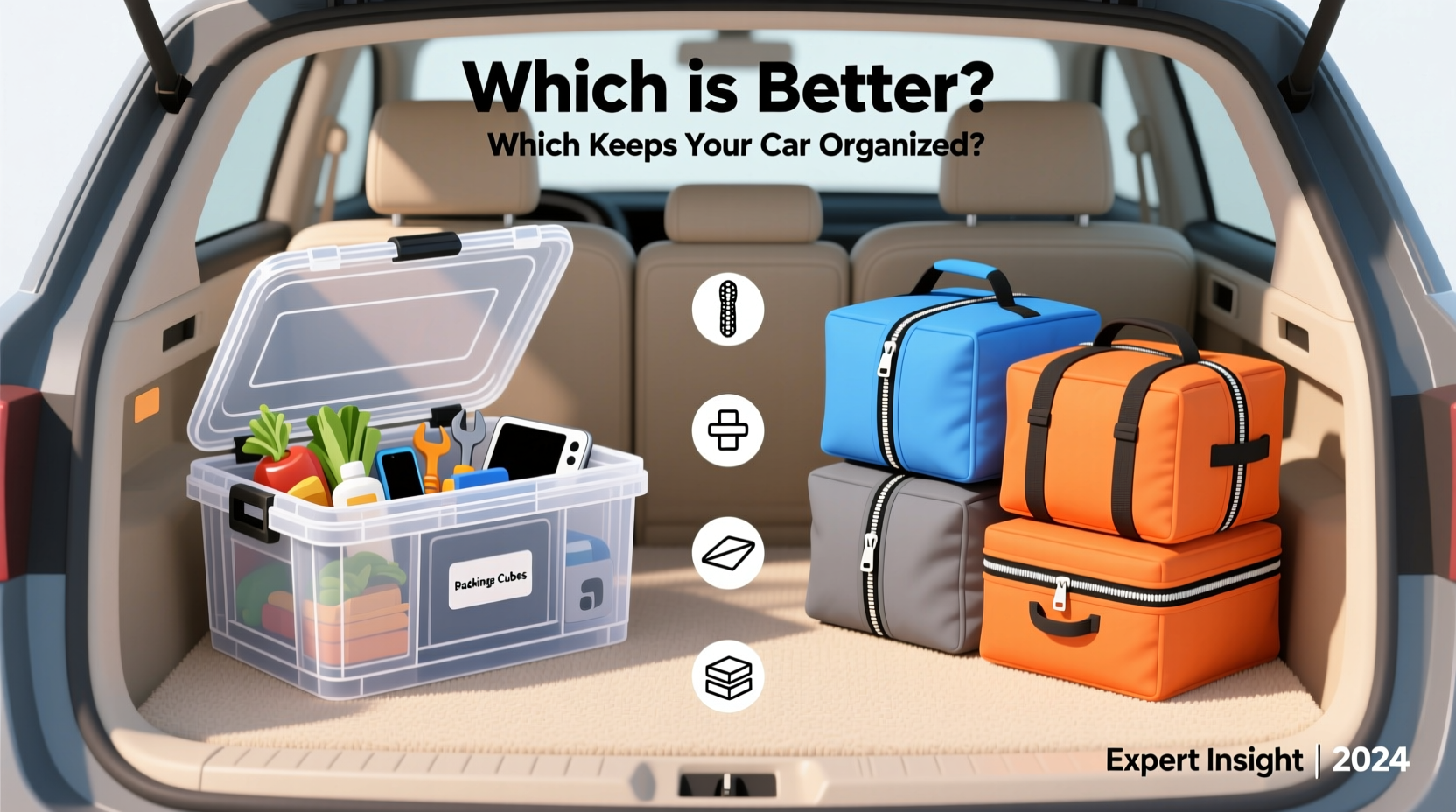
At first glance, trunk storage boxes and packing cubes might seem interchangeable—both hold items and help manage space. But their design, durability, and functionality diverge significantly.
Trunk storage boxes are typically made from hard plastic, metal, or reinforced fabric. They offer structure, protection, and often include lids to shield contents from dust, moisture, or shifting during transit. These are ideal for storing heavier, bulkier, or sensitive items like tools, emergency kits, or sports equipment.
Packing cubes, on the other hand, are soft-sided organizers originally designed for luggage. Made from nylon, polyester, or mesh, they compress easily and adapt to irregular spaces. They excel at sorting smaller items—snacks, cables, baby supplies, or gym clothes—without adding rigidity.
The choice ultimately hinges on how you use your vehicle and what kind of organization you need: structured containment or flexible categorization.
When a Trunk Storage Box Shines
Rigid storage containers are unmatched when it comes to security, durability, and weather resistance. If your trunk regularly carries heavy or potentially hazardous materials—like jumper cables, tire inflators, or cleaning chemicals—a sturdy box keeps everything contained and prevents loose items from becoming projectiles in an abrupt stop.
Many modern trunk organizers come with added features: non-slip bases, tie-down straps, built-in dividers, or even USB-powered interior lighting. SUVs and hatchbacks with deep, open cargo areas benefit most from these boxes, as they can occupy dead space efficiently and create a flat loading surface when stacked.
Real Example: The Road-Tripping Family
The Ramirez family drives a midsize SUV used for school runs, grocery trips, and annual cross-country vacations. Without organization, their trunk became a dumping ground for forgotten water bottles, soccer gear, and half-empty snack bags. After installing a modular trunk system with two large plastic bins—one for emergency supplies, one for activity gear—they regained control. Now, everything has a place. Their kids know where to find flashlights or first aid, and cleanup takes minutes instead of hours.
“Hard-shell organizers transform chaotic trunks into functional storage zones. They’re especially valuable for families or anyone who uses their vehicle for work.” — Dana Reeves, Automotive Lifestyle Consultant
The Strength of Packing Cubes in Vehicle Organization
Packing cubes bring a minimalist, adaptable approach to car organization. Unlike rigid boxes, they don’t demand exact spatial commitment. You can squeeze them into corners, tuck them under seats, or rearrange them weekly based on changing needs.
For urban drivers with compact cars, packing cubes are a game-changer. A sedan trunk may not accommodate a large bin, but it can fit several soft cubes holding dry-erase markers for car detailing, spare masks, or charging cables. Because they’re lightweight and collapsible, they can be removed entirely when hauling larger items—something rigid boxes struggle with.
Color-coded cubes also enhance visual sorting. Assign red for emergency items, blue for tech accessories, green for personal care. This system reduces search time and encourages maintenance, since disorganization becomes immediately visible.
Step-by-Step: Implementing Packing Cubes in Your Trunk
- Assess your most frequently carried small items (e.g., gloves, snacks, documents).
- Group similar items together into logical categories.
- Select 3–5 durable packing cubes in varying sizes (small, medium, large).
- Label or color-code each cube by category (use masking tape or permanent labels).
- Place cubes in stable areas of the trunk where they won’t slide during turns.
- Re-evaluate monthly and adjust contents as needs change.
Direct Comparison: Storage Box vs Packing Cubes
| Feature | Trunk Storage Box | Packing Cubes |
|---|---|---|
| Durability | High – resistant to impact and crushing | Moderate – susceptible to wear over time |
| Weather Protection | Excellent – sealed units block moisture | Limited – fabric absorbs spills unless coated |
| Space Flexibility | Low – fixed shape requires dedicated space | High – compressible and repositionable |
| Weight | Heavier – adds load when full | Lightweight – negligible added mass |
| Cleaning Ease | Easy – wipeable surfaces | Varies – some are machine washable |
| Best For | Heavy tools, emergency kits, outdoor gear | Snacks, electronics, clothing, small accessories |
Combining Both: The Hybrid Approach
You don’t have to choose one or the other. Many drivers achieve optimal organization by using both systems strategically. A large trunk storage box can anchor the back of an SUV, housing critical items like a fire extinguisher or warning triangles. Meanwhile, smaller packing cubes fill leftover gaps, organizing softer goods like blankets, umbrellas, or reusable shopping bags.
This hybrid method maximizes space utilization while maintaining accessibility. It also allows for seasonal rotation—swap out winter emergency supplies for summer picnic gear without overhauling the entire system.
Checklist: Building a Balanced Trunk System
- ✅ Identify your top 5 most-used trunk items
- ✅ Choose a primary organizer (box or cube set)
- ✅ Measure available trunk space including height and wheel wells
- ✅ Select organizers with secure bases or tie-down options
- ✅ Label all containers clearly
- ✅ Test the setup with normal driving (turns, stops) to check stability
- ✅ Reassess every 3 months and adjust as needed
Frequently Asked Questions
Can I use travel packing cubes in my car?
Yes, standard travel packing cubes work well in vehicles, especially for light, dry items. Opt for water-resistant or ripstop nylon versions if you live in rainy climates or carry drinks.
Are trunk storage boxes safe in hot weather?
Most plastic boxes are UV-stabilized and heat-resistant up to 140°F (60°C), typical of interior car temperatures. However, avoid storing flammable materials or electronics inside unventilated containers exposed to direct sun.
How do I keep organizers from sliding around?
Use organizers with rubberized bottoms or place them on non-slip matting. Some models include straps that anchor to cargo hooks or seat anchors. Always test stability before driving at speed.
Final Thoughts: Function Over Form
There’s no universal answer to whether a car trunk storage box or packing cubes are “better.” The right choice depends on your vehicle type, usage patterns, and organizational goals. If you prioritize protection, security, and heavy-duty storage, a rigid box is likely your best bet. If you value adaptability, portability, and quick access to categorized items, packing cubes offer unmatched convenience.
The most effective systems aren’t about following trends—they’re about solving real problems. Start small. Try one solution for two weeks. Evaluate what works. Tweak it. Over time, you’ll develop a personalized system that transforms your trunk from a catch-all mess into a streamlined extension of your lifestyle.




 浙公网安备
33010002000092号
浙公网安备
33010002000092号 浙B2-20120091-4
Comments
No comments yet. Why don't you start the discussion?