
Sitting down to unwind with your favorite show should be relaxing—not painful. Yet, many people experience recurring headaches shortly after watching TV in a dark room. The contrast between the bright screen and surrounding darkness creates visual stress that can trigger tension-type headaches or even migraines in sensitive individuals. While it may seem like a minor inconvenience, chronic post-screen headaches can disrupt sleep, reduce screen enjoyment, and affect overall well-being. The good news is that this issue is both preventable and manageable with the right strategies.
This article explores the physiological reasons behind TV-induced headaches in low-light environments, identifies key risk factors, and provides practical, evidence-based solutions. Whether you're a night owl catching up on series or someone who uses TV as background noise before bed, understanding how lighting, screen settings, and viewing habits interact can make a significant difference in your comfort and long-term eye health.
The Science Behind Screen-Induced Headaches in Darkness
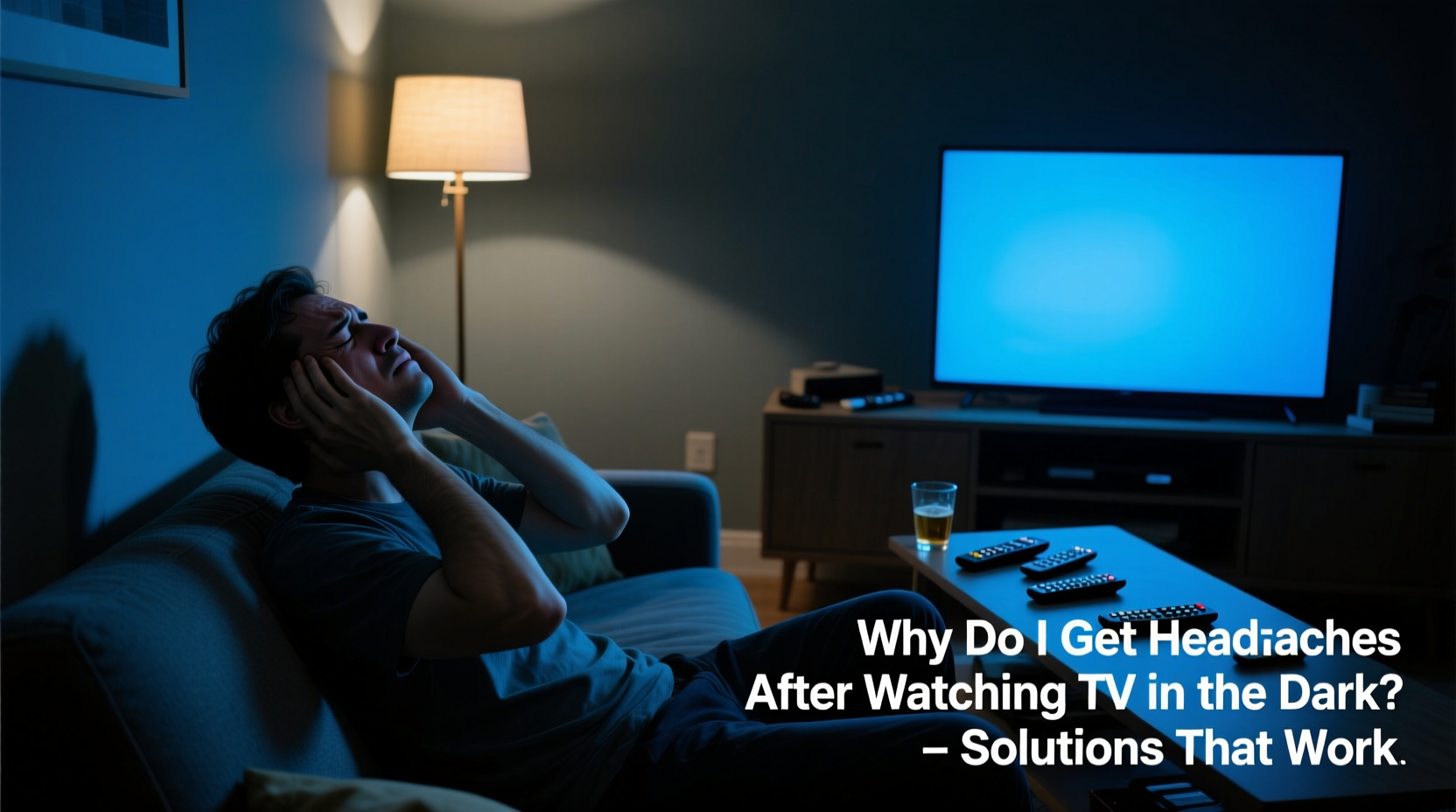
When you watch television in a completely dark room, your eyes are subjected to what optometrists call \"high contrast stress.\" The bright light emitted from the screen floods your retina while the rest of your visual field remains nearly black. This forces your pupils to rapidly dilate and contract, creating fatigue in the ciliary muscles responsible for focusing. Over time, this constant adjustment leads to eye strain—a primary precursor to headaches.
Additionally, modern LED and OLED screens emit a high proportion of blue light, which has shorter wavelengths and higher energy than other visible light. Blue light scatters more easily within the eye, reducing visual contrast and contributing to digital eye strain. In darkness, where there’s no ambient light to balance the screen's brightness, the impact is amplified.
Neurologically, prolonged exposure to unbalanced lighting can also overstimulate the trigeminal nerve—the main pathway for head pain—especially in individuals prone to migraines. A 2020 study published in *Cephalalgia* found that patients with photophobia (light sensitivity) reported significantly increased headache frequency when exposed to high-luminance screens in dim environments.
“Watching TV in total darkness is one of the most common yet overlooked triggers for visually induced headaches. It creates an unnatural visual environment that the brain struggles to process over time.” — Dr. Lena Torres, Neuro-Ophthalmologist, Mayo Clinic
Common Risk Factors That Make Headaches Worse
Not everyone who watches TV in the dark develops headaches—but certain factors increase susceptibility:
- Prolonged viewing sessions: Watching for more than 90 minutes without breaks increases ocular fatigue.
- Pre-existing conditions: Migraine sufferers, those with dry eye syndrome, or individuals diagnosed with convergence insufficiency are at higher risk.
- Screen brightness settings: Factory-default brightness levels are often too intense for home viewing, especially at night.
- Distance and angle: Sitting too close or viewing the screen from an off-center position strains eye muscles.
- Room acoustics and mental focus: Loud sound effects or intense plotlines can heighten sensory load, indirectly increasing headache likelihood.
Proven Solutions That Work
Eliminating post-TV headaches doesn’t require giving up evening entertainment. Instead, small environmental and behavioral changes can dramatically reduce discomfort. Below are seven effective, scientifically supported interventions.
1. Add Ambient Background Lighting
The single most effective fix is introducing soft, indirect light into the room. This reduces the stark contrast between the screen and surroundings. Use a floor lamp behind the couch or wall sconces with warm-toned bulbs (2700K–3000K color temperature). Avoid overhead lights, which create glare and reflections on the screen.
2. Adjust Screen Settings for Night Viewing
Modern TVs come with customizable display modes. For nighttime use:
- Switch to “Cinema,” “Low Blue Light,” or “Eye Comfort” mode.
- Reduce brightness to 30–50% (test by holding your hand in front of the screen—if the reflection is strong, it’s too bright).
- Enable dynamic contrast if available, so brightness adapts to scene content.
- Turn off motion smoothing (“soap opera effect”), which increases flicker perception.
3. Use Bias Lighting Behind the TV
Bias lighting refers to a soft glow placed directly behind the television. This technique stabilizes pupil size and improves perceived image quality while reducing eye fatigue. You can install LED strips with adjustable color temperature or purchase bias lighting kits designed for TVs.
“Bias lighting isn’t just aesthetic—it’s functional. It tricks your peripheral vision into perceiving balanced illumination, easing neural processing load.” — Dr. Alan Pierce, Vision Scientist, University of California, Berkeley
4. Follow the 20-20-20 Rule
To prevent cumulative eye strain, take regular breaks using the 20-20-20 method:
- Every 20 minutes,
- Look at something 20 feet away,
- For at least 20 seconds.
This simple habit relaxes the focusing muscles and gives your visual system a chance to reset.
5. Optimize Room Layout and Viewing Distance
Your physical setup plays a crucial role. The ideal viewing distance is 1.5 to 2.5 times the diagonal size of your screen. For example, a 55-inch TV should be viewed from 7 to 10 feet away. Also ensure the center of the screen is at or slightly below eye level when seated.
6. Limit Blue Light Exposure Before Bed
Blue light suppresses melatonin production, disrupting sleep cycles and potentially worsening headache recovery. Activate your TV’s blue light filter after 7 PM, or wear blue-blocking glasses if the screen lacks built-in options. Amber-tinted lenses have been shown in studies to reduce headache intensity in light-sensitive individuals.
7. Stay Hydrated and Blink Consciously
Dry eyes worsen visual discomfort. People blink 66% less while focusing on screens, leading to irritation and strain. Keep water nearby and make a habit of full, deliberate blinks every few minutes. Consider using preservative-free artificial tears if dryness persists.
Do’s and Don’ts: Quick Reference Table
| Do’s | Don’ts |
|---|---|
| Add soft ambient lighting (e.g., floor lamp behind sofa) | Watch in complete darkness |
| Use bias lighting behind the TV | Place bright lamps in direct line of sight |
| Lower screen brightness and enable night mode | Leave TV at maximum factory brightness |
| Take a 20-second break every 20 minutes | Binge-watch for hours without pause |
| Position screen at eye level and proper distance | Sit too close or tilt head upward/downward |
Real-Life Example: How Sarah Reduced Her Weekend Headaches
Sarah, a 34-year-old graphic designer, used to suffer from throbbing headaches every Sunday evening after her weekly movie ritual. She would dim all lights, recline on the couch, and watch films for two to three hours straight. Despite loving cinema, she began dreading the aftermath: nausea, light sensitivity, and difficulty sleeping.
After consulting an optometrist, she made several adjustments. She installed a bias light strip behind her TV, reduced brightness by 40%, and added a dimmable salt lamp in the corner of her living room. She also set a smartwatch reminder to follow the 20-20-20 rule. Within two weeks, her headaches disappeared entirely. “I didn’t realize how much my viewing environment was working against me,” she said. “Now I enjoy movies more because I’m not paying for them with pain.”
Step-by-Step Plan to Prevent TV Headaches
Follow this five-step action plan to create a headache-free viewing experience:
- Assess Your Current Setup (Night 1): Watch TV as usual but note when discomfort begins. Pay attention to brightness, posture, and duration.
- Install Ambient Lighting (Day 2): Add a soft, indirect light source such as a floor lamp or bias lighting. Test different positions and intensities.
- Optimize TV Settings (Day 3): Access display settings and reduce brightness, enable blue light reduction, and select a warmer color tone.
- Set Break Reminders (Day 4): Program a phone or smartwatch alarm to go off every 20 minutes during viewing.
- Monitor & Refine (Next 7 Days): Track symptoms in a journal. Adjust lighting or timing as needed until headaches stop occurring.
Frequently Asked Questions
Can watching TV in the dark damage my eyes permanently?
No, watching TV in the dark does not cause permanent eye damage. However, chronic eye strain may contribute to long-term discomfort, worsened dry eye, or increased headache frequency in susceptible individuals. The effects are typically reversible with improved viewing habits.
Is blue light from the TV the main cause of headaches?
Blue light is a contributing factor, but not the sole cause. The primary issue is the contrast imbalance between the bright screen and dark room. Blue light exacerbates the problem by increasing visual scatter and suppressing melatonin, which can indirectly influence headache development, especially at night.
Are some people more prone to TV-induced headaches than others?
Yes. Individuals with migraines, light sensitivity (photophobia), uncorrected vision problems, or pre-existing eye muscle imbalances are more vulnerable. Children and older adults may also be more affected due to differences in pupil response and tear production.
Final Thoughts and Call to Action
Headaches after watching TV in the dark are not something you have to accept as inevitable. They are a clear signal from your body that your visual environment is out of balance. By making thoughtful adjustments—adding ambient light, tweaking screen settings, taking breaks, and optimizing your viewing space—you can reclaim your screen time without pain.
Start tonight. Turn on a soft lamp, lower your brightness, and give your eyes the support they need. Small changes lead to lasting relief. If you’ve struggled with this issue for years, now is the time to act. Your comfort—and your next movie night—depends on it.




 浙公网安备
33010002000092号
浙公网安备
33010002000092号 浙B2-20120091-4
Comments
No comments yet. Why don't you start the discussion?