
There are few automotive experiences more unsettling than turning the key or pressing the start-stop button—only to find the engine still roaring to life. A car that won’t turn off not only creates immediate safety concerns but can also signal deeper mechanical or electrical issues. Whether your vehicle is old or new, manual or push-button start, unexpected engine behavior demands prompt attention. Understanding the root causes behind this malfunction allows you to respond calmly, diagnose accurately, and take appropriate action before costly damage occurs.
Why Engines Should Shut Down Properly
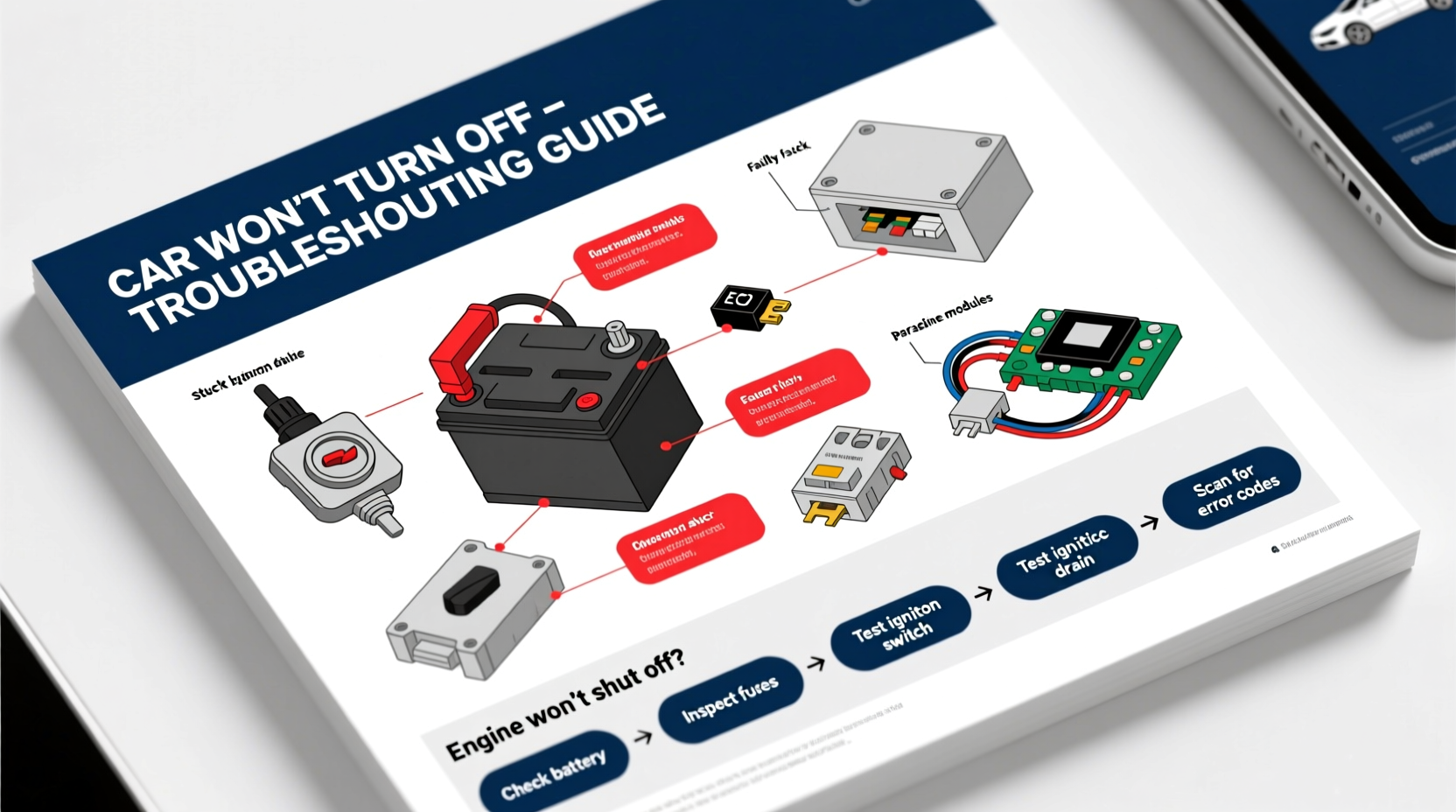
A properly functioning ignition system is designed to cut power to the fuel injectors, spark plugs, and ECU when the key is turned to “off” or the stop command is issued. This halts combustion and brings the engine to a controlled stop. When this process fails, the engine continues running despite no input from the driver. In some cases, it may even keep running after the key has been removed—a phenomenon known as “dieseling” in older engines or “run-on.” Modern vehicles with electronic throttle control and smart ignition systems are not immune; they simply fail for different reasons.
“An engine that refuses to shut down is rarely a minor glitch—it’s a red flag indicating either electrical faults, mechanical wear, or control module failures.” — Carlos Mendez, ASE-Certified Master Technician
Common Causes of Engine Shutdown Failure
Several components contribute to a smooth engine shutdown. When one fails, the entire sequence breaks down. Below are the most frequent culprits:
- Stuck Ignition Relay: The relay controls power delivery to the ignition system. If it sticks closed, power continues flowing even after the key is turned off.
- Defective Ignition Switch: Worn internal contacts can fail to break the circuit, leaving the engine energized.
- Faulty Start/Stop Button (in push-button ignitions): These buttons can degrade over time, sending incorrect signals to the ECU.
- Throttle Body Sticking Open: Carbon buildup or mechanical binding prevents the throttle from closing fully, allowing air in and keeping combustion alive.
- ECU or Immobilizer Glitch: Software errors or corrupted firmware may prevent proper shutdown commands from being executed.
- Diesel Run-On (in gasoline engines): Though rare, hot spots in the combustion chamber can ignite fuel without spark, especially in high-compression or turbocharged engines under load.
- Aftermarket Accessories: Poorly installed alarms, remote starters, or stereo systems can backfeed power into the ignition circuit.
Step-by-Step Troubleshooting Guide
Follow this logical sequence to identify and resolve the issue safely:
- Stay Calm and Secure the Vehicle: Keep steering and braking control. Pull over safely, engage the parking brake, and avoid sudden maneuvers.
- Attempt Normal Shutdown Again: Cycle the key or press the start/stop button multiple times. Sometimes intermittent contact resolves momentarily.
- Shift to Park (Automatic) or Neutral (Manual): Prevents accidental movement and reduces load on drivetrain.
- Turn Off All Accessories: Disable AC, radio, lights—anything drawing power—to reduce electrical load.
- Disconnect the Battery (if engine persists): Use insulated tools to remove the negative cable. This cuts all power and forces shutdown. Do this only when parked and safe.
- Inspect the Fuse Box: Locate the ignition relay and swap it with an identical one (e.g., horn relay). Test if the problem returns.
- Check for Aftermarket Devices: Disconnect any recently installed electronics temporarily to rule out interference.
- Scan for Error Codes: Use an OBD2 scanner to check for stored codes related to the ignition system, ECU, or throttle position sensor.
- Examine Throttle Body and IAC Valve: Clean carbon deposits using throttle body cleaner and a soft brush. Ensure the valve moves freely.
- Consult a Professional: If the cause isn’t obvious, seek help from a certified mechanic with diagnostic equipment.
Troubleshooting Checklist
✅ Quick Diagnostic Checklist: Car Won’t Turn Off
- Engine continues running after key removal or button press?
- Ignition relay clicks repeatedly or stays engaged?
- Start/stop button feels loose or unresponsive?
- Recent installation of aftermarket electronics?
- Noticeable hesitation or rough idle before shutdown attempt?
- Battery drains quickly or warning lights appear?
- Vehicle has high mileage (>100,000 miles)?
Do’s and Don’ts During a Shutdown Failure
| Do’s | Don’ts |
|---|---|
| Stay calm and pull over safely | Panic or stall the engine abruptly while moving |
| Use the parking brake to secure the vehicle | Try to remove the key forcefully if stuck |
| Disconnect the battery negative terminal as last resort | Ignore recurring issues—even if it works next time |
| Document symptoms (sounds, warning lights, frequency) | Continue driving long distances with unresolved electrical issues |
| Have the ECU scanned for hidden fault codes | Assume it’s “just the weather” or a fluke without checking |
Real-World Case Study: Persistent Run-On in a 2017 Sedan
A 2017 compact sedan owner reported that her engine kept running for up to 30 seconds after turning off the ignition. Initially sporadic, the issue worsened over two months. She tried cycling the key rapidly and holding the start button longer, but neither helped consistently. A local mechanic replaced the ignition switch at a cost of $280, but the problem returned within a week.
Further diagnosis revealed a corroded ground connection near the fuse box, causing erratic signals to the ignition relay. Additionally, a third-party remote starter had been spliced into the ignition harness, creating a backfeed loop. Once both issues were corrected—cleaning the ground point and removing the unauthorized device—the vehicle shut down normally every time.
This case underscores how multiple small faults can combine into a persistent failure. It also highlights the risk of non-OEM modifications interfering with factory safety protocols.
Preventive Maintenance Tips
Many shutdown problems stem from neglect or gradual component degradation. Regular maintenance helps prevent surprises:
- Clean the throttle body every 30,000 miles to prevent sticking.
- Inspect the battery terminals and grounding points annually for corrosion.
- Replace worn ignition switches before they fail completely.
- Avoid cheap aftermarket accessories that lack proper relays or fusing.
- Update ECU firmware during scheduled service visits, especially if recalls exist.
Frequently Asked Questions
Can a bad alternator cause my car not to turn off?
No—alternators generate power but don’t control engine shutdown. However, a failing alternator with voltage spikes can confuse the ECU or keep relays engaged indirectly. While not a direct cause, it can contribute to erratic electrical behavior.
Why does my push-button car stay on after I exit?
This usually happens if the vehicle doesn’t detect the key fob inside or if the brake circuit isn’t registering release. Some models require you to press the button again or close the door to finalize shutdown. Check your owner’s manual for specific procedures.
Is engine run-on dangerous?
Yes. A running engine poses fire risks, exhaust poisoning hazards in enclosed spaces, and potential mechanical damage due to oil starvation if left unattended. Always address the issue promptly.
Conclusion: Act Now, Avoid Bigger Problems
A car that won’t turn off is more than an inconvenience—it’s a signal that something in your vehicle’s electrical or mechanical system is compromised. From sticky relays to faulty switches and rogue aftermarket gear, the causes vary but share one thing in common: they tend to get worse over time. Ignoring the problem risks safety, increases repair costs, and could leave you stranded—or worse, dealing with a fire hazard.
By following systematic checks, staying aware of changes in your car’s behavior, and seeking expert help when needed, you protect not just your vehicle but yourself and others on the road. Don’t wait for a minor fault to become a major breakdown.




 浙公网安备
33010002000092号
浙公网安备
33010002000092号 浙B2-20120091-4
Comments
No comments yet. Why don't you start the discussion?