
Celery is a staple in kitchens around the world—not for its bold flavor or caloric density, but for its remarkable neutrality, hydrating properties, and minimal impact on blood sugar. Among the most frequently asked questions about this crisp vegetable: how many carbohydrates does it actually contain? For individuals managing diabetes, following low-carb or ketogenic diets, or simply tracking macronutrients, understanding the precise carbohydrate profile of celery stalks is essential. Beyond the headline number, the type of carbohydrates—fiber versus sugars—and how they affect digestion and energy metabolism matter just as much. This article provides a comprehensive, science-backed analysis of the carbohydrate content in celery stalks, contextualized within real-world cooking, dietary planning, and nutritional science.
Definition & Overview
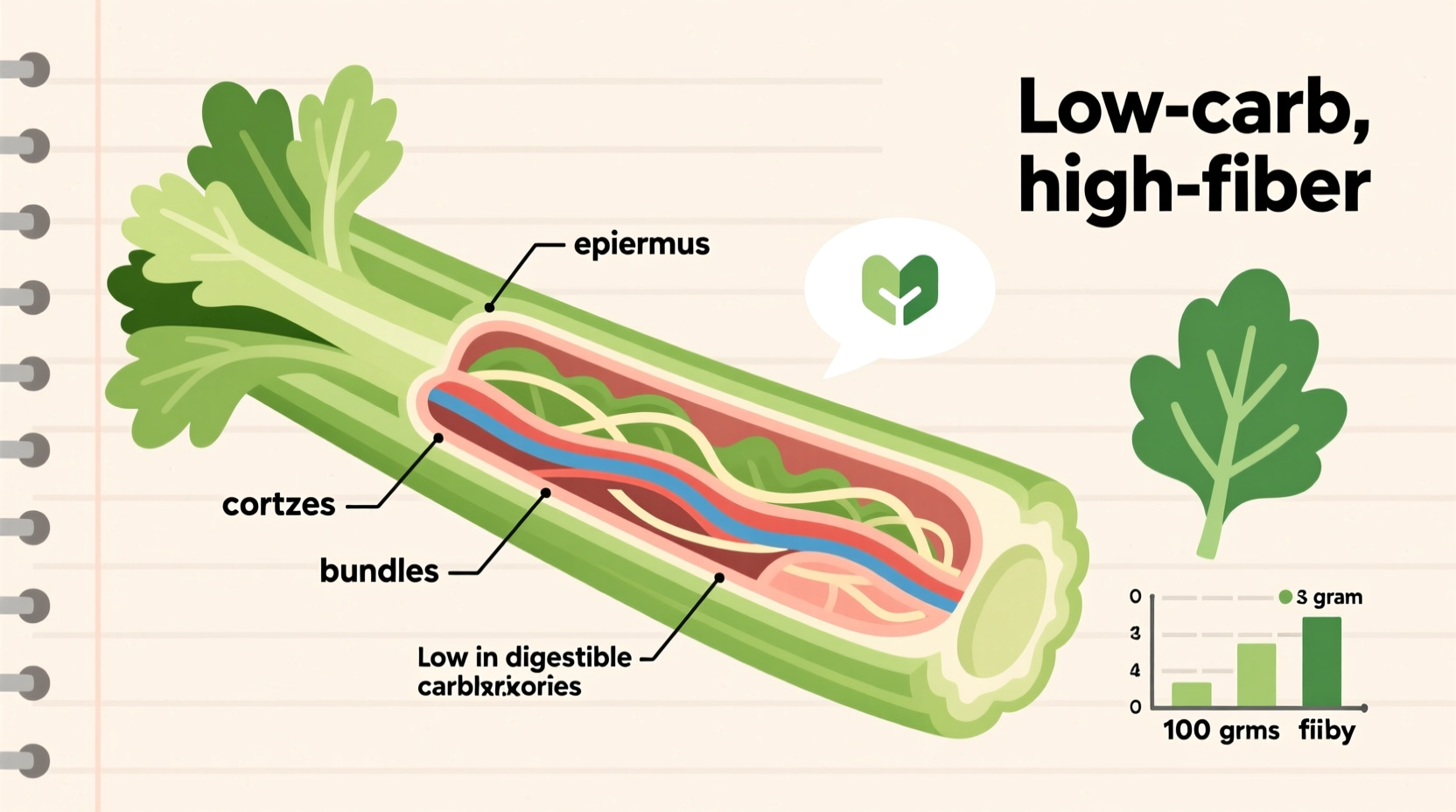
Celery (Apium graveolens) is a marshland plant species in the Apiaceae family, cultivated as a vegetable since ancient times. The edible portion most commonly consumed is the petiole, or leaf stalk, known colloquially as a \"celery stalk.\" It grows in tight bundles called \"ramps\" and features long, fibrous, pale green to light yellow stems with a high water content and subtle, slightly bitter, herbal flavor. Native to the Mediterranean region, celery was initially used for medicinal purposes before becoming a culinary mainstay in soups, salads, stir-fries, and raw vegetable platters.
Nutritionally, celery is classified as a non-starchy vegetable. It is prized not for its energy contribution but for its volume, texture, and ability to enhance dishes without adding significant calories or carbohydrates. A single medium-sized celery stalk (approximately 7–8 inches long and weighing about 40 grams) contains negligible macronutrients, making it a favorite among health-conscious eaters and dietitians alike.
Key Characteristics
- Flavor Profile: Mildly bitter, earthy, with a fresh, green aroma and subtle saltiness when raw.
- Aroma: Herbal and slightly peppery due to volatile compounds like phthalides.
- Color & Form: Pale green to off-white; long, ribbed, fibrous stalks with a crunchy texture.
- Water Content: Approximately 95%, contributing to its low-calorie and low-carb nature.
- Culinary Function: Adds texture, moisture, and aromatic depth to dishes; often used as a base ingredient (e.g., in mirepoix).
- Shelf Life: 1–2 weeks when refrigerated in a crisper drawer; longer if wrapped in aluminum foil or stored in water.
- Heat Sensitivity: Loses crunch when overcooked; best added late in cooking or eaten raw for maximum texture.
TIP: To preserve crispness, store cut celery in water inside the refrigerator. Change the water every two days to prevent bacterial growth.
Carbohydrate Breakdown: What’s in a Stalk?
The total carbohydrate content in a single medium celery stalk (40g) is approximately 1.2 grams. However, this figure must be understood in context. Not all carbohydrates are metabolically equivalent. The key lies in differentiating between total carbs, fiber, and net carbs—a distinction critical for those on low-carbohydrate regimens.
Here's a detailed nutritional breakdown per medium stalk (40g):
| Nutrient | Amount |
|---|---|
| Total Carbohydrates | 1.2 g |
| Dietary Fiber | 0.6 g |
| Sugars | 0.5 g |
| Net Carbohydrates | 0.6 g |
| Calories | 6 kcal |
Net carbohydrates are calculated by subtracting fiber from total carbohydrates. Since dietary fiber is indigestible and does not raise blood glucose levels, it is excluded from net carb counts in diabetic and ketogenic meal planning. Therefore, one celery stalk contributes only **0.6 grams of net carbs**, making it effectively \"free\" on most low-carb diets—even stricter versions of keto that limit intake to 20 grams per day.
The small amount of sugar present—mainly glucose, fructose, and sucrose—is offset by the fiber and water content, resulting in a glycemic load of nearly zero. This means celery has no meaningful impact on insulin secretion or blood sugar spikes, even in sensitive individuals.
Practical Usage in Cooking and Diet Planning
Celery’s low carbohydrate content makes it an ideal ingredient across multiple dietary frameworks. Its utility extends beyond mere snacking—it plays functional roles in both home and professional kitchens.
Home Cooking Applications
In everyday cooking, celery is a foundational aromatic. Alongside onion and carrot, it forms the base of mirepoix in French cuisine, which is sautéed at the beginning of soup, stew, and sauce preparations to build flavor complexity. Because it breaks down during prolonged cooking, its carbohydrate contribution becomes even less relevant—dissolved into the broth and distributed across large volumes.
For raw applications, celery adds crunch and freshness. Common uses include:
- Ants on a Log: Celery filled with nut butter and topped with raisins—ideal for children’s snacks, with approximately 3–4 grams of net carbs per serving (depending on additions).
- Salads and Slaws: Julienned or diced celery enhances texture in tuna, chicken, or egg salads without altering the carb balance significantly.
- Vegetable Platters: Paired with hummus, guacamole, or yogurt-based dips for low-carb grazing.
- Juicing: Often included in green juices for its mild flavor and electrolyte content, though juicing removes fiber and concentrates sugars slightly—use in moderation.
Professional Kitchen Uses
In restaurant settings, celery is valued not only for taste but also for cost-efficiency and shelf stability. Chefs use it in stock production, where it imparts depth without clouding the liquid. Braised celery appears in refined vegetable sides, often finished with herbs and butter. Some modern interpretations involve peeling the outer fibers and serving it raw in carpaccio-style dishes with citrus and Parmesan.
From a nutritional labeling perspective, chefs preparing meals for medical or wellness-focused clientele can confidently list celery as a \"negligible source of carbohydrates,\" aligning with FDA guidelines that allow foods with less than 1 gram of sugar and total carbs per serving to be labeled as such.
Pairing Suggestions and Ratios
To maximize flavor while maintaining low carbohydrate levels, consider these pairings:
- Celery + Avocado: Combines healthy fats with insoluble fiber for balanced satiety.
- Celery + Cottage Cheese or Cream Cheese: High-protein, low-carb snack option; one stalk with 2 tablespoons cottage cheese yields under 5 grams net carbs.
- Celery + Lemon Zest and Olive Oil: Bright, elegant side dish with zero added sugar.
When building a low-carb meal, aim for a ratio of 70% non-starchy vegetables (like celery), 20% protein, and 10% healthy fats to ensure nutrient density without exceeding carbohydrate limits.
PRO TIP: Use a kitchen scale to measure celery when tracking macros precisely. Visual estimates can vary by up to 30%, especially with irregular stalk sizes.
Variants & Types
While the standard green Pascal celery dominates supermarket shelves, several variants exist, each with slight differences in texture, color, and usage:
| Type | Description | Carbohydrate Content (per 40g) | Best Uses |
|---|---|---|---|
| Green Pascal Celery | The most common variety; ribbed, green, crisp. | 1.2 g total / 0.6 g net | All-purpose: raw, cooked, juiced |
| Golden Celery | Grown covered to prevent chlorophyll development; paler, more delicate. | 1.1 g total / 0.5 g net | Raw preparations, fine dining presentations |
| Red Celery (e.g., ‘Red Venture’) | Anthocyanin-rich; reddish-pink streaks, slightly sweeter. | 1.3 g total / 0.7 g net | Salads, garnishes, colorful platters |
| Celeriac (Celery Root) | Same species, different cultivar; grown for its bulbous root. | 5.8 g total / 4.5 g net | Mashed, roasted, or julienned—higher carb, not keto-friendly in large portions |
| Leaf Celery | Thin stalks, abundant leaves; intense flavor. | 1.0 g total / 0.5 g net | Herbal seasoning, teas, stir-fries |
Note: Celeriac is nutritionally distinct and should not be confused with stalk celery. While both come from Apium graveolens, celeriac functions more like a root vegetable and contains over four times the carbohydrates per serving.
Comparison with Similar Ingredients
Celery is often compared to other crunchy, low-carb vegetables. Understanding the differences helps in making informed substitutions based on dietary goals.
| Vegetable (per 40g) | Total Carbs | Fiber | Net Carbs | Notes |
|---|---|---|---|---|
| Celery Stalk | 1.2 g | 0.6 g | 0.6 g | High water, fibrous, subtle flavor |
| Cucumber | 0.8 g | 0.3 g | 0.5 g | Even lower carb, less fibrous, milder taste |
| Green Bell Pepper (raw) | 1.7 g | 0.6 g | 1.1 g | Sweeter, thicker flesh, higher vitamin C |
| Zucchini (raw) | 1.0 g | 0.4 g | 0.6 g | Softer texture, better for grilling or spiralizing |
| Jicama | 3.0 g | 1.3 g | 1.7 g | Sweeter, starchier, popular in Latin cuisine |
\"In clinical nutrition, we recommend celery as a 'free food' for patients with type 2 diabetes. Its combination of low digestible carbs, high water, and beneficial phytonutrients supports metabolic health without risk of glucose excursions.\" — Dr. Lena Torres, Registered Dietitian and Diabetes Educator
Practical Tips & FAQs
Is celery suitable for a ketogenic diet?
Yes. With only 0.6 grams of net carbs per stalk, celery fits easily within a 20–50 gram daily carb limit. It’s commonly used as a vehicle for high-fat toppings like blue cheese dressing or salmon mousse in keto circles.
Does cooking celery increase its carbohydrate availability?
No. Cooking breaks down cell walls but does not convert fiber into digestible carbs. In fact, some water-soluble sugars may leach into cooking liquid, slightly reducing overall carb content in the solid portion.
Can celery help with weight management?
Indirectly, yes. Its high water and fiber content promote fullness with minimal caloric intake. Eating celery before meals may reduce overall calorie consumption, though it should not be relied upon as a standalone weight-loss tool.
Are there any anti-nutrients in celery?
Celery contains naturally occurring compounds like psoralens, which can cause photosensitivity in very large quantities. However, normal culinary consumption poses no risk. Individuals on specific medications (e.g., diuretics) should consult a physician before consuming celery juice in excess.
How should I store celery to maintain freshness and nutrient content?
Wrap the entire bunch tightly in aluminum foil and store in the crisper drawer. The foil allows ethylene gas to escape while retaining moisture, extending freshness up to three weeks. Alternatively, submerge cut stalks in water in a sealed container.
Is organic celery worth the extra cost?
Celery consistently ranks high on the Environmental Working Group’s “Dirty Dozen” list due to pesticide residue. If budget allows, choosing organic reduces exposure to chemicals absorbed through the porous stalk surface.
STORAGE HACK: Revive limp celery by cutting it into sticks and soaking in ice water for 30 minutes. The cells rehydrate, restoring crispness.
Summary & Key Takeaways
Celery stalks are among the lowest-carbohydrate vegetables available, containing just 1.2 grams of total carbs and 0.6 grams of net carbs per medium stalk. Their composition—dominated by water and fiber—makes them ideal for low-carb, ketogenic, diabetic, and weight-conscious diets. Far from being nutritionally empty, celery delivers beneficial plant compounds like apigenin and phthalides, which have been studied for their anti-inflammatory and blood pressure-lowering effects.
Culinarily versatile, celery functions as both a textural element and a flavor base. Whether eaten raw with dip, simmered in broths, or used as a garnish, its impact on carbohydrate totals is negligible. Variants like golden or red celery offer aesthetic diversity without significant nutritional deviation, while celeriac must be treated as a separate, higher-carb ingredient.
When comparing celery to similar vegetables, it holds its own as a go-to for crunch and hydration with minimal metabolic impact. Proper storage ensures longevity and maintains its desirable crispness.
In conclusion, celery is not merely a diet food—it is a smart, functional ingredient that bridges health and flavor. Understanding its true carbohydrate content empowers cooks and eaters to use it confidently, accurately, and creatively in everyday meals.
Final Thought: Never underestimate the humble celery stalk. In the right context, it’s a powerful ally for health, flavor, and culinary precision.




 浙公网安备
33010002000092号
浙公网安备
33010002000092号 浙B2-20120091-4
Comments
No comments yet. Why don't you start the discussion?