
For decades, the thick leather wallet has been a staple of adult life—a symbol of responsibility, identity, and personal style. But as lifestyles shift toward minimalism, digital payments, and on-the-go efficiency, many are asking: Is it time to retire the overstuffed bifold? The rise of the card holder keychain suggests that yes, the era of the bulky wallet may be coming to an end.
Today’s consumers carry fewer cards, rely more on smartphones for payments, and value convenience over tradition. This evolution isn’t just about aesthetics—it reflects deeper changes in how we interact with money, security, and daily logistics. Whether you're clinging to a vintage wallet or considering a switch, understanding the trade-offs between a card holder keychain and a traditional wallet is essential.
The Decline of the Bulky Wallet
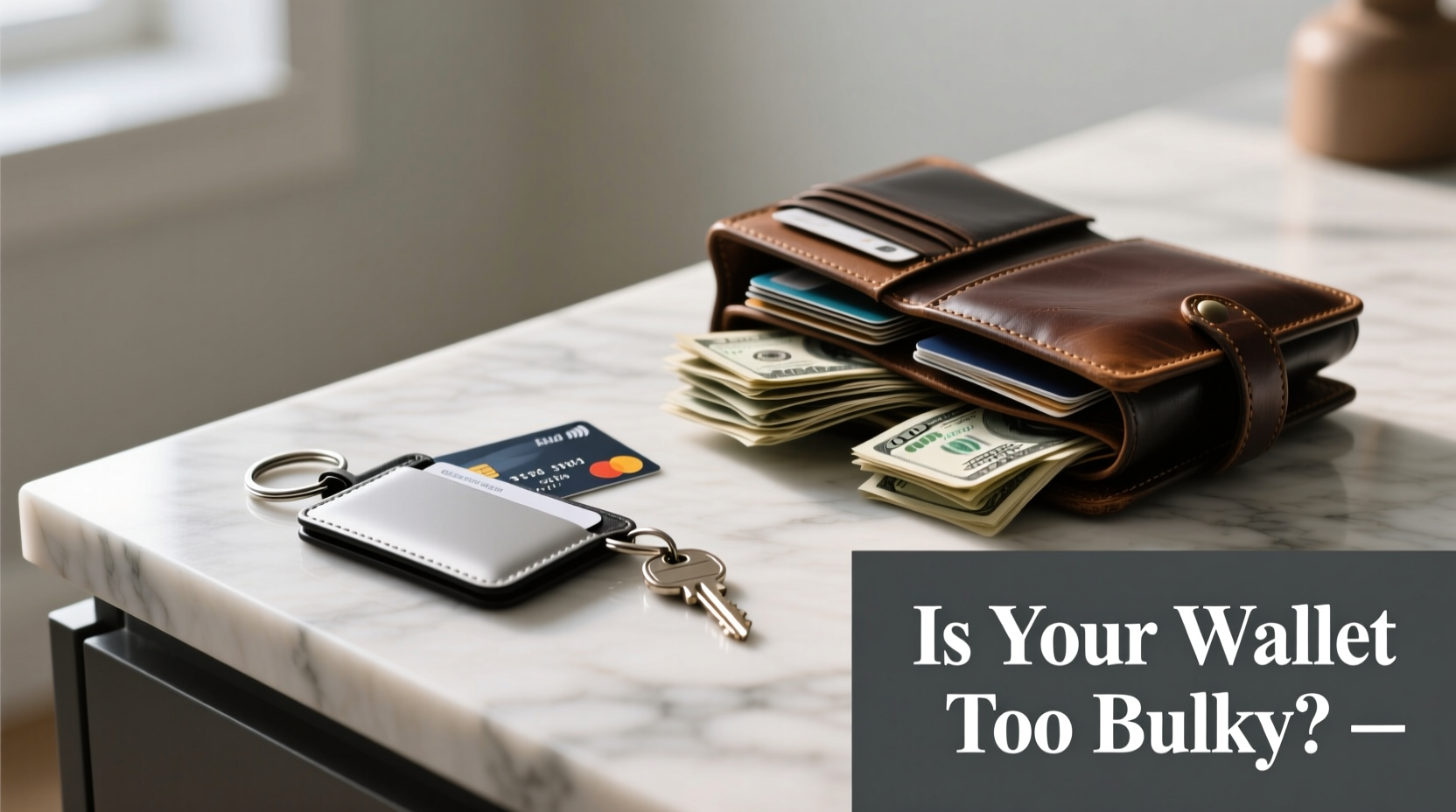
There was a time when carrying ten credit cards, multiple IDs, loyalty punch cards, and wads of cash felt necessary. Today, most people use three cards regularly—if that. Mobile wallets like Apple Pay, Google Pay, and Samsung Pay have made physical cards optional rather than mandatory. Even cash usage has declined sharply; according to the Federal Reserve, cash accounted for only 19% of transactions in 2022, down from nearly 30% a decade earlier.
This behavioral shift has exposed the inefficiencies of the traditional wallet. A thick stack of rarely used cards leads to clutter, discomfort when sitting, and slower transaction times. Worse, oversized wallets can damage suits, strain back pockets, and even contribute to posture issues over time.
Card Holder Keychains: What Are They?
A card holder keychain is a compact device—often made of aluminum, titanium, or high-grade polymer—that holds one to four cards and attaches directly to your keyring. Some models include small cash clips or RFID-blocking layers. Unlike wallets, they’re designed not to sit in your pocket but to move with your keys, ensuring you never leave them behind.
These minimalist tools emerged from the ultralight carry movement popularized by travelers, urban commuters, and tech professionals. Their appeal lies in simplicity: no bulk, no wasted space, and instant access. Because they’re attached to your keys, which most people check before leaving home, the risk of forgetting them drops significantly.
Some advanced versions feature rotating mechanisms, magnetic closures, or modular designs that allow expansion when needed. Despite their small size, modern keychain card holders prioritize durability and ease of use, often outlasting traditional leather wallets under daily stress.
Wallets vs. Card Holder Keychains: A Practical Comparison
| Feature | Traditional Wallet | Card Holder Keychain |
|---|---|---|
| Capacity | High (10+ cards, cash, receipts) | Low to moderate (1–4 cards, limited cash) |
| Bulk & Comfort | Bulky; causes pocket wear and discomfort | Minimalist; near-zero profile |
| Security | Prone to pickpocketing; easy to misplace | Attached to keys; harder to lose |
| Digital Integration | Limited (unless NFC-enabled) | Complements mobile payments well |
| Style & Customization | Wide range of materials and designs | Sleek, modern, tech-forward aesthetic |
| Lifespan | Varies (leather wears, stitching fails) | Often metal-based; highly durable |
The data shows a clear trend: if your lifestyle revolves around speed, mobility, and digital tools, the card holder keychain wins on practicality. However, if you frequently carry cash, business cards, or need ID separation (e.g., flight boarding passes), a slim bi-fold or front-pocket wallet might still serve better.
Real-Life Shift: A Case Study
Take Mark, a 34-year-old software developer in Austin. For years, he carried a full-grain leather wallet packed with eight credit cards, gym membership, insurance cards, and folded dollar bills. It weighed down his back pocket, caused numbness after long drives, and once triggered a metal detector at a conference.
After reading about digital minimalism, he switched to a titanium card holder keychain. He kept only his driver’s license, primary debit card, and work badge. Everything else moved into a secure travel wallet at home. Within weeks, he noticed less hip pain, faster airport screening, and greater peace of mind knowing his essentials were always clipped to his keys.
“I used to think losing my wallet would be catastrophic,” Mark said. “Now I realize most of what I carried was dead weight. My phone does 90% of the job, and the keychain holds the rest.”
“Minimalist carry isn’t about having less—it’s about making everything you own earn its place.” — David Chen, Urban Mobility Consultant
How to Transition Smoothly: A Step-by-Step Guide
Moving from a bulky wallet to a streamlined system takes planning. Follow this timeline to avoid frustration:
- Week 1: Audit Your Contents
Carefully empty your wallet. Sort items into categories: daily use, occasional use, emergency-only, and obsolete. Shred expired cards and store rarely used ones securely at home. - Week 2: Test Digital Alternatives
Add your main cards to Apple Pay or Google Pay. Practice contactless payments at stores, transit systems, and online platforms. - Week 3: Choose Your Minimal Carry
Select either a card holder keychain or a slim front-pocket wallet based on your needs. Prioritize materials like aerospace aluminum or carbon fiber for longevity. - Week 4: Integrate & Evaluate
Use only your new carry method for seven days. Note any gaps (e.g., needing cash) and adjust accordingly. Consider a micro-wallet pouch for rare scenarios.
FAQ: Common Questions About Going Minimal
Can I still use contactless payments with a card holder keychain?
Absolutely. Most keychain holders allow quick card access, and since you’ll likely keep your primary payment card visible, tapping to pay is faster than fumbling through a thick wallet.
What if I need to carry cash regularly?
If cash is part of your routine, a card holder keychain alone may not suffice. Consider pairing it with a thin cash sleeve or opting for a minimalist wallet with a built-in bill fold. Alternatively, use mobile peer-to-peer payment apps like Venmo or Cash App to reduce physical currency reliance.
Are card holder keychains prone to damaging cards?
Poorly designed models with sharp edges or excessive pressure can warp or demagnetize cards over time. Look for models with smooth interiors, rounded corners, and proper spacing. Titanium and spring-loaded designs generally offer the best protection.
Checklist: Is a Card Holder Keychain Right for You?
- ✅ I use digital payments (Apple Pay, etc.) more than 70% of the time
- ✅ I carry fewer than five cards daily
- ✅ I experience discomfort from sitting on a bulky wallet
- ✅ I frequently misplace my wallet or forget it at home
- ✅ I value sleek, functional design over traditional aesthetics
- ✅ I’m willing to adapt habits for long-term convenience
If you checked most of these, a card holder keychain could be a smart upgrade. If not, a slimmed-down wallet alternative may offer a balanced compromise.
Conclusion: Embracing Smart Simplicity
The bulky wallet isn’t obsolete overnight—but its dominance is fading. As society moves toward digital identity, frictionless payments, and intentional living, the tools we carry must evolve too. The card holder keychain represents more than a gadget; it’s a philosophy of efficiency, awareness, and freedom from excess.
You don’t have to abandon your current wallet to embrace change. Start small: remove unused cards, digitize what you can, and experiment with minimalist alternatives. Over time, you might find that less really is more—not just in your pocket, but in your mindset.




 浙公网安备
33010002000092号
浙公网安备
33010002000092号 浙B2-20120091-4
Comments
No comments yet. Why don't you start the discussion?