
Not all cinnamon is created equal. While many home cooks reach for a jar labeled simply “cinnamon,” two distinct types dominate global markets—Cassia and Ceylon—each with unique flavor profiles, chemical compositions, and culinary applications. The difference goes beyond taste; it impacts shelf life, health implications, and even how you should store and use them. Understanding these distinctions empowers better seasoning choices, enhances dish authenticity, and supports long-term spice quality. This guide breaks down everything from botanical origins to practical kitchen strategies, helping you choose, store, and apply each type with precision.
Definition & Overview
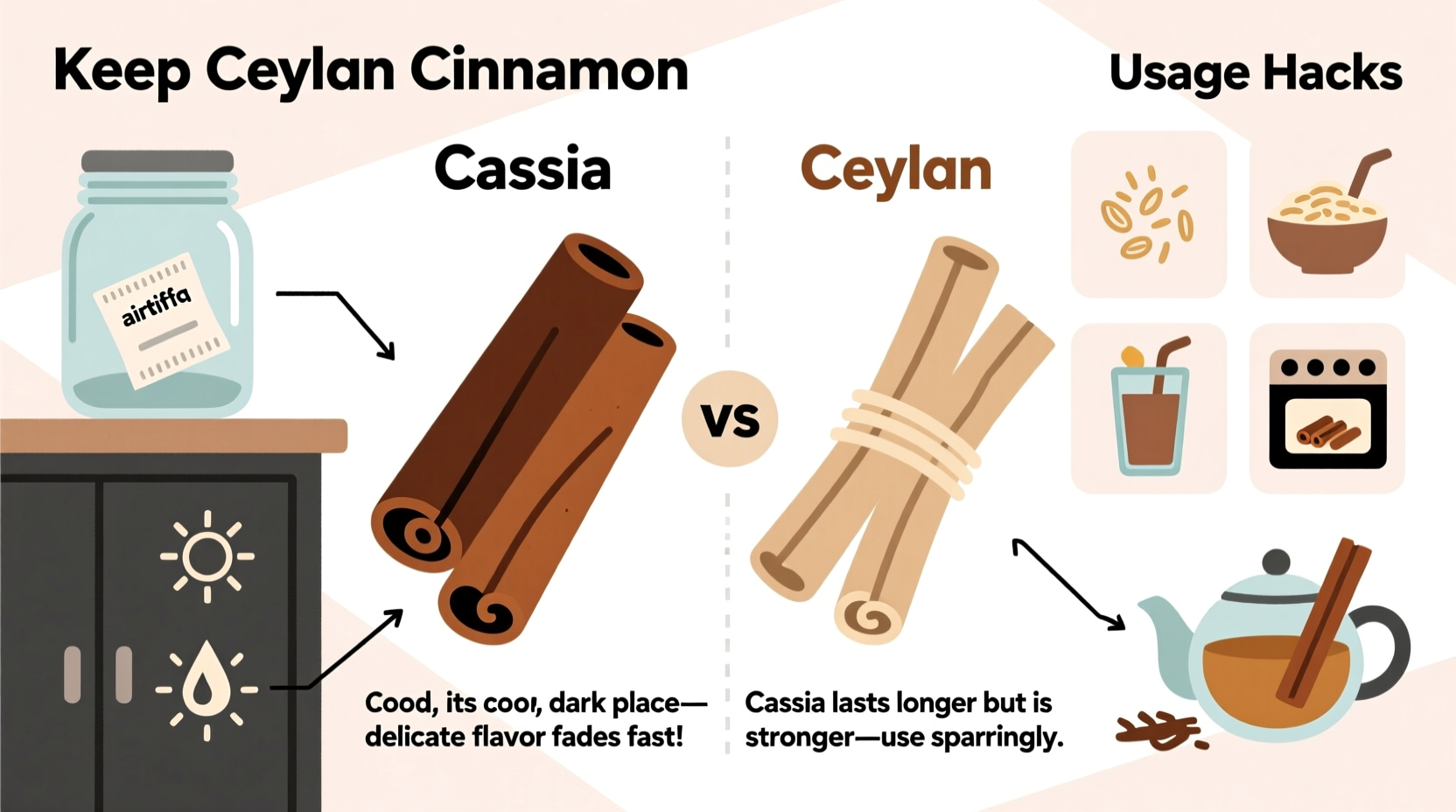
Cinnamon is a spice derived from the inner bark of trees in the Cinnamomum genus. Despite its uniform appearance in ground form, two primary varieties are commercially available: Cassia cinnamon (Cinnamomum cassia) and Ceylon cinnamon (Cinnamomum verum). Though often used interchangeably, they originate from different regions, possess contrasting textures and aromas, and vary significantly in chemical makeup.
Cassia cinnamon, commonly known as “regular” or “Chinese” cinnamon, hails primarily from China, Indonesia, and Vietnam. It features thick, tightly rolled quills with a deep reddish-brown color and a bold, spicy-sweet profile. Due to its robustness and lower cost, it dominates supermarket shelves across North America and Europe.
Ceylon cinnamon, sometimes called “true cinnamon,” originates from Sri Lanka (formerly Ceylon) and southern India. Its bark forms delicate, multi-layered sticks resembling parchment scrolls. Lighter in color and more complex in flavor, Ceylon offers citrusy, floral notes with subtle sweetness and minimal heat. Historically prized by European royalty, it remains a specialty item favored in artisanal and traditional preparations.
Key Characteristics
| Characteristic | Cassia Cinnamon | Ceylon Cinnamon |
|---|---|---|
| Botanical Name | Cinnamomum cassia | Cinnamomum verum |
| Origin | China, Indonesia, Vietnam | Sri Lanka, Southern India |
| Appearance (Stick Form) | Thick, single-layer quill; dark brown | Thin, layered roll; light tan |
| Flavor Profile | Intense, warm, spicy-sweet with woody depth | Mild, sweet, citrusy, floral with low heat |
| Aroma | Pungent, robust, instantly recognizable | Subtle, perfumed, slightly fragrant |
| Coumarin Content | High (up to 1% dry weight) | Very low (less than 0.04%) |
| Shelf Life (Properly Stored) | 2–3 years (ground), 4+ years (sticks) | 1.5–2 years (ground), 3–4 years (sticks) |
| Common Culinary Use | Baking, spiced beverages, savory rubs | Desserts, custards, Middle Eastern & Latin dishes |
Comparison with Similar Ingredients
The confusion between Cassia and Ceylon stems partly from labeling practices. In the U.S., Canada, and parts of Europe, most products labeled “cinnamon” are actually Cassia. Consumers seeking authentic Ceylon must read labels carefully or purchase from specialty suppliers.
- Taste Difference: Cassia delivers a punchy, assertive warmth ideal for strong-flavored applications like pumpkin pie or chai. Ceylon provides nuance—better suited to delicate sauces, rice puddings, or dishes where balance matters.
- Health Implication: Cassia contains high levels of coumarin, a naturally occurring compound that can be toxic to the liver in large doses over time. Ceylon’s negligible coumarin content makes it safer for regular consumption, especially for children or those using cinnamon medicinally.
- Texture & Solubility: Ground Cassia tends to clump more due to higher oil content and coarser grind. Ceylon dissolves more evenly in liquids, making it preferable in custards, syrups, and fine pastries.
“Many professional bakers don’t realize they’re working with Cassia until they taste-test side-by-side. Once they do, there’s no going back—especially in applications where subtlety wins.” — Chef Elena Torres, Pastry Consultant, San Francisco
Variants & Types
Both Cassia and Ceylon come in various physical forms, each affecting usage and longevity.
Stick (Quill) Form
Whole cinnamon sticks preserve flavor longer than ground versions. Cassia sticks are dense and hard to break, often requiring a mortar or spice grinder. Ceylon sticks are fragile and can be crumbled by hand. Both are excellent for infusing soups, stews, poaching liquids, and mulled wines. Remove before serving unless finely crushed.
Ground Powder
Convenient but less stable, ground cinnamon oxidizes faster. Cassia powder retains potency well in baked goods. Ceylon powder shines in desserts requiring aromatic finesse without bitterness. Always check freshness dates and source from reputable brands that specify origin.
Extracts & Oils
Cinnamon essential oil is typically derived from Cassia due to its high cinnamaldehyde content. These oils are extremely potent and not meant for direct consumption. For baking, alcohol-based extracts offer concentrated flavor—use sparingly. True Ceylon extract is rare and expensive but invaluable in premium confections.
Other Related Spices
- Saigon Cinnamon: A subtype of Cassia (C. loureiroi) from Vietnam, known for intense heat and high essential oil content. Ideal for bold recipes needing extra kick.
- Korintje Cinnamon: Indonesian Cassia, milder than Saigon but stronger than Ceylon. Common in commercial blends.
- Malabar Cinnamon: Indian-grown Ceylon variant, slightly warmer in tone but still low in coumarin.
Practical Usage: How to Use Each Type Effectively
Choosing the right cinnamon depends on the desired outcome—not just flavor, but texture, safety, and shelf stability.
When to Use Cassia Cinnamon
- In spiced breads, muffins, and cookies where a strong cinnamon presence is expected.
- For mulled cider, chai tea, or hot chocolate, where its robust aroma stands up to boiling liquids.
- In savory spice rubs for meats like lamb or duck, particularly in Chinese five-spice or Moroccan ras el hanout blends.
- As a cost-effective option for large-batch cooking or institutional kitchens.
Usage Hack: Toast Cassia sticks lightly in a dry pan before grinding to deepen their natural sweetness and reduce raw edge.
When to Use Ceylon Cinnamon
- In custards, flans, and rice puddings where smooth integration and delicate fragrance matter.
- For French toast, crème brûlée, or whipped cream toppings, where overpowering spice would detract from richness.
- In Latin American atoles or Mexican champurrado, where traditional recipes call for true cinnamon.
- For daily medicinal use, such as sprinkling into oatmeal or smoothies for blood sugar support—Ceylon is safer for consistent intake.
Usage Hack: Infuse whole Ceylon quills in warm milk overnight in the fridge for cold-infused golden lattes with rounded flavor and no bitterness.
Pro Tip: When substituting one for the other, adjust quantities. Replace 1 tsp Cassia with 1¼ to 1½ tsp Ceylon for equivalent warmth. Conversely, use only ¾ tsp Cassia when a recipe specifies Ceylon to avoid harshness.
Storage Tips for Maximum Longevity
Improper storage degrades both types rapidly, leading to loss of volatile oils, stale flavor, and potential microbial growth. Follow these guidelines to extend shelf life and maintain quality.
Dry, Dark, and Cool: The Golden Rule
Store both ground and stick cinnamon in airtight containers away from heat sources (stove, oven), sunlight (windowsills), and humidity (above-kettle zones). A dedicated spice drawer inside a lower cabinet is ideal.
Use Glass or Stainless Steel Containers
Avoid plastic jars, which can absorb odors and allow slow oxidation. Amber glass jars with tight-sealing lids protect against UV light and moisture ingress.
Buy Whole When Possible
Whole sticks retain potency far longer than pre-ground powder. Grind small batches as needed using a dedicated coffee grinder or mortar and pestle. Label your container with the grinding date.
Freezing: A Controversial Option
While freezing spices can prolong life, condensation upon removal poses risks. If freezing, place sticks or powder in vacuum-sealed bags or double-wrapped containers. Allow to return to room temperature before opening to prevent moisture absorption.
Label Everything Clearly
Mistaking Cassia for Ceylon undermines both flavor and health goals. Label containers explicitly: “Cassia – Chinese Cinnamon” or “Ceylon – True Cinnamon, Sri Lanka.” Include purchase or grind date.
Check for Freshness Regularly
Fresh cinnamon should release a strong, sweet aroma when crushed. Stale cinnamon smells flat or musty. Perform a taste test: fresh samples tingle slightly on the tongue; old ones taste dusty or bitter.
Quick Freshness Test: Crush a small piece of stick cinnamon between your fingers. If little to no aroma emerges, it's past peak. For ground cinnamon, mix ¼ tsp with 2 tbsp warm water. Stir and smell—if the scent is faint, replace it.
Practical Tips & FAQs
Is Cassia Cinnamon Dangerous?
Not inherently—but excessive consumption carries risk. The tolerable daily intake (TDI) for coumarin is approximately 0.1 mg per kg of body weight. One teaspoon of Cassia cinnamon may contain 5–12 mg of coumarin, meaning regular intake of more than half a teaspoon per day could exceed safe limits for adults. Children are especially vulnerable. For daily functional use (e.g., blood sugar management), Ceylon is strongly recommended.
Can I Substitute One for the Other?
Yes, but with adjustments. Substituting Cassia for Ceylon adds intensity and potential bitterness. Reduce quantity by 25%. Replacing Cassia with Ceylon requires increasing volume slightly and accepting a milder result. Never substitute in medicinal contexts without considering coumarin load.
Why Is Ceylon More Expensive?
Ceylon cinnamon requires labor-intensive harvesting—peeling thin layers of bark by hand—and yields less per tree. Production is limited mainly to Sri Lanka, whereas Cassia grows abundantly and mechanically harvestable in large plantations.
How Do I Know What I’m Buying?
Read labels closely. Terms like “True Cinnamon,” “Cinnamomum verum,” or “Sri Lankan Cinnamon” indicate Ceylon. Vague labels saying only “cinnamon” almost always mean Cassia. Specialty health stores, Latin markets (for Mexican-style cinnamon), or online purveyors focusing on single-origin spices are reliable sources.
Does Organic Certification Matter?
It helps ensure purity and absence of fumigants, but doesn't distinguish between types. Some organic-certified products still sell Cassia as generic cinnamon. Look for dual labeling: “Organic Ceylon Cinnamon” for assurance.
Best Dishes for Each Type
| Cassia Cinnamon | Ceylon Cinnamon |
|---|---|
| Pumpkin pie, snickerdoodles, gingerbread | Rice pudding, flan, crème caramel |
| Chai masala, mulled wine, spiced nuts | Atol de elote, Mexican hot chocolate (authentic) |
| Five-spice powder, beef pho broth | Cardamom-cinnamon syrup for desserts |
| Oatmeal with heavy spices | Whipped cream dusting, panna cotta |
Summary & Key Takeaways
Cassia and Ceylon cinnamon are not interchangeable equivalents—they represent distinct culinary tools with separate strengths. Recognizing their differences transforms ordinary seasoning into intentional craft.
- Cassia is bold, affordable, and dominant in Western markets. Best for hearty baking, spiced drinks, and savory blends where power trumps finesse.
- Ceylon is refined, nuanced, and safer for daily use. Choose it for delicate desserts, traditional ethnic dishes, and health-focused applications.
- Coumarin content in Cassia necessitates moderation, especially for children or frequent users.
- Proper storage—cool, dark, airtight—preserves flavor and extends usability for both types.
- Always label clearly and buy whole sticks when possible to maximize freshness and control quality.
Upgrade your spice rack today: Keep both Cassia and Ceylon on hand, labeled and stored properly. Your palate—and liver—will thank you.




 浙公网安备
33010002000092号
浙公网安备
33010002000092号 浙B2-20120091-4
Comments
No comments yet. Why don't you start the discussion?