
Cats have an instinctual need to scratch. It’s not just about sharpening claws—it’s a way to stretch muscles, mark territory through scent glands in their paws, and relieve stress. But when that natural behavior targets your favorite sofa, frustration sets in fast. The solution lies not in punishment, but in redirection: offering your cat appealing alternatives like scratching posts or cardboard scratchers. But which one actually works better at protecting your furniture over time?
This isn’t just a matter of preference—it’s about durability, feline psychology, and long-term behavioral reinforcement. Understanding how each option performs can help you make a smart investment in both your home and your cat’s well-being.
Why Cats Scratch—and Why Your Couch Is a Target
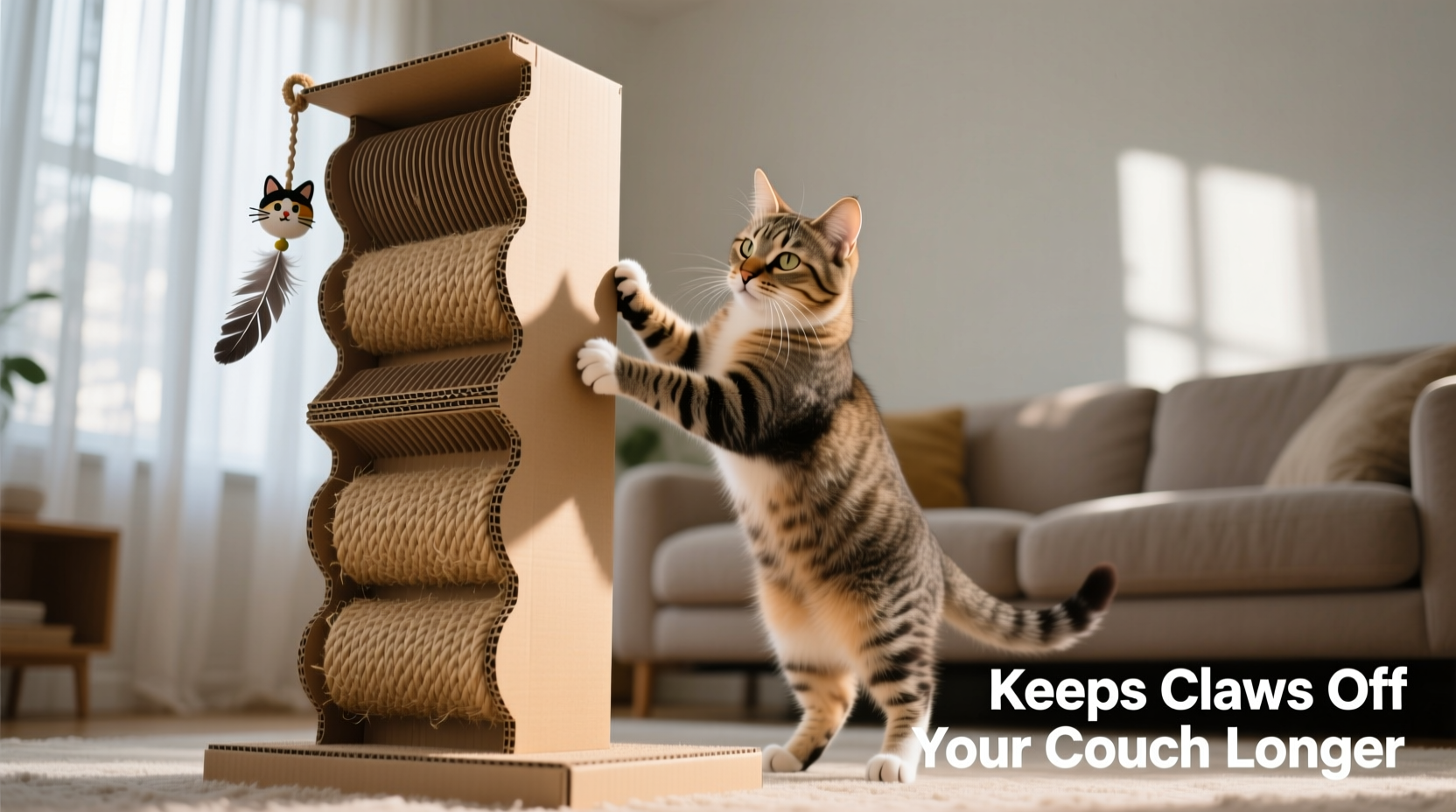
Scratching is hardwired into cats. Even declawed cats (though the procedure is ethically controversial and medically discouraged) often exhibit paw-raking behaviors because the motion is tied to muscle memory and emotional regulation. When a cat scratches, they’re engaging multiple systems:
- Muscle activation: Scratching stretches the spine, shoulders, and legs—especially after naps.
- Scent marking: Sweat glands between the paw pads release pheromones, signaling safety and ownership.
- Claw maintenance: Outer claw sheaths are shed regularly, and rough surfaces help remove them.
Your couch likely checks all the boxes from a cat’s perspective: tall enough to stretch fully, textured fabric that catches claws, and placed in high-traffic areas where your cat wants to leave its mark. That makes it an ideal—but unwelcome—target.
“Cats don’t destroy furniture out of spite. They’re responding to instinct. The key is giving them a more attractive outlet.” — Dr. Sarah Langston, DVM, Feline Behavior Consultant
Scratching Posts: Structure, Stability, and Longevity
A scratching post is typically a vertical or angled structure wrapped in sisal rope, carpet, or faux fur. Some include platforms, condos, or dangling toys. These units range from compact floor models to multi-level towers over five feet tall.
The primary advantage of a scratching post is stability. A heavy, well-anchored post allows a cat to lean into it with full body weight during vigorous scratching sessions. This mimics tree trunks in the wild—the natural scratching surface cats evolved to use.
Benefits of Scratching Posts
- Durability: High-quality sisal-wrapped posts last 1–3 years with regular use.
- Full-body engagement: Tall designs encourage stretching from toes to tail.
- Multipurpose use: Many double as perches, hideouts, or play zones.
- Strategic placement: Can be positioned near furniture to intercept unwanted scratching early.
However, not all scratching posts succeed. Common reasons for rejection include wobbling bases, soft padding instead of abrasive textures, or poor positioning in low-traffic corners. A post must feel secure and be located where the cat already spends time—near sleeping areas or sunny windowsills.
Cardboard Scratchers: Affordable, Replaceable, and Irresistible
Cardboard scratchers come in flat, corrugated sheets or curved loungers. They’re lightweight, inexpensive, and widely available. Most are made from recycled paperboard with horizontal grooves that catch claws effectively.
What makes cardboard so appealing to cats? The texture provides just enough resistance to satisfy claw-shedding needs, and the sound of tearing stimulates hunting instincts. Plus, cardboard holds scent well, making it a familiar-feeling surface over time.
Pros and Cons of Cardboard Scratchers
| Advantage | Limitation |
|---|---|
| Low cost (typically $5–$15) | Limited lifespan (weeks to months) |
| Highly attractive texture to most cats | No vertical stretching support |
| Easy to replace and dispose | Can become litter-box adjacent if not rotated |
| Great for multi-cat homes (place several) | Less effective for large or powerful scratchers |
While cardboard won’t stop a determined cat from attacking upholstery on its own, it excels as part of a layered strategy. Its strength lies in accessibility and sensory appeal—not structural permanence.
Comparing Effectiveness: Which Keeps Claws Off the Couch Longer?
To determine which option offers longer-lasting protection for your furniture, consider three factors: feline preference, durability, and behavioral reinforcement.
Feline Preference
Studies show that over 70% of cats initially prefer cardboard over sisal or carpet when given a choice. The crinkling sound and ease of shredding trigger positive feedback loops. However, kittens and smaller cats favor cardboard more than larger breeds, who may quickly tear through it and seek sturdier options.
Durability
This is where scratching posts pull ahead. A single cardboard pad may last two months under daily use before becoming unsafe (loose fibers, exposed glue). In contrast, a well-built sisal post withstands years of use. Replacement costs add up: using only cardboard could mean spending $60+ annually on replacements.
Behavioral Reinforcement
The best deterrent isn’t just availability—it’s consistency. A stable, permanent fixture like a scratching post trains cats to return to the same spot. Cardboard, while enticing, is often treated as disposable by both cats and owners, leading to inconsistent placement and reduced long-term impact.
“We installed a sisal post next to the loveseat. Within three weeks, the couch was untouched. The cat knew exactly where to go.” — Maria T., Portland, OR (2-cat household)
Real Example: One Home’s Transformation
Maria adopted two adult rescue cats—Luna and Jasper—both of whom shredded her linen couch within days. She tried flat cardboard scratchers first, placing them nearby. Both cats used them enthusiastically—for about ten days. Then they returned to the couch.
After consulting a vet behaviorist, she invested in a 36-inch-tall sisal-wrapped post with a weighted base. She placed it directly beside the damaged corner and lightly sprayed it with catnip oil. For two weeks, she gently redirected the cats whenever they approached the couch. Within a month, both were using the post consistently. Six months later, the couch remains intact, and the cardboard scratchers are now supplemental lounging spots.
The takeaway? Initial attraction matters, but long-term habit formation requires a reliable, always-available option.
Step-by-Step Plan to Protect Your Furniture for Good
Whether you choose a scratching post, cardboard scratcher, or both, success depends on implementation. Follow this timeline to create lasting change:
- Week 1: Assess Damage Zones
Identify exactly where your cat scratches. Note height, angle (vertical vs. horizontal), and nearby activity (e.g., near TV, bedroom door). - Week 2: Introduce the Right Tool
For vertical damage, install a tall scratching post (at least as high as your cat’s full stretch). For horizontal surfaces (like armrests), add a flat or curved cardboard scratcher. - Week 3: Enhance Appeal
Sprinkle catnip, attach dangling toys, or rub the surface with a worn sock to add familiar scent. Use double-sided tape or aluminum foil on the couch to deter access temporarily. - Week 4: Monitor and Redirect
If you catch your cat scratching the couch, calmly lift and place them at the alternative. No yelling. Repeat as needed. - Ongoing: Maintain and Replace
Rotate cardboard scratchers every 4–6 weeks. Vacuum debris from sisal posts. Replace frayed components before they become unappealing.
Checklist: Choosing & Using the Best Scratch Solution
- ✅ Measure your cat’s full stretch height—your post should match or exceed it.
- ✅ Choose sisal over carpet (carpet encourages confusion with household rugs).
- ✅ Anchor the post firmly—no wobbling when pushed.
- ✅ Place scratchers in at least two high-use areas (living room, bedroom).
- ✅ Combine cardboard and post: use cardboard for novelty, post for permanence.
- ✅ Avoid plastic or flimsy materials—they fail under pressure and erode trust.
- ✅ Reward correct use with treats or affection to reinforce the behavior.
Frequently Asked Questions
Can I use only cardboard scratchers to protect my furniture?
You can, but it’s less effective long-term. Cardboard appeals strongly at first, but its short lifespan means gaps in availability. Cats revert to furniture when alternatives disappear. For lasting results, pair cardboard with a permanent post.
My cat ignores both types—what should I do?
Try changing location, texture, or orientation. Some cats prefer horizontal scratching. Others respond only to specific scents. Experiment with different models and placements. Also rule out medical issues—pain or arthritis can alter scratching habits.
How many scratchers do I need for multiple cats?
Veterinarians recommend one scratching station per cat, plus one extra. In multi-cat homes, competition can suppress scratching behavior or redirect it to forbidden areas. Spread options across rooms to reduce tension.
Final Verdict: Post Wins for Long-Term Couch Protection
While cardboard scratchers win in initial appeal and affordability, scratching posts provide superior long-term defense against furniture damage. Their durability, structural integrity, and ability to support full-body stretching make them the cornerstone of any effective scratch management plan.
The smart approach? Use both. Deploy cardboard scratchers to capture attention and build positive associations, then anchor the behavior with a permanent, stable post. Over time, the post becomes the default destination—even when the cardboard runs out.
Protecting your couch isn’t about stopping scratching. It’s about guiding it. With the right tools and consistent reinforcement, you can preserve your furniture while honoring your cat’s instincts.




 浙公网安备
33010002000092号
浙公网安备
33010002000092号 浙B2-20120091-4
Comments
No comments yet. Why don't you start the discussion?